

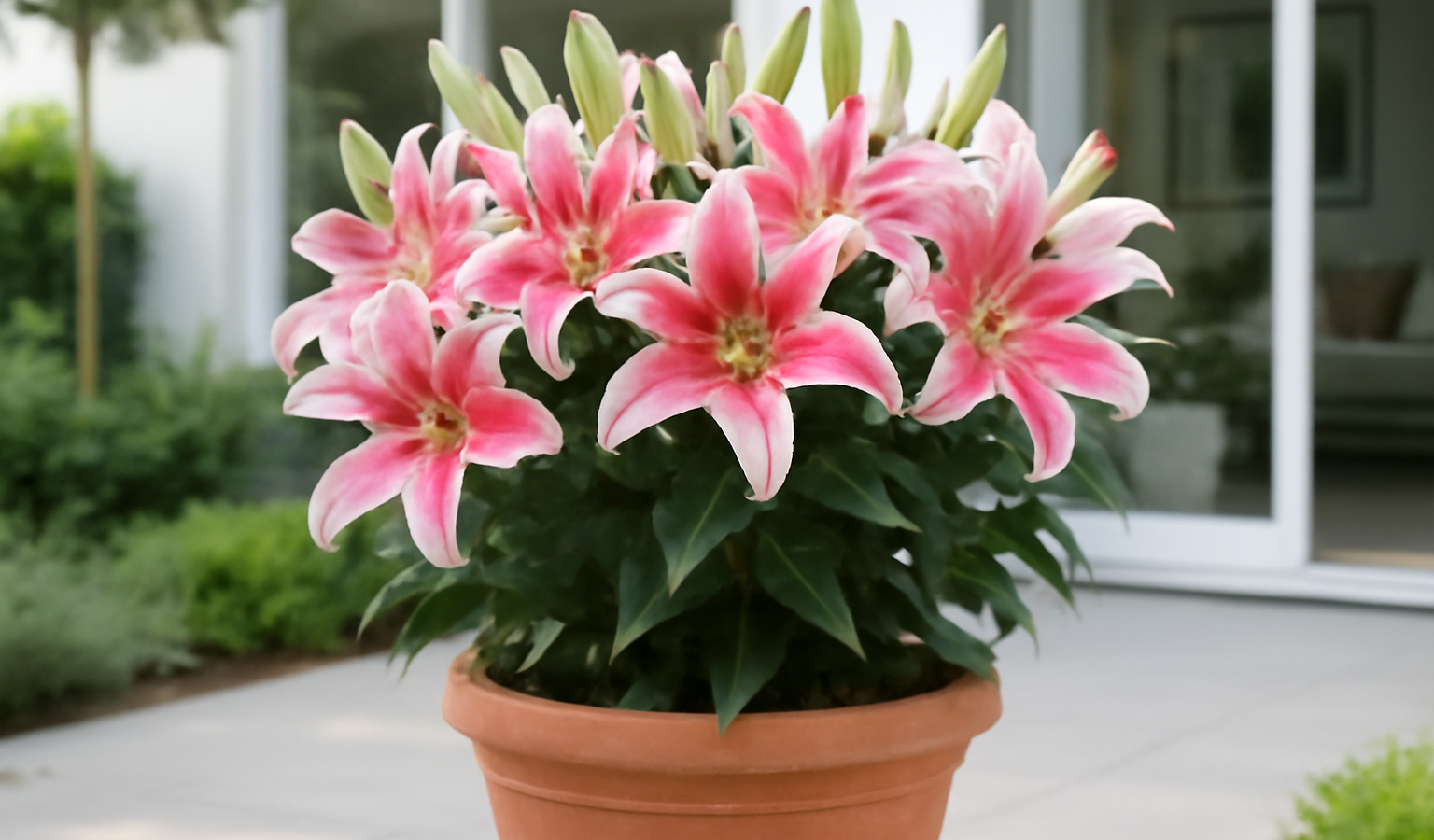
To grow Oriental lilies, plant the bulbs in fall or early spring about three times as deep as the bulb is tall — roughly 6 to 8 inches — in full sun to light afternoon shade and rich, sharply drained soil, then leave them to bulk up and bloom in mid to late summer. These are the late-season aristocrats of the lily world: huge, often recurved flowers in white, pink, crimson, and bicolors, carrying a perfume so powerful that a single stem scents an entire room. ‘Stargazer’, with its upfacing crimson-and-white blooms, is the one most people picture, but the group runs from pure white ‘Casa Blanca’ to deep raspberry types and the giant Orienpet hybrids. They are hardy, long-lived, and surprisingly low-maintenance once sited well — the main things they demand are excellent drainage and a position that shows off the fragrance. One serious caveat overshadows all the others, so it leads this guide: true lilies are deadly to cats, and Oriental lilies are among the most dangerous. This guide covers planting depth, sun and soil, staking, dividing and overwintering, and that toxicity in detail.
Key Takeaways
- Hardy in zones 4-9, returning and multiplying for years from the bulb when drainage is good.
- Plant bulbs 6 to 8 inches deep (about 3× the bulb’s height), pointed end up, in fall or early spring.
- Full sun on the flowers, cool shaded roots — the classic “head in sun, feet in shade” lily rule.
- Sharp drainage is non-negotiable; lily bulbs rot fast in heavy, wet soil and benefit from a sandy, raised, or sloped site.
- Bloom mid to late summer with intensely fragrant flowers, weeks after Asiatic lilies finish.
- Extremely toxic to cats — every part, even pollen and vase water, can cause fatal kidney failure. Do not grow them where cats live.
Know What You Are Planting
Oriental lilies are hybrids derived from East Asian species such as Lilium auratum and Lilium speciosum. They grow from a true scaly bulb — overlapping fleshy scales with no papery tunic — that should never be allowed to dry out, which is why fresh lily bulbs feel firm and slightly moist, unlike a dormant tulip or daffodil. Stems rise 2 to 5 feet tall (taller in the Orienpet group, which crosses Orientals with trumpet lilies) and carry several to many large flowers near the top.
What sets Orientals apart from Asiatic lilies is fragrance and timing. Asiatics bloom in early summer and have little to no scent; Orientals bloom weeks later, in mid to late summer, with that famous heavy perfume. The flowers are large, often 6 to 8 inches across, frequently with reflexed petals, ruffled edges, and a sprinkling of raised spots, and they come in white, pink, rose, crimson, and white-edged bicolors. Plant a mix of Asiatic and Oriental types and you can stretch lily season across most of the summer; for the earlier, scent-free, cat-still-dangerous cousins, the same planting and overwintering rules below apply. Browse companions in the plants and flowers hub.
Climate and Zones
Oriental lilies are hardy in USDA zones 4 through 9 and actually require a winter chill period to bloom well, so they are at home across most of the country. In the coldest zones, a winter mulch protects the bulbs; in the warmest zones (9 and into 10), the lack of reliable winter cold can weaken bloom over time, and gardeners there sometimes pre-chill bulbs or treat them as shorter-lived. They tolerate summer heat as long as the roots stay cool and moist and drainage is good.
The biggest climate-related killer is not cold but wet — bulbs sitting in saturated winter soil rot. If you garden in heavy clay or a low, wet spot, plant lilies on a slope, in a raised bed, or in a container with excellent drainage rather than fighting the soil. Get drainage right and these are genuinely long-lived perennials that return and multiply for a decade or more.
When and How Deep to Plant the Bulbs
Plant Oriental lily bulbs in fall, several weeks before the ground freezes, so roots establish before winter; spring planting also works where you buy bulbs then. Plant as soon as you get them, since the scaly bulbs deteriorate if stored dry for long. The depth rule is simple: set the bulb so it is covered by soil about three times the bulb’s own height — for typical bulbs that means a hole 6 to 8 inches deep, measured to the base of the bulb. This deeper planting matters more for lilies than for most bulbs because lily stems produce roots along the buried portion of the stem, and that stem-root zone feeds the plant and helps hold tall stems upright.
Set each bulb pointed (nose) end up, roots fanned down, on a base of loosened, grit-amended soil, and space bulbs 8 to 12 inches apart. Planting in groups of three or five reads far better than a single stem. Backfill, water in, and mulch lightly. In containers, use a deep pot, plant slightly shallower, and ensure free-draining mix and drainage holes.
Sun, Soil, and the “Head in Sun, Feet in Shade” Rule
Oriental lilies flower best with the blooms in full sun — at least 6 hours — but they resent baking, hot soil at the root zone. The traditional lily rule of “head in the sun, feet in the shade” captures it: site them where the tops get good light but the roots stay cool and shaded, whether by a mulch, by low perennials planted around the base, or by an east-facing spot that gets morning sun and afternoon relief in hot climates. A few hours of light afternoon shade is welcome in the South and can extend the life of each fragrant flower.
Soil should be fertile, rich in organic matter, slightly acidic to neutral, and above all well-drained. Work compost and, in heavy ground, coarse grit or sand into the planting area. Keep the soil evenly moist during growth and bloom but never soggy; an inch of water a week in dry spells is a good guide. Mulch keeps roots cool and moisture steady. Feed in spring as shoots emerge and again as buds form with a balanced or low-nitrogen, bloom-oriented fertilizer; too much nitrogen gives leafy, floppy stems with weaker bloom.
Staking, Bloom, and Deadheading
Tall Oriental and Orienpet hybrids carry heavy clusters of big flowers and often need support, especially in wind or after rain. Place a slim stake near each stem at planting time so you do not spear the bulb later, and tie the stem loosely as it grows. Expect bloom in mid to late summer — typically July and August — with each stem flowering for a couple of weeks and the perfume strongest in the evening.
As flowers fade, deadhead them by snapping off the spent bloom and the developing seed pod behind it so the plant pours energy into the bulb rather than seed. Crucially, when you cut stems for the vase or after bloom, leave as much green stem and foliage standing as you can: the leaves recharge the bulb for next year. Let the stems yellow and die down naturally in fall before cutting them to the ground. Removing green foliage early starves the bulb and weakens future bloom — the single most common reason lilies dwindle.
Dividing and Overwintering
Oriental lily bulbs multiply underground, forming offsets and bulblets, so a clump grows denser and the bloom can thin over several years. When that happens, dig and divide in fall after the foliage dies back: lift the clump, gently separate the bulbs and any plump bulblets, and replant immediately at the proper depth and spacing in refreshed soil. The bulblets take a year or two to reach blooming size.
In zones 4 and colder, apply a several-inch layer of mulch after the ground begins to freeze to insulate the bulbs through winter, then pull it back in spring. Because Orientals are hardy through zone 4, gardeners in most regions leave them in the ground year-round — there is no need to lift and store them like dahlias. In containers, where roots are more exposed to cold, either sink the pot in the ground for winter, move it to an unheated but protected garage, or insulate it well; potted bulbs are far more vulnerable to freezing than those in open ground.
Pests, Problems, and the Critical Cat Warning
Watch for the bright red lily leaf beetle, which can defoliate plants fast in affected regions — hand-pick adults and crush the larvae, or treat early. Aphids spread lily viruses, so control them and remove any plant with mottled, streaked, distorted foliage. Bulb rot and basal rot come from poor drainage, reinforcing the need for a well-drained site. Botrytis can spot the leaves in cool, wet weather. For sorting out small sucking pests on the foliage, our guide on aphids vs spider mites helps with identification.
The most important thing on this page has nothing to do with garden pests: true lilies, including all Oriental lilies, are extremely and potentially fatally toxic to cats. Every part of the plant is dangerous — petals, leaves, stems, pollen, and even the water in a vase that held cut lilies. A cat that merely brushes against the flowers and then grooms pollen off its fur, or licks vase water, can suffer acute kidney failure that is often fatal without immediate veterinary treatment. There is no safe amount. If you share your home or garden with cats, do not grow Oriental (or Asiatic, or any true) lilies, and never bring cut lilies indoors. If a cat is suspected of any exposure, treat it as an emergency and contact a veterinarian or a pet poison hotline at once. The plant is also toxic to dogs and people if eaten, though far less catastrophically than to cats. This single fact should drive your decision to plant or not.
Frequently Asked Questions
How deep do I plant Oriental lily bulbs?
Plant them about three times as deep as the bulb is tall — usually 6 to 8 inches to the base of the bulb — with the pointed nose facing up. This deeper planting supports the tall stems, which grow feeder roots along the buried portion, and protects the bulbs from cold and heat. Space bulbs 8 to 12 inches apart.
Do Oriental lilies come back every year?
Yes. They are hardy perennials in zones 4 to 9 and return and multiply for many years from the bulb when drainage is good. The main reason they dwindle is cutting the green foliage too early or planting in wet, poorly drained soil that rots the bulbs.
How much sun do Oriental lilies need?
The flowers want full sun, at least six hours, but the roots prefer to stay cool and shaded — the classic “head in sun, feet in shade.” Mulch or plant low companions around the base to keep roots cool, and give a few hours of afternoon shade in hot climates.
When do Oriental lilies bloom?
Mid to late summer, typically July and August, several weeks after early-summer Asiatic lilies finish. Each stem flowers for about two weeks with large, intensely fragrant blooms. Planting both Asiatic and Oriental types stretches lily season across most of the summer.
Are Oriental lilies poisonous to cats?
Yes, dangerously so. All true lilies, including Oriental lilies, are extremely toxic to cats — every part, including the pollen and even vase water, can cause fatal kidney failure. Do not grow them or bring cut stems indoors if you have cats, and treat any suspected exposure as a veterinary emergency.