

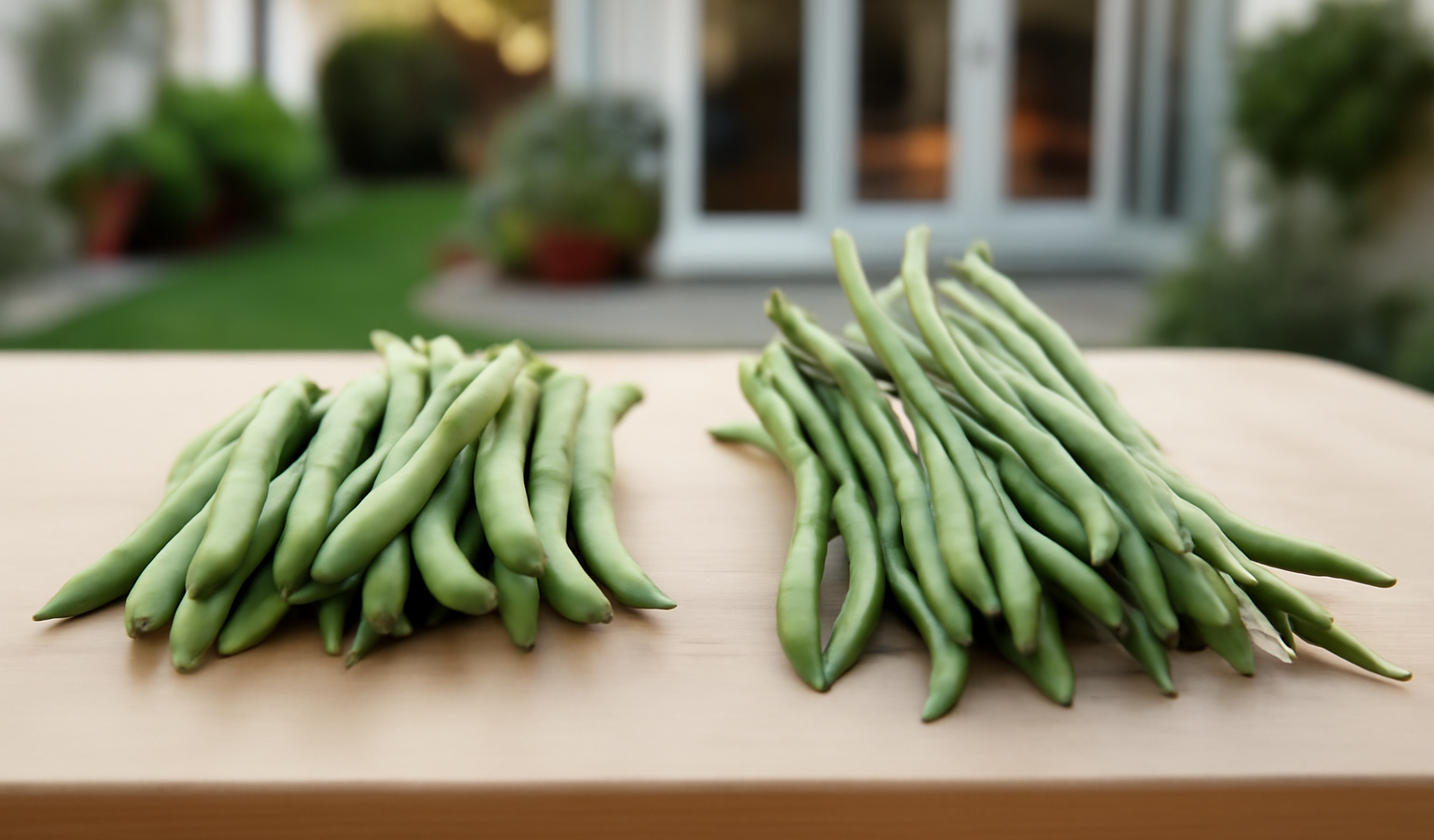
Both bush and pole beans are the same easy, productive crop at heart — but they grow in completely different shapes, and that shape decides how they fit your garden. Bush beans grow as compact, self-supporting plants about a foot or two tall that crank out their whole crop in a concentrated two-to-three-week burst, then quit. Pole beans send up climbing vines six to ten feet tall that need a trellis but then keep producing steadily for two months or more, often yielding more total beans per square foot of ground. If you want a big batch all at once for canning or freezing, or you garden in containers and short rows, bush beans are usually the answer. If you want a steady picking supply through the season, you have vertical space to spare, and you would rather harvest standing up than bent over, pole beans win. This guide breaks down yield, space, timing, flavor, and effort for each, with concrete planting and trellis advice so you can choose confidently — and, in many gardens, the best move is to grow some of both.
Key Takeaways
- Bush beans grow 1–2 ft tall, need no support, and crop all at once over 2–3 weeks.
- Pole beans climb 6–10 ft, need a trellis, and produce steadily for 2 months or more.
- Pole beans give higher total yield per square foot; bush beans give a faster, concentrated harvest.
- Choose bush beans for containers, short seasons, and preserving; pole beans for fresh eating and small footprints with vertical space.
- Sow bush beans in succession every 2–3 weeks for a continuous supply.
- Both are warm-season crops — sow after frost in soil above 60°F.
Quick Comparison: Bush vs Pole Beans
| Trait | Bush Beans | Pole Beans |
|---|---|---|
| Height | 12–24 inches | 6–10 feet |
| Support needed | None | Trellis, poles, or netting |
| Harvest pattern | One concentrated flush (2–3 weeks) | Continuous (8+ weeks) |
| Time to first harvest | 50–55 days | 60–70 days |
| Yield per square foot | Lower | Higher |
| Best for | Canning, freezing, containers | Fresh eating, small plots, vertical space |
| Effort | Low (no trellising) | Moderate (build support) |
Bush Beans: Compact, Fast, and Fuss-Free
Bush beans are the low-effort workhorse of the vegetable garden. The plants form tidy, knee-high bushes that hold themselves up — no poles, no netting, no tying. From seed they reach their first picking in about 50 to 55 days, fast enough to fit two or three plantings into a single season. Their defining trait is the concentrated harvest: a bush bean plant sets the bulk of its pods within a window of two to three weeks, then largely stops. That sounds like a drawback, but it is exactly what you want if you preserve. When you are canning, freezing, or pickling beans, having a big batch ready at once is far more convenient than picking a handful every few days.
Plant bush beans one inch deep and two to four inches apart in rows eighteen inches apart, or broadcast them in a wide band. Because each planting finishes quickly, the trick to a steady fresh supply from bush beans is succession sowing — drop a new short row every two to three weeks from your last frost until about ten weeks before first fall frost. Their short stature also makes them the obvious choice for containers, raised beds, and windy sites where tall vines would whip and snap. The trade-off is yield: because the plants are small and the harvest is brief, bush beans produce less total food per square foot than pole beans, and you trade a little flavor and tenderness in some varieties for that speed and convenience.
Pole Beans: High Yield from a Small Footprint
Pole beans take a different approach: they grow up. Given a trellis, teepee of poles, fence, or netting, the vines climb six to ten feet and clothe that vertical structure in foliage and pods. They take a little longer to start producing — about 60 to 70 days — but once they begin, they keep flowering and setting pods continuously for two months or more, right up until frost, especially if you keep them picked. Regular harvesting is actually the key to their productivity: every mature pod left on the vine signals the plant to stop making new ones, so picking every few days keeps the machine running.
Because pole beans use vertical space, they deliver more total yield from a given patch of ground than bush beans — a real advantage in small gardens. They are also easier on your back; you harvest standing up rather than crouching, and the pods hang in plain view rather than hiding under leaves. Many gardeners also find classic pole varieties like Kentucky Wonder and Blue Lake more flavorful and meatier. The cost is setup: you must build and anchor a sturdy support before or at planting, because the vines grow fast and become heavy with crop. Sink poles deep, lash a teepee tightly, or string netting between firm posts. Plant four to six seeds around each pole or every six inches along a trellis, one inch deep, after the soil warms.
Half-Runners and Other In-Between Types
The bush-versus-pole split is not perfectly binary. Half-runner beans, an Appalachian favorite, grow as vigorous semi-vining plants three to five feet tall that fall between the two camps — too rangy to stand alone like a true bush, too short to need a full ten-foot trellis. A short fence, a few stakes, or even a sturdy neighboring planting gives them the modest support they want, and in return they offer a longer picking window than bush beans without the tall structure pole beans demand. They are prized for canning because the mature seeds inside the pod are full-flavored. If you like the idea of a compromise, half-runners deliver much of the steady-harvest benefit of pole beans on a more manageable frame.
It is also worth knowing that “bush” and “pole” describe growth habit, not bean type. You can find bush and pole forms of green snap beans, of dry beans grown for storage, and of shell beans grown for the mature seed. Runner beans (often grown as ornamentals for their scarlet flowers) are almost always climbers, while most dry-bean field varieties are bush types bred for mechanical harvest. When you read a seed packet, look past the romantic variety name to the two words that actually govern your garden layout: the habit, and the days to maturity.
Yield, Timing, and Effort Compared
On yield, pole beans win per square foot thanks to vertical growth and a long season, while bush beans win on speed to that first harvest. On timing, bush beans give you one quick, predictable flush ideal for preserving; pole beans give you a long, steady trickle ideal for fresh eating night after night. On effort, bush beans are clearly easier — there is nothing to build — whereas pole beans demand a support structure and a commitment to frequent picking. On space, both can be efficient, but pole beans shine where ground is tight and air space is free, and bush beans shine in containers and exposed, windy spots.
Both share the same growing needs because they are the same species: full sun, warm soil above 60°F, even moisture once flowering begins, and light feeding (beans fix their own nitrogen, so go easy on high-nitrogen fertilizer or you will get lush vines and few pods). Both are warm-season crops, so sow them after your last frost. For more on getting that timing right, see our guide to warm-season versus cool-season vegetables.
One practical effort difference shows up at the end of the season. Because bush beans finish in a tight window, the plants are easy to pull and compost all at once, clearing the bed quickly for a fall crop. Pole beans, by contrast, leave you with a tangled mass of vine wrapped around the support that takes longer to dismantle and clean up — a small but real chore worth factoring in if you turn beds over fast. On the flip side, that long pole-bean season means a single sowing does the work that two or three successive bush sowings require, so the effort balances out differently depending on whether you would rather build a trellis once or re-sow repeatedly.
The Verdict: Which Should You Grow?
Choose bush beans if you preserve your harvest, garden in containers or a short-season climate, want beans fast with zero construction, or face wind that would torment tall vines. Choose pole beans if you eat your beans fresh over a long stretch, want the highest yield from a small plot, have a fence or trellis to spare, and do not mind building a support and picking regularly. Honestly, the smartest answer for most gardeners is both: plant a bed of bush beans timed for a big preserving batch, and run a teepee or trellis of pole beans alongside for steady fresh picking all summer. That combination gives you the convenience of one and the abundance of the other. Whichever you pick, succession-sow or keep picking, and you will pull more beans from less space than you expected. Browse more in our plants and flowers guides.
Frequently Asked Questions
Which produces more beans, bush or pole?
Pole beans produce more total beans per square foot because they grow vertically and keep cropping for two months or more. Bush beans yield less overall but deliver their harvest faster, in one concentrated flush.
Do bush beans need support?
No. Bush beans grow as self-supporting plants only 12–24 inches tall, which is why they suit containers, raised beds, and windy sites where tall vines would break.
How tall do pole beans get and what support do they need?
Pole beans climb 6–10 feet and need a sturdy trellis, teepee of poles, fence, or netting anchored firmly before the heavy, fast-growing vines weigh it down.
How do I get a continuous harvest from bush beans?
Succession-sow a new short row every two to three weeks from your last spring frost until about ten weeks before first fall frost, since each bush planting crops for only two to three weeks.
When should I plant beans?
Both types are warm-season crops. Sow seeds one inch deep after all danger of frost has passed and soil has warmed to at least 60°F; cold soil rots the seeds.