

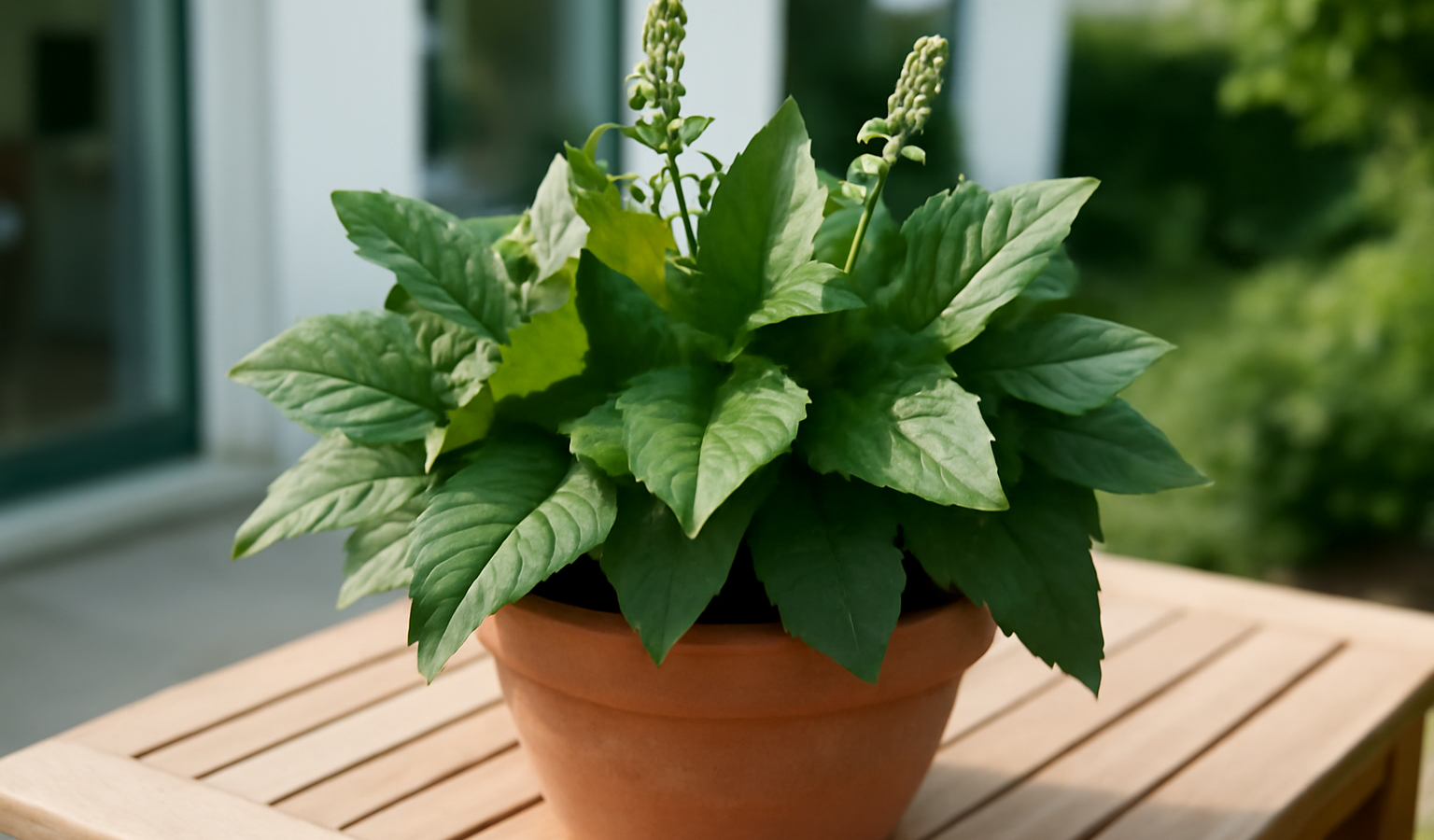
Good King Henry (Blitum bonus-henricus, long known as Chenopodium bonus-henricus) is a hardy perennial leafy vegetable that English cottage gardeners grew for centuries as a dependable spring green long before annual spinach took over. It is a three-in-one crop: in early spring you cut the young shoots like asparagus, through the season you harvest the arrow-shaped leaves to cook like spinach, and you can even eat the immature flower spikes like tiny broccoli. Hardy in USDA zones 3 through 9, it forms a clump 12 to 24 inches tall, tolerates poor soil and part shade, and once established it returns reliably every spring for a decade or more from the same crown. The one thing to know is that it is a slow starter, taking a year or two to settle in before it crops generously, and the leaves are best eaten cooked rather than raw. Plant it in a permanent corner, give it rich soil, and it becomes a low-maintenance source of greens at the hungriest time of the gardening year.
Key Takeaways
- Hardy perennial green in USDA zones 3-9; grows 12-24 in tall in full sun to part shade and lives for many years.
- A triple crop: blanched spring shoots eaten like asparagus, leaves cooked like spinach, and flower buds used like broccoli.
- Prefers rich, moist, well-drained soil but tolerates poorer ground; thrives in part shade where summer spinach bolts.
- Grow from seed (slow, needs cold stratification) or far more easily from spring crown divisions.
- Slow to establish: do not harvest hard in year one; from year two it crops reliably each spring with little care.
What Good King Henry Is and Why Grow It
Good King Henry is a clump-forming perennial in the amaranth family, a relative of spinach, beets, chard, and the wild fat hen many gardeners know as a weed. It sends up a basal clump of dark green, broadly triangular or arrow-shaped leaves on upright stems, reaching 12 to 24 inches tall, and in summer it carries slender spikes of small greenish flowers typical of its family. The plant is native to the hills and old pastures of Europe and has naturalized widely, and that mountain-meadow toughness is exactly why it survives where tenderer greens fail. The name is folklore: the “Good” King Henry distinguished it from a poisonous look-alike sometimes called “Bad” Henry, and it has nothing to do with any English monarch.
The reason to grow it is that it fills the spring “hungry gap” with fresh greens when little else in the vegetable garden is ready, and it does so year after year from a single planting. The young shoots, blanched by mounding soil or a cover over the crown, are a genuine delicacy cut and steamed like asparagus. The leaves, picked young and cooked, make a perfectly good spinach substitute, richer in flavor and more robust than the annual sort, and they keep coming through the season in conditions that would make spinach bolt to seed. As a perennial it is the definition of low effort: no annual sowing, no replanting, just a patch that quietly produces. It earns a spot among other perennial edibles and is a natural companion to a patch of perennial herbs and unusual roots.
Where and When to Plant
Hardiness and light
Good King Henry is exceptionally hardy, thriving in USDA zones 3 through 9, and it withstands hard winters without protection. For light it is flexible in a way that makes it valuable: it grows well in full sun in cooler climates, but it genuinely prefers part shade, especially in zones 7 through 9, where the dappled or afternoon shade keeps the leaves tender and slows bolting through hot weather. This shade tolerance is one of its best features, letting you grow productive greens in spots too dim for sun-loving vegetables. A position that gets morning sun and afternoon shade, or light shade beneath the open canopy of taller plants, suits it perfectly.
Soil
Like most leafy greens, Good King Henry produces the most tender, generous foliage in rich, moisture-retentive but well-drained soil with plenty of organic matter. Before planting, dig in a good quantity of compost or well-rotted manure to feed the plant for its long perennial life and to hold moisture. That said, it is far more forgiving than spinach and will get by in poorer, drier soils, simply cropping less heavily. A near-neutral pH of 6.0 to 7.0 is ideal. The one condition it dislikes is waterlogged ground, where the crown is prone to rot, so on heavy clay improve drainage with organic matter or plant in a slightly raised position. Because it is permanent, choose its spot with care: a back corner of the vegetable plot, the edge of a border, or a perennial-edible bed where you will not be digging around it.
When to plant
Sow seed in early spring after stratification, or set out crown divisions in spring as growth begins. Spring planting gives the plant the whole season to establish a strong root system before its first winter. In mild zones you can also divide and replant in early autumn. Whichever route you take, resist the urge to harvest much in the first year; the plant needs that season to build the crown that will feed you for years.
Planting From Seed and Divisions
Growing from seed
Good King Henry seed germinates slowly and unevenly, and it benefits greatly from a period of cold-moist stratification, which mimics the winter chill the seed expects in the wild. The simplest method is to sow in fall and let the weather do the chilling, or to mix the seed with damp sand or vermiculite and refrigerate it for three to four weeks before sowing in early spring. Sow shallowly, barely covering the seed, in pots or a well-prepared seedbed, and keep the soil moist at around 50 to 65 F. Germination can take two to four weeks. Thin or prick out the seedlings and grow them on, then transplant to their final spacing of 12 to 18 inches apart once they are sturdy and frost has passed. Be patient: seed-raised plants are leisurely and may take two seasons to reach full productivity.
Growing from crown divisions
Division is the quicker, surer route and a good reason to start from an existing plant if you can. In early spring as new growth appears, lift an established clump with a fork and split the crown into sections, each with roots and at least one growing shoot. Replant the divisions immediately at the same depth, 12 to 18 inches apart, in the enriched bed, and water them in well. Divisions re-establish within a season and will crop the following spring. Dividing an old clump every few years also keeps it vigorous and gives you new plants to spread around the garden or share.
Spacing and mulch
Space plants 12 to 18 inches apart, giving each clump room to expand. After planting, spread a 2 to 3 inch layer of compost or other organic mulch over the bed, keeping it clear of the crowns, to conserve moisture, feed the soil, and suppress the weeds that compete with young plants. Because this is a long-lived perennial, that mulch becomes an annual ritual rather than a one-off.
Caring for Good King Henry
Watering and feeding
For the tenderest, most plentiful leaves, keep the soil evenly moist, watering during dry spells especially while the plant is actively growing in spring and early summer. Established plants are reasonably drought tolerant and will survive dry periods, but the foliage turns tougher and more bitter when stressed. As a leafy perennial it appreciates feeding: top-dress with compost or well-rotted manure each spring, and a feed of a balanced or nitrogen-leaning organic fertilizer early in the season encourages lush leaf growth. Refresh the mulch annually to keep moisture in and weeds down.
Blanching the spring shoots
To harvest the prized asparagus-like shoots, blanch them by excluding light from the emerging growth. As the crown begins to push up shoots in early spring, mound loose soil, leaf mold, or a bucket over it, or set a forcing pot on top, so the shoots grow up pale, slender, and tender rather than green and bitter. After a couple of weeks the blanched shoots will be several inches long and ready to cut. This is optional; you can simply let the plant green up and harvest leaves, but blanching gives you that delicacy crop in the leanest weeks of the year.
Bolting and general maintenance
Through summer the plant sends up flower spikes. You can harvest the immature spikes to eat like small broccoli, or remove the flowering stems entirely to keep the plant producing leaves and to prevent it self-seeding around the garden, which it does freely if allowed. Removing flower stalks channels energy back into the leaves. Keep the bed weeded, particularly while plants are young, and cut back the dying foliage in late autumn as the plant goes dormant. It re-sprouts faithfully from the crown each spring.
Harvesting and Eating
Harvest is staggered across the season. First come the blanched spring shoots, cut at the base while young and steamed or boiled briefly like asparagus. Then, through spring and summer, pick the young leaves a few from each plant at a time, taking the tender newer growth and leaving the crown with enough foliage to keep feeding itself. Cook the leaves rather than eating them raw: like spinach and chard, Good King Henry contains oxalic acid and saponins that make raw leaves bitter and best avoided in quantity, but a quick boil or steam, with the cooking water discarded, gives you a rich, robust green to use anywhere you would use spinach. The immature flower buds, picked before they open, can be steamed like a miniature broccoli. Do not strip a young plant in its first year; from year two onward you can harvest generously through the season.
Because the plant crops over months rather than all at once, it suits the kitchen gardener who wants a steady trickle of greens rather than a glut. Use the leaves in soups, frittatas, gratins, pies, and pasta, or simply wilted with butter and a little nutmeg. For more dependable perennial crops to grow alongside it, see our wider Plants & Flowers hub.
Pests, Problems, and Troubleshooting
Good King Henry is one of the most robust and pest-free vegetables you can grow, which is much of its charm. As a member of the goosefoot tribe it can occasionally pick up the same troubles as its relatives spinach and beet, namely leaf miners, whose larvae make pale tunnels and blotches inside the leaves, and the fungal leaf spots and downy mildew that strike in damp, crowded conditions. Pick off and destroy affected leaves, keep plants spaced for air movement, and avoid overhead watering late in the day to keep foliage dry. Slugs and snails enjoy the tender spring shoots, so patrol the blanched growth and use iron-phosphate bait if needed. The most common grower complaints are not pests but expectations: leaves that taste bitter usually mean the plant was drought-stressed, harvested too old, or eaten raw, all of which are fixed by watering well, picking young leaves, and always cooking them. And a plant that crops poorly in its first year is simply doing what Good King Henry does, taking its time. Give it that establishment season, keep it fed, watered, and weeded, and you will have a reliable perennial green that asks almost nothing in return for years.
Frequently Asked Questions
Can you eat Good King Henry raw?
It is best cooked. The leaves contain oxalic acid and saponins that make them bitter and unpleasant raw in any quantity. A quick boil or steam, with the water discarded, gives you a rich, mild green to use exactly like cooked spinach.
How long does Good King Henry take to establish?
It is a slow starter. Expect light cropping in the first year while the crown builds, and a full, generous harvest from the second year onward. Once established, a single plant can crop reliably each spring for ten years or more.
Does Good King Henry grow in shade?
Yes, and it actually prefers part shade in warmer zones. Dappled or afternoon shade keeps the leaves tender and slows bolting in summer heat, making it a productive green for spots too dim for most sun-loving vegetables.
What are the blanched shoots and how do I get them?
In early spring you can mound soil or set a pot over the emerging crown to exclude light, so the new shoots grow up pale and tender. Cut these when a few inches long and cook them like asparagus; they are the plant’s spring delicacy.
Is Good King Henry invasive?
It is not invasive in a running sense, but it self-seeds freely if you let the flower spikes mature. To keep it in bounds, remove the flowering stems before they set seed, which also redirects the plant’s energy into producing more leaves.