

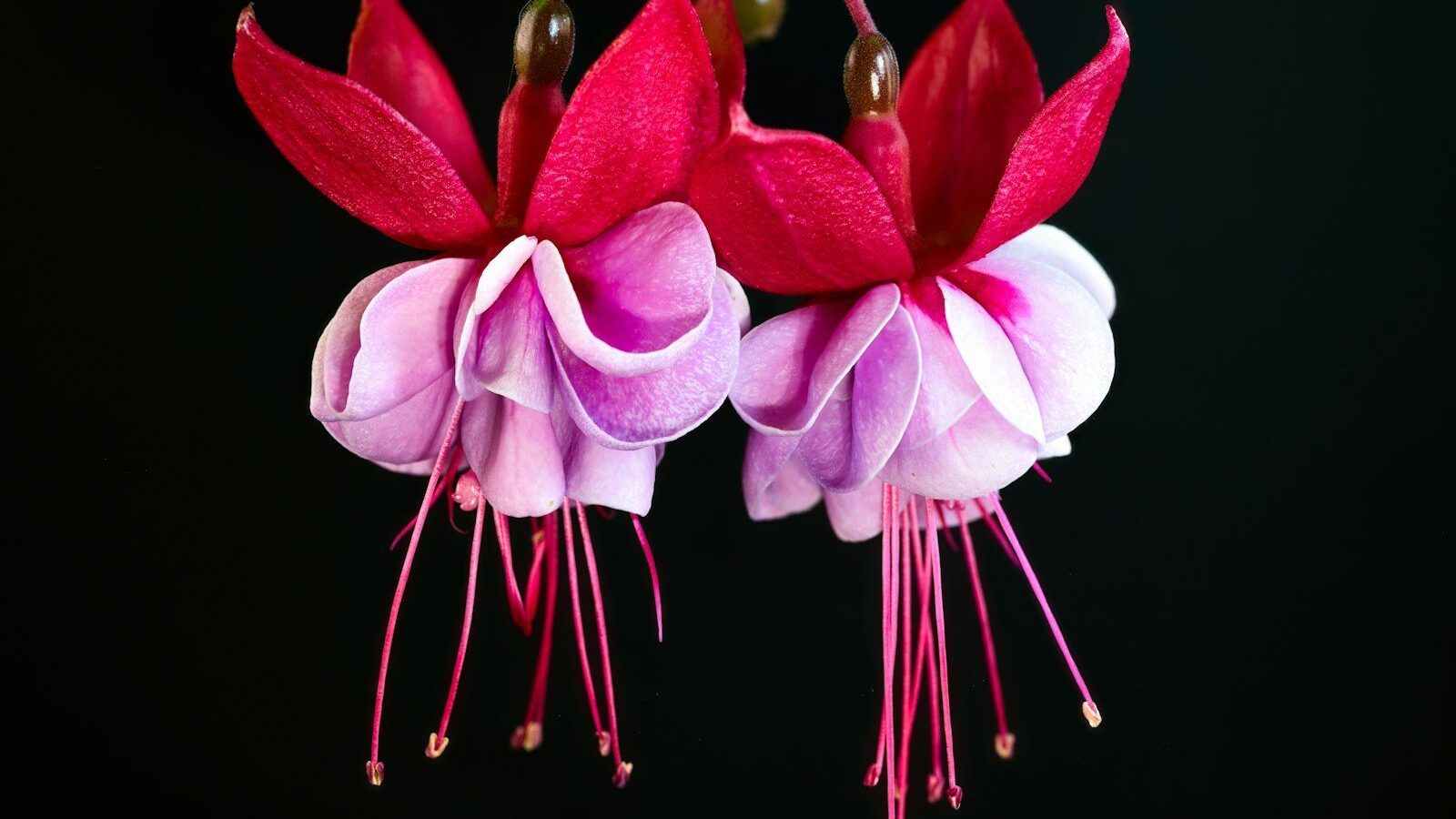
Fuchsias produce some of the most theatrical flowers in the garden — pendant, two-toned blooms in magenta, purple, pink, white and coral that dangle like tiny ballerinas and pull in hummingbirds all season. They are tender perennials native to cool, humid mountain forests of Central and South America, which tells you everything about how to grow them: they love shade, moisture and mild temperatures, and they sulk in hot, dry conditions. Most gardeners in USDA zones 6-9 grow them as annuals or overwintered container plants, while in zones 10-11 and a few hardy varieties down to zone 6, they persist outdoors. This guide covers light, soil, planting, watering, feeding, the all-important pinching, growing in baskets versus beds, pests, and how to overwinter fuchsias so you keep them for years.
Key Takeaways
- Fuchsias want bright shade to filtered morning sun and cool temperatures (60-70°F); they stop blooming in extreme heat.
- Use a rich, moist, well-drained mix and keep it consistently damp — fuchsias are thirsty but rot in soggy soil.
- Plant trailing types in hanging baskets and upright types in beds or as patio standards.
- Pinch growing tips every few weeks early in the season for a bushy, flower-laden plant.
- Feed every 1-2 weeks with a balanced or high-potassium fertilizer for nonstop bloom.
- Overwinter fuchsias indoors as houseplants or store them dormant in a cool, frost-free space.
Hardy vs. Tender Fuchsias
Fuchsias fall into two broad camps. Tender (trailing and upright) fuchsias are the showy hybrids sold in hanging baskets and pots — the ones with big double flowers in dramatic color combinations. They are not frost-hardy and are grown as annuals or overwintered indoors in most of the country. Hardy fuchsias, such as Fuchsia magellanica and its cultivars, are tougher shrubs with smaller single flowers that can survive winters down to zone 6 or even 5 with mulch protection, dying back to the ground and resprouting in spring. If you want a permanent garden plant, choose a hardy variety; if you want the spectacular baskets, expect to overwinter the plant or treat it as a seasonal splurge. Knowing which you have determines whether you mulch it in place for winter or bring it inside.
Light and Temperature: The Make-or-Break Factor
If fuchsias disappoint, it is almost always because they were too hot or too sunny. They thrive in bright shade to dappled, filtered light — think the east side of a house with gentle morning sun, or under high tree canopy. A few newer heat-tolerant series take more sun, but as a rule, hot afternoon sun bleaches the foliage, wilts the plant, and shuts down flowering. Temperature is equally critical: fuchsias bloom best between 60 and 70°F and stop setting buds when daytime temperatures climb above the mid-80s. In hot regions (zones 8-9 and warmer), site them in the coolest, shadiest spot you have, mist on hot afternoons, and accept that they may pause blooming in midsummer and rebound in fall. In cool coastal and northern climates, fuchsias are far easier and flower continuously. Indoors, give them a bright but not blazing window.
Soil and Planting
Fuchsias want a soil that is rich, moisture-retentive and yet free-draining — a contradiction solved by lots of organic matter plus good structure. Use a quality peat- or coir-based potting mix for containers, ideally with extra compost worked in. In beds, amend the soil heavily with compost or leaf mold and aim for a slightly acidic to neutral pH of about 6.0-7.0. Plant outdoors only after all frost danger has passed and nights stay above 50°F. Set plants at the same depth they grew in their pots; for baskets, three to five young plants in a 12-14 inch basket fills out beautifully. Space upright bedding fuchsias 12-18 inches apart. Because they need constant moisture, larger containers (10 inches and up) are far easier to manage than small pots that dry out in hours.
Watering and Humidity
Fuchsias are thirsty plants and the most frequent cause of failure in containers is letting them dry out — a fuchsia that wilts hard may drop all its buds even if you rescue it. Keep the soil consistently moist but never waterlogged. In summer, hanging baskets often need watering once or twice a day; check by lifting the basket (light means dry) or feeling the top inch of soil. In beds, water deeply two or three times a week and mulch to hold moisture. At the same time, the roots must not sit in stagnant water, so ensure excellent drainage. Fuchsias also love humidity; in dry climates, misting the foliage on hot days and grouping plants together helps. The balance you are after is evenly damp soil and humid air around cool roots — exactly the forest floor they came from.
Feeding for Continuous Bloom
Fuchsias are heavy feeders that flower on new growth, so steady fertilizing pays off in more blooms. During active growth and flowering, feed every 1-2 weeks with a balanced liquid fertilizer (such as 20-20-20) early in the season to build the plant, then switch to a higher-potassium bloom formula (like a tomato fertilizer or 15-30-15) once flowering begins to fuel the display. A slow-release fertilizer mixed into the potting mix at planting provides a steady baseline. Because frequent watering leaches nutrients from containers fast, container fuchsias rely on this regular liquid feeding to keep performing. Ease off feeding in late summer and stop entirely by early fall so the plant can wind down before winter. If growth is lush but flowers are scarce, cut back on nitrogen and increase potassium.
Pinching: The Secret to a Full Plant
Pinching is the single technique that turns a sparse fuchsia into a flower-smothered showpiece. Fuchsias bloom on new growth, and each time you pinch out a growing tip the stem branches into two, doubling the number of flowering shoots. Start when young plants have three or four pairs of leaves: pinch out the tip above the second pair. Repeat on each new shoot every few weeks through spring and early summer, stopping about six to eight weeks before you want peak bloom (pinching delays flowering by roughly that long, so pinch early and then let it bloom). For trailing basket types, this builds the cascading, fully clothed look; for upright types, it creates a dense, branching shrub. You can also train upright fuchsias into a “standard” — a small lollipop tree — by growing a single stem and pinching only the top once it reaches the height you want.
Baskets vs. Beds
Trailing fuchsias were made for hanging baskets and elevated containers, where their pendant flowers dangle at eye level and can be admired from below — the classic way to display them on a shaded porch. Upright fuchsias work as patio specimens, container centerpieces, or in shady borders, and hardy types make permanent shrubs in a woodland-edge bed. Containers give you the control fuchsias crave: the right mix, easy moisture management, and the ability to move plants to the coolest, shadiest spot or indoors for winter. If you are gardening on a shaded balcony or patio, fuchsias are a top pick — see our container and small-space gardening guides for basket ideas. To pair fuchsias with other shade lovers like begonias, impatiens and ferns, browse the Plants & Flowers hub.
Common Pests and Diseases
The pest fuchsia growers dread most is the fuchsia gall mite, a microscopic mite that causes grotesque distorted, reddened, thickened growth at the shoot tips — it looks like the plant has gone haywire. There is no easy cure; prune out and destroy affected growth, and in bad cases replace the plant with a resistant variety. Whiteflies are the other common nuisance, clouds of tiny white insects under the leaves; control them with yellow sticky traps and insecticidal soap. Watch also for aphids on tender new growth and spider mites in hot, dry conditions (a sign the plant is too warm). On the disease side, fuchsia rust shows as orange pustules on leaf undersides in humid, crowded conditions — improve air flow, remove affected leaves, and avoid wetting the foliage. Botrytis (gray mold) can rot flowers and stems in cool, damp weather, so deadhead and keep plants from staying soggy. Good air circulation and base-watering prevent most of these problems.
How to Overwinter Fuchsia
Tender fuchsias can be kept for many years if you overwinter them. As houseplants: before the first frost, bring the plant indoors, set it in a bright, cool room, and keep it lightly watered; it will grow slowly and may flower a little. As dormant plants — the easier method: after a light frost or as growth slows, cut the plant back by about half, move it to a cool, frost-free spot (a garage, basement or unheated room at 40-50°F), and water just enough every few weeks to keep the roots from drying out completely. The plant drops its leaves and rests. In late winter, bring it into warmth and light, cut it back hard to two or three buds per stem, resume watering, and it will leaf out vigorously. For hardy fuchsias in zones 6-7, leave the plant in the ground, mulch the crown heavily with 4-6 inches of bark or leaves after the first hard frost, and cut the dead top growth back in spring once new shoots appear at the base. You can also take and root cuttings in late summer as insurance.
Propagating Fuchsia From Cuttings
Fuchsias root quickly and easily from softwood cuttings, making them simple to multiply. In spring or late summer, take a 3-4 inch tip cutting with two or three pairs of leaves, remove the lowest pair and any flower buds, and insert the stem into moist, gritty potting mix. Keep it humid (a clear bag or dome helps) in bright, indirect light, and roots will form in 2-3 weeks. Pot the rooted cutting on, then begin pinching to build a bushy young plant. Taking cuttings in late summer is a reliable way to carry a favorite variety through winter on a windowsill even if the parent plant doesn’t make it. For the complete step-by-step approach, see our guide on propagating plants from cuttings.
Frequently Asked Questions
Do fuchsias like sun or shade?
Most fuchsias prefer bright shade to filtered morning sun and cool temperatures. Hot afternoon sun bleaches the foliage and stops flowering. A few heat-tolerant series take more sun, but as a rule, give fuchsias dappled light and the coolest spot you have, especially in warm climates.
Why is my fuchsia dropping flowers and buds?
Bud drop is usually caused by the plant drying out, by sudden heat, or by an abrupt change in conditions. Keep the soil consistently moist (baskets may need watering twice a day in summer), keep the plant cool and shaded, and avoid moving it suddenly between very different environments.
How do I make my fuchsia bushier and fuller?
Pinch out the growing tips regularly. Each pinch makes the stem branch into two, so starting when the plant is young and repeating every few weeks through spring builds a dense, flower-covered plant. Stop pinching about six to eight weeks before you want peak bloom.
Can fuchsias survive winter outside?
Only hardy fuchsias (like Fuchsia magellanica types) survive winter outdoors, down to about zone 6 with heavy mulch over the crown; they die back and resprout in spring. Tender basket fuchsias must be brought indoors and overwintered as houseplants or stored dormant in a cool, frost-free space.
How often should I feed a fuchsia?
Feed every 1-2 weeks during active growth and flowering. Use a balanced fertilizer early to build the plant, then switch to a high-potassium bloom formula once flowering starts. Container fuchsias especially need regular feeding because frequent watering washes nutrients out of the mix.
Fuchsias ask for cool shade, steady moisture and a little pinching, and in return they hang their jewel-like flowers all summer and bring in the hummingbirds. Match them to a shady, cool spot, keep the basket from ever drying out, and overwinter the plant dormant in a frost-free corner — and a single fuchsia can give you that spectacular cascade of bloom for years to come.