

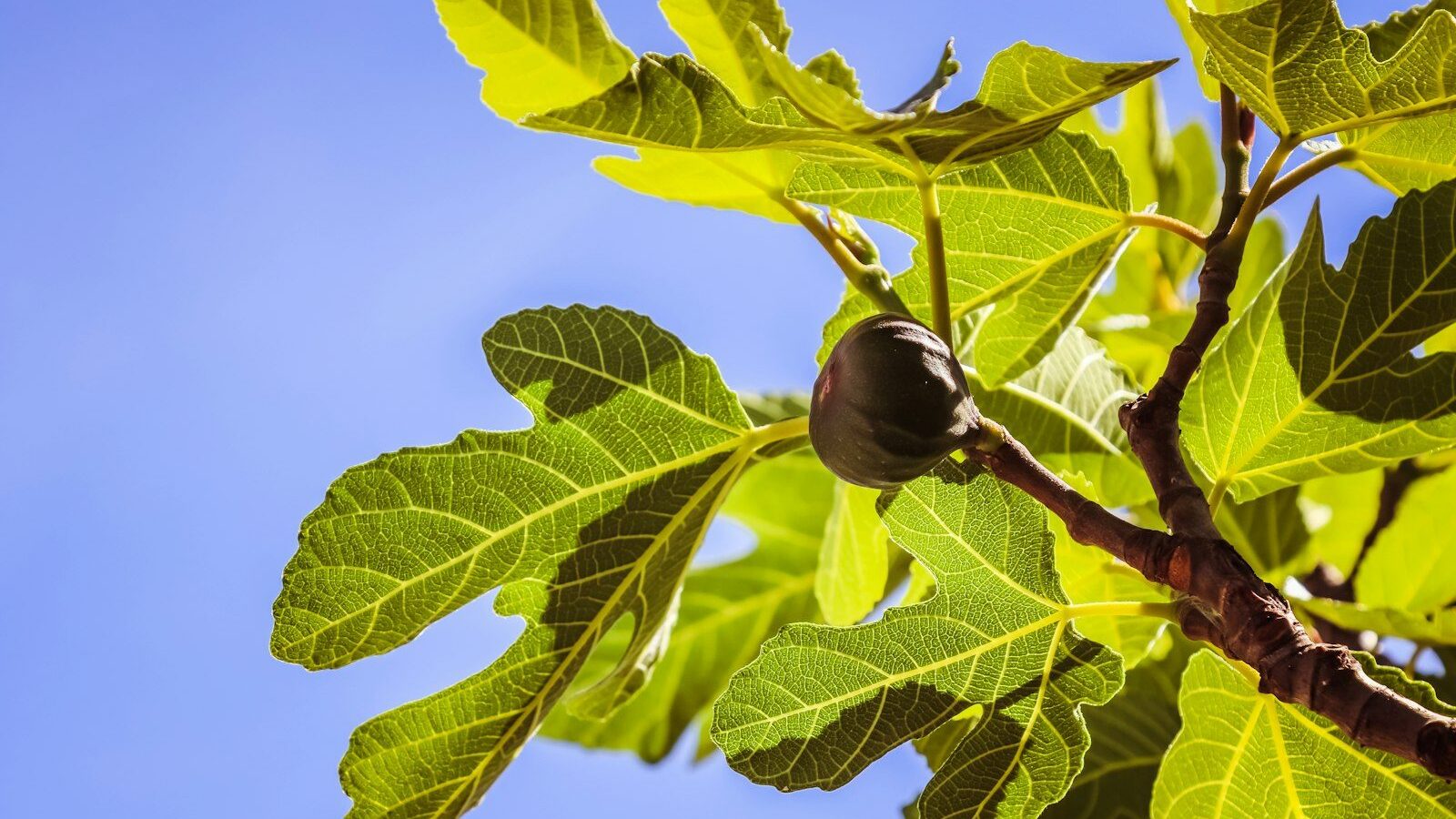
Few fruits feel as luxurious — or are as easy to grow — as a tree-ripened fig. Picked at the moment it droops on the branch, a fig is soft, honey-sweet, and jammy in a way no store can match, because real figs are too delicate to ship ripe. The good news is that figs are among the most forgiving fruit trees a home gardener can plant: they tolerate poor soil, ask for little fuss, need no second tree for pollination in most varieties, and even fruit happily in a pot on a patio. The main thing northern growers must master is winter protection, and even that is straightforward once you understand how figs fruit. This guide covers varieties, planting, watering, pruning, container culture, overwintering, and harvest.
Key Takeaways
- Common figs like ‘Brown Turkey’, ‘Celeste’, ‘Chicago Hardy’, and ‘Brunswick’ are self-fertile and need no second tree or wasp pollinator.
- Figs grow in the ground in USDA zones 7–10; in zones 5–6 grow cold-hardy types or keep them in containers to overwinter indoors.
- Plant in full sun in well-drained soil at pH 6.0–6.5, water deeply but infrequently, and avoid heavy nitrogen feeding.
- Many figs bear two crops — a small breba crop on old wood and a main crop on new growth — so prune lightly to keep both.
Choosing a Fig Variety
Almost all backyard figs are “common figs,” which set fruit without pollination — no fig wasp, no second tree, no fuss. That’s a relief, because the famous Smyrna and caprifig types do require the specialized fig wasp and aren’t practical outside fig-growing regions. Among common figs, choose by climate. ‘Chicago Hardy’ (also sold as ‘Bensonhurst Purple’) is the standout for cold regions: it survives roots-hardy to zone 5 and, even if winter kills the top, regrows from the base and fruits on new wood the same season.
‘Celeste’ is a small, very sweet, cold-hardy fig beloved in the Southeast; ‘Brown Turkey’ is a reliable, productive all-rounder for zones 7–10; ‘Brunswick’ and ‘Hardy Chicago’ handle cold well; and ‘Black Mission’ and ‘Kadota’ thrive in the warm West. If you garden in a cold zone, lean toward ‘Chicago Hardy’ or ‘Celeste’, or plan to grow in a container you can shelter. Buy from a nursery that names the variety; unlabeled figs are a gamble on hardiness and flavor.
Where and When to Plant
Plant figs in spring after the last frost, giving them a full season to establish before their first winter. Figs crave heat and sun — pick the warmest, sunniest spot you have, ideally against a south- or west-facing wall that radiates stored warmth and shelters the tree from cold winds. Eight or more hours of direct sun produces the sweetest, most abundant fruit. The reflected heat of a masonry wall can effectively push a fig one zone warmer, a trick that lets northern growers ripen fruit reliably.
Figs aren’t picky about soil but they insist on good drainage; they rot in wet ground. They tolerate a wide pH range but prefer 6.0 to 6.5. Dig a hole twice as wide as the root ball, set the tree at the depth it grew in the nursery (or an inch or two deeper to encourage rooting along the buried stem), backfill, firm, and water deeply. Interestingly, figs fruit better when their roots are somewhat confined — overly rich, spacious soil produces lush leafy growth and few figs, which is part of why container culture works so well.
Figs round out a home orchard nicely alongside berries — see the Plants & Flowers hub for companion fruit guides, and our piece on how to grow grapes covers another sun-loving, low-water fruit that pairs well in a warm corner of the yard.
Watering and Feeding
Established in-ground figs are notably drought-tolerant, but consistent moisture during fruit development gives you bigger, sweeter figs and prevents fruit drop. Water young trees deeply once or twice a week through the first season. Mature trees need about an inch of water weekly during dry spells; mulch with 2–4 inches of wood chips to conserve moisture and moderate soil temperature, keeping it pulled back from the trunk. Yellowing leaves and dropping fruit often signal water stress. Container figs, by contrast, may need daily watering in summer.
Go easy on fertilizer. Figs growing in reasonable soil rarely need feeding, and excess nitrogen produces a leafy tree with sparse fruit and tender growth that’s vulnerable to winter damage. If growth is weak (less than about a foot of new shoot a year) or leaves are pale, apply a light dose of balanced fertilizer in early spring. Container figs, whose nutrients leach out with watering, benefit from a monthly half-strength feed through the growing season, tapering off by late summer.
Pruning
Pruning figs is light work, but understanding the two crops helps you prune wisely. Many figs produce a small early “breba” crop on the previous year’s wood in early summer, followed by the larger “main” crop on the current season’s new growth in late summer to fall. Heavy winter pruning removes the breba wood, so if you value that early crop, prune sparingly. In cold climates where the breba crop rarely ripens anyway, you can prune harder to control size and maximize the main crop.
In the first few years, prune in late winter to build a strong open framework of four to six main branches and an open center that lets light and air reach the fruit. On established trees, remove dead, crossing, and crowded branches, and shorten overly long shoots to keep the tree at a harvestable height. Figs respond vigorously to pruning, so don’t be timid; you can keep even a naturally large variety to 6–8 feet for easy picking. Wear gloves — fig sap irritates skin.
Growing Figs in Containers
Container growing is the secret weapon for gardeners in zones 5 and 6 — and it suits figs beautifully because they fruit well with confined roots. Use a large pot, at least 15–20 gallons, with excellent drainage and a quality potting mix. Keep the tree pruned to a manageable size, water regularly (often daily in summer heat), and feed monthly through the season. The big advantage: in late autumn, after the leaves drop and the tree goes dormant, you simply move the pot into an unheated garage, basement, or shed where it stays cold but above hard freezing, water it sparingly through winter, and bring it back out in spring.
Winter Protection for In-Ground Figs
In zone 7 and warmer, established figs usually overwinter outdoors with just a thick mulch over the root zone. In zones 5 and 6, protect in-ground figs once they’re fully dormant and leafless. The classic method is to wrap the tree: bundle the branches together, wrap with burlap and then a layer of insulating material, and cap the top to shed water. An alternative northern tradition is to bend the whole tree over into a trench and bury it for the winter. Even simpler, with hardy types like ‘Chicago Hardy’, pile a deep mound of mulch or leaves over the base — if the top dies back, the roots survive and resprout, fruiting on new wood that same year.
Harvesting Figs
Timing the harvest is the whole game with figs, because they do not ripen at all after picking — a fig picked early stays hard and bland forever. A ripe fig tells you it’s ready: it softens noticeably, the neck weakens so the fruit hangs down or droops, the skin color deepens to its mature shade (purple, brown, or amber by variety), and often a drop of nectar beads at the eye. Gently twist or snip ripe figs with a short piece of stem attached, handling them carefully since they bruise easily and the skin is thin.
Figs ripen over several weeks in late summer and fall, so check the tree every day or two during the season and pick promptly — overripe figs split, sour, and draw wasps, ants, and birds. Fresh figs last only two to three days refrigerated, so eat them quickly, or preserve the glut by drying, freezing, or making jam. A mature tree can yield 20 pounds or more in a good year. Net the tree if birds compete for the ripening crop, and clean up fallen fruit to keep pests down.
Frequently Asked Questions
Do fig trees need a pollinator?
No. Common fig varieties grown in home gardens — ‘Brown Turkey’, ‘Celeste’, ‘Chicago Hardy’ and the like — are self-fertile and set fruit without pollination, a wasp, or a second tree.
How cold-hardy are fig trees?
Most figs are root-hardy to about zone 7 outdoors. Cold-tolerant types like ‘Chicago Hardy’ survive to zone 5 if mulched heavily; if the top dies back, they resprout from the roots and fruit on new wood the same year.
Why is my fig tree not producing fruit?
The usual causes are too little sun, too much nitrogen fertilizer producing leafy growth, an immature tree (figs may take two to three years to fruit), or winter dieback of the fruiting wood in cold climates.
Can I grow a fig tree in a pot?
Yes, and it’s the best approach in cold zones. Figs fruit well with confined roots. Use a 15–20 gallon pot, water and feed regularly in summer, and overwinter the dormant tree in an unheated garage or shed.
How do I know when a fig is ripe?
A ripe fig softens, droops on its stem, deepens to its mature color, and may bead nectar at the tip. Figs do not ripen after picking, so wait until they’re soft and hanging before harvesting.