

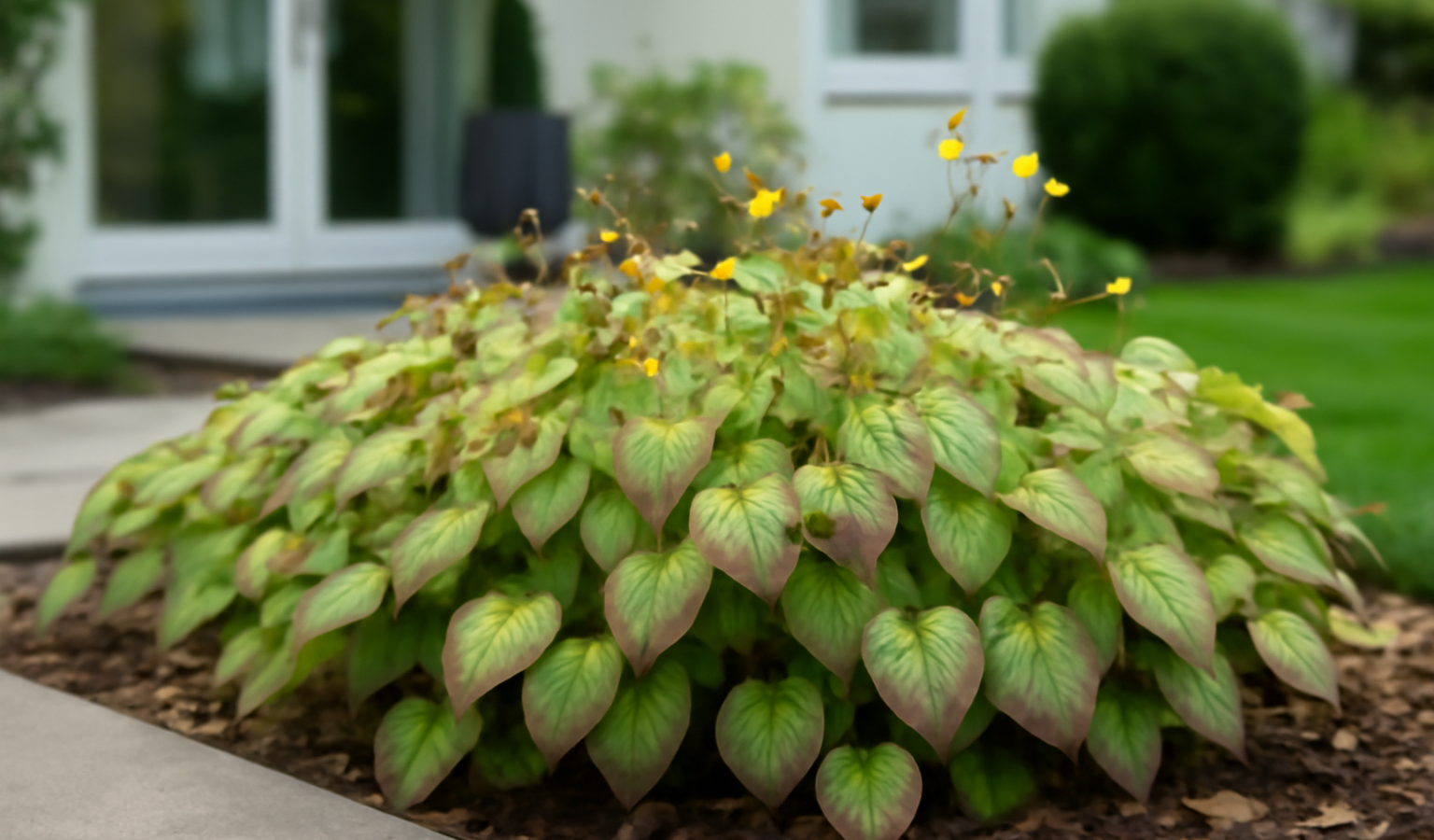
If you have a patch of dry shade under a maple or along a north foundation where nothing seems to thrive, epimedium (Epimedium spp.), also called barrenwort or bishop’s hat, is the groundcover that finally fills it. These tough, long-lived perennials form slowly spreading mats of wiry stems and heart-shaped leaflets, throwing up airy sprays of tiny spurred flowers in early spring before most of the garden has woken up. Many varieties hold their foliage through winter and flush with bronze, red or pink in new growth. Once established, epimedium shrugs off the two conditions that defeat most shade plants—competition from tree roots and a lack of summer water—which is exactly why landscapers reach for it under trees and in those impossible narrow side beds.
Key Takeaways
- Zones: Most epimediums are hardy in USDA zones 4–8; a few deciduous types push into zone 3 and some evergreens into zone 9.
- Light: Part to full shade. Morning sun with afternoon shade is ideal; deep dry shade is tolerated once established.
- Soil: Humus-rich, well-drained soil is best, but mature plants endure dry, root-filled shade better than almost any perennial.
- Spacing: Set plants 12–18 inches apart; clumping types spread slowly, while E. × versicolor and similar run to form a true groundcover.
- Bloom: Delicate spurred flowers in white, yellow, pink, red or lavender, March to May depending on climate.
- Cut back: Shear old foliage to the ground in late winter so the spring flowers show.
Choosing a type for your garden
Epimedium splits broadly into two camps, and knowing which you have changes how you use it. Clumping species, such as Epimedium grandiflorum and E. × rubrum, expand slowly into tidy mounds and are best for edging, woodland pockets and mixed shade borders. Spreading or running types, led by E. × versicolor ‘Sulphureum’ and E. pinnatum subsp. colchicum, travel on rhizomes to knit together a dense groundcover that smothers weeds. For covering ground fast under trees, choose a runner; for a refined specimen near a path, choose a clumper.
Foliage matters as much as flowers here. Many epimediums are semi-evergreen to evergreen in zones 6 and warmer, holding leathery leaves through winter, while deciduous types like E. grandiflorum die back but are often the hardiest (to zone 3–4) and have the largest, showiest blooms. New spring growth frequently emerges flushed bronze, copper or red before maturing to green—a bonus season of color that pairs beautifully with hellebores, ferns and early bulbs.
Light: where epimedium really shines
Epimedium is a true shade plant. Its sweet spot is partial shade—a few hours of gentle morning sun followed by afternoon shade, or the dappled light beneath high-canopied trees. It will grow happily in full shade too, though flowering may be a little lighter. What it cannot take is hot, direct afternoon sun in warm climates, which scorches the leaf edges and bleaches the foliage. In cool-summer northern gardens you can push it into more sun if the soil stays moist, but for most growers the rule is simple: the warmer your region, the more shade epimedium wants.
Soil and planting
In an ideal world epimedium gets humus-rich, evenly moist but well-drained soil, slightly acidic to neutral, of the sort you find on a woodland floor. The single most important thing you can do at planting is to dig in plenty of compost or leaf mold, because that organic matter holds the moisture young plants need while they build the deep, fibrous root system that later lets them survive drought. Soggy, poorly drained ground is the one soil it dislikes—roots can rot in standing winter wet.
Plant in spring or early fall, setting the crown level with the soil surface. Space plants 12–18 inches apart: closer for a fast groundcover, wider if you’re patient and want to let runners fill in. Water in well and mulch with 1–2 inches of shredded leaves or bark to lock in moisture and feed the soil as it breaks down. Here is the part most guides underplay—epimedium is famously slow to establish. Expect it to look unimpressive for its first year or two while it roots in; from the third year on it accelerates and rewards your patience.
Watering and feeding
During that establishment phase, keep the soil consistently moist—water deeply about once a week in the absence of rain through the first full growing season. This is non-negotiable: epimedium’s legendary drought tolerance only kicks in after the roots are deep, and skipping water in year one is the most common reason plantings fail. Once established, plants under trees may need an occasional deep soak during prolonged summer drought, but mature clumps in average shade often need no supplemental water at all.
Feeding is minimal. A spring topdressing of compost or a light scattering of balanced, slow-release fertilizer as growth begins is all most plants want. Heavy feeding produces lush leaves at the expense of the delicate flowers and isn’t in keeping with the plant’s tough woodland nature. The annual mulch of leaf mold does most of the nourishing for you.
The one pruning job that matters
Epimedium needs almost no maintenance, with a single important exception: cut back the old foliage in late winter, before the new flower stems emerge. On evergreen and semi-evergreen types the previous year’s leaves grow tattered, scorched and faded over winter, and—crucially—they hide the low-held spring flowers. Shearing the entire clump to the ground in late February or early March (just as new growth stirs) removes the shabby foliage and gives the airy blooms a clean stage. A pair of hedge shears or even a string trimmer makes quick work of a large patch.
Time it before the new leaves and flower spikes push up—once they emerge, you’ll nick them with the shears. For deciduous types you can simply rake away the spent leaves. That’s the whole pruning regimen. Beyond this annual cutback, leave the plant alone; it resents fussing and rewards neglect. For more on managing other low-care perennials, see our Plants & Flowers guides.
Dividing and propagating epimedium
Division is the easiest way to make more plants and to rejuvenate an aging clump. The best time is after flowering in spring, or in early fall while there’s still time to root before winter. Dig up the clump, then use a sharp spade or knife to slice the tough, woody rhizomes into sections, making sure each division has several growth buds and a portion of roots. Replant immediately at the same depth, water in well, and keep the divisions moist while they re-establish.
A word of warning: the rhizomes are dense and fibrous, so dividing a mature epimedium takes a sturdy blade and some muscle. Don’t divide too small if you want a quick recovery—larger sections re-establish faster. Spreading types can also be propagated simply by lifting rooted runners from the edge of the patch and moving them elsewhere. Seed propagation is possible but slow and unreliable, and named hybrids won’t come true from seed, so division is the practical route for home gardeners.
Pests, problems and deer resistance
One of epimedium’s best traits is how little goes wrong with it. It is largely deer- and rabbit-resistant, a major selling point for woodland gardens where browsing wrecks hostas and other shade plants. Serious pests are rare. Occasionally vine weevil grubs chew the roots or mosaic virus mottles the leaves, but neither is common in home gardens. The most likely issue is cosmetic leaf scorch from too much sun or dry wind, solved by siting the plant in deeper shade.
If a clump declines or thins in the center after many years, division usually revives it. And if foliage looks ragged in spring, you almost certainly skipped the late-winter cutback—shear it and the fresh growth will redeem the planting. Pair epimedium with ferns, hellebores, pulmonaria and spring bulbs for a layered, self-sustaining shade tapestry; for design inspiration in tricky shaded spots, browse our Outdoor Living ideas.
Using epimedium in the landscape
Because it tolerates root competition and dry shade, epimedium excels in spots that defeat other plants: under shallow-rooted trees, along shaded foundations, on north-facing slopes and in the gaps between shrubs. The running types make an excellent weed-suppressing groundcover once knitted together, while clumpers earn their place as refined edging or specimens. The semi-evergreen foliage gives year-round structure, the bronze spring flush and delicate flowers add seasonal interest, and the whole thing asks for nothing but one haircut a year. Few plants give back so much for so little.
Frequently Asked Questions
Will epimedium grow in dry shade under trees?
Yes—dry shade is where epimedium excels once established. Its deep, fibrous roots let it compete with tree roots and tolerate summer drought. The catch is the first year or two: keep new plants consistently watered until they root in, after which they need little to no supplemental water.
When should I cut back epimedium foliage?
Shear the old leaves to the ground in late winter, around late February to early March, before the new flower stems and leaves emerge. This removes tattered winter foliage and lets the low-held spring flowers show. Time it before new growth appears so you don’t damage the buds.
How far apart should I plant epimedium?
Space plants 12–18 inches apart. Use the closer spacing and spreading (running) varieties like E. × versicolor for a quick groundcover, and wider spacing for slower clumping types. Either way, expect a slow start and faster fill-in from the third year on.
How do you divide epimedium?
Divide after flowering in spring or in early fall. Dig the clump and cut the tough woody rhizomes into sections with a sharp spade or knife, each with several buds and some roots. Replant at the same depth, water well, and keep moist while the divisions re-establish.
Is epimedium deer resistant?
Yes. Epimedium is considered both deer- and rabbit-resistant, which makes it valuable for woodland gardens where browsing damages hostas and other shade plants. No plant is fully deer-proof in a hungry winter, but epimedium is rarely touched.
Epimedium is the rare plant that solves a real problem—dry, rooty shade—while looking elegant doing it. Give it humus-rich soil and steady water for its first season or two, shear it once each late winter, and divide it when you want more. From then on it’s one of the most self-reliant, deer-proof groundcovers you can grow. For more shade-tolerant perennials and groundcovers, explore our Plants & Flowers collection.