

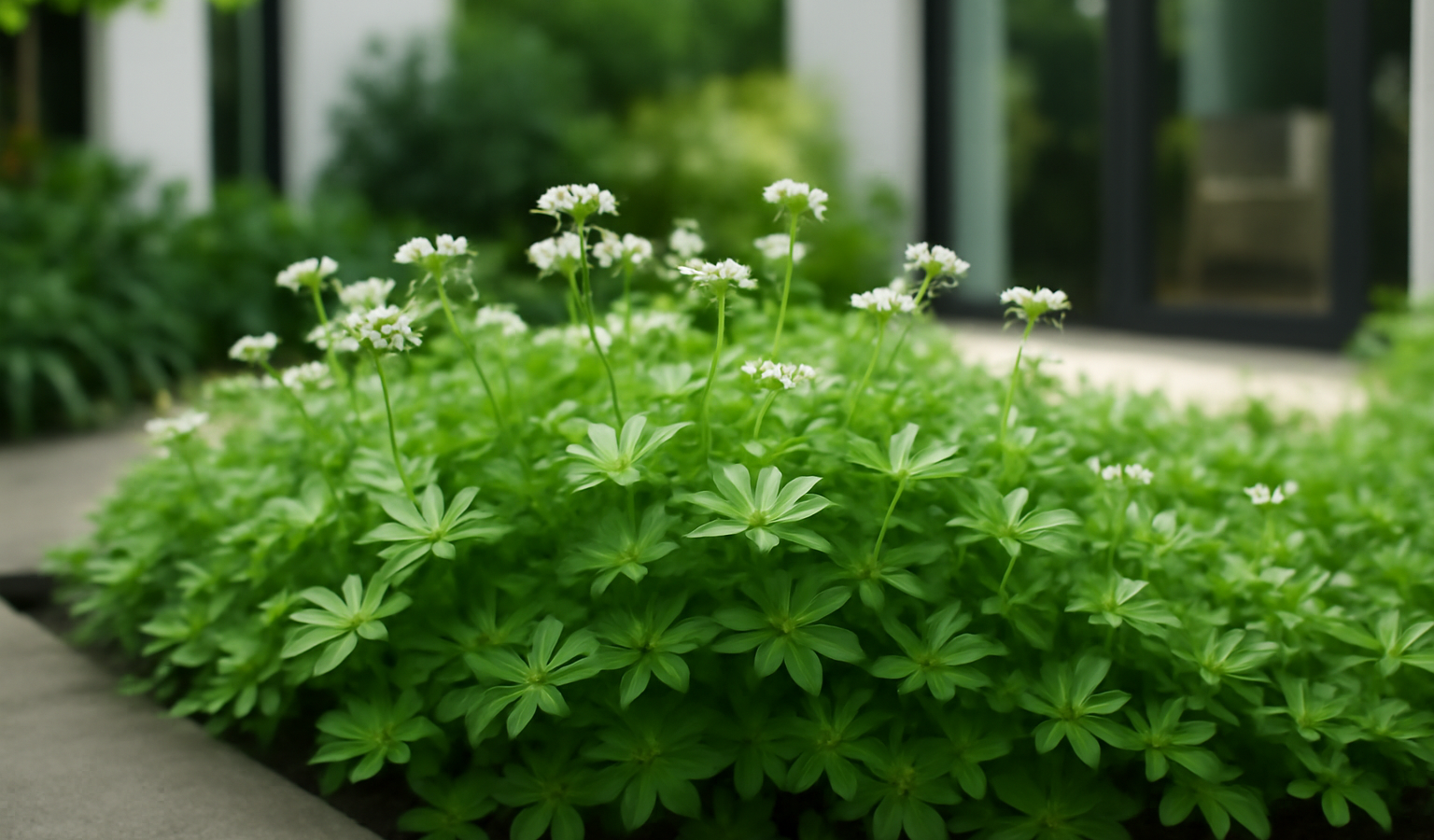
Sweet woodruff (Galium odoratum) is the answer to the problem every shade gardener faces: what carpets the dim, root-filled ground beneath trees and shrubs where nothing else will grow? Plant it 8–12 inches apart in moist, humus-rich soil under part to full shade, and within a season or two it weaves a soft, ankle-high mat of whorled, emerald-green leaves topped in late spring by a froth of tiny, star-shaped white flowers. Crush or dry the foliage and it releases the sweet scent of new-mown hay and vanilla — the coumarin that made it a traditional strewing herb and the classic flavoring in German May wine. It is a vigorous, fast-spreading perennial groundcover hardy in USDA zones 4–8, prized for thriving in exactly the cool, moist, low-light conditions that defeat lawns and most flowering plants. Native to Europe, North Africa, and western Asia rather than North America, it is generally well-behaved in cool gardens but can spread enthusiastically where it is happy, so a little management keeps it where you want it. This guide walks through planting, care, and how to use — and control — this charming woodland carpet.
Key Takeaways
- Light: Part to full shade is ideal; tolerates more sun only where soil stays reliably moist and cool. Too much sun yellows the leaves.
- Soil: Moist, rich, well-drained woodland soil high in organic matter; slightly acidic to neutral. Keep it from drying out for best growth.
- Zones: Hardy in USDA zones 4–8; a cool-climate plant that can struggle in hot, humid southern summers.
- Native status: Native to Europe, North Africa, and western Asia — not North America. Not federally listed as invasive but spreads readily; site thoughtfully.
- Spreading: A fast, vigorous groundcover that spreads by creeping rhizomes and self-seeding to form a dense carpet — give it room or contain it.
- Spacing: Plant plugs or divisions 8–12 inches apart; they fill in quickly to a continuous mat.
Where to Plant Sweet Woodruff
Sweet woodruff is a quintessential woodland-floor plant, and it wants the conditions of one: cool, shaded, and moist. The best site is part to full shade — beneath deciduous trees and large shrubs, along a north-facing foundation, or in any bed that stays out of the hot afternoon sun. It is one of the few groundcovers genuinely happy in deep shade, which makes it invaluable for the gloomy spots under evergreens or on the dark side of the house. It will take dappled morning sun, and in cool northern climates it tolerates more light, but in any reasonably bright or hot position the leaves yellow and scorch and the plant looks miserable. The rule is simple: the sunnier the spot, the wetter the soil must be to compensate.
Soil should be moist, loose, and rich in organic matter — true forest-floor humus — with a slightly acidic to neutral pH. Sweet woodruff resents drying out, so heavy, moisture-retentive soils suit it well as long as they don’t become waterlogged sludge. It is a cool-climate plant at heart; gardeners in hot, humid southern zones (8 and warmer) often find it sulks or melts out in summer heat, and it does best there in the deepest, coolest, dampest shade available. Because it spreads readily, give it an area where it can roam — under shrubs, between stepping stones, naturalized in a woodland edge — rather than a tidy mixed border where it will swamp delicate neighbors. For other plants that pair well in these conditions, see our roundup of moist-shade perennials.
How to Plant Sweet Woodruff
Sweet woodruff is usually planted from nursery plugs, small potted plants, or divisions taken from an established clump, since seed is slow and unreliable. The best planting times are spring and early fall, when the soil is cool and moist and temperatures are mild, giving the shallow roots time to establish before summer heat or winter cold. Avoid planting into the middle of a dry, hot summer.
Spacing and depth
Before planting, work a generous amount of compost or leaf mold into the bed to enrich it and improve moisture retention. Set the plants at the same depth they grew in their pots — sweet woodruff is shallow-rooted and should not be buried deeply. Space individual plants 8–12 inches apart; because the plant spreads quickly, this spacing fills in to a solid carpet within one to two growing seasons. If you want faster coverage, space at the closer 8-inch end. Water thoroughly after planting and apply a thin mulch of leaf mold around (not over) the plants to keep the roots cool and moist. Keep newly planted woodruff consistently watered through its first season; once it knits together and establishes, it becomes far more self-sufficient.
Watering, Feeding, and Seasonal Care
Moisture is the key to lush sweet woodruff. During establishment and in any dry spell, water deeply whenever the top inch of soil begins to dry — roughly once or twice a week without rain. The plant’s biggest enemy is hot, dry soil, which turns the foliage yellow and crispy and can send it into early dormancy. In genuinely moist shade it may need almost no supplemental water; in drier shade under thirsty tree roots, plan to irrigate during droughts. A spring mulch of leaf mold or compost helps enormously, conserving moisture and feeding the soil as it decomposes.
Feeding requirements are minimal. In decent woodland soil the annual organic mulch is all the nourishment it needs. Heavy fertilizing actually backfires, pushing soft, floppy, overly vigorous growth and encouraging the plant to spread even faster. If growth is genuinely weak, a single light feed of balanced fertilizer in spring is plenty. Sweet woodruff is largely evergreen to semi-evergreen in mild climates and dies back in cold ones; there’s little cleanup required. Some gardeners shear the mat lightly after flowering to keep it tidy and dense and to remove spent blooms before they set seed — a useful trick for managing its spread.
Spreading and Keeping It in Bounds
This is the plant’s defining trait and the thing to understand before you plant it. Sweet woodruff spreads two ways: by creeping underground rhizomes that push the mat outward, and by self-seeding after flowering. In the cool, moist, shady conditions it loves, it can be genuinely vigorous, knitting into a dense carpet that crowds out weeds — exactly what you want as a groundcover, but potentially a nuisance among delicate perennials. It is not classed as a noxious invasive in North America, but treat it as an enthusiastic spreader and site it accordingly.
Keeping it in bounds is straightforward. Plant it where it can roam freely, or contain it with a physical edging, a path, or a buried barrier. Shearing or mowing after bloom reduces self-seeding, and the shallow rhizomes are easy to pull or slice back with a spade where it overreaches. To propagate it deliberately — to fill a new shady area — simply divide an established clump in spring or fall: lift a section, separate it into rooted pieces, and replant immediately at the same depth. Each division roots quickly. You can also let self-sown seedlings do the work for you in a naturalized setting. For more on filling difficult ground, see our guide to groundcovers for shade.
Uses, Pests, and Troubleshooting
Part of sweet woodruff’s enduring charm is its fragrance. The fresh leaves are nearly scentless, but as they dry they release coumarin — a sweet, hay-and-vanilla aroma that made the herb a traditional strewing plant for floors, a stuffing for mattresses and sachets, and the signature flavoring of German Maibowle (May wine). A word of caution: coumarin is mildly toxic in large amounts, so culinary use should be light and occasional, and the plant is best treated as ornamental in most gardens. The flowers are also a useful early-season nectar source for small pollinators.
Pests and diseases are rare — this is a tough, healthy plant. Deer and rabbits tend to ignore it, and its dense growth suppresses weeds naturally. The main troubleshooting issues are environmental. Yellow, scorched, or browning foliage almost always means too much sun or soil too dry; move it shadier and keep it moist. Sparse, leggy growth with few flowers usually points to too little light or, occasionally, over-rich soil. Dieback in summer is common in hot southern climates, where the plant goes dormant in heat — site it in the coolest, dampest shade you have and it often returns when temperatures drop. In the right cool, moist, shaded spot, sweet woodruff is about as carefree and rewarding as a groundcover gets. Explore more shade and woodland plants on our plants and flowers hub.
Frequently Asked Questions
Is sweet woodruff invasive?
It is a vigorous spreader rather than a federally listed noxious invasive. In the cool, moist shade it loves, it spreads readily by rhizomes and self-seeding to form a dense carpet, which is ideal as a groundcover but can overwhelm delicate neighbors. Plant it where it can roam, contain it with edging, and shear it after flowering to limit self-seeding.
Will sweet woodruff grow in full shade?
Yes — it is one of the few groundcovers that genuinely thrives in deep, full shade, which makes it invaluable under trees and on the dark sides of buildings. It only needs more light to be avoided, not embraced: hot or bright sun yellows and scorches the leaves unless the soil is kept very moist and cool.
How far apart should I plant sweet woodruff?
Space plugs or divisions 8–12 inches apart. Because the plant spreads quickly by rhizomes, this spacing fills in to a continuous mat within one to two growing seasons. Use the closer 8-inch spacing if you want faster coverage of a bare area.
Why are my sweet woodruff leaves turning yellow?
Yellowing foliage almost always signals too much sun or soil that is too dry — the two stresses this cool, moist-shade plant cannot tolerate. Move it into deeper shade and keep the soil consistently moist with a leaf-mold mulch. In hot southern climates some summer yellowing and dieback is normal as the plant goes dormant in heat.
Can you use sweet woodruff in cooking?
Traditionally yes — the dried, hay-scented leaves flavor German May wine, syrups, and desserts. However, the active compound coumarin is mildly toxic in large amounts, so any culinary use should be light and occasional. Many gardeners simply enjoy it as a fragrant ornamental groundcover and a source of dried potpourri.