

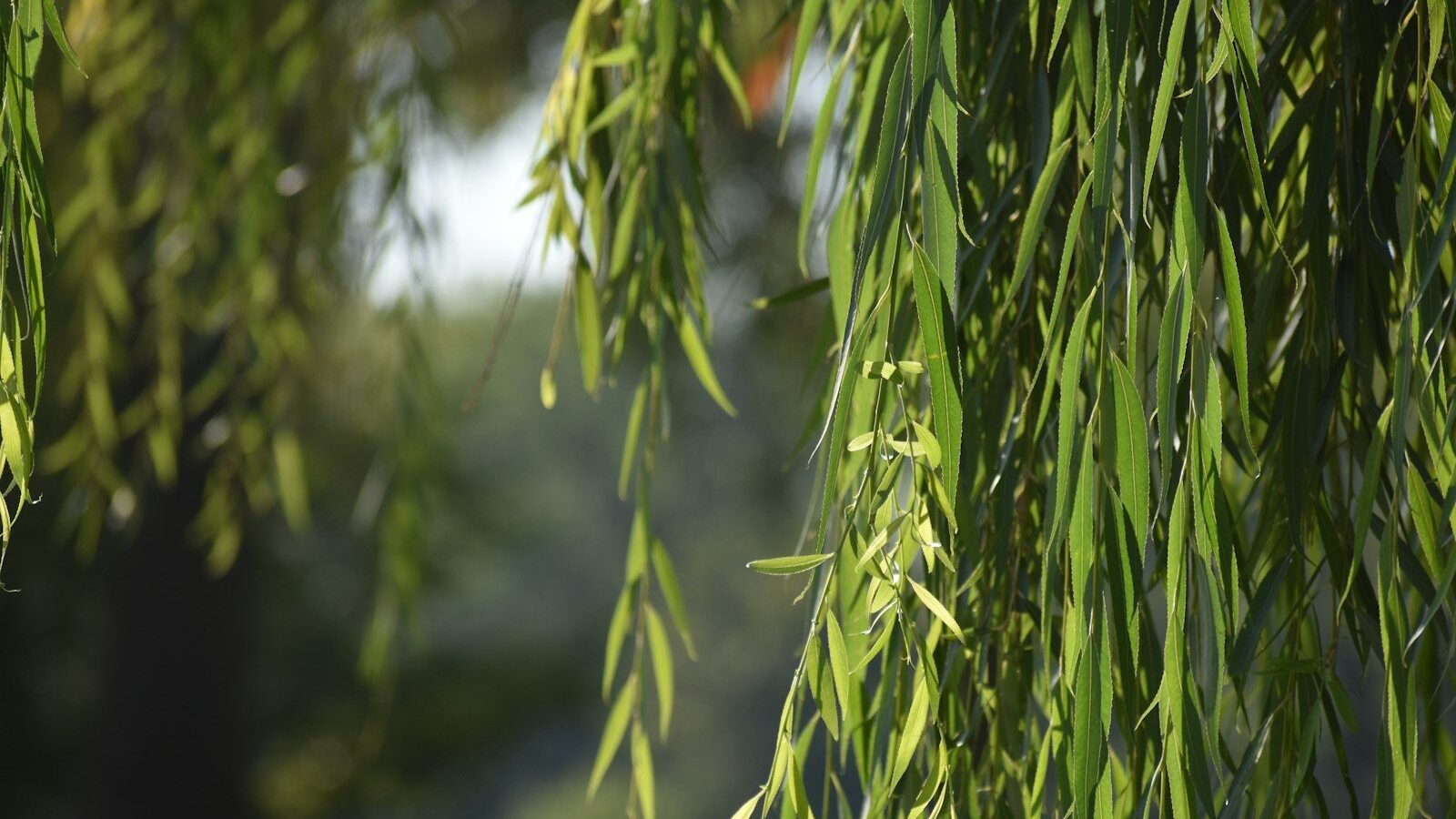
Few trees capture a landscape like a weeping willow (Salix babylonica and its hybrids). Those long, supple branches sweeping the ground beside a pond are the stuff of postcards — but they are also the reason this tree gets so many homeowners into trouble. A weeping willow is fast, thirsty, large, and short-lived, with aggressive roots that hunt for water. Plant it in the right place and it becomes a magnificent shade tree in just a few years; plant it next to your house, your septic field, or your water line, and you will spend the next decade fighting it. This guide walks through choosing a site, getting the spacing and soil right, how big and how fast it grows, and the watering, feeding, and pruning that keep a willow healthy.
Key Takeaways
- Hardy in USDA zones 4–8; grows fast at 3–8 feet per year and matures at 30–50 feet tall and wide.
- Site it at least 50 feet — ideally more — from your home, septic system, sewer lines, water pipes, and foundations. The roots seek water aggressively.
- Loves moisture: plant near a pond, stream, ditch, or low, damp spot in full sun. It tolerates wet feet that would kill most trees.
- Plan for a short life. Willows typically live 30–50 years and have weak, brittle wood that drops branches in storms.
- Easy to propagate: a cut branch stuck in moist soil roots readily, often without any rooting hormone.
- Expect litter — dropped twigs, leaves, and catkins — and prune annually while young to build a strong structure.
Siting: The Most Important Decision You’ll Make
Where you plant a weeping willow matters more than anything else you do for it. This is not a tree you can squeeze into a small suburban lot near the house and forget about. The root system spreads wider than the canopy — often two to three times the branch spread — and it is genetically programmed to seek out moisture. That means willow roots will find and invade leaky water lines, old clay sewer pipes, septic leach fields, French drains, and even the slightly damper soil beside a foundation. They rarely break an intact, modern pipe, but they exploit any existing crack or joint and can clog a drain field completely.
The practical rule is to keep a weeping willow at least 50 feet away from any building, paved surface, septic system, or underground utility, and more if you have room. Before you dig, call 811 (in the US) to have buried utilities marked. Avoid planting over a septic tank or leach field at any distance. The ideal spot is an open, sunny area with consistent moisture — the edge of a pond, the bank of a creek, a drainage swale, or a low corner of the yard that stays damp after rain. Willows actually thrive in saturated soil that would drown most ornamentals, so that soggy patch where nothing else grows is often perfect. Give the tree full sun, meaning at least six hours of direct light a day, for the densest, healthiest growth.
One more siting note: weeping willows are messy. They constantly shed small twigs, narrow leaves, and spent catkins, and their brittle wood means storms will bring down branches. Don’t plant one where falling debris over a patio, pool, or driveway will annoy you, and don’t plant it where a dropped limb could land on something valuable.
How Big and How Fast Does a Weeping Willow Grow?
Weeping willows are among the fastest-growing trees you can plant. A young, well-watered willow commonly puts on three to eight feet of height per year, with four to six feet being typical in good conditions. That speed is the main appeal — you can go from a bare-root whip to meaningful shade in three or four seasons. The trade-off is the same trade-off you get with all fast growers: the wood is soft, weak, and prone to breaking, and the tree is comparatively short-lived.
At maturity, expect a weeping willow to reach roughly 30 to 50 feet tall with an equal or greater spread, forming a broad, rounded, dome-like crown of cascading branches. The canopy can easily be 40 feet or more across, which is another reason to give it open space. Allow at least 35 to 50 feet of clearance from other trees, structures, and overhead power lines on every side. The trunk thickens quickly too, so don’t underestimate how dominant this tree will become in a small yard within a decade.
Be realistic about lifespan. A weeping willow that is well sited and well cared for usually lives 30 to 50 years, and stressed trees can decline much faster. This is a tree to plant for fast impact in your lifetime, not a heirloom oak to pass down for generations. If you want a long-lived large tree, look at our guide to growing a ginkgo tree, which is slower but can outlast you by centuries.
Planting a Weeping Willow
The best time to plant is in early spring, as soon as the soil is workable, or in fall in milder climates — both give roots time to establish before summer heat or hard freeze. Willows are sold as bare-root whips, in containers, and balled-and-burlapped; bare-root is cheapest and establishes well if planted promptly while dormant.
Dig a hole two to three times as wide as the root ball but no deeper than the roots themselves — the flare where the trunk widens at the base should sit at or just slightly above the surrounding soil line. Planting too deep is a common killer of young trees. Set the tree in, backfill with the native soil you dug out (willows aren’t fussy about soil type and don’t need rich amendments), and firm it gently to remove air pockets. Water deeply right away to settle the soil around the roots. Spread a 2–3 inch layer of mulch in a wide ring out to the drip line, keeping it a few inches away from the trunk to prevent rot. Staking is usually unnecessary unless the site is very windy.
Willows are famously easy to propagate, which is why you’ll often see a neighbor’s tree shared as a cutting. In spring, cut a pencil-thick, foot-long section of dormant branch and push the bottom several inches into moist soil or stand it in a jar of water. Roots usually appear within weeks, no rooting hormone required. It’s one of the most reliable hardwood cuttings in gardening.
Watering and Feeding
Water is the willow’s love language. For the first two growing seasons, water deeply and regularly — a long, slow soak once or twice a week so the moisture reaches the entire root zone, more often during hot, dry spells. The goal is consistently moist (not waterlogged-into-rot, though willows handle saturation better than almost any tree) soil while the roots spread. Mulch helps hold that moisture and suppress competing grass.
Once established, a willow planted near a natural water source may never need supplemental irrigation. A willow planted in ordinary garden soil away from water, however, will need watering through dry summers for its whole life — drought stress shows up as yellowing, scorched leaf edges, and early leaf drop, and a chronically thirsty willow becomes a magnet for pests and disease. If you can’t reliably keep the soil moist, this may not be the tree for your site.
Feeding is rarely necessary. These trees grow vigorously on their own, and excess nitrogen just produces even weaker, faster wood. If a soil test shows a deficiency or growth seems poor, apply a balanced slow-release tree fertilizer in early spring. Otherwise, an annual top-up of compost or mulch over the root zone supplies plenty.
Pruning and Structure
Prune a weeping willow in late winter to early spring while it’s dormant, before the sap rises and leaves emerge. Early structural pruning pays off for decades. While the tree is young, select and encourage a strong central leader and remove competing co-dominant stems that form weak, narrow forks — these are the unions most likely to split in a storm. Thin out crossing and rubbing branches so the crown has good airflow.
On mature trees, the cascading branches naturally trail to the ground. You can leave them for the classic curtain effect or limb the tree up — removing the lowest branches — to create headroom for mowing and walking beneath. Always remove dead, damaged, and diseased wood whenever you see it. Because willows are prone to storm breakage, an annual once-over to take out weak and crossing limbs genuinely reduces the mess and hazard. Use clean, sharp tools and make cuts just outside the branch collar; if you keep your blades in shape, our notes on keeping garden blades sharp apply to loppers and pruning saws too. For more large-plant and tree care, browse the full Plants & Flowers collection.
Common Problems
Pests and Disease
Willows attract aphids, gypsy moth caterpillars, borers, and lace bugs, and they’re susceptible to fungal issues like willow scab, black canker, tar spot, and powdery mildew, especially when stressed or crowded. The best defense is a healthy, well-watered tree with good air circulation. Rake up and dispose of fallen, diseased leaves rather than composting them, and prune out cankered wood. Heavy aphid populations can leave sticky honeydew and sooty mold below the tree — usually cosmetic and not fatal.
Brittle Wood and Breakage
Soft, fast-grown willow wood snaps in ice, snow, and high wind. There’s no cure for the trait, but good early structural pruning and annual removal of weak limbs greatly reduce storm damage. Never top a willow — it produces a flush of even weaker regrowth.
Invasive Roots
If a willow was planted too close to pipes or a septic field, roots can clog drains over time. Prevention through proper siting is the only real fix; once roots have invaded a line, you’re into repeated mechanical clearing or removing the tree. This is why the 50-foot rule matters so much.
Weeping Willow Care at a Glance
In spring, plant or prune while dormant, mulch the root zone, and begin regular deep watering. Through summer, keep the soil consistently moist, watch for aphids and leaf spot, and enjoy the rapid growth. In fall, the narrow leaves turn pale yellow and drop; rake diseased foliage away. In winter, the bare, golden-toned branches and graceful silhouette carry the tree’s beauty through the cold months. Give it space, water, and sun, and a weeping willow rewards you with shade and drama faster than almost any tree you can plant.
Frequently Asked Questions
How far should a weeping willow be planted from a house or septic system?
At least 50 feet, and more if you can manage it. The roots spread far beyond the canopy and aggressively seek moisture, so they can invade cracked sewer lines, water pipes, and septic leach fields. Never plant one over a septic tank or drain field, and call 811 to locate buried utilities before digging.
How fast does a weeping willow grow?
Very fast — typically 3 to 8 feet of new growth per year when young and well watered, with 4 to 6 feet being common. That speed comes at the cost of weak, brittle wood and a relatively short lifespan of about 30 to 50 years.
How big does a weeping willow get?
Mature trees usually reach 30 to 50 feet tall with an equal or greater spread, forming a broad, rounded crown of cascading branches. Plan for 35 to 50 feet of open clearance on all sides, away from buildings and power lines.
Do weeping willows need a lot of water?
Yes. They thrive in moist to wet soil and tolerate conditions that would drown most trees. A willow near a pond or stream may never need watering, but one in ordinary soil will need regular deep watering through dry spells for its entire life.
Can you grow a weeping willow from a cutting?
Absolutely — willows are one of the easiest trees to propagate. In spring, push a foot-long, pencil-thick section of dormant branch a few inches into moist soil, or stand it in water. It usually roots within a few weeks, with no rooting hormone needed.
A weeping willow is a spectacular tree for the right spot: an open, sunny, moist area well away from structures and pipes. Respect its space, its thirst, and its messiness, give it sound early pruning, and you’ll have a fast, graceful shade tree that defines your landscape for decades.