

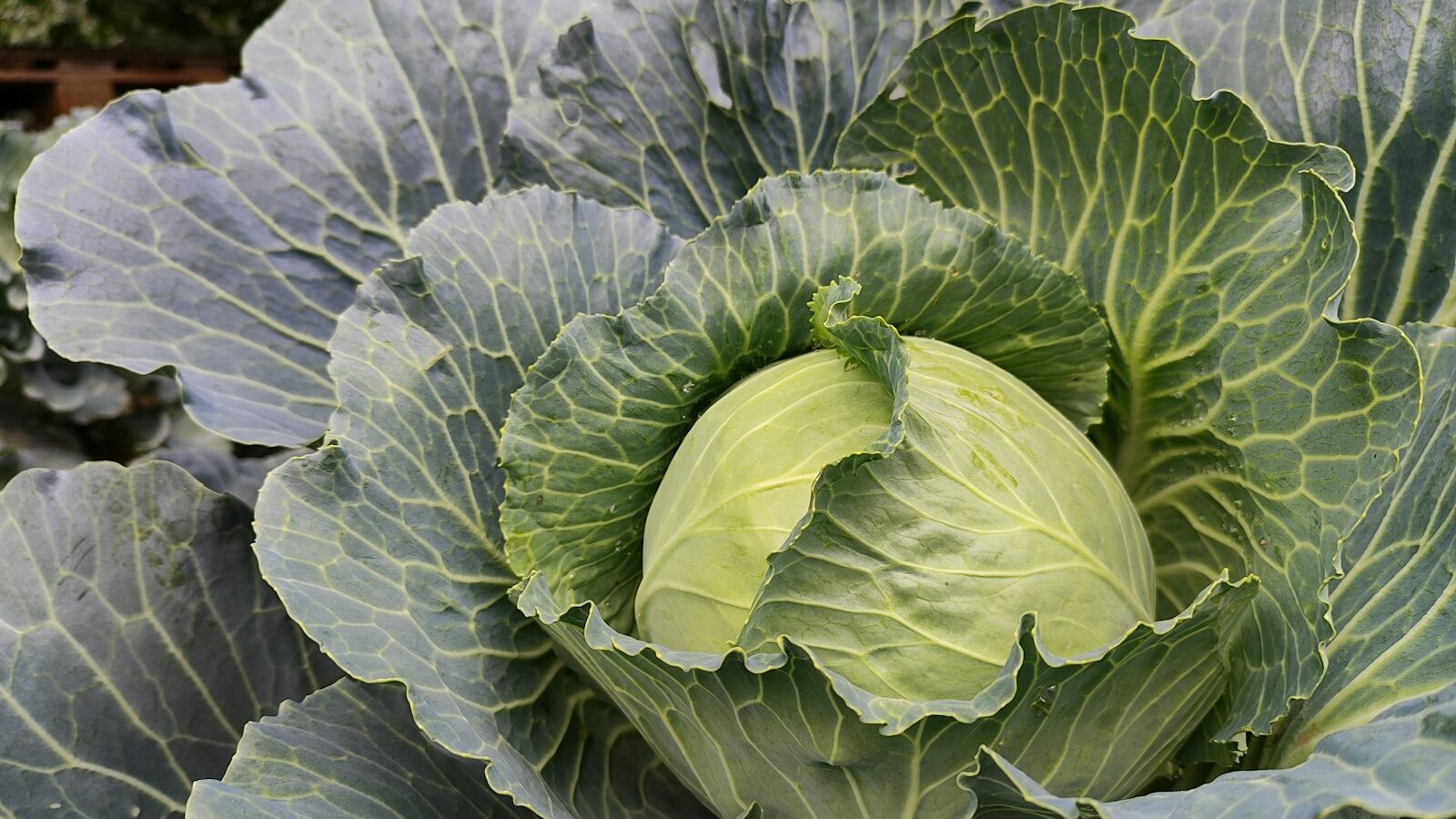
Cabbage is one of the most rewarding cool-season vegetables you can grow, turning a small patch of rich soil into dense, crisp heads in just a few months. The trick to success is timing your crop for cool weather, keeping the soil firm and steadily moist, and staying a step ahead of the caterpillars that love brassicas as much as we do. This guide walks you through growing cabbage for both spring and fall harvests, whether you have a backyard bed or a few large containers on a patio.
Cabbage quick facts
- Cool-season — grow in spring & fall
- Full sun, rich firm soil, steady moisture
- Wider spacing = bigger heads
- Even watering prevents splitting
- Use row cover & BT against cabbage worms
As an Amazon Associate we earn from qualifying purchases.
If you are new to growing your own vegetables, cabbage is a great anchor crop for a productive plot. It pairs naturally with other brassicas, and once you learn its rhythm you can apply the same approach to relatives like broccoli and kale. For the bigger picture on planning a productive space, start with our urban gardening guide.
When to plant: timing spring and fall crops
Cabbage is a true cool-season vegetable. It grows best when daytime temperatures sit in the 60–70°F (15–21°C) range, and it can shrug off light frost. Heat is the enemy: when temperatures climb above the mid-80s°F (around 30°C), plants bolt, taste bitter, and heads split. That is why most gardeners aim for two windows each year — an early spring crop that matures before summer heat, and a fall crop that sweetens as nights cool.
Spring crop
- Start seeds indoors 6–8 weeks before your last expected frost.
- Transplant seedlings outdoors 2–4 weeks before the last frost, once they have 4–5 true leaves.
- Choose early-maturing varieties (55–70 days) so heads form before summer heat arrives.
Fall crop
- Count back from your first fall frost: most varieties need 70–100 days from transplant.
- Start seeds in mid- to late summer, often in a shaded spot or indoors where it is cooler.
- Fall cabbage frequently produces the best flavor, as cool nights concentrate sugars.
Because timing is so important, it pays to know your local frost dates and your average summer highs. In mild-winter and coastal climates, you can sometimes overwinter cabbage for an extra-early spring harvest.
Starting from seed or transplants
You can grow cabbage either from seed you start yourself or from transplants bought at a garden center. Starting from seed gives you far more variety to choose from — green, red, savoy, mini, and storage types — and it is inexpensive. A single packet of cabbage seeds will produce more plants than most home gardens need.
Starting seeds indoors
- Sow seeds ¼ inch (6 mm) deep in cell trays or small pots of seed-starting mix.
- Keep the mix warm (60–70°F / 15–21°C) and lightly moist until germination, usually 5–10 days.
- Give seedlings bright light from a sunny window or grow light to prevent legginess.
- “Harden off” young plants over 7–10 days by gradually exposing them to outdoor conditions before transplanting.
Buying transplants
If you are short on time, healthy nursery transplants are a fine shortcut. Look for stocky, deep-green seedlings with no yellowing leaves and avoid any that are root-bound or already showing a tiny premature head. Plant cabbage a little deeper than it sat in the pot, burying the stem up to the first set of leaves to encourage strong rooting.
Sun, soil, and spacing
Cabbage wants three things from its location: plenty of sun, rich soil, and firm footing. Give plants at least 6 hours of direct sun per day. In regions with hot springs, a little afternoon shade can buy you extra time before the weather turns.
Building rich, firm soil
- Work 2–3 inches of finished compost into the bed before planting to feed heavy-feeding cabbage.
- Aim for a slightly acidic to neutral pH of 6.0–7.0; this range also helps suppress clubroot disease.
- Firm the soil around transplants. Unlike loose-loving root crops, cabbage forms tighter heads in firm ground.
Spacing controls head size
Here is a lever many beginners miss: spacing directly determines how big your heads grow. Closer spacing yields smaller, more uniform heads; wider spacing yields larger ones. Choose based on the size you actually want to cook with.
- Small heads (1–2 lb): space plants 12 inches apart.
- Medium heads (3–4 lb): space plants 15–18 inches apart.
- Large heads (5 lb+): space plants 18–24 inches apart.
- Leave 24–36 inches between rows for airflow and easy access.
Watering, feeding, and preventing split heads
Steady, even moisture is the single biggest factor in growing tender, crack-free cabbage. These are thirsty plants with shallow roots, so the soil should stay consistently moist but never waterlogged.
Watering and feeding
- Provide about 1–1.5 inches of water per week, more in hot or windy weather.
- Water at the base in the morning to keep foliage dry and reduce disease.
- Mulch with straw or shredded leaves to lock in moisture and keep roots cool.
- Feed every 3–4 weeks with a balanced or nitrogen-leaning fertilizer until heads begin to form, then ease off.
Why heads split — and how to stop it
A cabbage head splits when the interior grows faster than the outer leaves can contain — almost always after a sudden surge of water following a dry spell. The mature head takes up water faster than it can hold, and it bursts. To prevent splitting:
- Keep watering consistent so plants never swing from bone-dry to soaked.
- Once heads feel firm and full, reduce watering slightly to slow internal growth.
- For a head that is fully mature but not ready to harvest, give the plant a quarter-turn twist or use a spade to sever some roots on one side. This slows water uptake and buys you several extra days.
- Harvest promptly when heads are firm rather than letting them sit and over-mature.
Harvesting and growing in containers
How and when to harvest
Harvest cabbage when the head feels solid and firm when squeezed, regardless of its final diameter. Use a sharp knife to cut the head off at the base, leaving the outer wrapper leaves and roots in the ground. Often a second flush of small, golf-ball-sized “baby cabbages” will sprout from the stump for a bonus harvest. Heads store for weeks in the refrigerator and even longer in a cool, humid root cellar.
Growing cabbage in containers
Cabbage grows well in pots, which makes it a great choice for patios and small urban spaces. The keys are a big enough container and disciplined watering, since pots dry out fast.
- Use a container at least 12 inches deep and wide, with one cabbage per pot (or compact “mini” varieties for tighter spaces).
- Fill with quality potting mix enriched with compost; ensure good drainage holes.
- Check moisture daily — container cabbage may need water once or twice a day in warm weather.
- Feed with a diluted liquid fertilizer more often, as frequent watering flushes nutrients away.
Crop rotation and companion planting
Cabbage belongs to the brassica family alongside broccoli, kale, cauliflower, Brussels sprouts, and turnips. Growing these in the same spot year after year invites soilborne diseases like clubroot and lets pests build up. A simple rotation keeps your soil and plants healthy.
- Wait at least 3 years before planting any brassica in the same bed.
- Follow cabbage with an unrelated crop such as beans, squash, or tomatoes.
- Avoid planting cabbage where strawberries or other brassicas grew recently.
Good neighbors help too. Aromatic herbs and flowers like dill, thyme, and marigolds can confuse pests, while onions and garlic deter aphids. Learn which pairings work in our companion planting guide.
Pests and how to control them
Brassicas attract a predictable cast of pests, but a few simple defenses handle nearly all of them. The most reliable strategy is to exclude pests physically and treat caterpillars with a targeted, organic spray.
Cabbage worms and loopers
Imported cabbage worms (the velvety green caterpillars from white butterflies) and cabbage loopers chew ragged holes in leaves and bore into heads. Cover plants from day one with floating garden row cover to block the egg-laying moths and butterflies. When you do see caterpillars, spray with BT caterpillar spray (Bacillus thuringiensis), an organic bacterium that targets caterpillars while sparing bees and beneficial insects. Reapply after rain.
Aphids
- Gray cabbage aphids cluster on undersides of leaves and deep in the head.
- Blast them off with a strong jet of water, or spray with insecticidal soap.
- Encourage ladybugs and lacewings, which devour aphids by the dozen.
Cabbage root maggots
- These larvae tunnel into roots, causing wilting and stunted plants.
- Place a cardboard or felt “collar” around the stem at soil level to stop egg-laying.
- Row cover applied right after transplanting is again your best defense.
- Rotate crops so maggots from last year’s brassicas have nothing to feed on.
Frequently asked questions
How long does cabbage take to grow?
Most varieties mature in 70–100 days from transplant, though early types can be ready in as little as 55 days. Fall crops sometimes take longer because growth slows in cooling weather.
Why is my cabbage not forming a head?
Heads fail to form when plants face too much heat, inconsistent water, poor soil fertility, or overcrowding. Make sure cabbage grows in cool weather, gets steady moisture, and has rich soil with enough room.
Can I grow cabbage in a pot?
Yes. Use a container at least 12 inches deep and wide, one plant per pot, quality potting mix with compost, and water daily in warm weather since pots dry out quickly.
How do I stop my cabbage heads from splitting?
Keep watering even and consistent, and once heads are firm, reduce water or give the plant a quarter-turn twist to sever some roots and slow water uptake. Harvest promptly once heads are solid.
What is the best way to get rid of cabbage worms naturally?
Cover plants with floating row cover to block the butterflies, then spray any caterpillars you find with BT (Bacillus thuringiensis), an organic treatment that is safe for pollinators.