

Fairy rings are one of the most stubborn and misunderstood lawn problems. You notice a ring or arc of unusually dark green, fast-growing grass, sometimes ringed with mushrooms, sometimes with a band of dead or thinning turf, and it keeps expanding outward year after year. Folklore blamed dancing fairies; the real culprit is a soil fungus feeding on buried organic matter. There is no single spray that makes a fairy ring vanish overnight, and most “cures” sold for them disappoint. But once you understand what type you have and what is driving it, you can manage and in many cases eliminate it with a combination of cultural practices. This guide explains the causes, the three distinct types, and the methods that actually work.
Key Takeaways
- Fairy rings are caused by soil-borne fungi feeding on buried organic matter such as old roots, stumps, and wood debris.
- There are three types: nutrient-release (dark green ring), turf-killing (dead band, often hydrophobic soil), and mushroom-only.
- The dark green ring is fungi releasing nitrogen; masking it with extra fertilizer often hides the symptom cheaply.
- Aerating, deep soaking with a wetting agent, and breaking up hydrophobic soil are the most effective non-chemical fixes.
- Severe cases may require digging out and replacing the affected soil, or in turf-killing rings, fungicide drenches as a last resort.
What Causes Fairy Rings
A fairy ring is the visible footprint of a fungus colony growing in the soil. The fungus starts at a central point, often a buried piece of organic matter like an old tree stump, dead roots, construction lumber, or a thick layer of thatch, and grows outward in all directions through the soil as a circular mat of fungal threads called mycelium. As the colony depletes the food in the center, the living, feeding edge keeps pushing outward, which is why the ring expands and grows larger every year, sometimes by a foot or more annually. Some rings are decades old and dozens of feet across.
The fungus affects the grass above it in two main ways. As it breaks down organic matter, it releases nitrogen into the soil, which the grass takes up, producing that band of lush, dark green growth. At the same time, dense fungal growth can make the soil hydrophobic, meaning it repels water, so the soil dries out and the grass over it browns and dies even while you are watering. Which symptom dominates determines the type of ring you are dealing with.
The Three Types of Fairy Ring
Type 1: The dark green ring (nutrient release)
This is the most common and least harmful type. You see a circle or arc of grass that is noticeably darker green and growing faster than the surrounding lawn, because the fungus is releasing nitrogen. The grass is not damaged, just outpacing its neighbors. The fix here is largely cosmetic: the ring stands out because the rest of the lawn is comparatively underfed. Fertilizing the whole lawn to match the green of the ring masks the difference and is often the simplest, cheapest response. The ring may still be visible in growth rate and may produce mushrooms in wet weather, but it is not hurting the turf.
Type 2: The turf-killing ring (dead band)
This is the damaging type. You see a ring of dead, brown, or severely thinned grass, sometimes with a green ring on the inside or outside of it. This happens when the fungal mat makes the soil hydrophobic, so water cannot penetrate and the roots dry out, and in some cases when the fungus produces compounds toxic to grass. This type needs active intervention because the turf is genuinely dying.
Type 3: Mushrooms only
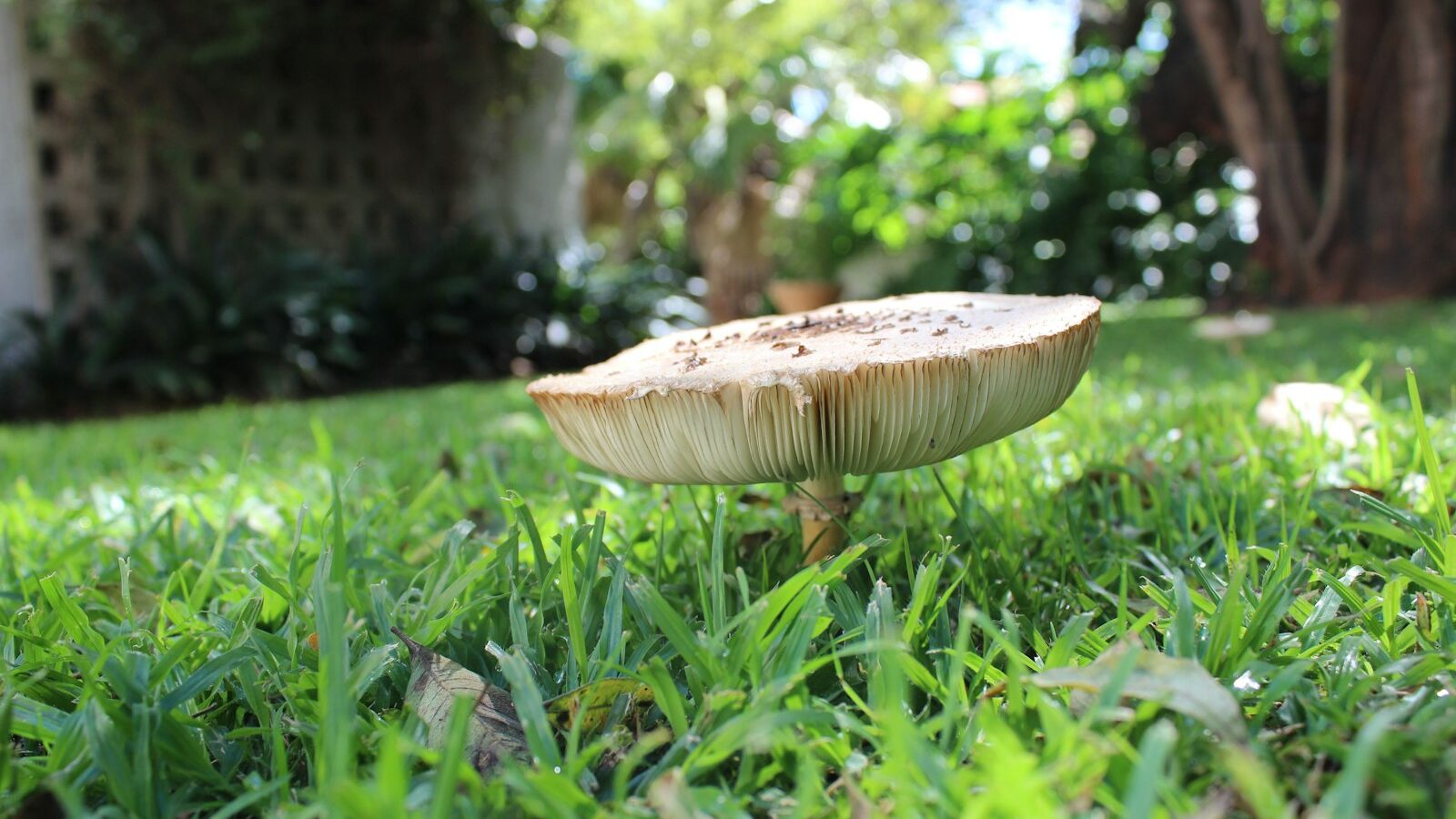
Sometimes you see only a ring of mushrooms or puffballs appear, usually after rain or heavy irrigation, with little or no effect on the grass color. These are the fruiting bodies of the underground fungus. They are temporary, will collapse on their own, and are mainly a nuisance, though they can be a concern in lawns where children or pets play, since some are toxic if eaten. Knock them down or mow them off and they will keep returning in wet spells until the underlying colony is dealt with.
How to Manage and Remove Fairy Rings
Mask the green (for nutrient-release rings)
If your ring is the harmless dark-green type, the easiest “removal” is to even out the color. Apply a balanced nitrogen fertilizer across the entire lawn so the surrounding grass greens up to match the ring. The ring fades into the background and the lawn looks uniform. This does not kill the fungus, but it solves the only real problem the ring was causing, its appearance, at minimal cost and effort.
Aerate and soak deeply with a wetting agent
For turf-killing rings driven by hydrophobic soil, the goal is to get water back into the ground. Core aerate the ring and a few feet beyond it to break up the soil and the fungal mat and to open channels for water. Then apply a soil wetting agent (surfactant), which reduces water’s surface tension so it can penetrate water-repellent soil. Follow with deep, slow watering, the aim is to thoroughly soak the affected zone to a depth of several inches and keep it moist for several weeks. This rewets the soil, dilutes the fungus’s grip, and lets the grass roots rehydrate. Spiking the ring repeatedly with a garden fork before watering is a low-tech version of the same idea for small areas.
Remove and replace the soil
For a persistent, damaging ring that will not respond to aeration and watering, the most reliable cure is physical removal. Dig out the soil in the affected ring to a depth of about 12 inches and extend roughly a foot beyond the visible ring on each side, since the active fungal edge reaches past the symptoms. Remove and dispose of that soil, taking care not to spread it across the rest of the lawn, and backfill with fresh, clean topsoil. Then reseed or re-sod the area. This is labor-intensive but it removes the food source and the colony directly, which is why it works when nothing else does. If you also suspect a buried stump or wood debris is feeding the ring, this is your chance to dig it out.
Fungicides as a last resort
Fairy ring fungi live deep in the soil and are protected by the very hydrophobic conditions they create, so over-the-counter fungicides are notoriously ineffective against them. Some specialized professional-grade fungicides labeled for fairy ring can suppress the most damaging type, but they generally must be watered in deeply, often after aeration and a wetting-agent treatment, to reach the fungus at all. Treat fungicide as a last resort for severe turf-killing rings, follow the label exactly, and set expectations for suppression rather than guaranteed eradication.
Prevention: Starve the Fungus
Because fairy rings feed on buried organic matter, the best long-term defense is to deny them food and keep the lawn vigorous enough to mask minor outbreaks. Remove old stumps, large roots, and buried construction debris when you can. Keep thatch under control, a thick thatch layer is a buffet for these fungi, so dethatch when it exceeds half an inch and core aerate regularly. Maintain even fertility so no single patch of nitrogen-fueled green stands out. Water deeply and evenly, and address soil compaction, which contributes to the dry, water-repellent conditions rings exploit. A healthy, well-fed, well-aerated lawn both resists fairy rings and hides the cosmetic ones. For a full renovation approach to a lawn that has gone downhill, see our guide on rejuvenating an old, tired lawn, and find more turf care in the outdoor living hub.
Frequently Asked Questions
What causes fairy rings in a lawn?
Fairy rings are caused by soil fungi feeding on buried organic matter such as old tree stumps, dead roots, wood debris, or heavy thatch. The fungus grows outward in a circle, releasing nitrogen (which greens the grass) and sometimes making the soil hydrophobic (which kills the grass). The ring expands a bit every year as the colony grows.
Are fairy ring mushrooms dangerous?
The mushrooms are the fruiting bodies of the soil fungus and are mainly a nuisance, but some species are toxic if eaten, so they are a real concern in lawns used by children or pets. Knock them down or mow them off, and they will keep reappearing in wet weather until you address the underlying colony.
Will fertilizer get rid of a fairy ring?
Fertilizer does not kill the fungus, but for the common dark-green ring type it is an effective fix for the appearance. Feeding the whole lawn brings the surrounding grass up to the same lush green as the ring, so the ring blends in. This handles the only problem a nutrient-release ring actually causes.
How do I fix a ring of dead grass from a fairy ring?
Dead-grass rings are usually caused by hydrophobic soil. Core aerate the ring and a few feet beyond, apply a soil wetting agent (surfactant), and water deeply and consistently for several weeks to rewet the soil. If that fails, dig out and replace the soil to about 12 inches deep and a foot beyond the ring, then reseed.
Do fungicides work on fairy rings?
Most over-the-counter fungicides do not work well, because the fungus lives deep in the soil and is shielded by the water-repellent conditions it creates. Some professional-grade products can suppress the damaging type if aerated and watered in deeply, but treat fungicide as a last resort and expect suppression rather than complete eradication.