

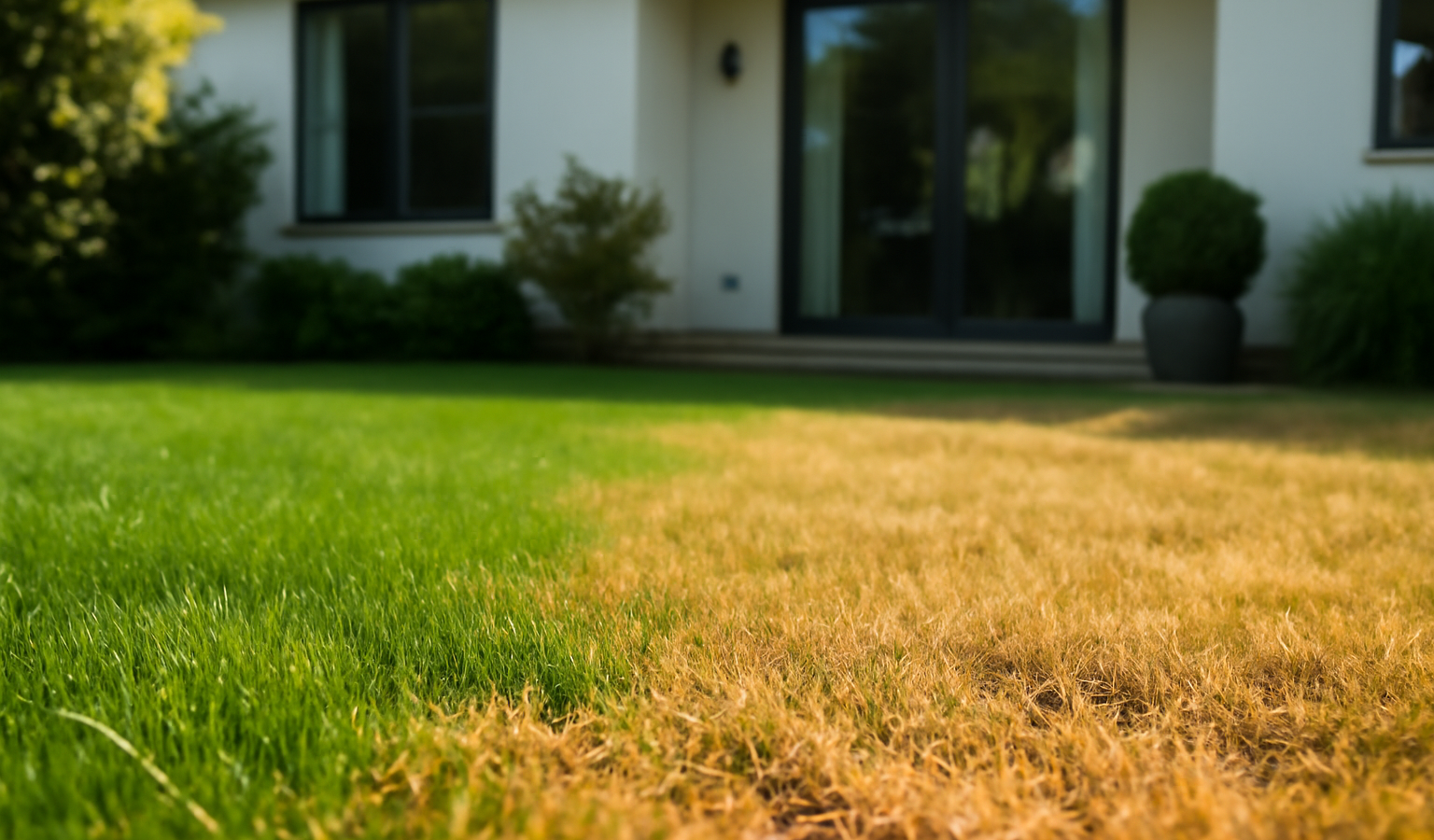
A yellowing lawn is the grass telling you something is out of balance, and the cause is usually identifiable from where and how the yellowing appears. Uniform, all-over fading often means a nitrogen shortage or watering problem. Scattered patches point to dog urine, fertilizer spills, fungal disease, or grubs eating the roots. Yellow following the mower lines means you cut too low or with a dull blade. Reading the pattern — uniform versus patchy, the shape of the patches, the time of year, and what is happening underfoot — is how you stop guessing and apply the right fix. This guide walks through every common cause of a yellow lawn, how to diagnose each one, exactly how to correct it, and how to keep your turf green and dense going forward.
Key Takeaways
- The pattern is the diagnosis: uniform yellowing means nutrients or water; round or irregular patches mean dog urine, disease, or grubs.
- Nitrogen deficiency is the most common cause of overall pale, yellow-green turf — a balanced feeding usually greens it up within a week or two.
- Both too much and too little water yellow grass; most lawns want about an inch of water per week, deep and infrequent, not daily sprinkles.
- If turf in suspect patches pulls up easily like loose carpet, check underneath for white C-shaped grubs.
- Mow high (around 3 inches) with a sharp blade, water deeply, and feed on schedule to prevent most yellowing.
Nitrogen and Nutrient Deficiency (the most common cause)
Grass is hungry for nitrogen, the nutrient that drives green, leafy growth. When the soil runs short — because it has not been fed, because heavy rain has leached it away, or because grass clippings have been bagged and removed for years — the whole lawn fades to a pale, yellow-green. Iron deficiency is a related culprit, especially in high-pH soils, and it greens up differently.
How to diagnose it
Nitrogen deficiency shows as a uniform, overall pale yellow-green across the whole lawn, with slow growth and thin, weak turf — not patches. It often appears in spring before the first feeding, or after a rainy spell that washed nutrients out. Iron deficiency (chlorosis) also yellows the lawn uniformly but tends to strike newer growth and persists even when nitrogen is adequate, common where soil pH is high. A soil test confirms which nutrients are short and the pH.
How to fix it
Apply a quality lawn fertilizer at the labeled rate for your grass type and the season — a slow-release nitrogen product greens the lawn steadily without a growth surge. Nitrogen-starved grass usually responds within one to two weeks. For confirmed iron chlorosis, a chelated iron product or an iron-fortified lawn fertilizer greens it fast, and correcting soil pH (sulfur to lower a high pH) addresses the root cause. Going forward, follow a seasonal feeding schedule suited to your grass — cool-season grasses fed mainly in fall and spring, warm-season grasses fed through summer — and leave the clippings on the lawn to recycle nitrogen.
Overwatering and Poor Drainage
Watering too much, or having soil that drains poorly, drowns the roots. Waterlogged soil drives out oxygen, the roots suffocate and cannot take up nutrients, and the grass yellows. Overwatering also invites fungal disease and shallow rooting.
How to diagnose it
The lawn is yellowing in the lowest, wettest areas or wherever water collects, the ground feels spongy or stays soggy long after rain or irrigation, and you may notice mushrooms, moss, or a sour smell. If you run sprinklers daily or the system is overscheduled, suspect overwatering. Yellowing that worsens in rainy weather points here.
How to fix it
Cut back to deep, infrequent watering — about an inch of water per week total (including rain), applied in one or two deep soakings rather than a little every day. Deep watering drives roots downward and lets the surface dry between cycles. Improve drainage in chronically wet spots by aerating compacted soil, topdressing with compost, and addressing low areas that collect runoff. For severe drainage problems, regrading or a drainage line may be needed. Letting the soil dry out is usually enough to bring lightly overwatered grass back.
Drought and Underwatering
The opposite problem is just as common in summer. When grass does not get enough water, it conserves resources by going dormant — turning yellow, then tan and straw-colored. Sandy soils, slopes, and areas your sprinkler misses dry out first.
How to diagnose it
The yellowing follows hot, dry weather, the soil is dry and hard, and the grass feels crisp. Footprints linger in the lawn (the blades don’t spring back) — a classic early drought sign. The high, sunny, or sandy spots and the edges your sprinkler can’t reach yellow first while shaded or well-watered areas stay green. Much summer dormancy is harmless and reversible.
How to fix it
Water deeply: about an inch per week in one or two soakings that wet the soil several inches down, ideally early in the morning to limit evaporation and disease. Established lawns that have gone dormant from drought usually green back up within a couple of weeks once steady moisture returns — so you can also simply let a healthy lawn ride out a dry spell dormant. Mowing higher shades the soil and conserves moisture, and aerating helps water penetrate compacted ground. Check your sprinkler coverage to find dry spots the system is missing.
Dog Urine Spots
If the yellow appears as distinct round patches — and you have a dog — this is almost certainly the cause. Dog urine is high in nitrogen and salts; a concentrated dose burns the grass like an overdose of fertilizer, killing the center and often leaving a ring of extra-green, lush growth around the edge where the diluted nitrogen acts as a feed.
How to diagnose it
Small, roughly circular dead or yellow patches a few inches across, frequently ringed by a halo of darker, taller green grass, scattered where the dog goes. Female dogs, which squat and deposit all at once, tend to cause more of these spots than males that mark.
How to fix it
Immediately after the dog goes, soak the spot with plenty of water to dilute and flush the nitrogen and salts before they burn — this is the single most effective prevention. Train the dog to a designated mulch or gravel area if possible, and keep it well hydrated so its urine is more dilute. For spots already dead, rake out the dead grass, rinse the area heavily, and reseed or patch with fresh sod once the salts are flushed. Avoid the many unproven dietary “cures” — dilution with water is what actually works.
Fertilizer Burn and Spills
Fertilizer greens a lawn, but too much in one place scorches it. Over-application, an uneven spreader pass, or a spill delivers a salt overdose that pulls moisture out of the grass and burns it yellow or brown. Spilled gasoline, weed killer, or other chemicals do the same.
How to diagnose it
The yellowing follows a recent fertilizer or chemical application, often in tell-tale shapes: straight stripes where spreader passes overlapped, or a defined blob where something spilled or was dumped. It appears within days of the application. Streaky yellow-and-green banding across the lawn is the signature of uneven fertilizing.
How to fix it
Water the affected areas heavily and repeatedly over several days to flush the excess salts down through the soil — caught early, lightly burned grass often recovers. Grass that has been killed outright will need to be raked out and reseeded or re-sodded after thoroughly flushing the spot. Prevent it by applying fertilizer at the labeled rate with a properly calibrated spreader, watering it in afterward, and never refueling mowers or mixing chemicals over the lawn.
Fungal Disease
Several lawn diseases yellow the grass, usually in distinctive patches. Brown patch, dollar spot, and others flare in warm, humid, or overly wet conditions, often worsened by overwatering, evening watering, or excess nitrogen.
How to diagnose it
Look for patches with characteristic shapes: dollar spot makes small, silver-dollar-sized straw-colored spots that can merge; brown patch makes larger circular yellow-brown areas, sometimes with a darker “smoke ring” edge, in hot humid weather. You may see fine cobwebby fungal threads on the blades in the early morning dew. Disease tends to appear suddenly in humid spells and spreads in rings or irregular patches.
How to fix it
Improve the conditions that feed fungus: water deeply but in the early morning only (never in the evening, which leaves blades wet overnight), avoid overwatering, mow at the proper height with a clean blade, and reduce thatch and improve airflow. Don’t over-apply nitrogen, which fuels some diseases. For severe or spreading outbreaks, a lawn fungicide labeled for the specific disease can help, but cultural fixes prevent recurrence. Most disease patches recover as the weather and watering improve.
Grubs and Insect Pests
White grubs — the larvae of beetles — feed on grass roots underground, severing the turf’s ability to take up water, so it yellows, browns, and dies in patches. Chinch bugs and other insects cause similar damage.
How to diagnose it
Irregular yellow-to-brown patches that expand, typically in late summer to fall, and the decisive test: grub-damaged turf lifts up easily like a loose carpet because the roots have been eaten away. Pull back a section and look in the top few inches of soil for fat, white, C-shaped larvae. More than about five to ten grubs per square foot warrants treatment. Animals like skunks, raccoons, or birds digging up the lawn at night is another strong sign of a grub buffet underneath.
How to fix it
If you confirm a damaging population, apply a grub-control insecticide at the right time of year for your region (curative products work on active larvae; preventive products are applied earlier in the season), and water it in. Beneficial nematodes and milky spore are biological options. Then repair the dead turf by raking it out and reseeding or sodding, and keep the lawn vigorous — healthy, deep-rooted grass tolerates a modest grub population without showing damage.
Improper Mowing
How you mow shows up fast in lawn color. Cutting too short (“scalping”) removes too much leaf, stresses the grass, and exposes the soil, yellowing the turf. A dull blade tears rather than slices the grass, leaving ragged tips that brown and give the whole lawn a yellowish cast.
How to diagnose it
Scalping yellows the lawn right after a too-short cut, worst on high spots and uneven ground the mower’s wheels dip over. A dull blade leaves frayed, whitish-brown, torn tips visible up close on the grass blades, and the lawn looks yellow-tinged within a day or two of mowing. Yellowing aligned with your mowing lines is a giveaway.
How to fix it
Raise the mower deck — most lawns are healthiest cut around 3 inches tall, and you should never remove more than one-third of the blade height in a single mowing. Taller grass shades the soil, roots deeper, and resists drought and weeds. Sharpen the mower blade at least once or twice a season so it cuts cleanly. The lawn recovers quickly once you correct the height and blade.
How to Prevent a Yellow Lawn
A consistently green lawn comes from a handful of steady habits that address the root causes above:
- Feed on schedule. Fertilize at the right times for your grass type with the correct rate, using slow-release nitrogen, and leave clippings on the lawn to recycle nutrients.
- Water deeply and infrequently. About an inch a week in one or two morning soakings — not daily sprinkles — to build deep roots and avoid both drought stress and disease.
- Mow high with a sharp blade. Cut around 3 inches, never removing more than a third at once, and sharpen the blade regularly.
- Flush dog spots and fertilizer immediately with water, and apply fertilizer evenly with a calibrated spreader.
- Aerate and dethatch compacted or thatchy lawns so water, air, and nutrients reach the roots.
- Scout for grubs and disease and act early; test your soil every few years to keep pH and nutrients in range.
Match the cause to the pattern and most yellow lawns green back up within a couple of weeks. For more on building healthy turf and beds, see our comparison of compost vs fertilizer and browse the Outdoor Living hub for more lawn and landscaping guides.
Frequently Asked Questions
Why is my whole lawn turning yellow uniformly?
Even, all-over yellowing usually means a nitrogen deficiency — the grass isn’t getting enough of the nutrient that drives green growth — or a watering problem (too much or too little). Iron deficiency in high-pH soil causes uniform yellowing too. Start with a balanced lawn fertilizer; nitrogen-starved grass typically greens up in one to two weeks. If feeding doesn’t help, check your watering and consider a soil test for pH and iron.
How do I know if grubs are causing the yellow patches?
Grub damage shows as expanding irregular yellow-brown patches, usually in late summer or fall, and the giveaway is that the dead turf lifts up like loose carpet because the roots have been eaten. Pull back a section and look in the top few inches of soil for fat, white, C-shaped larvae. More than about five to ten per square foot is worth treating. Animals digging up the lawn at night to eat grubs is another strong sign.
Why does my grass have yellow circles with green rings around them?
That distinctive pattern — a dead or yellow center surrounded by a halo of extra-green, lush grass — is the classic signature of dog urine. The concentrated nitrogen and salts burn the grass in the middle while the diluted edge gets a fertilizing boost. Flush the spot with plenty of water right after the dog goes to prevent the burn, and reseed dead patches after rinsing the salts out.
Can overwatering turn grass yellow?
Yes. Too much water drives oxygen out of the soil, suffocating the roots so they can’t take up nutrients, and the grass yellows — often in the lowest, wettest spots, with spongy soil and sometimes mushrooms or moss. Overwatering also breeds fungal disease. Switch to deep, infrequent watering of about an inch a week in one or two morning soakings, and improve drainage in chronically soggy areas by aerating and topdressing.
Will my yellow lawn turn green again?
In most cases, yes. Lawns yellow from nitrogen deficiency green up within a week or two of feeding; drought-dormant grass revives within a couple of weeks once steady water returns; and lightly burned or diseased turf recovers once you flush salts or fix the conditions. Grass that’s been killed outright — by severe urine or fertilizer burn, heavy grub feeding, or chemical spills — won’t recover and will need raking out and reseeding or re-sodding.