

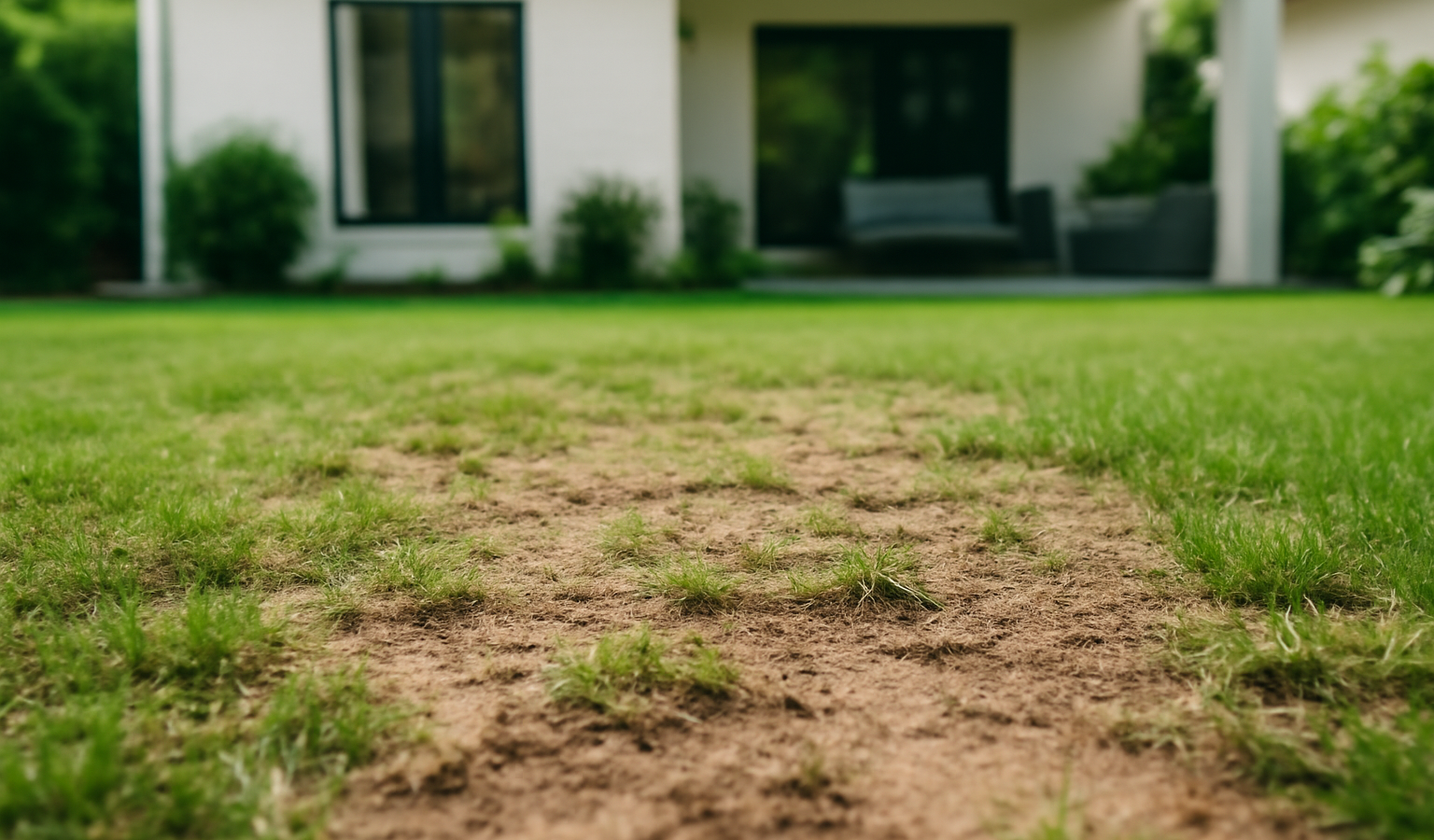
A thinning lawn rarely happens for one reason, and it almost never fixes itself. The grass gets sparse, you can see soil between the blades, and the bare spots slowly creep wider every season. The good news is that lawn thinning follows a short list of usual suspects, and once you know which one you are dealing with, the repair is straightforward. Below are the six causes I check first, in roughly the order they show up, with a practical way to diagnose each and the fix that actually moves the needle. Work through them in order, because more than one is often in play at the same time, and treating the wrong cause wastes a whole growing season.
Key Takeaways
- Most lawn thinning traces to shade, compaction, traffic, disease, grubs, or low fertility, and often two at once.
- A screwdriver pushed into the soil and a soil test for pH (target 6.0 to 7.0) diagnose half of these problems in ten minutes.
- Core aeration plus fall overseeding at 3 to 4 pounds of seed per 1,000 square feet is the single most effective recovery move.
- Switch to fine fescue in shade, because no sun-loving grass survives under 4 hours of direct light.
- Lift sod and count grubs: 6 to 10 per square foot is the treatment threshold, and a spongy lawn that peels back like carpet confirms it.
Too Much Shade
Shade is the most common reason a once-thick lawn goes patchy, and it tends to get worse every year as nearby trees mature and their canopy fills in. Cool-season turf like Kentucky bluegrass needs roughly 6 hours of direct sun, and most warm-season grasses want even more. Drop below 4 hours and the grass simply runs out of energy, growing tall and leggy as it reaches for light, then thinning until soil shows through.
How to diagnose it
Watch the thin area across a full day. Note when direct sun hits it and when shadow takes over, and add up the hours of real sun, not bright shade. If the bare patches sit under tree canopy, against the north side of the house, or behind a fence, and they total fewer than 4 hours of direct light, shade is your answer. The tell is grass that is thin but tall and spindly rather than short and stressed, often with more moss than turf in the worst spots.
How to fix it
First, prune. Limbing up lower tree branches and thinning the canopy can lift a spot from 3 hours of sun to 5 or 6, which is often enough. Then reseed with the right grass: fine fescues (creeping red, chewings, hard fescue) are the most shade-tolerant cool-season turf and hold on in as little as 4 hours of dappled light. In the South, St. Augustine handles shade better than Bermuda. Mow shaded areas higher, around 3.5 to 4 inches, so each blade keeps more leaf surface to gather light. If a spot gets under 3 hours of sun, stop fighting it and switch to mulch, a shade groundcover, or a stepping path.
Soil Compaction
Compacted soil squeezes out the air pockets and pore space that roots need, so water runs off instead of soaking in and roots stay shallow and weak. Grass on compacted ground thins out, struggles in summer heat, and gives way to weeds like prostrate knotweed that thrive in hard soil. Clay soils and any area that has been driven on, parked on, or walked over for years are prime candidates.
How to diagnose it
Take a regular screwdriver, 6 inches of blade, and push it into moist soil. In healthy ground it slides in with light hand pressure. If you have to lean on it or it stops at 2 inches, the soil is compacted. Another check: dig out a small plug and look at the roots. Roots that turn sideways or stop at a shallow hard layer instead of going down 4 to 6 inches confirm the problem. Water pooling on the surface after rain or irrigation is a third clue.
How to fix it
Core aeration is the fix, and it is worth doing right. Rent a hollow-tine core aerator (not a spike aerator, which just makes compaction worse) and run it over the lawn when the soil is moist, twice in perpendicular passes for badly compacted ground. The machine pulls finger-sized plugs of soil and lays them on the surface; leave them to break down on their own over a couple of weeks. Aerate cool-season lawns in early fall and warm-season lawns in late spring. Follow with a thin layer of compost topdressing, about a quarter inch, raked into the holes to keep the soil loose long term. This is also the perfect moment to overseed, since the holes give seed direct contact with soil.
Heavy Foot and Pet Traffic
Grass is tough, but it cannot take being crushed in the same line day after day. The shortcut across the yard, the path the dog runs along the fence, the spot under the kids’ swing set, and the patch where the trash cans sit all thin out and eventually go bare. Traffic both physically tears the crowns of the grass plants and compacts the soil underneath, so it often shows up alongside the compaction problem above.
How to diagnose it
Traffic damage announces itself by shape: it shows up as straight worn lines, narrow paths, or defined patches in high-use spots rather than scattered irregular blotches. Look at where the thin areas line up with how people and pets actually move through the yard. Dog urine adds a twist, leaving small round dead spots with a darker green ring around the edge, often near the dog’s favorite corner of the yard.
How to fix it
You cannot out-seed a problem you keep re-creating, so reroute the traffic first. Lay stepping-stones or a flagstone path along the route people already take, spacing the stones about 24 inches center to center to match a natural stride. For a worn dog run, a strip of mulch or pea gravel along the fence solves it permanently. Once the traffic is redirected, loosen the soil, add an inch of fresh topsoil, and overseed. If you must keep grass in a busy area, choose a durable, fast-recovering turf-type tall fescue or a perennial ryegrass blend, and water the dog’s spots heavily right after use to dilute the nitrogen.
Lawn Disease
Fungal diseases such as brown patch, dollar spot, and red thread can thin a lawn quickly, sometimes over a single humid week. They usually flare when the grass stays wet too long, when nitrogen is out of balance, or when airflow is poor. Disease thinning is often mistaken for drought or grubs, so it pays to look closely before you reach for a treatment.
How to diagnose it
Get down on your knees in the morning while there is still dew. Dollar spot leaves small silver-dollar-sized bleached patches and hourglass-shaped lesions on individual blades. Brown patch makes larger circular brown areas, sometimes a foot or more across, often with a darker smoke-colored ring at the edge. Red thread shows pinkish-red threadlike strands knitting the blade tips together. The common thread is that the grass plants themselves are infected but the roots still hold, so the turf does not pull up easily the way grub-damaged turf does.
How to fix it
Most lawn disease is a watering and airflow problem first. Water deeply but infrequently, about 1 inch per week in one or two sessions, and do it early in the morning so blades dry by midday instead of staying wet overnight. Avoid overdoing high-nitrogen fertilizer during hot, humid stretches, which feeds brown patch. Mow with a sharp blade, since ragged cuts are open wounds for fungus, and bag clippings while disease is active to stop spreading spores. If you correct the conditions, most lawns grow out of fungal damage on their own. Reserve fungicide for severe or recurring outbreaks, and treat at the first sign rather than after the patch is established.
Grubs
White grubs are the larvae of beetles such as Japanese beetles and June bugs, and they live in the top few inches of soil chewing through grass roots. A lawn with no roots cannot anchor or feed itself, so it thins, browns in irregular patches, and peels back like a loose rug. Grub damage usually peaks in late summer and early fall as the larvae reach full size and appetite.
How to diagnose it
Run the tug test: grab a handful of thinning turf and pull. If it lifts away with little resistance, rolling back like carpet because the roots have been eaten, suspect grubs. Confirm by cutting three sides of a 1-square-foot, 2-inch-deep flap of sod with a spade and folding it back. Count the C-shaped, cream-colored grubs you find. A healthy lawn shrugs off a few, but 6 to 10 grubs per square foot is the threshold where the population is large enough to cause the visible thinning and warrants treatment. Skunks, raccoons, and crows tearing up the turf at night to feed are a strong secondary sign.
How to fix it
Timing matters more than product. Curative grub controls work best on young grubs in late summer, so apply them when you confirm an active infestation above threshold, then water the product in with about half an inch of irrigation to carry it down to the root zone where the grubs feed. For a longer-term, lower-chemical approach, beneficial nematodes or milky spore can suppress populations over time. Once the grubs are handled, repair the damage by raking out the dead turf, loosening the surface, and overseeding, since the bare ground left behind will not recover on its own.
Low Fertility
Grass is a hungry plant, and a lawn that never gets fed slowly runs out of the nitrogen it needs to produce new shoots and fill in. It pales from deep green toward yellow-green, growth slows, and thin spots open up that weeds are happy to claim. Off-target soil pH compounds the problem, because even when nutrients are present in the soil, grass cannot absorb them well outside its preferred range.
How to diagnose it
Buy a soil test, either a home kit or, better, a mail-in test from your county extension office for about 15 to 20 dollars. It will tell you pH and nutrient levels. Most turfgrass wants a soil pH of 6.0 to 7.0; outside that band, nitrogen and iron get locked up no matter how much you apply. Pale, slow-growing grass that thins evenly across sunny, uncompacted areas, with no disease lesions and no loose roots, points to a feeding or pH problem rather than the causes above.
How to fix it
Fix pH first if the test calls for it: lime raises a too-acidic pH, while elemental sulfur lowers a too-alkaline one, both applied at the rate the soil test specifies. Then set up a real feeding schedule rather than one random spring application. For cool-season lawns, the heaviest feeding should land in fall, with lighter feedings spring and early summer, totaling roughly 2 to 4 pounds of actual nitrogen per 1,000 square feet per year split across applications. Warm-season lawns get the bulk of their nitrogen in late spring and summer when they are actively growing. A slow-release fertilizer feeds steadily and is far less likely to burn the lawn than a cheap quick-release product.
Preventing a Thinning Lawn
A thick lawn is the best defense against every problem above, because dense turf crowds out weeds, shades the soil, and recovers fast from minor damage. The cornerstone habit is fall overseeding: every year or two, core-aerate and spread fresh seed at 3 to 4 pounds per 1,000 square feet for cool-season grasses, choosing improved varieties suited to your light and traffic. Early fall is the ideal window, since warm soil and cooling air give seedlings weeks to establish before winter without summer heat or weed pressure.
The rest is routine. Mow at the right height (3 to 4 inches for most cool-season turf) and follow the one-third rule, never cutting more than a third of the blade height at once, so the grass keeps the leaf area it needs to stay dense. Keep the mower blade sharp. Water deeply and infrequently to push roots downward, aiming for about 1 inch per week including rain. Feed on a real schedule with the fall emphasis described above, and test your soil every two or three years to keep pH in the 6.0 to 7.0 range. For more on building and maintaining healthy turf, our outdoor living and lawn care guides walk through seasonal routines in depth, and if shade is forcing you to rethink a bed, the plants and flowers section covers shade-tolerant alternatives to turf. Stay ahead of compaction and traffic with aeration and a few well-placed stepping-stones, and most thinning never gets a chance to start.
Frequently Asked Questions
How often should I overseed to keep my lawn from thinning?
For most cool-season lawns, overseeding every one to two years in early fall keeps the turf dense enough to resist weeds and recover from minor damage. Pair it with core aeration and spread 3 to 4 pounds of seed per 1,000 square feet for the best results.
Why is my lawn thinning even though I water it a lot?
Overwatering can actually cause thinning by encouraging fungal disease and shallow roots. Most lawns need about 1 inch of water per week in one or two deep sessions, applied in the early morning, rather than a light daily sprinkle that keeps the blades wet and the roots near the surface.
What grass is best for a thinning, shady lawn?
Fine fescues, including creeping red, chewings, and hard fescue, are the most shade-tolerant cool-season grasses and hold on in as little as 4 hours of dappled light. In warmer regions, St. Augustine tolerates shade better than Bermuda. Below 3 hours of sun, no grass thrives, so consider a groundcover or mulch.
How do I know if grubs are causing my lawn to thin?
Tug a handful of thin turf; if it peels back like carpet because the roots are gone, suspect grubs. Confirm by folding back a 1-square-foot flap of sod and counting the cream-colored C-shaped larvae. Six to ten grubs per square foot is the threshold that warrants treatment.
Can I fix a thinning lawn in spring, or do I have to wait for fall?
You can do spring repairs, but fall is far better for cool-season grass because the soil is warm, the air is cooling, and weed pressure is low, giving seed time to establish. Use spring for aeration, feeding, and addressing grubs or disease, and save major overseeding for early fall.