

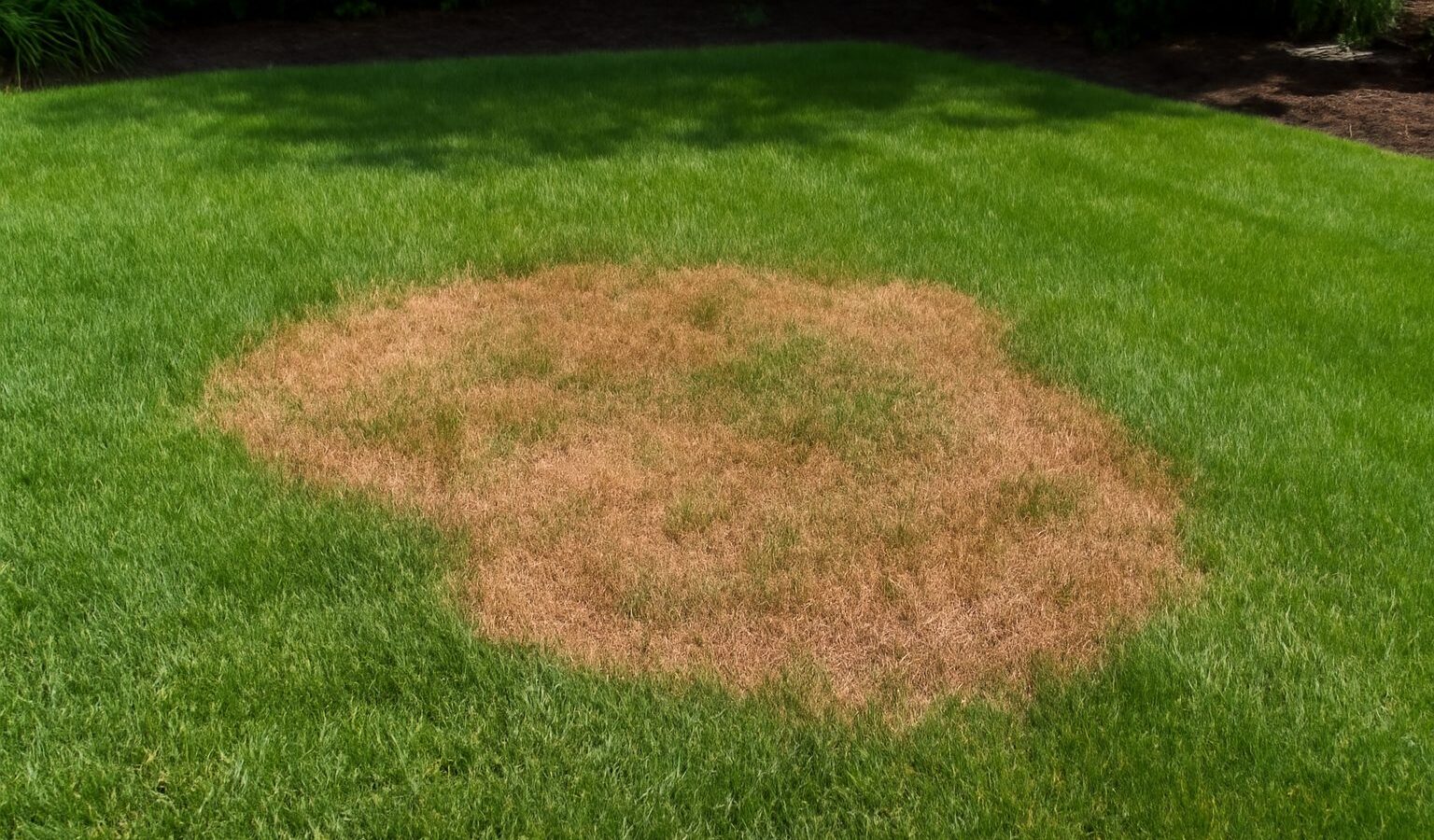
Most lawn fungus problems are fixed not at the sprayer but at the hose and the mower. Fungal disease shows up when a pathogen that is already living in your soil finally gets the conditions it needs—warm nights, leaf wetness that lasts more than 10 hours, and a stressed or over-fertilized stand of grass. Kill the conditions and you usually kill the disease. This guide walks you through identifying the five diseases that hit home lawns most often, the cultural changes that stop them, and exactly which fungicides to reach for, at what rate and on what interval, when an active outbreak is moving faster than your mowing can.
Key Takeaways
- Identify the disease before you spray—brown patch, dollar spot, rust, red thread and snow mold each call for different timing and products.
- Water deeply but infrequently, and only between 4 a.m. and 9 a.m., so blades dry fast. Long leaf wetness is the single biggest driver of fungus.
- Stop pushing nitrogen during disease-prone heat; excess soft growth feeds brown patch and Pythium.
- Rotate fungicide classes (FRAC groups) to avoid resistance—never use the same active ingredient back to back all season.
- Mow with a sharp blade at the high end of your grass’s range; ragged cuts are open wounds for spores.
First, Confirm It’s Actually a Fungus
Not every brown spot is disease. Dog urine, dull-mower scalping, grub damage, fertilizer burn and dry spots all mimic fungal symptoms and none of them respond to fungicide. Before you treat, run three quick diagnostic checks. First, tug a handful of brown grass—if it lifts away like a loose carpet with chewed roots, you have grubs, not fungus. Second, look at the pattern: rings and arcs, irregular blotches, or small silver-dollar spots point to disease, while sharp straight edges point to spills or scalping. Third, get out at dawn while dew is still on the lawn and look for the diagnostic signs below; many fungi produce visible mycelium (a fine white or gray cobweb) only in early-morning humidity.
The Five Diseases You’ll Actually See
Brown Patch (Rhizoctonia)
The classic summer disease of tall fescue, perennial ryegrass and St. Augustine. It appears as roughly circular patches from a few inches to several feet wide, often with a darker “smoke ring” of wilted grass at the margin in the morning. It fires when night temperatures stay above 65°F and humidity is high—think July and August across most of the country. Individual blades show tan lesions with a thin brown border. Brown patch loves excess nitrogen, so the first move is to stop fertilizing. Tall fescue rarely dies outright from brown patch; the crowns survive and the lawn fills back in once nights cool, so you’re managing appearance and slowing spread, not saving the lawn from death.
Dollar Spot
Small, bleached, silver-dollar-sized spots (1–3 inches) that can merge into larger blighted areas. On the blades you’ll see distinctive straw-colored lesions with a reddish-brown border that band straight across the leaf. Dollar spot is the disease of low fertility—it gets worse when the lawn is hungry for nitrogen and when heavy dew sits all morning. Counterintuitively, a light nitrogen feeding (about 0.25 lb N per 1,000 sq ft) often suppresses it. It runs spring through fall whenever you get warm days, cool nights and heavy dew.
Rust
If your shoes turn orange walking across the lawn, that’s rust. It coats blades in orange-to-yellow powdery pustules (spores), usually in late summer and early fall on slow-growing, under-fertilized Kentucky bluegrass and ryegrass, especially in shade. Rust is a weak-lawn disease—mowing it off and feeding the lawn to push new growth is usually enough; you rarely need a fungicide.
Red Thread
Pink-to-red threadlike strands (“sclerotia”) binding the tips of blades together in irregular patches of tan grass, typical of cool, wet spring and fall weather on fescue and ryegrass. Like dollar spot, it signals low nitrogen; a modest feeding plus drier surface conditions usually clears it without chemicals.
Snow Mold (Pink & Gray)
Revealed at snowmelt as matted, crusty patches—gray (Typhula) where snow piled deepest, pink (Microdochium, which also attacks without snow in cold wet weather) often with a faint pink margin. Prevent it by mowing the lawn down to about 2 inches with the last fall cut, not leaving long grass to mat under snow, and avoiding late-fall nitrogen that pushes tender growth into winter.
Fix the Conditions First (the Cultural Cure)
Fungicides buy time; culture is the actual cure. Get these five right and most outbreaks fade on their own.
- Water early and deep. One inch per week in one or two soakings, applied between 4 a.m. and 9 a.m. so blades dry by mid-morning. Never water in the evening—you’d hand the fungus 12+ hours of leaf wetness.
- Back off nitrogen in the heat. Soft, lush growth from summer fertilizer is brown patch’s favorite food. Hold high-N feedings for spring and fall.
- Mow tall and sharp. Keep tall fescue at 3.5–4 inches, bluegrass at 2.5–3.5, and sharpen the blade every 8–10 hours of use. Bag clippings while disease is active to carry spores off the lawn.
- Improve airflow and light. Prune overhanging limbs and thin shrubs; shaded, stagnant corners stay wet longest and break first.
- Dethatch and aerate. A thatch layer over half an inch holds moisture and harbors pathogens. Core-aerate compacted lawns in fall to improve drainage.
When and How to Use Fungicide
Reach for a fungicide when disease is actively spreading, the weather forecast keeps the trigger conditions in place, and the affected area is large enough or valuable enough to justify it. Two cautions before you spray. First, fungicides are mostly protectant—they shield healthy tissue but can’t bring dead blades back, so timing matters more than dose. Second, rotate chemical classes. Every fungicide belongs to a FRAC group (printed on the label); using one group repeatedly breeds resistant pathogens. Alternate between at least two different groups through the season.
For homeowners, three actives cover nearly everything. Azoxystrobin (FRAC 11, sold as Heritage and in many granular “lawn fungus control” products) is a broad-spectrum strobilurin good on brown patch, dollar spot, rust and snow mold; granular forms typically apply around 2–4 lb per 1,000 sq ft, watered in. Propiconazole (FRAC 3, e.g., Banner Maxx and many concentrates) is a curative-leaning triazole strong on dollar spot, brown patch and snow mold, usually mixed at roughly 1–2 oz per 1,000 sq ft in a few gallons of water. Chlorothalonil (FRAC M5, e.g., Daconil) is a contact protectant that’s an excellent rotation partner because resistance to it is rare. Always read and follow the specific product label—rates, intervals and turf-safety vary by brand, and the label is the law.
Apply on a 14–21 day interval while pressure is high, in the morning on dry blades with no rain expected for a few hours, and don’t mow for 24 hours after a liquid application. A practical season program: chlorothalonil as your baseline protectant, then alternate in azoxystrobin or propiconazole every other spray so you never apply the same FRAC group twice running. For prevention on a lawn with a known history, a single curative product like propiconazole applied just before brown-patch weather arrives is far cheaper than chasing an outbreak.
Biologicals and Repairing the Damage
For organic-minded lawns, products built around Bacillus subtilis or other beneficial microbes provide modest, preventive suppression but won’t knock down a raging outbreak; treat them as a supplement to good culture, not a rescue. A light topdressing of finished compost (about a quarter inch) feeds soil microbes that compete with pathogens and is one of the best long-term investments you can make in disease resistance.
Once nights cool and the disease stops advancing, repair the thin spots. Rake out dead matted grass, loosen the surface, and overseed with a disease-resistant cultivar blend—look for tall fescue or bluegrass varieties rated for brown patch and dollar spot tolerance on the seed tag. Keep the new seed moist with light, frequent watering until it germinates, then transition back to deep, infrequent morning watering. If a thin, bare lawn is your real problem, work through our guide to fixing a patchy, thin lawn alongside this one. And because over- and under-feeding both invite disease, time your nitrogen with a proper seasonal fertilizer schedule rather than guessing. For more on building a resilient outdoor space, browse the rest of our outdoor living guides.
Frequently Asked Questions
Will lawn fungus go away on its own?
Many diseases—brown patch, dollar spot, red thread and rust—fade on their own once the weather changes and you correct watering and mowing. The crowns usually survive even when blades brown out, so the lawn fills back in. Fungicide is for stopping active, fast spreading on a lawn you can’t afford to let thin.
What does the start of lawn fungus look like?
Look at dawn while dew is present. Early signs include small bleached spots (dollar spot), a faint white or gray cobweb of mycelium on the blades, circular tan patches with a dark “smoke ring” edge (brown patch), or orange powder on your shoes (rust). Catching it at this stage is when cultural fixes work best.
Can I treat lawn fungus naturally?
Yes, to a point. Correct watering (morning only, deep and infrequent), proper mowing height with a sharp blade, improved airflow, and a quarter-inch compost topdressing suppress most disease. Biological products with Bacillus subtilis add preventive help. None of these will rescue a severe, fast-moving outbreak the way a fungicide will.
How often should I apply lawn fungicide?
While disease pressure is high, every 14–21 days, following the product label. Rotate between at least two different FRAC chemical groups so the pathogen doesn’t develop resistance. Stop once the weather conditions that drive the disease have passed.
Does overwatering cause lawn fungus?
Indirectly, yes—it’s not the volume but the timing. Watering in the evening, or so frequently that blades never dry, gives fungal spores the long leaf-wetness they need to infect. Switch to one deep soak early in the morning and many problems disappear without any chemical.