

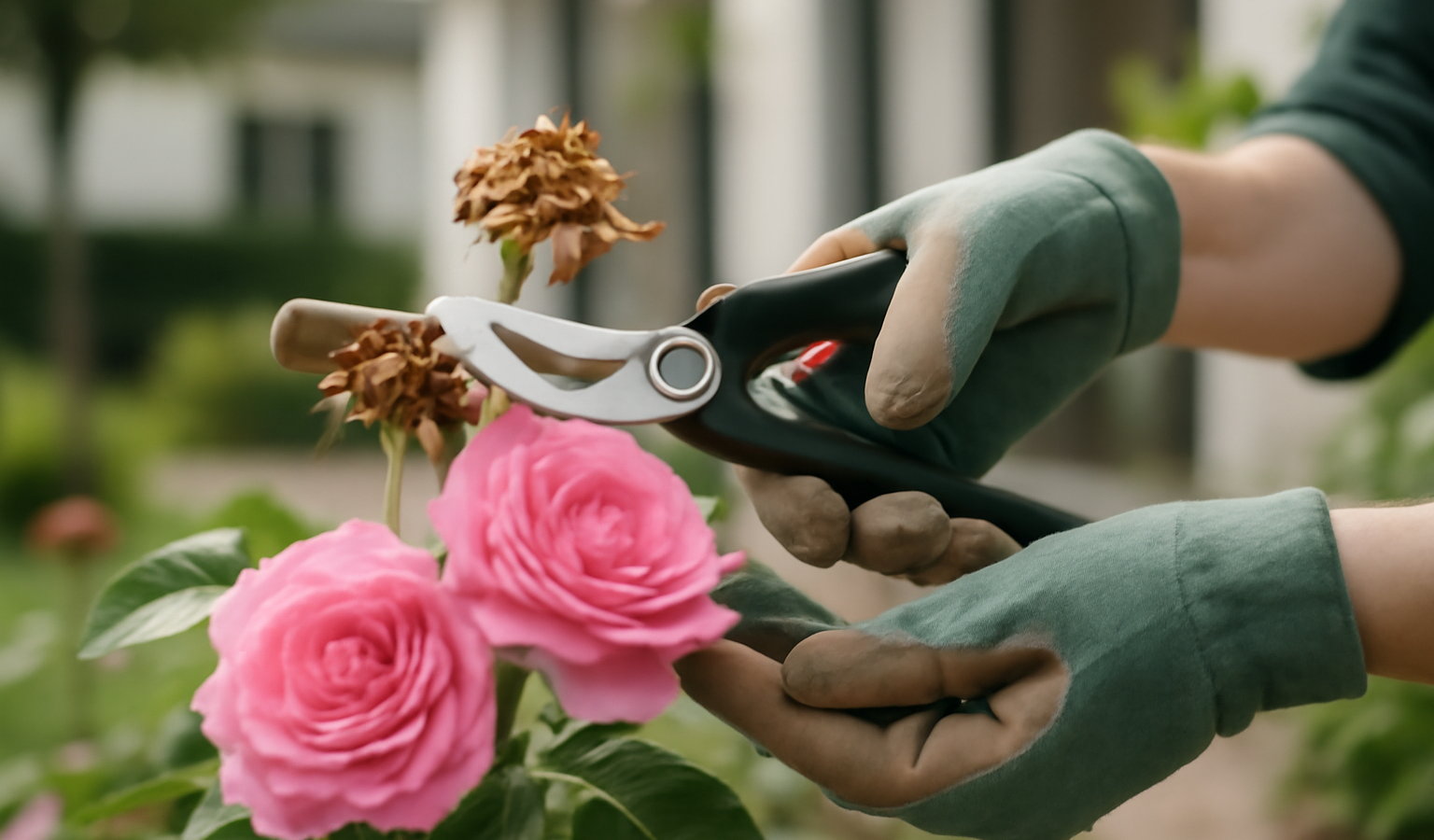
Deadheading roses is simple: remove the spent flowers before they set seed, and the plant pours its energy back into making more blooms instead of ripening hips. On a repeat-blooming rose, that one habit can be the difference between a tired bush with a single flush in June and a shrub that keeps throwing color from late spring straight through fall. The classic method is to cut the faded bloom back to the first leaf with five leaflets that sits above an outward-facing bud, making a clean 45-degree cut about a quarter inch above that node. There’s also a faster “snap method” for the busy weeks, and a short list of roses you should leave completely alone if you want hips or you’re growing a once-blooming heirloom. Below I’ll walk through exactly where to cut, when to do it, when to stop, and how to handle everything from a fussy hybrid tea to a self-cleaning landscape rose.
Key Takeaways
- Deadheading redirects energy from seed production back into new flowers—it only boosts blooms on repeat-flowering roses.
- Classic cut: prune to the first five-leaflet leaf with an outward-facing bud, 45 degrees, a quarter inch above the node.
- The faster snap method removes the spent bloom at the abscission joint with no pruners—great for floribundas and shrub roses.
- Skip deadheading on hip-producing species, ramblers, and once-blooming old garden roses if you want fall hips or a single show.
- Stop deadheading 6 to 8 weeks before your first frost—roughly late August into September—so the plant can harden off.
- Self-cleaning roses like Knock Out and landscape roses drop their petals on their own; a light shear keeps them tidy.
What Deadheading Actually Does
A rose flower exists to make seed. Once a bloom is pollinated and starts to fade, the plant shifts its resources toward swelling the seed pod—the hip—at the base of the flower. That ripening process is a hormonal off-switch for new bud production. The plant essentially decides it has done its job for the season and slows down. When you remove the spent bloom before the hip develops, you interrupt that signal. The rose reads the missing flower as unfinished business and pushes out fresh growth and new buds to try again.
That’s the whole mechanism, and it explains the single most important rule in this guide: deadheading only increases blooming on roses that are genetically capable of repeat flowering. Cutting the spent flowers off a once-blooming heirloom won’t coax a second flush out of it—the plant simply isn’t wired to rebloom. On a modern reblooming shrub, hybrid tea, or floribunda, though, consistent deadheading through summer is the most reliable way to keep flowers coming.
There’s a tidiness payoff too. Spent rose blooms turn brown, ball up in wet weather, and can harbor botrytis and other fungal trouble. Clearing them improves airflow and keeps the bush looking presentable, which matters if your roses anchor a bed in your outdoor living space rather than living in a cutting garden out back.
Exactly Where to Cut: The Five-Leaflet Rule
Here’s the answer first, then the why. On a hybrid tea or grandiflora, follow the stem down from the faded bloom and you’ll pass a leaf with three leaflets, then reach a leaf with five leaflets. Cut just above the first five-leaflet leaf that faces away from the center of the plant. Make the cut at a roughly 45-degree angle, sloping down and away from the bud, about a quarter inch above the node where that leaf meets the stem.
Three details make this work. First, the five-leaflet leaf has a strong, viable bud in its axil—the little growth point tucked where the leaf joins the stem. The three-leaflet leaves higher up often have weaker buds that produce spindly, blind shoots. Second, choosing an outward-facing bud sends the new cane out toward the open air instead of into the congested middle of the bush, which improves shape and airflow. Third, the quarter-inch gap and the angle matter: cut too close and you damage the bud; leave too long a stub and it dies back and invites dieback or cankers. The slope sheds water away from the bud rather than letting it pool on the cut.
A common mistake is snipping only the flower head off right below the petals. That leaves a long bare stub with no active bud nearby, and the rose responds slowly or not at all. Going down to a good five-leaflet leaf gives the plant a clear, well-fed point from which to break new growth.
The Modern Snap Method
The five-leaflet method is precise but slow when you have a dozen bushes to work through. The snap method is the modern shortcut, and rose societies have largely come around to it. As a spent bloom fades, a natural separation layer—an abscission joint—forms just below the flower base. Grab the stem an inch or two under the faded bloom and bend it sharply to the side; it snaps off cleanly at that joint with no tool at all. The plant breaks new growth from buds right below, and because you’re removing less stem and leaf, the bush keeps more foliage to fuel that regrowth—which can actually speed up the next flush.
The snap method shines on floribundas, shrub roses, and any healthy plant in active growth. Use the classic pruned cut when you also want to shape the plant, when the stem is too woody to snap cleanly, or on prized hybrid teas where you’re managing cane direction for show-quality blooms. In practice most experienced growers mix the two: snap during quick daily passes, prune properly when doing a fuller cleanup.
Single Blooms vs. Clusters: Hybrid Teas and Floribundas
How you deadhead depends on whether the rose blooms one flower per stem or in clusters. Hybrid teas and grandifloras typically carry a single large bloom on a long stem. With these, you treat each spent flower individually—follow the stem down to a strong five-leaflet leaf with an outward bud and cut there, as described above. Because you’re removing a good length of stem, deadheading doubles as light shaping.
Floribundas, polyanthas, and most modern shrub roses bloom in clusters or sprays, with many flowers opening at staggered times on one head. Don’t cut the whole cluster the moment the first flower fades—you’d sacrifice all the buds still waiting to open. Instead, pinch or snap out each individual spent bloom within the cluster as it browns, leaving the rest to develop. Once every flower in the spray has finished, then cut the entire stem back to the first five-leaflet leaf below the cluster. This two-stage approach keeps the head looking fresh and stretches the display.
For a clean cut on either type, sharp bypass pruners are the right tool—the kind with two curved blades that slice past each other like scissors. Avoid anvil pruners, which crush the stem against a flat plate and leave a bruised, mashed cut that heals poorly. Wipe your blades with rubbing alcohol or a disinfectant when you move between plants, especially if any bush is showing disease; pruners are an easy way to spread cankers and viruses from rose to rose.
Roses You Should NOT Deadhead
Not every rose wants the scissors, and on some, deadheading throws away the best part of the show. Skip it in these cases.
- Hip-producing roses you grow for the fruit. Species like Rosa rugosa, Rosa glauca, and Rosa moyesii set large, ornamental hips that color up scarlet or orange in fall and feed birds into winter. If you want that display, stop deadheading after the main flush and let the hips form.
- Once-blooming old garden roses. Gallicas, damasks, albas, centifolias, and most species roses flower a single glorious time in late spring or early summer and won’t repeat no matter what you do. Deadheading them gains you nothing in bloom and may sacrifice fall hips.
- Single-flush ramblers. Many vigorous ramblers bloom once on old wood. Deadheading is pointless for rebloom and impractical at scale—leave them to set hips or simply let the spent flowers fall.
- Any rose where you want fall hips for arrangements. Rose hips are gorgeous in autumn wreaths and dried displays. If you plan to harvest them, leave the late-season blooms intact.
If you’re growing roses partly for the harvest—blooms for the vase and hips for the mantel—it helps to plan the season around it. Cut your best fresh stems early, then ease off deadheading toward fall so hips can develop. Our guide to cutting flowers for a vase covers the timing and conditioning that keeps cut roses lasting longest.
Timing Through the Growing Season
The rhythm of deadheading follows the bloom cycle. From the first flush in late spring—typically May into June across much of the US—get in the habit of walking your roses every few days and removing whatever has faded. A repeat bloomer generally takes about five to seven weeks to produce the next flush after a flower is removed, so the more consistently you deadhead, the more continuous the show.
In the heat of midsummer, July and August, many roses slow down and some go semi-dormant during a heat wave. Keep deadheading but don’t expect the same turnaround; flowers will be smaller and come less often until temperatures ease. This is also when consistent water and a light feeding after each flush pay off most—a stressed, thirsty rose won’t rebloom well no matter how diligently you snip.
As the weather cools into early fall, well-watered repeat bloomers often give a strong final flush—sometimes the best blooms of the year, since cooler nights deepen color and slow the flowers’ opening. That last show is your reward for the season’s work, right up until you make the deliberate decision to stop.
When to Stop: Hardening Off for Winter
Here’s the rule that protects your plant: stop deadheading roughly 6 to 8 weeks before your average first frost date. For most of the country that lands in late August through September. After that point, let the spent blooms stay on the plant and form hips.
The reason is hormonal, just like the deadheading itself. Every time you remove a spent flower, you prompt the rose to push tender new growth. Soft, succulent shoots produced in October don’t have time to mature and harden before a freeze, and they’re the first tissue to be damaged by cold—dieback there can extend down into healthy wood. Letting hips form does the opposite: it signals the plant that the season is ending, slows new growth, and lets the existing canes firm up and harden off for winter. The forming hips become a built-in signal to wind down.
So in a zone with a mid-October first frost, you’d enjoy that late-summer flush, then quit deadheading around the start of September and leave the rest. In milder zones with frost in November or later, you can deadhead correspondingly longer. Either way, the goal is the same: no fresh, tender growth heading into the cold. The hips you leave behind also give you autumn color and material for arrangements—if you plan to dry them or build them into displays, our notes on how to dry flowers apply directly to rose hips and seed heads.
Self-Cleaning Roses: Knock Out and Landscape Types
If you grow Knock Out roses, Drift roses, or other modern landscape and groundcover types, you can largely set the pruners down. These are bred to be self-cleaning: their petals shatter and drop on their own, and the plants keep reblooming on a tight cycle—often every five to six weeks—without any individual deadheading. That’s exactly why they dominate parking-lot plantings and low-maintenance landscapes.
You don’t have to deadhead them flower by flower, but a light cleanup still helps. Two or three times a season, when a bush looks ragged after a flush, give it a quick all-over shear—take off the top few inches with hedge shears or pruners to remove the spent heads and any forming hips in one pass. This tidies the plant, encourages a more uniform next flush, and keeps the shrub dense. Many gardeners do a harder shaping cut on Knock Outs in late winter or early spring, cutting them back by a third to a half, and otherwise just shear lightly through summer.
The same fall rule applies here: stop the light shearing 6 to 8 weeks before frost so you’re not forcing tender growth at the wrong time. Even self-cleaning roses benefit from being allowed to wind down naturally in autumn. If you’re still deciding which roses to plant, browse our broader plants and flowers resources to match the right type to how much maintenance you actually want to do.
Tools and Clean Cuts
You need surprisingly little. A pair of sharp bypass pruners handles all routine deadheading; keep them sharp so they slice rather than tear, since a clean cut heals faster and resists disease better than a ragged one. A pair of long gauntlet rose gloves saves your forearms from thorns when you’re reaching into a bush. For the snap method you need nothing but your fingers.
Keep the cut clean and angled at 45 degrees, sloping away from the bud, and always leave that quarter-inch margin above the node—not so close that you bruise the bud, not so far that you leave a dieback-prone stub. Disinfect blades between plants with isopropyl alcohol if disease is present in the garden. Drop spent blooms and prunings into the trash rather than the compost if any fungal disease like black spot is around, so you’re not recycling spores back into your beds. Do these few things consistently and a healthy reblooming rose will keep flowering for you from the first warm weeks of summer until the season finally turns.
Frequently Asked Questions
How often should I deadhead my roses?
During active bloom, walk your roses every two to three days and remove anything that has faded. Consistency matters more than doing a big cleanup once a week—the sooner you remove a spent bloom before it sets a hip, the sooner the plant starts the next flush, which typically takes five to seven weeks.
Can I just snap the spent bloom off instead of using pruners?
Yes. The snap method—bending the faded stem an inch or two below the flower until it breaks at the natural joint—is fully accepted and often faster. It works best on floribundas and shrub roses in active growth. Switch to pruned cuts on woody stems or prized hybrid teas where you want to control cane direction.
Will deadheading make a once-blooming rose flower again?
No. Deadheading only increases bloom on roses genetically capable of repeat flowering. Once-blooming old garden roses—gallicas, damasks, albas—and single-flush ramblers flower a single time per year regardless. On those, deadheading mainly costs you the fall hips, so it’s usually better to leave them be.
When exactly should I stop deadheading in the fall?
Stop about 6 to 8 weeks before your average first frost—roughly late August into September for much of the US. After that, let spent blooms form hips. This stops the plant from pushing tender new growth that won’t harden before a freeze and would be vulnerable to cold damage and dieback.
Do I need to deadhead Knock Out roses?
Not flower by flower—they’re self-cleaning and rebloom on their own. A light all-over shear two or three times a season tidies the plant and encourages a more even next flush. Stop shearing 6 to 8 weeks before frost, and do any hard shaping cut in late winter or early spring.