

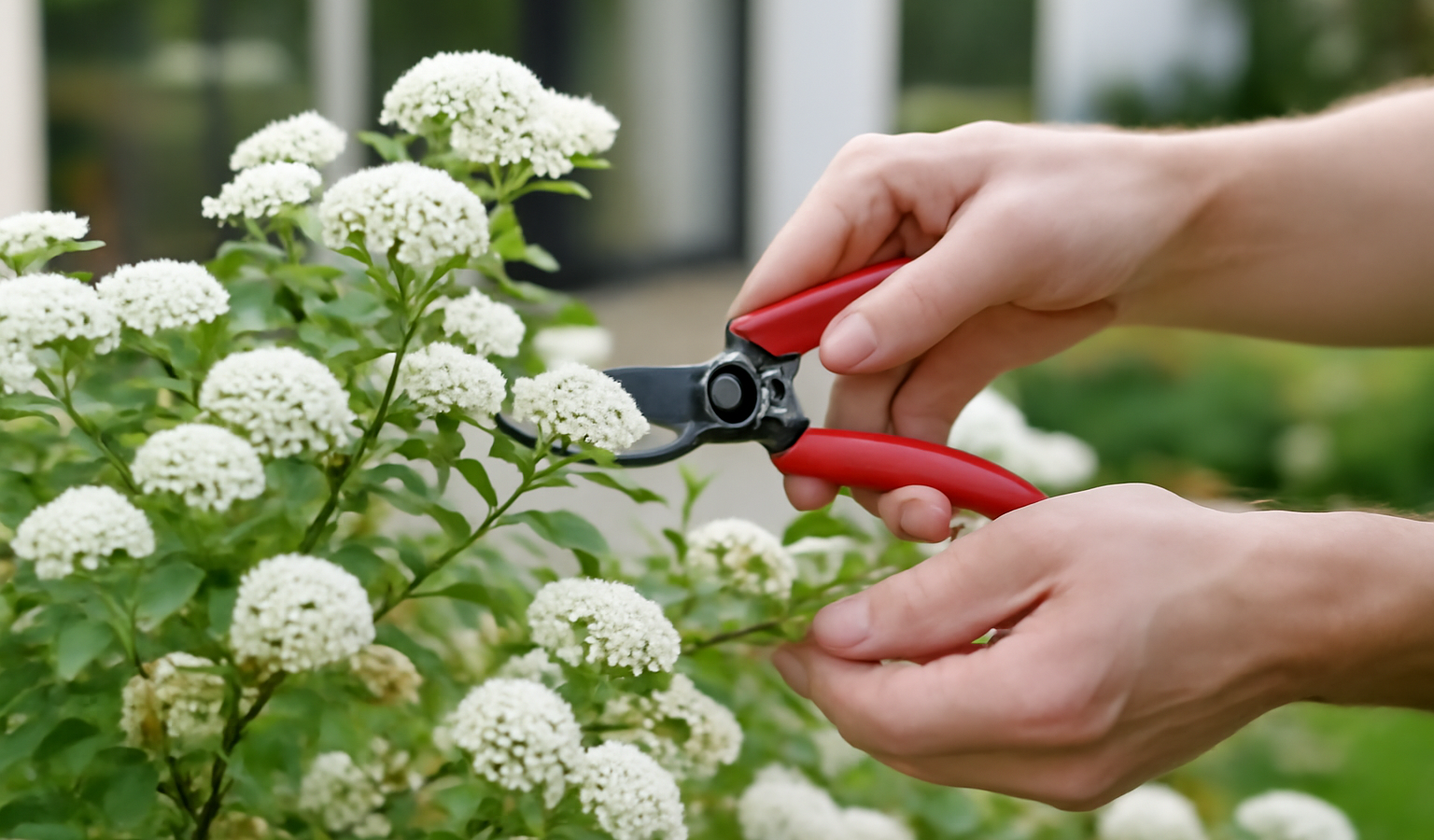
Spirea is one of the most rewarding shrubs to prune because it bounces back fast and rewards almost any reasonable cut with fresh growth and more flowers. The one thing you have to get right is which type of spirea you have: spring-blooming spireas flower on old wood and are pruned right after they bloom, while the popular summer-blooming types (like the ‘Goldflame’, ‘Anthony Waterer’, and ‘Little Princess’ Japanese and bumald spireas) flower on new wood and are pruned in late winter or early spring. Match your timing to the bloom type and spirea is nearly foolproof. This guide explains how to tell the two groups apart, the exact cuts to make for each, how to shear summer bloomers for a second flush of flowers, and how to renovate a tired, woody plant back to its dense, mounded best.
Key Takeaways
- Know your type: Spring bloomers (white, e.g. bridalwreath) flower on old wood; summer bloomers (pink/red, Japanese/bumald) flower on new wood.
- Spring bloomers: Prune right after flowering finishes in late spring.
- Summer bloomers: Prune hard in late winter or early spring before growth starts; they bloom on the new season’s wood.
- Deadhead for rebloom: Shearing spent flowers off summer bloomers often triggers a second flush of bloom.
- Rejuvenation: Cut neglected, woody spireas to 6–12 inches in late winter—they resprout vigorously.
- Don’t fear it: Spirea tolerates hard pruning better than almost any common shrub.
First, Identify Your Spirea
Every pruning decision flows from one question: does your spirea bloom in spring or in summer? The two groups have opposite pruning rules, and cutting at the wrong time is the only real way to ruin a season of flowers.
Spring-blooming spireas include the classic bridalwreath spirea (Spiraea prunifolia) and Vanhoutte spirea (Spiraea × vanhouttei). These are the large, fountain-shaped shrubs that erupt in cascades of small white flowers along arching branches in mid-to-late spring. They bloom on old wood—growth from the previous year—so they are pruned right after the flowers fade, just like azaleas, forsythia, and lilac.
Summer-blooming spireas are the compact, mounded Japanese spireas (Spiraea japonica) and bumald spireas (Spiraea × bumalda)—familiar cultivars like ‘Goldflame’, ‘Anthony Waterer’, ‘Little Princess’, ‘Magic Carpet’, and ‘Goldmound’. They carry flat-topped clusters of pink, rose, or red flowers from early summer onward, often with colorful gold or chartreuse foliage. These bloom on new wood—the current season’s growth—so they are pruned in late winter or early spring before they leaf out, which actually stimulates more flowering shoots. If you are not sure which you have, flower color and timing are the easiest tells: white and early equals spring/old wood; pink-red and summer equals new wood.
Pruning Spring-Blooming Spirea
Treat bridalwreath and Vanhoutte spirea like any spring shrub that flowers on old wood: prune immediately after the blooms finish, usually late spring to early summer. That gives the plant the rest of the season to grow new wood and set buds for next year. Pruning these later in the season removes the buds and costs you flowers.
The goal with these graceful, arching shrubs is to preserve their natural fountain form, so never shear them into a box—that destroys the cascade and leaves a stiff, awkward shape. Instead, thin by reaching into the plant and cutting the oldest, thickest canes all the way to the ground or to a strong low branch. Removing about one-quarter to one-third of the oldest stems each year keeps the shrub renewing itself, lets light into the center, and maintains that elegant arching habit. After thinning, you can lightly shorten any wayward branches that stick out beyond the outline, cutting back to a side branch or bud. That is all a spring spirea needs in a typical year.
Pruning Summer-Blooming Spirea
The compact Japanese and bumald spireas are the easiest shrubs in the garden to prune, because they flower on new wood and tolerate hard cuts. The main pruning happens in late winter or very early spring, while the plant is still dormant or just breaking bud. At that point you can cut the whole shrub back hard—down to about 4 to 8 inches above the ground, or by roughly one-third to one-half of its height—and it will respond with a flush of vigorous new shoots that carry the summer’s flowers. This annual hard cut is what keeps these spireas dense, compact, and brightly colored; left unpruned, they grow open, leggy, and woody at the base.
You do not have to cut to the ground every year. A lighter approach is to shape the mound and remove any dead, weak, or crossing stems while thinning out a few of the oldest canes. But because these shrubs recover so fast and bloom on fresh growth, an early-spring shearing is the simplest way to get a tidy, floriferous plant. If you also want the brightest foliage color from cultivars like ‘Goldflame’ or ‘Magic Carpet’, the hard spring cut encourages the fresh, vivid new leaves those varieties are grown for.
Deadheading and Shearing for a Second Bloom
One of the best tricks with summer-blooming spireas is shearing off the spent flower clusters right after the first flush fades. Because these plants keep producing on new growth, removing the faded, brown flower heads—and trimming the shrub back by a couple of inches at the same time—often prompts a fresh wave of shoots and a second round of blooms later in the season. Use hedge shears or hand pruners to lightly clip over the top of the mound, taking off the old flowers and the inch or two of stem behind them. A little supplemental water and a light feeding after shearing helps fuel the rebloom.
This repeat-bloom shearing applies only to the summer, new-wood types. On spring bloomers, deadheading is cosmetic at best and will not produce a meaningful second flush, since those plants flower only once a year on old wood.
Rejuvenating an Old or Overgrown Spirea
Spirea that has been neglected for years tends to get woody and bare at the base, sparse in the center, and shapeless overall. The good news is that spirea is among the most forgiving shrubs for hard rejuvenation pruning. In late winter or early spring, you can cut the entire plant down to about 6 to 12 inches from the ground. It looks drastic, but spirea has abundant dormant buds at the base and will send up a thicket of strong new growth that quickly rebuilds a full, healthy mound.
For summer-blooming types, this hard cut sacrifices little—they bloom on the new growth anyway, so you may still get flowers the same year. For spring-blooming types, a late-winter rejuvenation cut will cost you that spring’s flowers, but the shrub recovers its bloom the following year. If you would rather not lose a whole shrub’s worth of foliage at once, renovate gradually by removing the oldest third of the canes to the ground each year for three years. After any hard cut, water consistently, mulch the root zone, and feed lightly to power the regrowth.
Step-by-Step: Making the Cuts
Whichever type you are pruning, the mechanics are the same. Use clean, sharp bypass pruners for small stems and bypass loppers for thicker canes, and disinfect the blades with rubbing alcohol between plants to avoid spreading disease. Work in this order:
- Remove the dead and damaged. Cut out any dead, broken, diseased, or crossing stems first, taking them back to healthy wood or to the base.
- Thin the oldest canes. Remove a quarter to a third of the oldest, thickest stems at ground level to renew the plant and open the center.
- Shape or shear. For summer types, cut the mound back hard (or lightly shear after bloom for rebloom). For spring types, shorten wayward branches to a side branch to keep the fountain form.
- Cut cleanly. Make each cut just above an outward-facing bud or node, at a slight angle, with no long stubs left behind.
Pair pruning with sound care: a 2-to-3-inch mulch layer over the roots, deep watering in dry spells, and a balanced shrub fertilizer in early spring. For more on integrating spirea into a mixed border or foundation planting, see our outdoor living and landscaping guides, and for companion shrubs and perennials, browse the plants and flowers section.
Common Spirea Pruning Mistakes
The biggest mistake is pruning at the wrong time for the bloom type—cutting a spring bloomer in late winter (removing its buds) or fussing over a summer bloomer right after its spring growth instead of cutting it back early. The second common error is shearing arching spring spireas into balls or boxes, which ruins their natural cascading shape; save shearing for the compact summer mounds. Other pitfalls include never thinning the old wood (which leaves the plant congested and bare-centered), being afraid to cut hard when rejuvenation is clearly needed, and skipping post-pruning water and feeding. Identify your type, cut at the right season, thin the old canes, and do not be timid—spirea forgives almost everything and rewards you with more flowers.
Frequently Asked Questions
When should I prune my spirea?
It depends on the type. Spring-blooming spireas (white, like bridalwreath) flower on old wood and are pruned right after they finish blooming in late spring. Summer-blooming spireas (pink/red Japanese and bumald types) flower on new wood and are pruned in late winter or early spring before growth begins.
Can I cut my spirea all the way back?
Yes. Spirea is one of the most forgiving shrubs for hard pruning. You can cut an overgrown plant down to 6–12 inches in late winter and it will resprout vigorously. Summer bloomers will often still flower the same year; spring bloomers will skip one season of bloom but recover the next.
How do I get my spirea to bloom again in summer?
On summer-blooming (new-wood) spireas, shear off the spent flower clusters and trim the mound back a couple of inches as soon as the first flush fades. This often triggers a second round of blooms. Water and feed lightly afterward to fuel the rebloom. Spring bloomers won’t repeat-bloom this way.
How do I know if my spirea blooms on old or new wood?
Use flower color and timing. White flowers in mid-to-late spring on large, arching shrubs (bridalwreath, Vanhoutte) means old wood—prune after bloom. Pink, rose, or red flat-topped clusters in summer on compact mounded plants (Japanese, bumald) means new wood—prune in late winter to early spring.
Should I shear my spirea with a hedge trimmer?
Only for the compact summer-blooming mounds, where light shearing is fine for shaping and deadheading. Never shear the arching spring-blooming spireas into a box—it destroys their natural fountain shape. For those, thin the oldest canes and lightly shorten stray branches with hand pruners instead.