

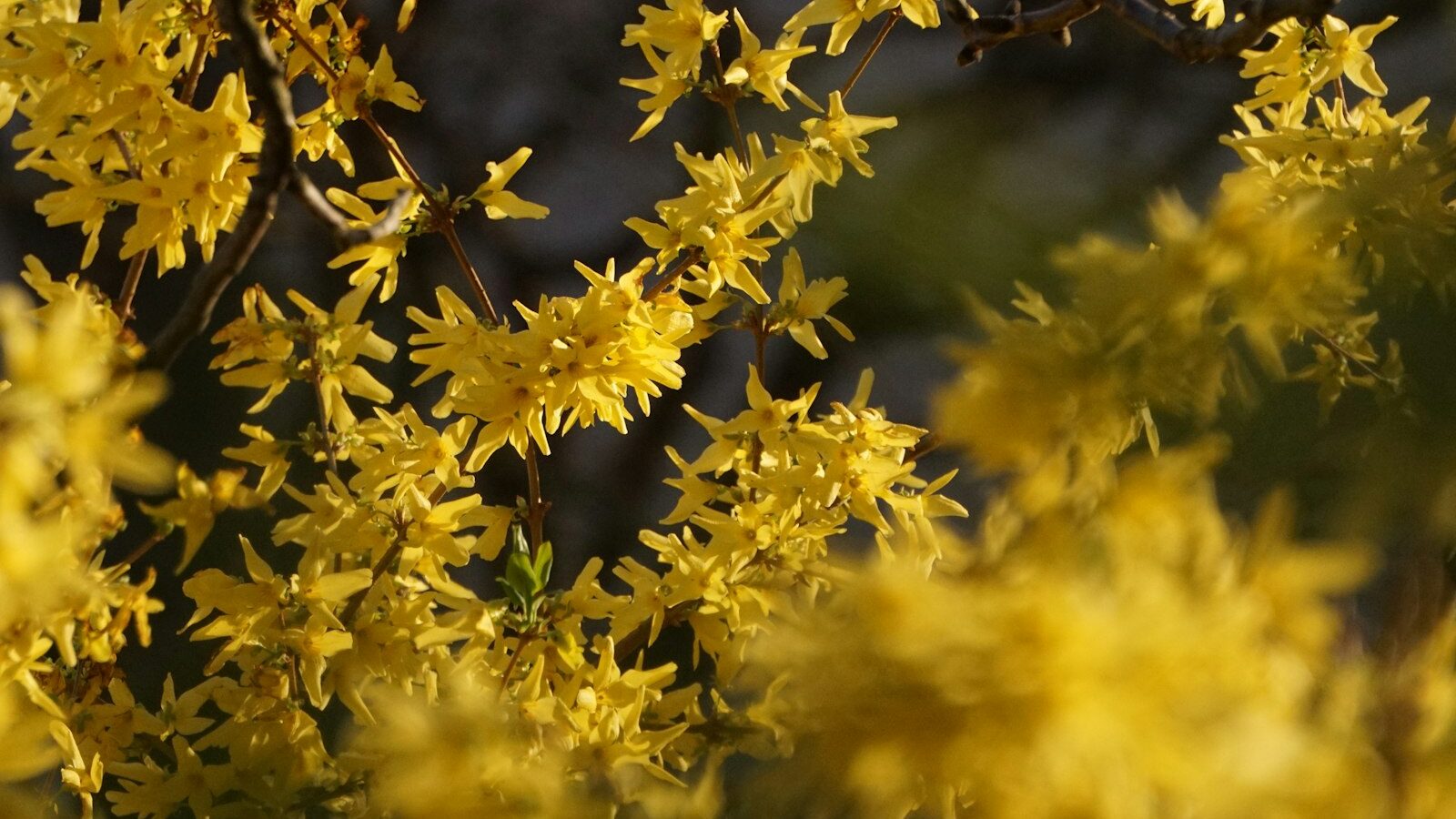
The single most important rule for pruning forsythia is this: prune immediately after it finishes flowering in spring, usually April or May depending on your USDA zone. Forsythia blooms on old wood, meaning the flower buds for next spring form on this summer’s new growth, on branches that are already a year old by the time they bloom. If you cut your shrub back in fall or winter, you are slicing off the very wood that holds next year’s flowers, which is exactly why so many forsythias produce more leaf than gold. Get the timing right and the rest of the job is easy. This guide walks through when to cut, how to do renewal pruning, how to rescue an overgrown thicket, and the mistakes that quietly rob you of blooms year after year.
Key Takeaways
- Prune right after flowering (April-May), never in fall or winter, or you cut off next spring’s flower buds.
- Forsythia blooms on old wood the new growth made last summer ripens into next year’s bloom wood.
- Do renewal pruning: remove about one-third of the oldest, thickest canes to the ground each year.
- Never shear it into a lollipop or gumdrop shaped hedge that removes the bud-bearing tips and kills flowering.
- Rescue a badly overgrown shrub with a hard cut to 4 to 6 inches, or do a gentler 3-year renewal.
- Cut branches in late winter to force blooms indoors before the outdoor show begins.
Why Timing Is Everything: Forsythia Blooms on Old Wood
Forsythia is one of the earliest shrubs to flower, throwing out its bright yellow bells in late winter to early spring, often before the leaves even appear. Depending on your climate that show happens anywhere from March in USDA zones 7 and 8 to April or even early May in colder zones 4 through 6. The flowers open on wood that grew the previous summer. That branch spent last season building up energy, set its flower buds in late summer and fall, went dormant through winter, and then burst open in spring. This is what “blooming on old wood” means, and it dictates your entire pruning calendar.
The practical consequence is simple. You have a window that opens the moment the last flowers fade and stays open for roughly four to six weeks. During that window the shrub has not yet set next year’s buds, so anything you cut is fair game. Prune in this period and the plant immediately pushes new growth that will mature and form buds by fall, ready to bloom the following spring. Wait too long, prune in summer, fall, or winter, and you are removing branches that are already loaded with dormant flower buds. The shrub survives, but it blooms sparsely or not at all.
If you have ever inherited a forsythia that refuses to flower well, mis-timed pruning is the most common culprit, followed closely by shearing. Both stem from treating forsythia like a tidy formal hedge rather than the loose, arching, fountain-shaped shrub it naturally wants to be.
Tools You Will Need
Forsythia pruning does not require much, but the right tool for each cut keeps your cuts clean and your work fast. Reach for these:
- Bypass hand pruners for stems up to about half an inch thick the bulk of your shaping and thinning of younger growth.
- Loppers for canes from half an inch to roughly an inch and a half, where you need leverage to make a clean cut deep inside the shrub.
- A pruning saw for the oldest, thickest canes at the base, which on a neglected forsythia can be two inches or more across and too tough for loppers.
- Gloves and eye protection, because you will be reaching into a dense, springy tangle of branches.
Keep your blades sharp. A clean cut heals quickly, while a crushed or torn cut from dull blades invites disease and dieback. Wipe blades with rubbing alcohol or a diluted bleach solution between shrubs, and especially if you spot any signs of disease, to avoid spreading problems from plant to plant.
Annual Renewal Pruning: The Method That Keeps Blooms Coming
Renewal pruning, sometimes called renovation or cane pruning, is the technique that keeps a forsythia young, open, and flowering heavily year after year. The principle is straightforward. A forsythia cane is most productive in its first few years. As canes age past four or five years they thicken, get woody, arch over and shade the interior, and flower less and less along their length. By systematically removing the oldest canes you force the plant to send up vigorous new shoots from the base, and those young canes are your future flowers.
How to Do It, Step by Step
- Wait until flowering finishes, then start within the next few weeks while you can still see which canes are which.
- Identify the oldest canes. They are the thickest, often grayish, sometimes peeling, and frequently the ones arching down to the ground.
- Cut about one-third of these to the ground or as close to the base as you can reach, ideally within an inch or two of the soil. Use loppers or a pruning saw.
- Remove any dead, damaged, or crossing branches that rub against each other and create wounds.
- Thin crowded spots in the interior to let light and air reach the center, which encourages flowering along the lower parts of remaining canes.
- Leave the young, slender canes alone. These are your bloom factory for the next year or two.
Done every spring, this one-third rule means your entire shrub cycles through fresh wood roughly every three years. You never have a forsythia full of exhausted old canes, and you never have to do a drastic rescue cut. The shrub keeps its natural arching fountain shape, blooms top to bottom, and stays at a manageable size. This is the same logic behind keeping many flowering shrubs productive, and if you enjoy this kind of structural pruning you may find our broader guidance in the outdoor living hub useful for the rest of your yard.
You can lightly shorten the tips of remaining branches to control height or reduce a wayward arch, but do this sparingly. Each tip you remove is a place where flowers would have formed. Light heading cuts to keep a branch in bounds are fine; wholesale tip removal is not.
The Lollipop and Gumdrop Mistake That Kills Blooms
Walk through almost any older neighborhood and you will see forsythias sheared into tight green meatballs, gumdrops, and rounded lollipops. They are dense, leafy, and almost flowerless. This is the single most common way people ruin forsythia, and it happens because shearing feels tidy and quick. Here is why it fails so completely.
When you run hedge shears over the outside of the shrub, you remove the outermost growth, which is exactly where the flower buds sit. Shearing also stimulates a flush of dense twiggy growth right at the cut surface, creating a thick outer shell of leaves that shades out the interior. The inside of the plant becomes a dead, bare tangle, and the only place that can flower, the very tips, gets clipped off every time you shear. The result is a shrub that is all leaf and no bloom, and once it is in that state it takes a couple of seasons of proper renewal pruning to recover.
The fix is to stop shearing entirely and switch to selective cane pruning. Make individual cuts back to a branch junction or down to the base, never a uniform clip across the surface. Let the shrub adopt its loose, arching habit. Yes, it takes up more room and looks less manicured than a sheared blob, but it rewards you with the cascade of yellow that makes forsythia worth growing in the first place. If formality is the goal, forsythia is simply the wrong plant; choose a shrub bred for hedging instead.
Rejuvenating a Badly Overgrown, Neglected Forsythia
If you have inherited a forsythia that is a ten-foot woody thicket, blooming only at the very top and tangled with dead wood at the base, you have two roads back to health. Both work; the choice comes down to how long you are willing to wait for flowers.
Option 1: The Hard Rejuvenation Cut
Forsythia tolerates being cut nearly to the ground. In late winter to very early spring, before growth begins, cut the entire shrub down to 4 to 6 inches above the soil. Use a pruning saw for the thick canes and loppers for the rest. The shrub will look like a stubble field, and you will sacrifice that spring’s bloom entirely. But forsythia is vigorous, and it responds by sending up a forest of fresh new canes that summer. Those canes mature, set buds, and you typically get a full, beautifully shaped, heavily blooming shrub the following spring, a year ahead. This is the fastest route to a renewed plant, at the cost of one season of flowers.
Option 2: The Gradual 3-Year Renewal
If you cannot bear to lose a season of bloom, spread the renovation over three years. Each spring, right after flowering, remove the oldest one-third of the canes to the ground, exactly as in normal renewal pruning but applied to an overgrown plant. By the end of year three, every original old cane is gone and the shrub is entirely composed of fresh, productive wood. You keep some flowers every year while the shrub gradually transforms. This gentler approach also suits gardeners who worry about the shock of a hard cut, though a healthy forsythia rarely minds.
The same patient, staged approach works well on other woody plants that resent drastic cuts, a principle you will recognize if you have read our guides on how to prune fig trees or how to prune cherry trees, where timing and gradual structure matter just as much.
Cutting Forsythia to Force Blooms Indoors
One of the best perks of growing forsythia is forcing branches into bloom indoors weeks before the outdoor display. In late winter, typically late January through February depending on your zone, once the worst cold has passed and the buds have had their required chilling, cut several long branches that are studded with fat flower buds. Choose branches you would prune anyway, so the forcing doubles as light maintenance.
- Cut 18 to 24 inch lengths with sharp pruners, making the cut just above a bud or branch junction.
- Bring them indoors and recut the stem ends at an angle, then split the bottom inch to help water uptake.
- Stand them in a vase of room-temperature water in a cool, bright spot.
- Change the water every few days. In one to three weeks the buds swell and open into the same cheerful yellow bells.
This is a no-risk way to enjoy early color, and because you are taking branches in winter you might wonder if this breaks the timing rule. It does not, as long as you only take a modest number of branches for cutting rather than pruning the whole plant. You are removing a handful of stems, not reshaping the shrub.
Managing Suckering and Rooting Tips
Forsythia spreads in two sneaky ways, and pruning is your main tool for keeping it in bounds. First, it suckers, sending up new shoots from the root zone that gradually widen the clump. Second, and more importantly, its long arching canes root wherever their tips touch the ground, a process called tip layering. A single shrub left alone for years can creep outward into a thicket several feet beyond its original footprint.
To control the spread, cut back any arching canes before their tips reach the soil, or prune off tips that have already rooted and dig out the new plantlet if you do not want it. Remove unwanted suckers at ground level with loppers as part of your annual renewal session. If you actually want more forsythia, that same rooting habit is a free propagation method: simply sever a rooted tip, dig it up with its new roots, and transplant it elsewhere. Forsythia pairs well with other easy flowering shrubs, and you will find more on selecting and placing them among our plants and flowers resources.
Common Mistakes to Avoid
- Pruning at the wrong time. Fall and winter cuts remove next spring’s flower buds. Always prune right after flowering.
- Shearing into a formal shape. This removes bud-bearing tips and creates a leafy, bloomless shell with a dead interior.
- Never removing old wood. Skip annual cane removal and the shrub becomes a woody thicket that blooms only at the top.
- Over-thinning all at once in normal years. Stick to one-third unless you are doing a deliberate hard rejuvenation.
- Letting tips root and suckers run. Unmanaged spread turns one shrub into an invasive-looking patch.
- Topping with heading cuts everywhere. Cutting every branch tip flat removes flowers and triggers ugly regrowth.
A Simple Yearly Rhythm
Put it all together and forsythia care becomes a predictable annual rhythm. In late winter, cut a few branches to force indoors and enjoy early bloom. In spring, let the shrub flower. The moment the flowers fade, do your renewal pruning: remove one-third of the oldest canes to the base, take out dead and crossing wood, thin the crowded interior, and snip any tips heading for the ground. That is it for the year. Resist the urge to touch it again in summer, fall, or winter beyond removing a clearly broken branch. Follow this rhythm and your forsythia will reward you with a fountain of gold every single spring, no thicket, no bare interior, and no disappointing year of all leaf and no flower.
Frequently Asked Questions
When is the best time to prune forsythia?
Prune immediately after the flowers fade in spring, usually April or May depending on your USDA zone. This gives you a four to six week window before the shrub sets next year’s flower buds, so you can cut freely without sacrificing future blooms. Avoid pruning in summer, fall, or winter.
Why is my forsythia not blooming?
The two most common reasons are wrong-time pruning and shearing. Forsythia blooms on old wood, so fall or winter cuts remove the buds, and shearing the surface clips off the bud-bearing tips. Too much shade or a recent hard frost on open buds can also reduce flowering.
Can I cut forsythia all the way to the ground?
Yes. Forsythia tolerates a hard rejuvenation cut to 4 to 6 inches above the soil in late winter. You will lose that spring’s bloom, but the shrub regrows vigorously and typically returns to full, heavy flowering the following year on fresh young canes.
How do I keep forsythia from getting too big?
Do annual renewal pruning right after flowering: remove about one-third of the oldest, thickest canes to the ground each year and thin the interior. This keeps the shrub renewing itself and at a manageable size far better than shearing, which only triggers dense regrowth.
How do I force forsythia branches to bloom indoors?
In late winter, cut 18 to 24 inch branches covered with fat buds. Recut the ends at an angle, split the bottom inch, and place them in water in a cool, bright room. Change the water every few days, and the buds will open into yellow flowers within one to three weeks.