

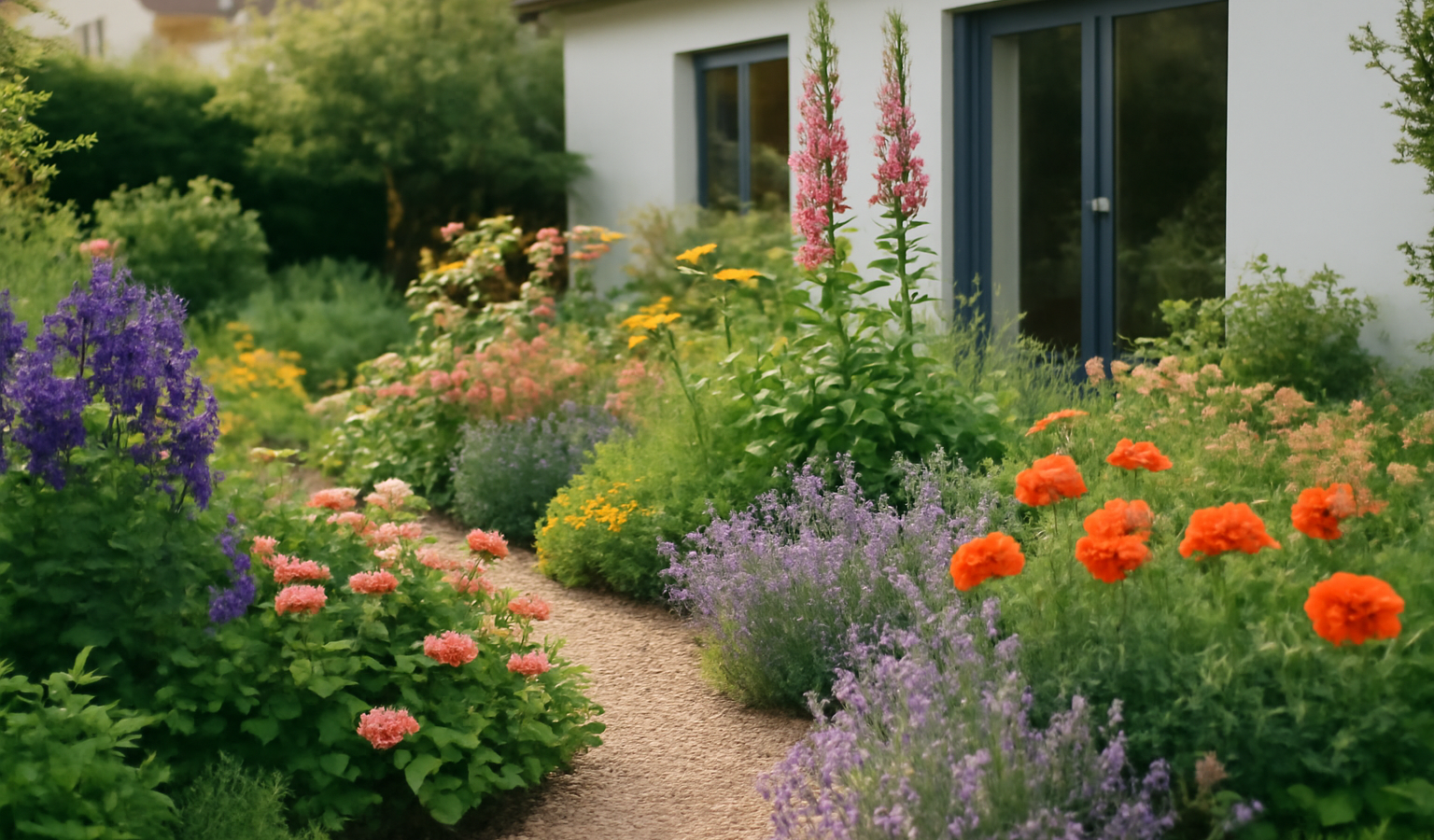
A cottage garden is the most forgiving design style there is, because its whole charm comes from controlled abundance rather than precision. The goal is a tumble of color packed wall to wall, with roses leaning over a path, hollyhocks against a fence, and self-sowing annuals filling every gap. It looks effortless, but the best cottage gardens are built on a few simple rules: dense planting, a backbone of repeat-blooming perennials, generous self-seeders, and a relaxed structure that keeps the chaos from reading as neglect. Get those right and you can plant a 200-square-foot bed that blooms from April frost-free dates through hard frost in October.
Key Takeaways
- Plant densely — 9–12 inches apart for perennials — so soil never shows and weeds get crowded out.
- Build a backbone of hardy repeat bloomers (roses, salvia, catmint, geranium) then layer in self-seeders for the loose look.
- Add quiet structure: a clear path, a fence or arch, and clipped or evergreen anchors so the planting reads as intentional.
- Choose USDA zone-hardy plants; in zones 5–8 the classic English-cottage palette thrives with little fuss.
- Maintenance is mostly deadheading, dividing every 3–4 years, and editing self-sown seedlings each spring.
What Defines a Cottage Garden
The cottage garden began as a practical English peasant plot — herbs, vegetables, fruit and a few flowers crammed into a small space around the house. That origin still shapes the look: informality, density, and a mix of useful and ornamental plants. Four features define the style. First, abundance: beds are full to overflowing with no bare mulch on display. Second, informality: plants spill over edges, curve rather than line up, and mingle instead of sitting in tidy blocks. Third, a romantic, mostly soft palette — pinks, lavenders, blues, creams and whites, punctuated by deeper magenta or claret. Fourth, vertical layering: tall spires and climbers at the back, mounding perennials in the middle, low edgers and self-seeders at the front.
Crucially, a cottage garden is not a wildflower meadow. It feels loose but it is curated. The difference between a charming cottage border and a weedy mess is the presence of structure — a path you can follow, an arch or fence that frames the planting, and a few strong repeating plants that give the eye a rhythm to follow through the riot of color.
Signature Plants for a Cottage Garden
The plant list is the heart of the style. Build it in three tiers so you get continuous bloom and the layered look.
The Backbone: Repeat-Blooming Perennials and Roses
These are the workhorses you plant once and keep for years. Repeat-flowering shrub roses such as ‘The Generous Gardener’, ‘Munstead Wood’ or any of the David Austin English roses give the quintessential cottage scent and bloom from June to frost in zones 5–9. Pair them with Nepeta ‘Walker’s Low’ (catmint), which froths lavender-blue for months and re-blooms if sheared back. Hardy geranium ‘Rozanne’ blooms violet-blue from June until frost and weaves between everything. Salvia nemorosa ‘Caradonna’, Phlox paniculata, peonies, and Shasta daisies round out the dependable middle layer. Lavender (‘Hidcote’ or ‘Munstead’) adds fragrant gray-green structure along a sunny path edge.
The Spires: Vertical Drama
Height creates the cottage skyline. Hollyhocks (Alcea rosea) reach 6–8 feet against a fence; foxgloves (Digitalis) send up 3–5 foot bells; delphiniums tower in cooler zones; and Verbascum, larkspur and Lupinus add more vertical lines. Many of these are biennials or short-lived, which is fine — they reseed and keep coming back.
The Self-Seeders and Fillers
This tier supplies the magic of a garden that plants itself. Sow or let naturalize Nigella (love-in-a-mist), Calendula, poppies (Shirley and breadseed), Verbena bonariensis, sweet alyssum, forget-me-nots, columbine (Aquilegia) and feverfew. These fill every gap, soften edges, and pop up in pleasant surprises each spring. Add climbers — clematis, sweet peas, and climbing roses — on every vertical surface. For a useful nod to cottage roots, tuck in chives, sage, thyme and parsley among the flowers; they earn their place and the bees love them.
Hardscape, Paths and Materials
Cottage hardscape is humble and weathered, never slick. The path is the single most important element — it gives you access and provides the structure that makes the planting read as a garden rather than a thicket. Use brick laid in a basket-weave or herringbone pattern, irregular flagstone, pea gravel, or simple stepping stones set into the soil. Keep the path narrow (24–36 inches) and let plants flop over the edges so it nearly disappears in summer. Avoid large expanses of poured concrete or rigid modern pavers; they fight the soft mood.
For boundaries and verticals, reach for traditional materials: a low picket fence (painted white or left to gray), woven willow or hazel hurdles, a simple wooden or metal arch over the entry, and rustic supports like birch twigs, bamboo tepees, or wrought-iron obelisks for climbers. A weathered bench, a stone birdbath, a galvanized watering can, or a salvaged trough as a planter all add the lived-in, collected feel. Materials should look as if they have been there for decades — patina is a feature, not a flaw.
Layout Principles
Even an informal garden needs a plan. Start with the bones, then loosen up. Lay out a clear path or two — a single line to the door, or a small loop — and shape the beds along it with gentle curves rather than straight lines. Make beds deep enough (at least 3–4 feet) to layer plants front to back. Place tall spires and climbers at the back or against the fence, mounding perennials in the middle, and edgers and self-seeders spilling at the front.
The trick that separates good cottage gardens from messy ones is repetition. Pick three or four signature plants — say catmint, a particular rose, and Verbena bonariensis — and repeat them in drifts down the border. The eye follows the repetition and the rest of the diversity reads as charming rather than chaotic. Plant in odd-numbered groups (3s, 5s, 7s) and let the groups merge at the edges. Aim for a long bloom relay: bulbs and forget-me-nots in spring, roses and perennials in early summer, phlox and daisies in midsummer, asters and Japanese anemones into fall. There should never be a moment with nothing in bloom.
Step-by-Step: How to Create Your Cottage Garden
- Pick a sunny spot. Most cottage classics want full sun (6+ hours). Note your USDA zone — it dictates which roses, lavenders and perennials will survive winter.
- Define the structure. Mark the path and bed edges with a hose or rope, then install the path and any fence, arch or obelisks before you plant. It is far easier to do hardscape first.
- Improve the soil. Cottage plants are hungry. Dig or top-dress with 2–3 inches of compost or well-rotted manure across the whole bed; most of these plants want fertile, well-drained, neutral-to-slightly-alkaline soil.
- Plant the backbone first. Set out roses and the key repeat perennials in drifts, spacing perennials 9–12 inches apart so they knit together by midsummer. Plant climbers at the base of every vertical support.
- Add spires and fillers. Tuck hollyhocks and foxgloves at the back, then scatter or plant self-seeders in every remaining gap. Water everything in well.
- Mulch lightly and let it sow. A thin mulch conserves moisture but leave some open soil so self-seeders can germinate. The first year looks sparse; by year two it fills in, and by year three it billows.
For the boundary itself, a classic landscaping and outdoor-living approach pairs the planting with a fence or low hedge that frames the abundance. If you want to add fragrant verticals quickly, learn how to grow climbing roses over your arch, and consider star jasmine for a scented, semi-evergreen screen in milder zones.
Maintaining a Cottage Garden
The reward of the cottage style is that mature beds are low-maintenance — dense planting smothers most weeds. Your real jobs are four. Deadhead roses and repeat bloomers through summer to keep flowers coming, and shear catmint and hardy geranium back by half after their first flush to trigger a second. Edit the self-seeders each spring: thin the seedlings, pull what landed where you don’t want it, and move volunteers around — this is where you steer the garden. Divide clumping perennials every 3–4 years in spring or fall to keep them vigorous and to make free plants. And cut back spent perennials in late fall or, better, leave seed heads standing through winter for the birds and clear them in early spring.
Watch for the usual suspects: aphids on rosebuds (blast with water or invite ladybugs), powdery mildew on phlox and bee balm (choose resistant cultivars and give them airflow), and slugs on hosta and delphinium. Feed roses and heavy bloomers in spring with compost and a balanced organic fertilizer. Beyond that, resist the urge to over-tidy — a little wildness is the entire point.
Frequently Asked Questions
How much space do I need for a cottage garden?
Almost none — the style was born in tiny plots. A border just 3–4 feet deep and 8–10 feet long can hold the full layered look. Density matters far more than square footage; you can create a convincing cottage garden in a front yard strip or even large containers.
Is a cottage garden low-maintenance?
Once established (year two or three) it is, because tight planting crowds out weeds. The ongoing work is mostly deadheading, editing self-sown seedlings each spring, and dividing perennials every few years. It needs less weeding than a sparse, mulched border but more “managing” of vigorous self-seeders.
What are the easiest cottage garden plants for beginners?
Start with catmint, hardy geranium ‘Rozanne’, Shasta daisy, salvia, foxglove, calendula and nigella. They are forgiving, long-blooming, and several reseed themselves. Add one repeat-flowering shrub rose for the classic centerpiece once you’re comfortable.
Can I have a cottage garden in shade?
Yes, with a different palette. Swap sun-lovers for foxglove, columbine, hellebore, astrantia, hardy geranium, ferns and hosta. The dense, layered, informal approach is the same — only the plant list changes for lower light.
How do I keep a cottage garden from looking messy?
Add quiet structure and repetition. A clear path, a fence or arch, and a few clipped or evergreen anchors give the eye order. Then repeat three or four signature plants in drifts through the border so the diversity reads as deliberate rather than chaotic.