

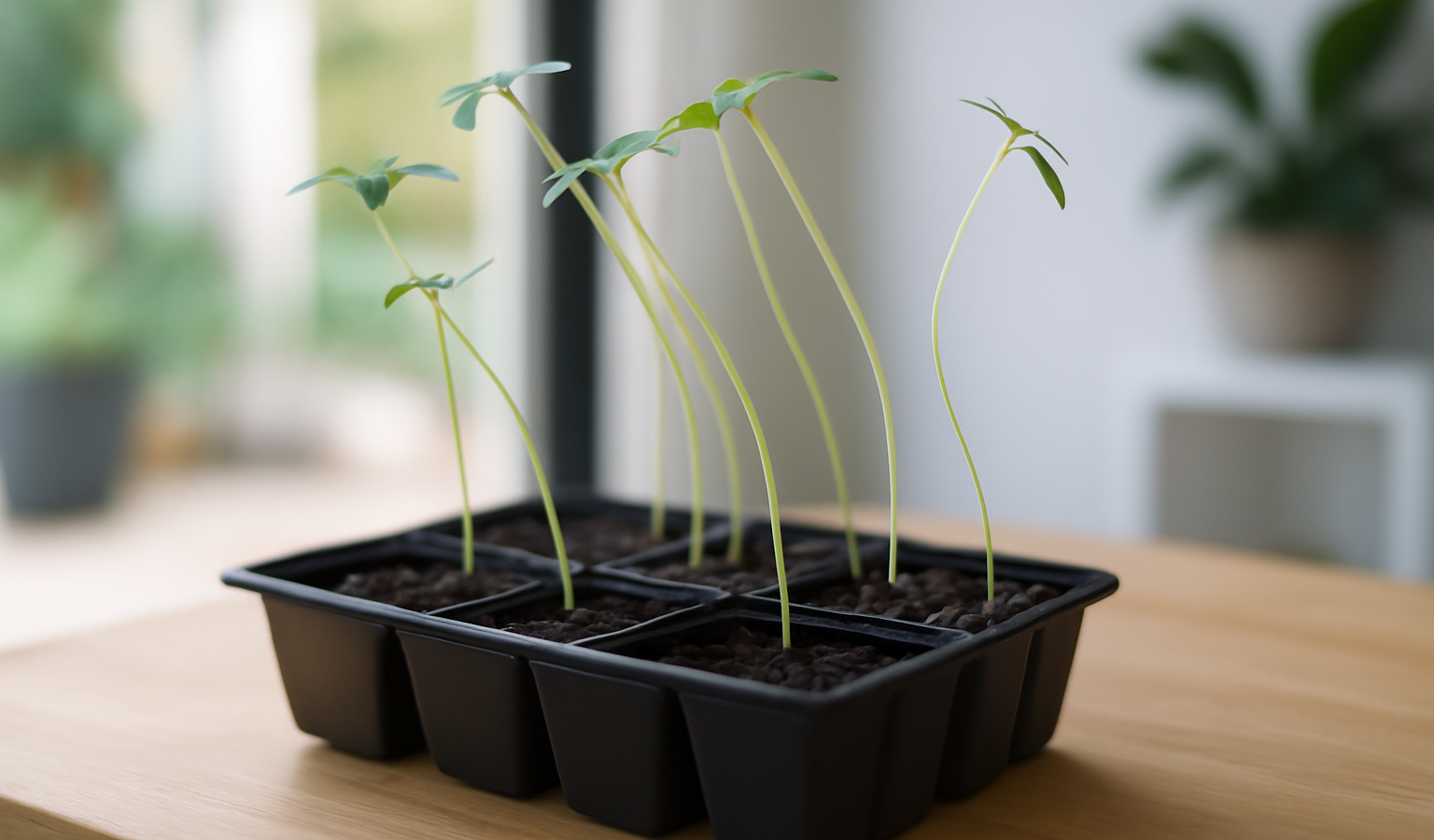
Leggy seedlings are the single most common mistake new seed-starters make indoors, and almost every case comes down to the same thing: the seedling is stretching toward a light source that isn’t bright enough or isn’t close enough. A healthy young seedling should be short and stocky, with the first leaves sitting an inch or two above the soil on a sturdy stem. A leggy one is the opposite—a long, thin, pale stem that flops over under the weight of its own leaves, often leaning hard in one direction. The good news is that legginess is a husbandry problem, not a disease, which means you can correct the conditions and either rescue the seedlings you have or grow a sturdier next batch. This guide walks through the three real causes—too little light, too much heat, and crowded spacing—then shows how to fix seedlings that have already stretched and how to prevent it from happening again.
Key Takeaways
- Insufficient light is the number-one cause. A bright windowsill is rarely enough; seedlings want 14–16 hours a day of light kept 2–4 inches above the leaves.
- Too much heat with too little light pushes fast, weak top growth. Drop the temperature to 60–65°F once seeds have sprouted.
- Crowding makes seedlings race each other upward. Thin to one strong seedling per cell and give them room.
- You can often rescue mild legginess by burying the stretched stem deeper at transplant (tomatoes and many others root along the stem) and running a fan for stronger stems.
- Prevention beats rescue: get a real grow light close to the seedlings the moment they germinate, not after they stretch.
Cause 1: Not Enough Light (the usual culprit)
If your seedlings stretched within a few days of breaking the surface, light is almost certainly the problem. A seedling is genetically programmed to grow upward fast in low light, “searching” for the sun—a survival trait that’s a disaster on a windowsill. Even a bright south-facing window delivers a fraction of full outdoor sun, and the light comes from one side, so seedlings lean and elongate toward it.
How to diagnose it
Look at the stem between the soil and the seed leaves (cotyledons). If that section is more than about half an inch to an inch long, pale, and thin, the seedling stretched looking for light. A clear lean toward a window confirms it. Seedlings under a weak light or one mounted too high—a foot or more above the tray—show the same symptoms even though a light is technically present. Wattage and distance both matter; a shop light hung high over the bench is not the same as a light kept just above the foliage.
How to fix it
Get a real light source and get it close. A basic LED or fluorescent shop light works fine; you do not need an expensive horticultural fixture for seed starting. Hang it so the bulbs sit just 2 to 4 inches above the tops of the seedlings and raise it as they grow to keep that gap. Run it 14 to 16 hours a day on a timer—seedlings need a dark period, so resist leaving it on 24/7. If you’re relying on a window, supplement with a light rather than depending on the glass alone; a windowsill simply cannot deliver enough intensity for stocky growth in most homes, especially in winter when the sun is low and days are short.
For seedlings that have already stretched, lowering the light close immediately stops further elongation and lets the next leaves come in tighter and stronger. Combine that with the transplant and airflow fixes below to rescue what you have.
Cause 2: Too Much Heat for the Light You’re Giving
Heat and light have to be balanced. A heat mat is excellent for germination—it warms the soil to 70–80°F and gets seeds up fast. But the moment seedlings emerge, that same warmth, paired with weak light, drives lush, soft, fast top growth: exactly the leggy look. The plant has the energy and warmth to grow quickly but not enough light to grow compactly, so it puts everything into reaching upward.
How to diagnose it
Suspect heat if your seedlings are on a heat mat or sitting near a heat vent, radiator, or warm appliance, and they stretched even though a light is present. Soft, floppy, fast growth with pale color often points to a warm-but-dim environment. Feel the soil and check the room temperature: if it’s consistently above 70°F around the seedlings after germination, heat is contributing.
How to fix it
Take the seedlings off the heat mat once most have germinated and move them to a cooler spot—aim for around 60 to 65°F. Cooler air slows the rush of soft growth and lets the plant build a thicker, sturdier stem under your light. This is why an unheated basement or spare room with grow lights often produces tougher seedlings than a warm, sunny kitchen windowsill. Keep them away from direct heat sources and don’t let a closed humidity dome cook them; vent or remove the dome after germination.
Cause 3: Crowding and Tight Spacing
When seedlings are packed together—several to a cell, or trays jammed wing-to-wing—they shade each other and compete for light. Each one responds the only way it can: by stretching upward faster than its neighbors to avoid being overtopped. The result is a forest of thin, drawn-out stems even if your light is otherwise adequate.
How to diagnose it
Count the seedlings per cell or per square inch. If you sowed several seeds together and let them all grow, or if leaves from neighboring plants are touching and overlapping, crowding is at play. Seedlings on the dense interior of a packed tray are usually leggier than those on the edges with more open light.
How to fix it
Thin to one strong seedling per cell. Rather than pulling extras—which disturbs the roots of the keeper—snip the weaker ones off at the soil line with small scissors. Space cells and trays so light reaches every plant from above, and pot seedlings up into larger containers before they get root-bound and start shading each other. Giving each seedling its own space and unobstructed light removes the competitive stretch entirely.
How to Rescue Seedlings That Are Already Leggy
A stretched seedling won’t shrink back, but you can still grow it into a healthy plant. Start by correcting the cause—lower the light, drop the heat, thin the crowding. Then use these recovery moves:
- Bury the stem deeper. Tomatoes, tomatillos, peppers (to a lesser degree), and many other plants can be transplanted up to their lowest leaves; the buried stem grows roots and the plant becomes shorter and stockier overnight. This is the single best fix for leggy tomato seedlings—pot them up into deeper containers and sink the long stem under the soil.
- Run a small fan on a low setting for a few hours a day. The gentle movement triggers the seedlings to thicken their stems (the same way wind toughens outdoor plants), and the airflow also reduces damping-off disease.
- Brush the tops lightly with your hand once or twice a day if you have no fan—the same mechanical stress strengthens stems.
- Stake or hill seedlings that can’t be buried. For plants that won’t root along the stem, mound a little extra mix around the base for support and keep the light close to prevent further stretch.
Severely leggy seedlings that flop flat and can’t stand may not be worth saving—if you have time before your planting window, it’s often faster to start a fresh batch with the conditions corrected from day one.
How to Prevent Leggy Seedlings Next Time
Prevention is mostly about getting the environment right from the moment of germination instead of reacting after the stretch:
- Have the light ready before you sow. The instant seeds sprout, light needs to be 2–4 inches above them. Many people wait until they see legginess to add light—by then the damage is done.
- Use a timer for a consistent 14–16 hour photoperiod and raise the fixture as plants grow.
- Germinate warm, grow cool. Heat mat for sprouting, then move to 60–65°F.
- Sow thinly and thin early so no seedling has to compete for light.
- Add airflow with a fan from the start to build sturdy stems and prevent fungal issues.
- Don’t start too early. Seedlings held indoors too long before transplant outgrow their light and stretch; time your sowing to your last frost date so they go out while still compact.
These same light, heat, and spacing principles carry over once your plants graduate to the garden. If you’re growing in tight quarters, our guide on raised bed vs in-ground gardening covers how to give transplants room to thrive, and you’ll find more small-space techniques on the Urban Gardening hub. If your rescued seedlings later look pale or yellow after transplanting, see why leaves turn yellow for the next round of diagnosis.
Frequently Asked Questions
Can leggy seedlings still produce a good plant?
Yes, mild legginess is usually fixable. Correct the light and heat, run a fan to strengthen the stem, and for plants like tomatoes bury the long stem deeper at transplant so it roots along its length and becomes stocky. Only severely floppy seedlings that can’t stand are worth replacing.
How close should grow lights be to seedlings?
Keep LED or fluorescent shop lights about 2 to 4 inches above the tops of the seedlings, and raise the fixture as the plants grow to maintain that gap. Run them 14 to 16 hours a day on a timer. A light mounted a foot or more above the tray is usually too far and causes stretching.
Is a sunny windowsill enough light for seedlings?
Usually not. Even a bright south window delivers far less intensity than full sun, and the one-directional light makes seedlings lean and stretch. In most homes—especially in winter—you’ll need a supplemental grow light kept close above the seedlings to grow compact, sturdy plants.
Should I keep seedlings on a heat mat after they sprout?
No. A heat mat is great for germination, but once most seeds have emerged, take them off the mat and move them somewhere around 60 to 65°F. Warm soil plus weak light drives soft, leggy growth; cooler air lets the seedlings build thicker, stronger stems under your light.
Why are my seedlings leaning to one side?
They’re bending toward a light source that’s coming from one direction, almost always a window. Rotate the tray daily as a stopgap, but the real fix is overhead light positioned directly above the seedlings so they grow straight up instead of reaching sideways.