

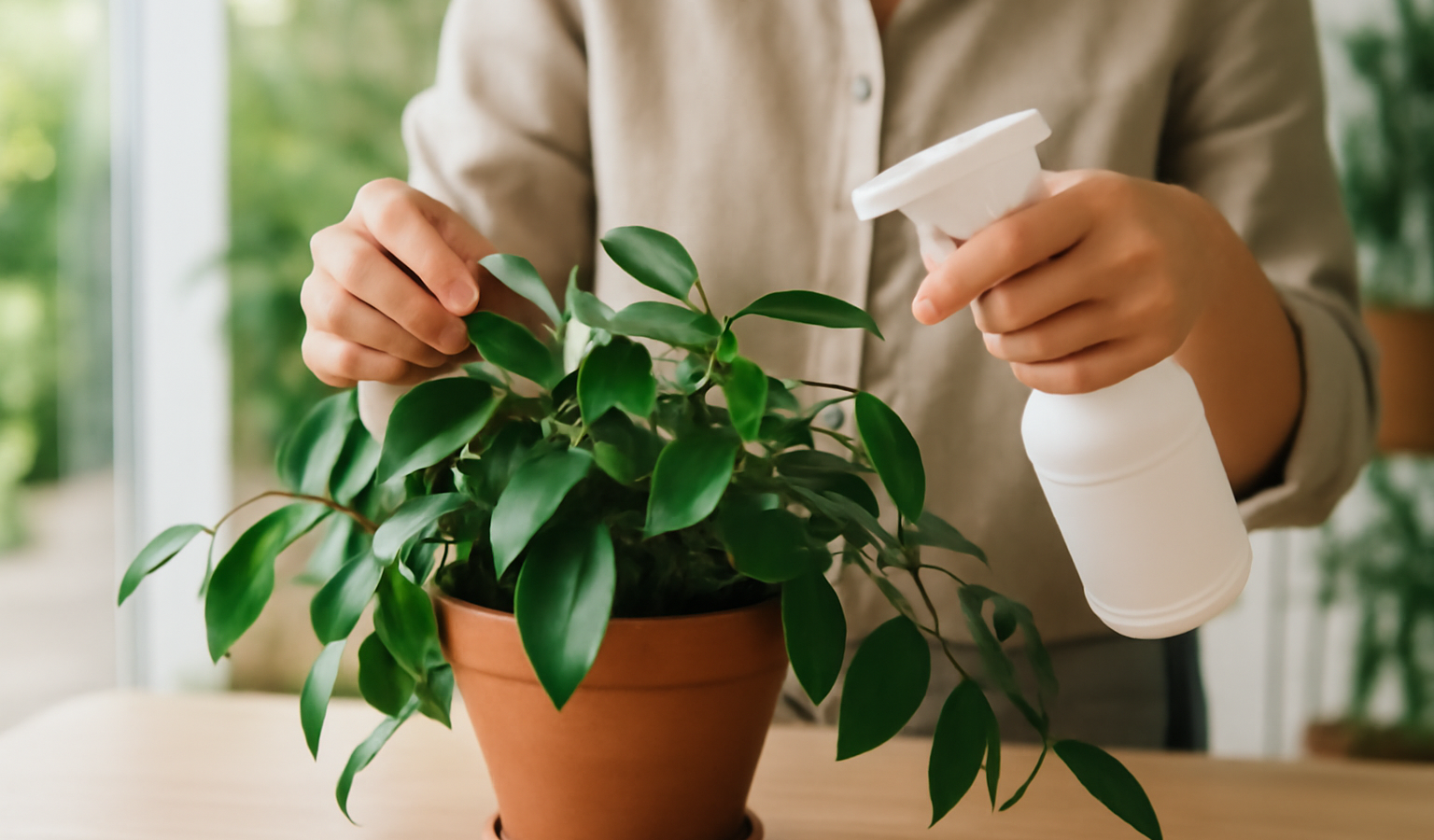
The fastest way to keep a Hoya carnosa happy is to treat it like the semi-succulent it is: give it bright indirect light with a little morning sun, let the soil dry out substantially before you water again, plant it in a chunky, fast-draining mix, and then mostly leave it alone. This is one of the most forgiving houseplants you can own, and a well-grown specimen will outlive most of your furniture. The catch most people run into is not keeping the plant alive, but getting it to produce those famous waxy, star-shaped flower clusters. That comes down to maturity, light, and one pruning mistake you must avoid. We will cover all of it below.
In this guide
Key Takeaways
- Light: Bright indirect light with some gentle morning sun; variegated types need even more to stay colorful and to bloom.
- Water: Let the top 2 inches or more dry out, then water thoroughly and drain. Overwatering causes root rot, the number one killer.
- Soil: Very chunky and well-draining. Think orchid bark plus perlite plus a little potting mix, or an amended cactus mix.
- Flowers: Never cut off the spent flower spurs (peduncles). The plant reblooms from the exact same spurs year after year.
- Bonus: Hoya carnosa is generally considered non-toxic and pet-safe, making it a low-worry choice for homes with cats and dogs.
What Is a Hoya Carnosa?
Hoya carnosa is the original wax plant, sometimes sold as the porcelain flower, and it has been a windowsill favorite for well over a century. It is an epiphytic, trailing-and-climbing vine native to East Asia and Australia, where in the wild it scrambles up tree trunks and along branches, clinging on with aerial roots rather than rooting deeply in soil. That epiphytic background explains almost everything about how you should care for it: the roots want air, they hate sitting wet, and the plant stores water in its thick, glossy, slightly succulent leaves.
Because those leaves are essentially little water reservoirs, the wax plant behaves much more like a succulent than like a typical tropical foliage plant. It is genuinely drought tolerant, it does not mind being neglected for a week or two, and it punishes overwatering harder than almost any other mistake. These plants are also remarkably long-lived. With reasonable care a single Hoya carnosa can thrive for decades, getting more impressive and more floriferous as it ages, which is part of why old specimens get handed down between gardeners.
There are dozens of named varieties, and collectors fall down the rabbit hole fast. The most common ones you will see are ‘Krimson Queen’ (cream-edged leaves), ‘Krimson Princess’ (cream-centered leaves), the curling, twisted ‘Compacta’ known as the Hindu rope, the pink-toned ‘Tricolor’, and the classic green-and-cream ‘Variegata’. The care below applies to all of them, with one important note: the more variegation (cream, pink, or white) a leaf carries, the less chlorophyll it has, so those varieties need brighter light to thrive and to flower.
Light Requirements
Hoya carnosa wants bright indirect light, and unlike many houseplants it genuinely benefits from a few hours of direct sun, especially gentle morning light. An east-facing window is close to ideal. A bright north window will keep the plant alive but rarely produces flowers. South and west windows work beautifully as long as you pull the plant back a foot or two from the glass during the harshest summer afternoons, since prolonged scorching sun through hot glass can bleach or burn those waxy leaves.
Light is the single biggest lever you have over blooming. A hoya in dim conditions will grow slowly, stretch toward the window with long bare stretches between leaves, and stubbornly refuse to flower no matter how long you wait. If your plant is healthy but has never bloomed, low light is the most likely culprit. Move it to the brightest spot you can offer short of all-day scorching sun, and be patient. Variegated cultivars are the most light-hungry of all; without enough light their cream and pink tones fade back toward green and growth gets leggy.
If you do not have a bright enough window, a basic full-spectrum grow light running 10 to 12 hours a day will close the gap nicely and can push a reluctant plant into bloom.
Watering Your Wax Plant
This is where most wax plants are won or lost. Because Hoya carnosa stores water in its leaves, it wants to dry out substantially between drinks. Wait until at least the top 2 inches of soil are bone dry before watering again; many growers go further and let the pot dry out almost completely, especially in winter. When you do water, do it thoroughly. Run water through the pot until it drains freely from the bottom, let the roots take a good drink, and then empty the saucer so the plant is never standing in water.
Overwatering is the number one killer of hoyas. Roots that stay wet in dense, soggy soil suffocate and rot, and by the time the leaves react the damage is often advanced. The early warning signs are yellowing leaves and a soft, mushy base. If you are not sure whether the problem is too much water or a deeper drainage failure, our breakdown of root rot versus overwatering walks through how to tell them apart and how to rescue a struggling plant before it is too late.
When in doubt, underwater. A thirsty hoya tells you clearly: the normally plump, firm leaves go soft and start to wrinkle or pucker. That is your cue to water, and the leaves usually plump back up within a day or two. A wrinkled-but-firm plant recovers easily; a rotted one often does not. Cut your watering frequency back sharply in the cooler, lower-light months, when the plant is barely growing and uses far less water.
The Right Soil and Pot
Remember the epiphyte: in nature these roots cling to bark in open air, not buried in dense earth. The best potting mix recreates that airy, fast-draining environment. A reliable recipe is roughly equal parts orchid bark, perlite, and a quality potting mix, which gives you chunky texture, big air pockets, and excellent drainage. If you would rather buy something off the shelf, a cactus and succulent mix amended with extra perlite and a handful of orchid bark works very well.
Whatever container you choose, it must have a drainage hole. Hoyas also genuinely like to be slightly rootbound, so resist the urge to overpot. A snug pot dries out faster (which suits this plant) and, as a bonus, mild rootbound stress is one of the conditions that encourages blooming. If you appreciate plants that thrive on a little benign neglect, you will recognize the same forgiving streak in other low-fuss favorites covered in our Plants and Flowers hub.
Humidity and Temperature
Hoya carnosa is delightfully unfussy about humidity. It tolerates average household air just fine, though like most plants from humid regions it appreciates a bit more, ideally somewhere around 50 to 60 percent. If your home runs dry in winter, grouping plants together or running a small humidifier nearby will keep the foliage looking its best, but this is a nice-to-have rather than a make-or-break.
Temperature-wise, aim for a comfortable 60 to 85 degrees Fahrenheit, which is to say ordinary room temperature. The wax plant is not frost hardy and should never be exposed to freezing conditions. Sustained temperatures below 50 degrees are risky and can cause damage, so if you summer your hoya outdoors, bring it back inside well before the first cold snap. That said, a brief cool, dry spell in winter is not a bad thing at all, and we will see why in the blooming section.
How to Get a Hoya Carnosa to Bloom
The flowers are the whole reason most people grow this plant, and they are spectacular: tight, rounded clusters (umbels) of dozens of small, perfectly star-shaped, almost porcelain-looking blooms, often blush pink with a deep red or pink center, and intensely fragrant in the evening. They also drip a sweet, sticky nectar, so you may want to keep a saucer or cloth underneath a flowering plant to protect your furniture or floor.
The One Rule You Cannot Break
Hoyas bloom from specialized stubby stems called spurs or peduncles. Here is the critical part: after a cluster of flowers fades and drops, do not cut off the spur. The plant reblooms from that exact same spur, year after year, often producing more flowers each season. Snipping off what looks like a spent, leafless little stalk is the single most common reason a previously blooming hoya stops flowering. Leave every spur in place, even when bare.
The Conditions That Trigger Flowering
Beyond protecting the spurs, blooming comes down to a handful of conditions stacking up together. First, maturity: a young plant simply will not flower, and many hoyas need to reach 2 to 3 years old before they are ready. Second, bright light, as discussed above, is non-negotiable for flowering. Third, the plant should be slightly rootbound rather than freshly potted into a big container. And fourth, a slightly cool, drier winter rest period (think reduced watering and a few weeks of cooler temperatures) often acts as the trigger that nudges a mature, well-lit plant into setting buds. Get those four lined up, keep your spurs intact, and the flowers will come.
Support, Training, and Display
Hoya carnosa is naturally a vine, so you have two good display options. You can let it trail freely from a hanging basket or a high shelf, where the long stems and leaf clusters cascade down beautifully. Or you can train it to climb a trellis, a hoop, or a moss pole, which keeps the plant compact and showcases the flower clusters at eye level. Many growers train hoyas around a simple wire hoop fixed in the pot, guiding the stems as they grow. Either way the plant is forgiving and the long stems are easy to tuck and redirect.
Fertilizing
Hoyas are not heavy feeders, but a little fertilizer during the active growing season fuels healthy growth and flowering. Feed roughly once a month in spring and summer with a balanced fertilizer diluted to about half strength. If your goal is flowers, switch to a high-potassium or high-phosphorus bloom fertilizer, the kind marketed for flowering plants, as too much nitrogen pushes leafy growth at the expense of blooms. Stop feeding entirely in fall and winter while the plant is resting. Always fertilize onto already-moist soil, never bone-dry roots, to avoid burning them.
Propagation
Propagating Hoya carnosa is genuinely easy and a great way to share the plant. Take a stem cutting with at least 1 to 2 nodes (the points where leaves attach, where new roots emerge). You can root cuttings in a glass of water, in damp sphagnum moss, or in straight perlite. Keep them warm and in bright indirect light, and roots typically appear within a few weeks. Once the roots are an inch or two long, pot the cutting up into your usual chunky hoya mix. One thing to skip: do not propagate from a spur or a flowering peduncle, since those are for blooming, not rooting. Take cuttings from leafy vine sections instead.
Repotting
Repot infrequently. Because the wax plant likes being snug and a tight pot encourages blooming, you generally only need to move up a size every 2 to 3 years, or when roots are clearly circling and pushing out of the drainage hole. Spring is the best time, at the start of the growing season. When you do repot, go up just one pot size, refresh the chunky mix, and resist the temptation to give it a roomy new home. If you enjoy this kind of low-intervention, semi-succulent plant, you may also like the equally easygoing trailing options in our guide to the marble queen pothos.
Common Problems and How to Fix Them
No flowers. The most common complaint. Usual causes are an immature plant, not enough light, over-fertilizing with high-nitrogen feed, or, very often, having cut off the flower spurs. Address light first, leave every spur in place, switch to a bloom-focused fertilizer, and wait for maturity.
Yellowing leaves. Almost always a sign of overwatering or poor drainage. Check the roots, let the soil dry out far more between waterings, and make sure the pot drains freely. Repot into chunkier mix if the soil stays soggy.
Wrinkled, puckered leaves. The opposite problem: underwatering. The plant has drawn down its leaf reserves. Give it a thorough drink and the leaves should firm back up within a day or two.
Pests. Mealybugs are the classic hoya pest and absolutely love these plants, hiding in leaf joints and among flower clusters as little white cottony specks. Watch also for aphids, scale, and spider mites. Treat by wiping the plant down, dabbing mealybugs with a cotton swab dipped in rubbing alcohol, and following up with insecticidal soap or neem oil, repeating every week or so until they are gone. Inspect new plants carefully before bringing them home. For more easygoing, problem-resistant companions to grow alongside it, the Philodendron Brasil is a forgiving pick.
Is Hoya Carnosa Toxic to Pets?
Good news here: Hoya carnosa is generally considered non-toxic and pet-safe, which makes it a relaxed choice for homes with curious cats and dogs. The milky sap can be mildly irritating to skin or if eaten in quantity, so it is still sensible to keep nibbling to a minimum, but the wax plant is not in the genuinely dangerous category that so many popular houseplants fall into. For many pet owners, that combination of toughness, beauty, and low toxicity is exactly what makes the hoya a keeper.
Frequently Asked Questions
Why won’t my Hoya carnosa bloom?
The usual reasons are that the plant is too young (many need 2 to 3 years), it is not getting enough light, it has been over-fertilized with nitrogen, or its flower spurs were accidentally pruned off. Provide bright light, leave every spur intact, switch to a bloom fertilizer, and consider a cool, dry winter rest to trigger flowering.
How often should I water a wax plant?
There is no fixed schedule. Water only when at least the top 2 inches of soil are dry, often every 1 to 2 weeks in summer and much less in winter. When in doubt, wait. This semi-succulent is far more tolerant of being too dry than too wet.
Should I cut off the flower stalks after the blooms fade?
No, never. Hoyas rebloom from the same spurs (peduncles) season after season. Cutting them off removes future flowers and is one of the most common reasons a plant stops blooming. Leave them in place even when bare.
Is Hoya carnosa safe for cats and dogs?
Yes. It is generally considered non-toxic and pet-safe. The sap can cause mild irritation if chewed, so discourage snacking, but it is far safer than most common houseplants.
Why are my hoya’s leaves wrinkled?
Wrinkled, puckered leaves usually mean the plant is thirsty and has used up its stored water. Give it a thorough watering and the leaves should plump back up within a day or two. If leaves yellow and go soft instead, that points to overwatering.