

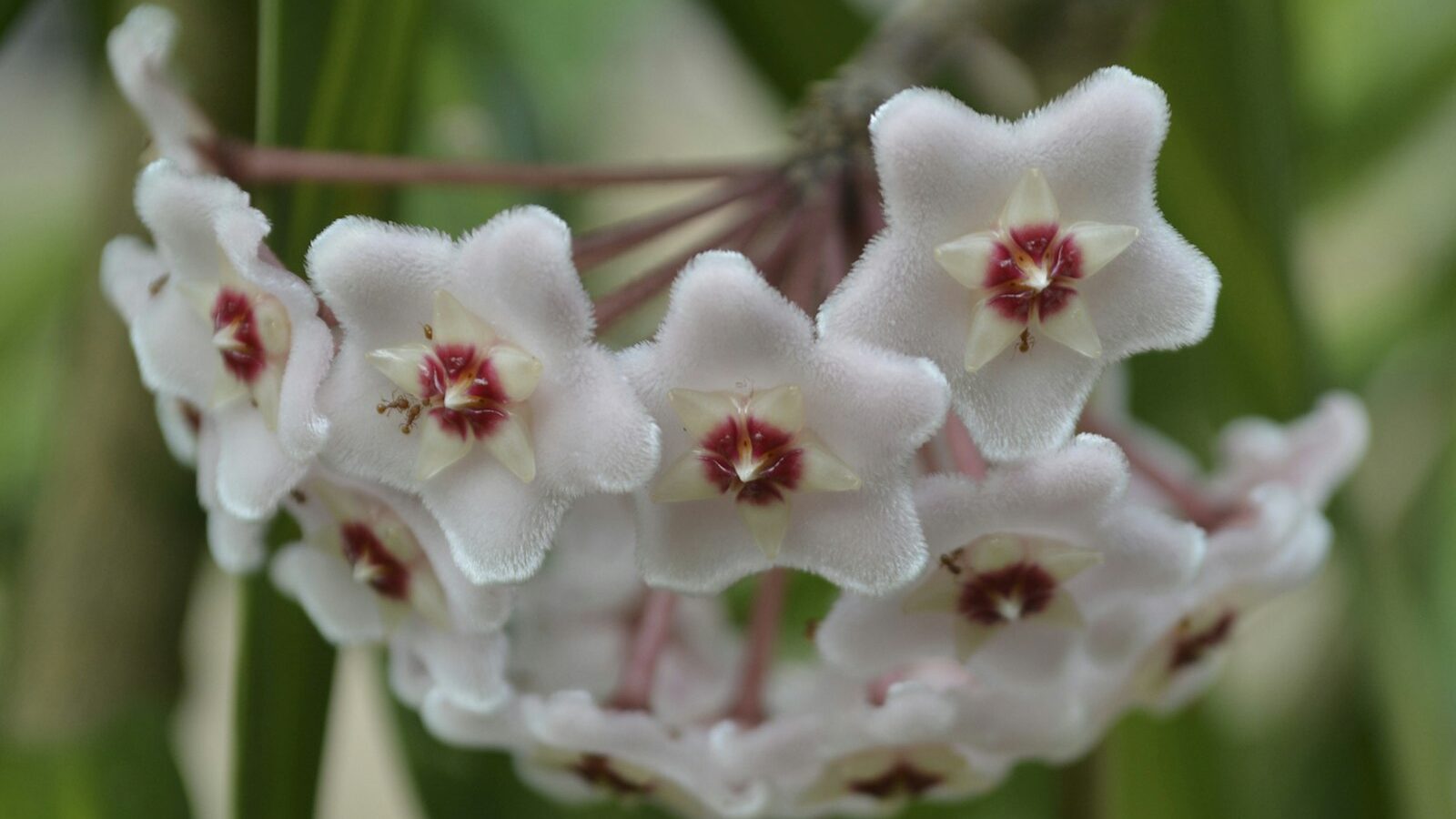
Hoyas, often called wax plants for their thick, glossy leaves and porcelain-like star-shaped flowers, are some of the most rewarding houseplants you can grow. They are forgiving, long-lived, and reward a little patience with clusters of sweetly scented blooms. This guide covers everything from choosing a variety to coaxing those elusive flowers and keeping your wax plant thriving for decades.
Hoya quick care
- Light: bright indirect (for blooms)
- Water: let dry; semi-succulent
- Humidity: moderate-high
- Soil: chunky, airy, well-draining
- Don’t cut old flower spurs; pet-safe
As an Amazon Associate we earn from qualifying purchases.
Popular types of Hoya to grow
There are hundreds of Hoya species and cultivars, but a handful dominate plant shops and windowsills for good reason: they are tough, attractive, and bloom reliably once established. If you are just starting out, any of these make an excellent first hoya plant.
The classics and the collectibles
- Hoya carnosa — the original wax plant. Vigorous, near indestructible, and a heavy bloomer with pink-and-red star clusters. The best beginner Hoya.
- Krimson Queen & Krimson Princess — variegated carnosa cultivars. Krimson Queen has creamy leaf margins; Krimson Princess has creamy centers. Both are stunning and a touch slower-growing because of the variegation.
- Hoya pubicalyx — fast, easygoing, with speckled silver leaves and dusky pink-to-near-black flowers. A fantastic grower for impatient gardeners.
- Hindu rope (Hoya carnosa compacta) — twisted, curled, contorted leaves that cascade like a braided rope. Slow but spectacular and very drought-tolerant.
- Hoya kerrii (sweetheart Hoya) — sold as a single heart-shaped leaf for Valentine’s Day. A single leaf rarely vines, but a cutting with a node will eventually grow into a full plant.
Whichever you choose, the care basics below apply across the genus. Once you understand how one Hoya behaves, you understand them all.
Light: the key to blooms
Hoyas will survive in medium light, but they will not flower there. Bright indirect light is the single most important factor in getting a wax plant to bloom. Think of an east-facing window where the plant gets gentle morning sun, or a spot a few feet back from a bright south or west window where the strong midday rays are filtered.
Reading your light
- Too little light: leggy growth, long gaps between leaves, no flowers. The plant survives but sulks.
- Just right: compact growth, thick leaves, reddish tinge on new growth, and eventually flower spurs.
- Too much: bleached, yellowed, or scorched leaves from direct hot-afternoon sun. A little direct morning light is welcome; harsh afternoon sun through glass is not.
A small amount of gentle direct sun (morning) actually encourages blooming and brings out the prized “sun stress” color in many varieties. If your home is dim, a grow light will make a real difference. Hoyas appreciate similar light to many other trailing plants, including pothos, though Hoyas need brighter conditions than pothos to flower.
Watering and humidity
Hoyas are semi-succulent. Their thick leaves store water, which means the fastest way to kill one is overwatering. Let the soil dry out almost completely between waterings, then water thoroughly until it runs from the drainage holes. In bright light and warm temperatures during spring and summer, this might mean watering every 7 to 14 days; in winter, far less often.
How to water without rot
- Check the soil with your finger or a wooden skewer — if it is dry at least two inches down, it is time to water.
- When leaves look slightly soft or wrinkled, the plant is thirsty. Plump, firm leaves mean it has plenty.
- Always use a pot with drainage holes. Never let a Hoya sit in a saucer of standing water.
- Reduce watering sharply in the cooler, darker months when growth slows.
Hoyas enjoy moderate to high humidity, ideally 50 to 70 percent. Many species are tropical epiphytes, so a bit of extra moisture in the air keeps leaves supple and encourages flowering. A pebble tray, grouping plants together, or a small humidifier all help, especially in dry winter homes. That said, the popular carnosa types are remarkably tolerant of average household humidity.
The right soil and pot
Because most Hoyas grow as epiphytes in the wild — clinging to tree bark rather than rooting in soil — they need a chunky, airy, fast-draining mix. Standard potting soil holds far too much water and will suffocate the roots. An orchid or aroid mix is ideal, or you can blend your own.
A simple Hoya soil recipe
- 2 parts quality potting mix
- 1 part orchid bark
- 1 part perlite or pumice
- An optional handful of horticultural charcoal for extra drainage
The goal is a mix that holds a little moisture but drains within seconds and lets air reach the roots. When you water, it should flow straight through. This single change — switching from dense soil to a chunky epiphytic blend — solves most Hoya problems before they start.
Why won’t my Hoya bloom? (And the peduncle rule)
This is the most common Hoya question, and the answers are usually simple: not enough light, a plant too young to bloom, or — the big one — cutting off the flower spurs. Hoyas flower from specialized stems called peduncles, also known as spurs. After a cluster of flowers fades and drops, the peduncle stays behind on the plant.
Never cut the old flower spurs
Those bare, leafless little stubs are not dead. Hoyas rebloom from the very same peduncle, year after year, often producing more flowers each time. Many growers unknowingly snip off these “useless” stems and then wonder why their plant stops flowering. Leave every spur intact, even when it looks bare and unattractive. It is a future bouquet.
- Give it bright light — the number-one trigger for flowering.
- Let it get a little snug in its pot (more on this below).
- Be patient — young or recently disturbed plants often need a year or two of settled growth before blooming.
- Don’t move a budding plant — rotating or relocating a Hoya in bud can cause it to drop the buds.
- Feed lightly with a high-phosphorus or balanced fertilizer during the growing season to support blooms.
Training, propagation, and repotting
Hoyas are natural climbers and trailers, which gives you flexibility in how you display them. You can let the vines cascade from a hanging basket or train them upward for a fuller, more floriferous look. Climbing varieties in particular tend to bloom better when given vertical support.
Training on a trellis
Set a small trellis or hoop into the pot and gently guide the vines around it, securing loosely with soft plant ties. Training keeps the plant tidy, exposes more leaves to light, and often encourages more peduncles to form. A wire hoop is the classic look for carnosa and pubicalyx.
Easy propagation
Hoyas are among the easiest houseplants to propagate. Take a stem cutting with at least one or two nodes (the points where leaves attach) and a couple of leaves. Root it in water, in moist sphagnum moss, or directly in your chunky mix. Roots usually appear within a few weeks. Keep it warm and bright while it establishes. For a full walkthrough of techniques, see our guide on how to propagate houseplants.
Repotting: they like being snug
Unlike most houseplants, Hoyas actually prefer to be a little root-bound, and many growers believe being snug encourages blooming. Repot only every two to three years, or when roots are clearly bursting from the drainage holes. When you do, go up just one pot size and refresh the soil. A pot that is too large holds excess moisture and invites rot.
Common problems and pet safety
Hoyas are hardy, but a few issues crop up. The good news is that almost all of them trace back to watering or light, both easy to correct.
Pests and rot
- Mealybugs — the most common Hoya pest, hiding in leaf joints and on peduncles as white cottony specks. Dab with a cotton swab dipped in rubbing alcohol, then treat with insecticidal soap or neem oil.
- Spider mites and scale — less common but possible. Inspect new plants and wipe leaves regularly.
- Root rot — caused by overwatering or dense soil. Symptoms include yellowing, mushy stems, and a sour smell. Unpot, trim away rotted roots, and replant in fresh, airy mix.
- Soft, wrinkled leaves — usually thirst (underwatering) but can also signal root rot if the soil is wet. Check the roots if watering doesn’t help.
Pet-safe peace of mind
Good news for animal lovers: Hoyas are considered non-toxic to cats and dogs, making them one of the safest flowering houseplants for homes with curious pets. As always, it is best to discourage nibbling, but you can grow a wax plant without the worry that comes with many other tropicals. For more pet-friendly options and care basics, browse our full plant & flower care guide.
Frequently asked questions
How often should I water my Hoya?
Let the soil dry out almost completely, then water thoroughly. In spring and summer this is often every 7 to 14 days; in winter, much less. When the thick leaves feel slightly soft, it is time to water. Plump, firm leaves mean the plant has enough.
Why won’t my Hoya bloom?
The most common reasons are not enough light, a plant that is still too young, or accidentally cutting off the flower spurs. Give it bright indirect light, let it get a little root-bound, be patient, and never remove the bare peduncles — Hoyas rebloom from those same spurs every year.
Should I cut off the bare flower stems after blooming?
No. Those leafless stubs are peduncles, and your Hoya will produce new flower clusters from the very same spurs in future seasons, often more each time. Cutting them off removes future blooms. Always leave them on the plant.
Are Hoyas safe for cats and dogs?
Yes. Hoyas are widely considered non-toxic to cats and dogs, making the wax plant a great choice for pet households. It is still wise to discourage pets from chewing on any houseplant.
What soil is best for a Hoya?
A chunky, airy, fast-draining mix. Use an orchid or aroid blend, or mix two parts potting soil with one part orchid bark and one part perlite or pumice. Because Hoyas are epiphytes, they need plenty of air around their roots and will rot in dense, water-retentive soil.