

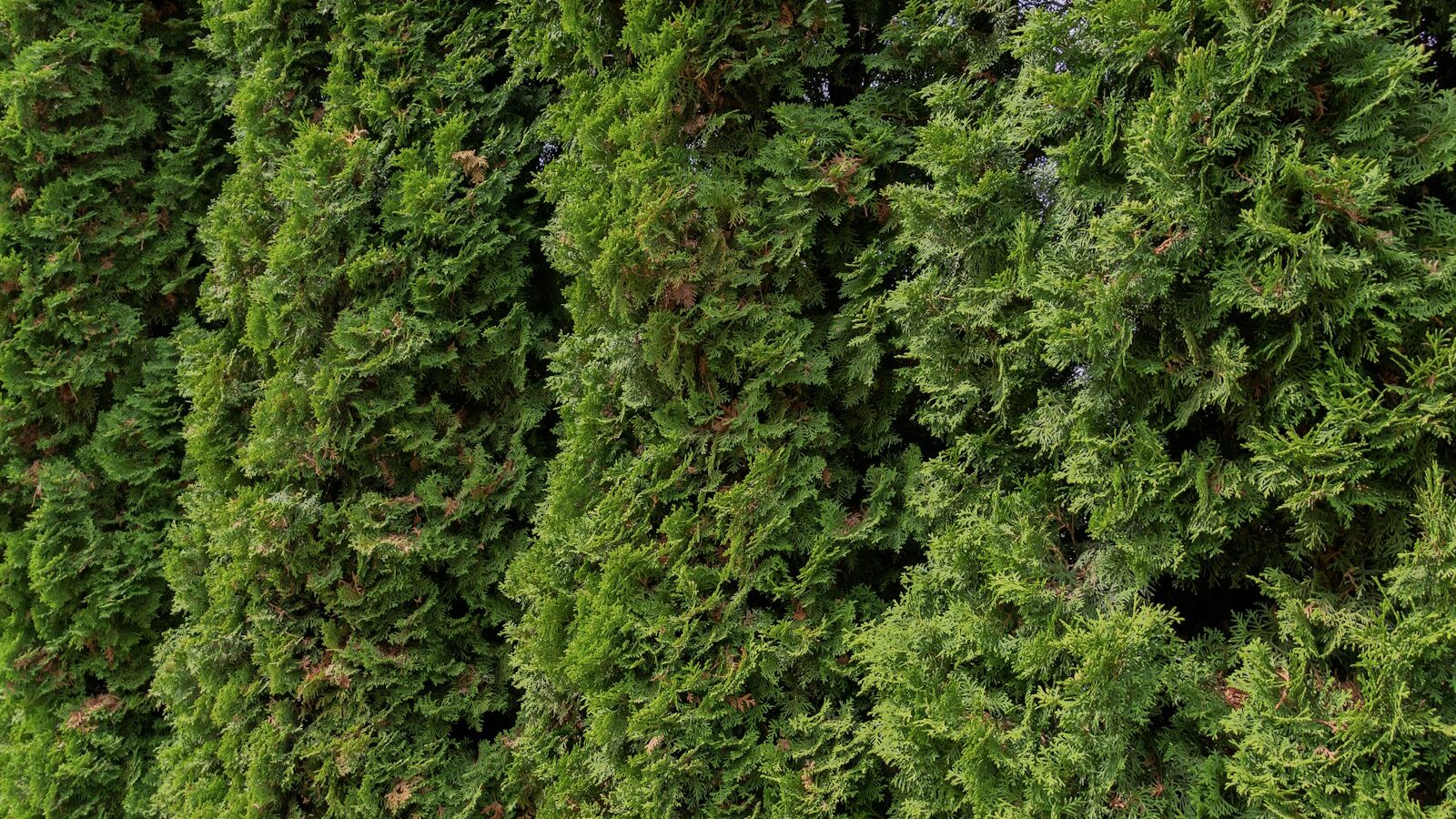
A good hedge does more than mark a boundary — in Singapore’s tight landed plots, the right screening plants buy you privacy from neighbours, soften the glare of an afternoon sun, dampen road noise and break the wind that funnels between terrace and semi-detached homes. The trick is matching the plant to our hot, humid, rain-soaked tropics, where growth is fast and trimming is a year-round commitment. This guide walks through the best hedge and screening plants for Singapore gardens, how to choose by purpose, how far apart to space them and how often you’ll be reaching for the shears.
Key takeaways
- For a crisp, formal boundary hedge, Ficus ‘Green Island’, Syzygium and Murraya hold a clean clipped face best in our climate.
- Ficus microcarpa, Podocarpus and clumping bamboo give you tall, fast privacy screens of 3m and above.
- Match the plant to the job: dense evergreens for privacy, layered planting for noise, and flexible-stemmed species for wind.
- Most Singapore hedges need trimming every 4–8 weeks through the year because growth rarely stops in the tropics.
- Spacing of 30–60cm for small hedges and 60–100cm for tall screens gives a solid wall within a year or two.
How to choose a hedge by purpose
Before you pick a species, decide what the hedge is actually for. The most common goals on Singapore landed boundaries are privacy, noise reduction and wind protection — and each one rewards a slightly different plant and layout.
Privacy from neighbours. You want a dense, evergreen plant that holds its leaves right down to the base and reaches eye height or above. Ficus ‘Green Island’, Syzygium/Eugenia and Podocarpus all give a solid, opaque face. Plant slightly closer together than the label suggests so the canopies knit quickly, and keep the top flat or tapered so light still reaches the lower foliage.
Noise from a road or busy lane. No hedge is a true sound barrier, but a deep, layered band of planting genuinely takes the edge off traffic noise. Combine a tall screen such as bamboo or Ficus microcarpa behind a denser mid-layer like Wrightia or Murraya. Mass and depth matter more than a single thin line, so allow at least a metre of planting width if you can spare it.
Wind along an exposed boundary. Counter-intuitively, a slightly permeable screen beats a solid wall here, because it filters and slows the wind rather than creating turbulence on the far side. Clumping bamboo and the flexible, airy stems of Wrightia and Pennisetum flex in a gust instead of fighting it, making them ideal along corner plots and rooftop terraces.
Best plants for formal clipped hedges
These are the workhorses of the neat Singapore boundary — species that take repeated shearing and respond by getting denser. If you want crisp lines and a flat green wall, start here.
Green Island Fig (Ficus microcarpa ‘Green Island’)
The default low-to-medium hedge across Singapore for good reason: rounded, glossy, leathery leaves that look tidy even between trims. Kept at 0.6–1.5m it forms a dense formal face, grows at a moderate pace and thrives in full sun to part shade. Trim every 6–8 weeks to maintain a sharp edge; it tolerates hard cutting back if it gets away from you.
Sea Apple / Kelat (Syzygium / Eugenia oleina)
A classic clipped hedge with a flush of coppery-red new growth that makes a trimmed wall look freshly polished. It will sit happily anywhere from 1m to 3m+, grows fairly fast in full sun and clips into very clean lines. Trim every 4–6 weeks during active growth to keep that bushy density and encourage the coloured new leaves.
Orange Jasmine (Murraya paniculata)
Loved as much for its intensely fragrant white flowers as for its glossy foliage, Murraya makes a dense, scented hedge of about 1–3m. Growth is moderate, it prefers full sun to light shade, and it tolerates regular clipping — though leaving it a little looser lets you enjoy more flowering. Trim every 6–8 weeks, easing off if you want the blooms and the bees they bring.
Best plants for tall privacy screens
When you need to block a neighbour’s second-storey window or screen out an overlooking block, you need height — ideally 3m and up. These plants get there quickly and stay green from top to bottom.
Chinese Banyan (Ficus microcarpa)
The full-sized cousin of ‘Green Island’, this is the go-to for a tall, fast, dense privacy screen and can be held anywhere from 2m to well over 4m. It grows vigorously in full sun and takes hard trimming, but mind the aggressive roots — keep it well clear of drains, boundary walls and foundations. Expect to trim every 4–6 weeks to keep a tall screen in check.
Buddhist Pine (Podocarpus macrophyllus / polystachyus)
An elegant, upright conifer-like screen with fine, dark needle-like foliage that gives a more refined look than broad-leaved hedges. It reaches 2–4m, grows slowly to moderately, and copes with full sun to part shade. The slow growth is a blessing for low maintenance — a trim every 8–12 weeks is usually enough to keep its narrow, columnar form.
Clumping Bamboo (e.g. Bambusa multiplex, Slender Weaver’s bamboo)
For a fast, soft, tall screen with movement and a gentle rustle, clumping bamboo is hard to beat, easily reaching 3–6m. Crucially, choose clumping (sympodial) types — never running bamboo — so it stays in a tidy clump rather than invading the garden. It loves full sun and grows very fast; maintenance is mostly annual thinning of old canes and trimming the top to height rather than frequent shearing.
Water Jasmine (Wrightia religiosa)
A graceful, slightly weeping shrub with dainty fragrant white flowers, Wrightia makes a softer, semi-formal screen of around 1.5–3m. Growth is moderate, it enjoys full sun, and its flexible stems make it forgiving along breezy boundaries. Trim every 6–8 weeks; lighter pruning preserves more of its pendulous blooms.
Best plants for soft, informal screens
Not every boundary needs a clipped wall. Where you want a lush, tropical, low-fuss screen — or a quick filler while a slower hedge matures — these foliage plants do the job with far less trimming.
Heliconia (Heliconia spp.)
For an instant lush, tropical look, Heliconia forms a dense clump of large paddle leaves topped with vivid lobster-claw flowers, reaching 1.5–4m depending on variety. It grows fast in full sun to part shade and loves our humidity and rain. There’s no shearing — maintenance is simply cutting spent stems to the ground and dividing the clump when it gets crowded.
Fountain Grass (Pennisetum spp.)
An ornamental grass that gives a soft, feathery, low screen of about 0.6–1.5m with plumes that catch the breeze — ideal for edging a driveway or a low boundary line. It grows quickly in full sun and asks very little. Maintenance is a hard cut-back once or twice a year to refresh it, rather than regular trimming.
Hedge plant comparison
| Plant | Typical height | Growth rate | Sun | Trim frequency | Best for |
|---|---|---|---|---|---|
| Ficus ‘Green Island’ | 0.6–1.5m | Moderate | Full–part sun | 6–8 weeks | Formal low hedge |
| Ficus microcarpa | 2–4m+ | Fast | Full sun | 4–6 weeks | Tall privacy screen |
| Syzygium / Eugenia | 1–3m+ | Fast | Full sun | 4–6 weeks | Formal coloured hedge |
| Murraya (Orange Jasmine) | 1–3m | Moderate | Full–part sun | 6–8 weeks | Fragrant privacy hedge |
| Podocarpus | 2–4m | Slow–moderate | Full–part sun | 8–12 weeks | Refined upright screen |
| Clumping bamboo | 3–6m | Very fast | Full sun | Thin yearly | Fast tall screen, wind |
| Wrightia (Water Jasmine) | 1.5–3m | Moderate | Full sun | 6–8 weeks | Soft semi-formal screen |
| Heliconia | 1.5–4m | Fast | Full–part sun | Cut spent stems | Lush informal screen |
| Pennisetum | 0.6–1.5m | Fast | Full sun | 1–2x yearly | Soft low border |
Spacing your hedge correctly
Spacing is where most home hedges go right or wrong. Plant too far apart and you’ll wait years for the gaps to close; plant too tight and the inner stems shade out, go bare and invite fungal problems in our humidity.
- Low formal hedges (Ficus ‘Green Island’, Pennisetum): space 30–45cm apart in a single row.
- Medium hedges (Syzygium, Murraya, Wrightia): space 45–60cm apart.
- Tall screens (Ficus microcarpa, Podocarpus): space 60–100cm apart.
- Clumping bamboo and Heliconia: space 1–1.5m apart and let the clumps fill in.
- For a fast, dense wall, stagger a double row in a zig-zag rather than cramming a single line.
Always check how close you’re planting to a shared boundary wall or fence — vigorous species like Ficus microcarpa should sit well back so roots and trunks don’t push against the structure or your neighbour’s side. A planting strip of at least 40–50cm from the wall keeps everything maintainable from your own garden.
Maintenance and trimming in the tropics
The single biggest difference between hedging here and in temperate climates is that Singapore plants barely pause. With near-constant warmth and rain, most hedges put on growth all year, so trimming is regular rather than seasonal. Plan for a clip every 4–8 weeks for fast formal species like Ficus and Syzygium, and every 8–12 weeks for slower plants like Podocarpus.
- Shape with a slight taper — wider at the base than the top — so sunlight reaches the lower foliage and the hedge stays green to the ground.
- Feed lightly after each major trim with a balanced fertiliser to keep dense regrowth.
- Watch for mealybugs and sooty mould, which thrive in our humidity, especially on stressed or overcrowded hedges.
- Keep cuts clean and tools sterilised to limit the spread of fungal disease between plants.
- Don’t let it get away from you — a hedge trimmed often is far easier than one hacked back hard twice a year.
If keeping up with year-round trimming sounds like more than you bargained for, it’s often worth booking a regular tree & hedge trimming service to hold the shape, and a planting service to get the spacing and soil right from day one. For broader inspiration, see our guide to the best plants for Singapore gardens, or browse all Singapore services.
Get free planting & hedging quotes in Singapore
Tell us about your boundary and we’ll match you with vetted local pros island-wide. Free, no obligation.
Frequently asked questions
What is the fastest-growing privacy hedge for Singapore?
Clumping bamboo and Ficus microcarpa are the quickest to reach a tall screen, often within a year or two in our climate. For a fast medium hedge, Syzygium/Eugenia establishes and thickens rapidly with regular trimming.
How often do I need to trim a hedge in Singapore?
Because plants grow nearly all year here, most formal hedges need trimming every 4–8 weeks. Slower species like Podocarpus can stretch to every 8–12 weeks, while bamboo and Heliconia just need occasional thinning rather than shearing.
Which hedge is best for privacy from neighbours?
For a dense, opaque screen at eye height or above, Ficus ‘Green Island’, Syzygium and Podocarpus are excellent. Plant them slightly closer together than usual and keep the top tapered so the lower foliage stays full and green.
How far from my boundary wall should I plant a hedge?
Leave at least 40–50cm between the plants and a shared wall or fence so you can trim from your own side and the roots don’t press against the structure. Vigorous species like Ficus microcarpa should sit even further back to keep their roots clear of drains and foundations.
Can a hedge really reduce road noise?
A single thin hedge won’t soundproof a garden, but a deep, layered band of planting noticeably softens traffic noise. Combine a tall screen such as bamboo or Ficus with a dense mid-layer like Wrightia or Murraya, and allow at least a metre of planting depth where you can.