

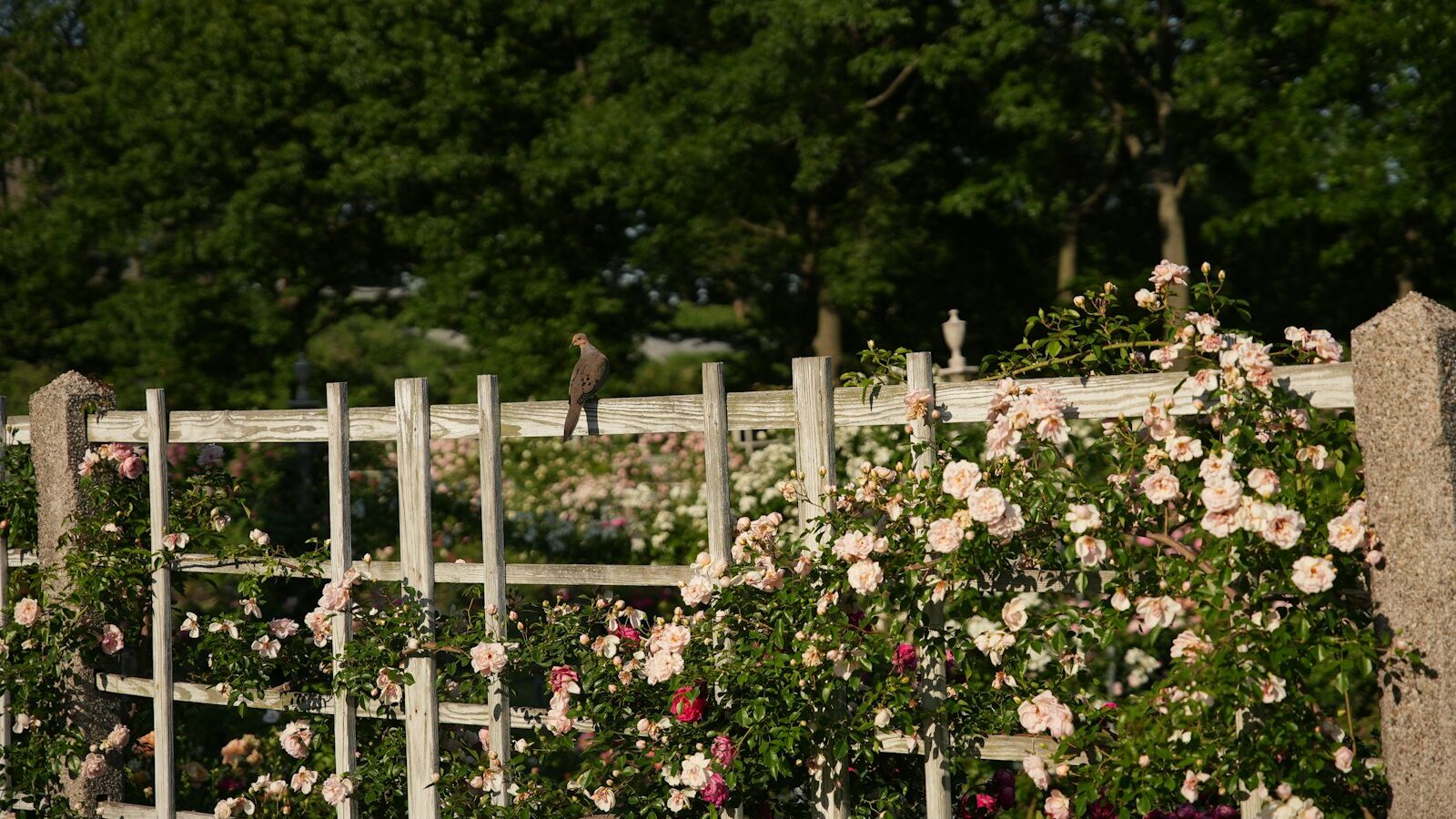
A good boundary does two jobs at once in Singapore: it keeps prying eyes out and pulls your garden together into something that feels intentional. Whether you are softening a bare party wall in a terrace house, screening an overlooking neighbour, or training bougainvillea up a smart aluminium frame, the right fence or trellis transforms how a space feels. This guide walks through every common fencing and screening option, the climbing plants that actually thrive in our heat, and realistic SGD costs so you can plan with confidence.
Key takeaways
- Humidity, heavy rain and salt-laced coastal air are the real enemies here, so choose materials rated for the tropics rather than for a temperate climate.
- Aluminium and powder-coated steel resist rot entirely; timber and bamboo need sealing and regular maintenance to survive our monsoon.
- A living or green screen offers privacy plus cooling, but pair it with a sturdy trellis so the structure, not the plant, carries the load.
- Bougainvillea, thunbergia, star jasmine and money plant are reliable Singapore climbers; match the plant to your sun exposure and wall height.
- Budget roughly SGD 80 to 350 per running metre installed, depending on material, height and ground works.
Why your fence choice matters more in the tropics
Singapore sits a degree off the equator, which means relentless heat, near-daily humidity above 80 per cent and short, violent downpours. Anything you mount outdoors is in a permanent moisture test. Untreated timber swells, splits and grows mould within a couple of seasons. Mild steel rusts at every weld and fixing. Even some plastics chalk and warp under direct UV.
That is why material selection sits ahead of style for most homeowners here. The good news is that landed properties have generous boundary lengths to work with, and the privacy challenge in Singapore is usually about overlooking from neighbours on raised platforms or from adjacent units, rather than wind or cold. So screening height and visual density matter, and you can lean on planting to soften hard lines. If you want the boundary worked into a wider garden plan, our landscaping & design service can sequence fencing, drainage and planting together.
Fence and screening materials compared
Five materials dominate Singapore boundaries: timber, aluminium, composite, bamboo and metal screens. Each trades cost against lifespan and the amount of upkeep your weekends can absorb.
| Material | Indicative cost (SGD/m, installed) | Lifespan in our climate | Maintenance | Best for |
|---|---|---|---|---|
| Powder-coated aluminium | 180–320 | 20+ years, no rust | Minimal; rinse occasionally | Low-fuss modern boundaries, coastal homes |
| Hardwood timber (chengal, balau) | 150–300 | 10–20 years if sealed | High; re-oil yearly | Warm, natural look in shaded areas |
| Composite (WPC) | 160–280 | 15–20 years | Low; wash down | Timber look without the rot |
| Bamboo (treated) | 80–160 | 3–8 years | High; seal and watch for splitting | Quick, affordable, tropical screening |
| Steel / laser-cut metal screens | 200–350 | 15–25 years if galvanised & coated | Moderate; touch up chips | Decorative privacy panels, feature gates |
Timber, bamboo and rot: getting the natural look to last
Timber and bamboo give the warm, organic feel many Singapore gardens want, but they are the materials most likely to disappoint if you skip preparation. For timber, specify a dense tropical hardwood such as chengal or balau rather than cheaper softwoods. These have natural oils and tight grain that resist our damp far better. Keep the bottom rail off the soil with a concrete plinth or galvanised post shoe, because constant ground contact is where rot starts.
Bamboo is the budget favourite for instant tropical screening, and it suits a Balinese or resort aesthetic beautifully. Buy properly treated, kiln-dried poles, seal them with a marine-grade clear coat, and reapply yearly. Even so, expect to replace panels every few years; bamboo is a refresh-it material, not a fit-and-forget one. Position it under eaves or partial shade where it stays drier, and it will last noticeably longer.
Aluminium, composite and metal: the low-maintenance route
If you would rather not spend Sundays re-oiling, powder-coated aluminium is the standout choice for Singapore. It does not rust, shrugs off humidity, and the powder coat holds colour for years. It is ideal for homes near the coast, where salt air would chew through untreated steel. Slatted aluminium panels also let you dial in privacy precisely; tighter slat spacing for full screening, wider for airflow and a lighter look.
Composite (wood-plastic composite, or WPC) mimics timber grain while resisting rot, termites and fading, making it a sensible middle path. For steel and laser-cut decorative screens, insist on hot-dip galvanising before powder coating; this dual layer is what keeps rust at bay. A single weld left unprimed will bleed orange streaks within a year in our climate, so workmanship matters as much as the material spec. These metal screens double brilliantly as privacy panels and as a trellis frame for climbers.
Trellises and living green screens
A trellis turns a flat boundary into a vertical garden and is the cheapest way to add greenery and privacy at once. The golden rule is that the structure must outlast the plant: a mature bougainvillea or money plant gets heavy and wind-loaded, so use a galvanised or aluminium frame fixed firmly to posts or a wall, not flimsy timber lattice that will sag and rot under the weight.
For full living screens, stand the trellis 10 to 15 centimetres off any solid wall so air circulates behind the foliage; this prevents trapped moisture and mould on both the plant and the wall. A green screen cools the boundary noticeably, an underrated benefit in our heat. If you want to go further and clad an entire wall, our green walls page covers modular living-wall systems, and our guide to hedge & screening plants covers denser, shrub-based privacy where a climber would be too sparse.
Best climbing plants for Singapore boundaries
Choose climbers by sun exposure first. The reliable performers in our climate are:
- Bougainvillea — the classic tropical climber, ablaze with colour in full sun. Vigorous and drought-tolerant once established, but thorny and needs regular pruning to keep it on the trellis rather than over it.
- Thunbergia (black-eyed Susan vine and the larger sky-vine) — fast, soft-stemmed and free-flowering; excellent for quickly clothing a new trellis in sun to part shade.
- Star jasmine — glossy evergreen with fragrant white flowers, happy in part shade and well-behaved enough for tidier boundaries; scents the garden at dusk.
- Passionflower (passiflora) — dramatic blooms and edible fruit on some varieties; vigorous, so give it a strong frame and room to roam in full sun.
- Money plant (pothos) — the easy shade option; it climbs or trails happily up a screen in low light where flowering climbers would sulk, giving lush green cover with almost no fuss.
For a flowering, sunny boundary, combine bougainvillea for colour with thunbergia for quick fill. For a shaded side return or a dim corridor between houses, money plant and star jasmine are the dependable choices. Whatever you plant, feed monthly through the growing season and prune after each flush to keep growth dense rather than leggy.
Planning, costs and getting it right
Before committing, confirm your boundary line and check any setback or height rules with your conveyancing documents or the relevant authorities; party-wall boundaries are best discussed with neighbours early to avoid disputes. As a planning rule of thumb, budget from around SGD 80 per metre for treated bamboo up to SGD 350 per metre for premium laser-cut metal, installed. Add for concrete footings, gates, demolition of an old fence and difficult site access.
Spend where it counts: posts and footings are what fail first, so do not cut corners on galvanised posts set in proper concrete. A mid-range aluminium boundary with a planted trellis usually offers the best balance of looks, privacy and near-zero maintenance for most Singapore homes. Browse all Singapore services to see how fencing fits alongside drainage, turf and planting in a complete garden.
Frequently asked questions
What is the best low-maintenance fence material for Singapore’s climate?
Powder-coated aluminium is the top low-maintenance choice. It does not rust, resists humidity and salt air, and holds its colour for years with only the occasional rinse. Composite (WPC) is a strong runner-up if you want a timber look without the upkeep.
How much does fencing cost per metre in Singapore?
As a planning guide, expect roughly SGD 80–160 per metre for treated bamboo, SGD 150–300 for hardwood timber, SGD 160–280 for composite, SGD 180–320 for aluminium, and SGD 200–350 for laser-cut metal screens, installed. Footings, gates and site access affect the final figure.
Which climbing plant gives privacy fastest?
Thunbergia and passionflower are among the fastest to cover a trellis in full sun, often clothing a frame within a few months. For shade, money plant fills in quickly with lush green foliage. Bougainvillea is vigorous too but takes a little longer to establish.
Do I need a trellis for climbers, or can they grow on the fence itself?
Most vigorous climbers need a dedicated trellis or wire support; heavy plants like bougainvillea can damage or pull down a fence over time. Mount a galvanised or aluminium trellis a few centimetres off any solid wall so air circulates and moisture does not get trapped.
How do I stop a timber fence from rotting?
Use a dense tropical hardwood such as chengal or balau, keep the timber off the ground with concrete plinths or galvanised post shoes, and seal it with a quality outdoor oil that you reapply yearly. Good airflow and avoiding constant ground contact are what extend its life most.
Featured project by Gensou Aquascaping
Get free fencing & screening quotes in Singapore
Tell us about your boundary and we’ll match you with vetted local pros island-wide. Free, no obligation.