

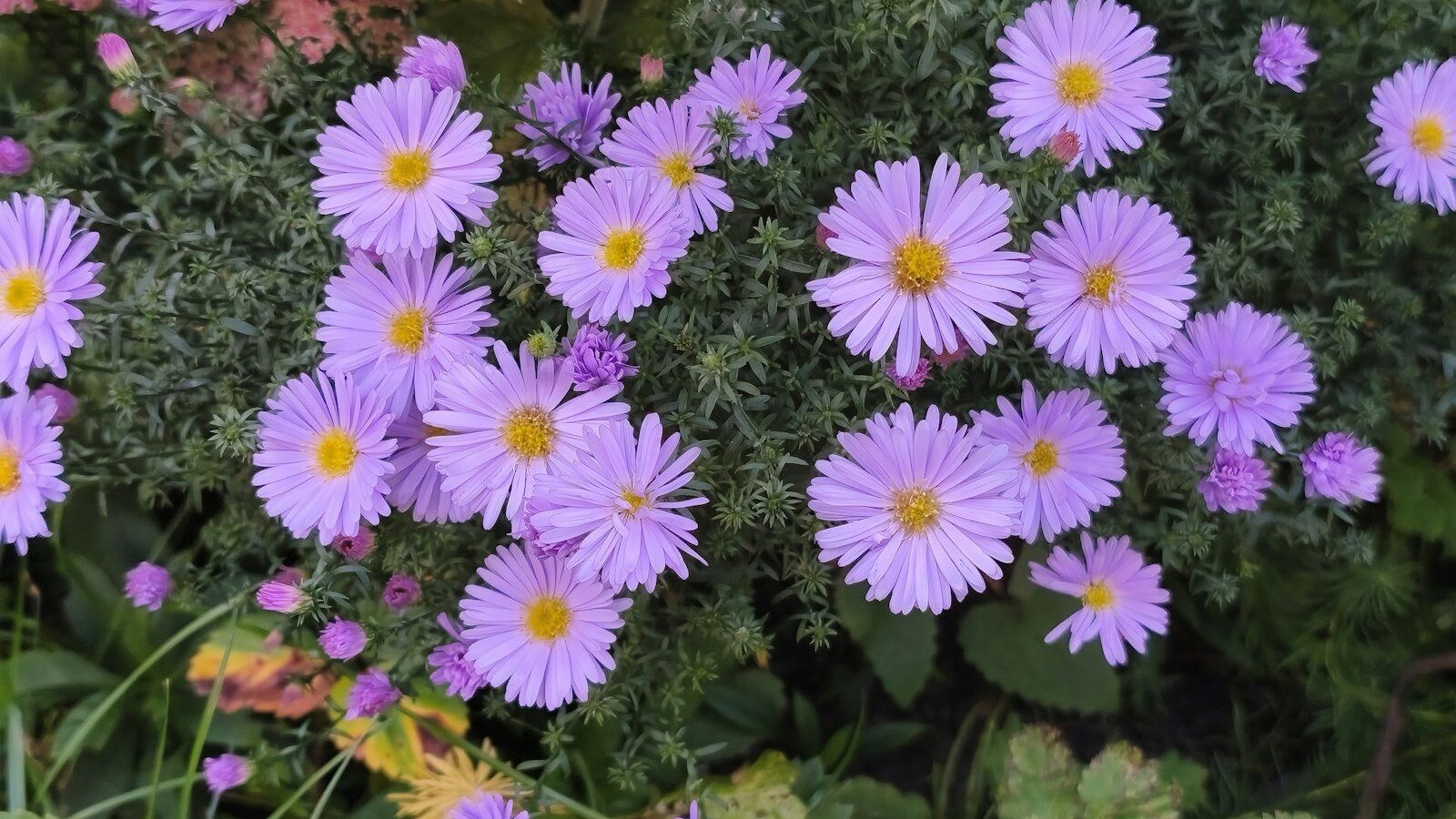
The most reliable fall-blooming perennials for US gardens are asters, sedum (hylotelephium), Japanese anemones, goldenrod, helenium, garden mums, Russian sage, toad lilies, turtlehead and the late ornamental grasses. Planted together, they carry color from late August until hard frost, feed late pollinators, and make the garden look intentional when summer annuals are fading. This guide lists the best choices for sun and shade with their zones, heights and bloom times, then covers how to plant, stake and pinch them so they flower well into October.
Part of our Flowers & Perennials guide →
In this guide
Key Takeaways
- For sun: asters, sedum, goldenrod, helenium, Russian sage, mums, and late salvias.
- For shade: Japanese anemone, toad lily, turtlehead, monkshood and fall-blooming bugbane.
- Pinch tall asters, mums and helenium by half before early July for sturdier, bushier plants.
- Plant fall bloomers in spring or early fall; give fall-planted perennials at least six weeks before the ground freezes.
- Leave seed heads standing for birds and winter interest, and cut back selectively.
Best Fall-Blooming Perennials for Sun
1. New England and New York asters
Native asters (now classified as Symphyotrichum) are the backbone of the fall border, with purple, pink, blue or white daisies from September into October. New England asters grow 3 to 6 feet and tolerate heavier, moister soil; New York asters are often shorter and bushier. Both are hardy in zones 3 to 8 and are among the most valuable late-season plants for bees and migrating monarchs. Choose mildew-resistant cultivars such as ‘Purple Dome’ for a compact plant. See our guide on how to grow asters.
2. Sedum (stonecrop)
Upright sedums such as ‘Autumn Joy’ (now Hylotelephium ‘Herbstfreude’) form broccoli-like flower heads that open pink in late August and age to rust and bronze through October. They grow 18 to 24 inches tall, need full sun and lean, well-drained soil, and thrive in zones 3 to 9. Rich soil makes them flop open; if they do, cut them back by half in early June next year. Our guide on how to grow sedum covers varieties.
3. Goldenrod
Goldenrod is unfairly blamed for hay fever; the real culprit is ragweed, which blooms at the same time with wind-borne pollen. Goldenrod’s heavy pollen is insect-carried. Garden cultivars like ‘Fireworks’ (zones 4 to 9) and compact ‘Golden Baby’ behave far better than wild stands, offering arching gold plumes in September and October. Grow in full sun; some species spread quickly, so choose clump-forming cultivars for borders.
4. Helenium (sneezeweed)
Helenium bears daisies in warm reds, oranges and yellows from late summer into fall on 3- to 5-foot stems. It likes full sun and moist soil and is hardy in zones 3 to 8. Pinch stems back by a third to a half in early summer to prevent flopping. Despite the common name, it does not cause sneezing. Our guide on how to grow helenium covers cultivars.
5. Garden mums (hardy chrysanthemums)
The potted mums sold in fall are often florist types that do not survive winter. For perennial color, buy hardy garden mums or cultivars like ‘Sheffield Pink’ and ‘Clara Curtis’ in spring, so they root in before winter. Pinch stems every few weeks until early July to create a full mound. Hardy in zones 5 to 9. See chrysanthemum care for overwintering tips.
6. Russian sage
Russian sage (Salvia yangii, formerly Perovskia) starts blooming in mid-summer and keeps its lavender-blue haze into fall. It is drought tolerant, deer resistant and hardy in zones 4 to 9, reaching 3 to 4 feet. Leave stems standing over winter and cut back to about 6 to 12 inches in spring when new growth appears.
7. Late salvias and agastache
Anise hyssop (Agastache) and many perennial salvias rebloom into fall if you deadhead them in summer. In warmer zones, autumn sage (Salvia greggii, zones 7 to 10) and Mexican bush sage (S. leucantha, zones 8 to 10) are at their best in fall.
8. Perennial sunflowers and boltonia
Swamp sunflower (Helianthus angustifolius, zones 6 to 9) covers itself in golden flowers in October on 5- to 8-foot stems. Boltonia (zones 4 to 9) produces clouds of small white asters on 4- to 6-foot plants. Both suit the back of the border and moist soil.
9. Ornamental grasses
Switchgrass, little bluestem and fountain grasses flower in late summer and color up in fall, providing the movement and structure that sets off fall flowers. Little bluestem turns copper-red; switchgrass cultivars range from blue to burgundy.
Best Fall-Blooming Perennials for Shade
10. Japanese anemone
Japanese anemones produce pink or white single or semi-double flowers on wiry 2- to 4-foot stems from late August into October. They do best in part shade with moist, well-drained soil and are hardy in zones 4 to 8. They are slow to establish and then spread by roots, sometimes enthusiastically. Our guide on how to grow Japanese anemone covers placement.
11. Toad lily
Toad lilies (Tricyrtis) have small, orchid-like, spotted flowers along arching stems in September and October. Plant them where you can see them up close, along a path or near a patio. They prefer shade to part shade, consistently moist, rich soil, and zones 4 to 9. See how to grow toad lily.
12. Turtlehead
Turtlehead (Chelone) is a native for moist shade and rain gardens, with pink or white hooded flowers from late summer into fall on 2- to 3-foot stems. Hardy in zones 3 to 8 and generally deer resistant.
13. Monkshood
Autumn monkshood (Aconitum carmichaelii) produces deep blue hooded flowers in September and October on 3- to 4-foot stems in part shade, zones 3 to 8. All parts are highly toxic, so wear gloves when handling it and keep it away from play areas.
14. Bugbane
Late-blooming bugbane (Actaea simplex), especially dark-leaved cultivars, sends up fragrant white bottlebrush spikes in late September and October. It needs moist shade and is hardy in zones 4 to 8.
15. Hardy begonia
Begonia grandis is a surprisingly hardy perennial begonia, zones 6 to 9, with pink flowers dangling over red-veined leaves from late summer into fall in shade.
16. Sweet autumn clematis (with caution)
Sweet autumn clematis covers fences with fragrant white flowers in late summer and fall, but it self-seeds aggressively and is invasive in parts of the eastern US. Consider the native virgin’s bower (Clematis virginiana) as an alternative.
Quick Comparison
| Plant | Zones | Height | Light | Peak bloom |
|---|---|---|---|---|
| New England aster | 3 to 8 | 3 to 6 ft | Sun | Sept to Oct |
| Sedum ‘Autumn Joy’ | 3 to 9 | 1.5 to 2 ft | Sun | Late Aug to Oct |
| Goldenrod cultivars | 4 to 9 | 1 to 4 ft | Sun | Sept to Oct |
| Helenium | 3 to 8 | 3 to 5 ft | Sun | Aug to Oct |
| Hardy mums | 5 to 9 | 1 to 3 ft | Sun | Sept to Oct |
| Russian sage | 4 to 9 | 3 to 4 ft | Sun | July to Oct |
| Swamp sunflower | 6 to 9 | 5 to 8 ft | Sun | Oct |
| Japanese anemone | 4 to 8 | 2 to 4 ft | Part shade | Late Aug to Oct |
| Toad lily | 4 to 9 | 2 to 3 ft | Shade | Sept to Oct |
| Turtlehead | 3 to 8 | 2 to 3 ft | Part shade | Aug to Oct |
| Monkshood | 3 to 8 | 3 to 4 ft | Part shade | Sept to Oct |
| Bugbane | 4 to 8 | 3 to 5 ft | Shade | Late Sept to Oct |
How to Get the Best Fall Display
Pinch in early summer
Tall fall bloomers have all summer to grow, so they often flop by September. Cut asters, mums, helenium, boltonia and swamp sunflower back by a third to a half in late May or June, no later than early July in most areas. This delays flowering slightly and produces shorter, bushier plants with more blooms. Pinching too late removes the flower buds.
Stake early
Set grow-through grids or pea sticks in late spring for tall plants you did not pinch. Staking a 5-foot aster after it falls is much harder than letting it grow through support.
Water through late summer
August drought is the biggest threat to fall flowers. Asters, helenium, anemones and toad lilies need about 1 inch of water a week while they set buds. A layer of mulch helps hold moisture.
Plant in combinations
Classic pairings include purple asters with goldenrod, ‘Autumn Joy’ sedum with little bluestem, and Japanese anemones with hostas and ferns in shade. Repeat a few plants through the bed instead of planting one of everything. For broader design ideas, see perennial garden ideas.
Regional Notes
In the Deep South and Gulf Coast (zones 8 to 10), fall is a second spring. Swamp sunflower, Mexican bush sage, autumn sage, salvias and native asters such as aromatic aster shine from October into November, while Japanese anemones and bugbane may struggle in heat. In the dry West, lean on drought-tolerant choices: Russian sage, sedum, agastache, California fuchsia (Epilobium) and aromatic aster. In the upper Midwest and Northeast (zones 3 to 5), early frosts can cut the season short, so favor reliably early fall bloomers such as New England aster, sedum, goldenrod and turtlehead, and site them in the warmest, sunniest spot you have.
When to Plant Fall-Blooming Perennials
Spring planting gives fall bloomers a full season to establish before they flower. Early fall planting also works well while soil is warm; aim for at least six weeks before the ground freezes, and water regularly until then. Buying plants in bloom in September lets you see the exact color, which is helpful for asters and mums, but these plants need extra water and a good layer of mulch to get through their first winter.
After Bloom: Cleanup and Winter
Many fall bloomers look good long after flowering. Sedum heads, coneflower seed heads, asters and grasses offer winter structure and seeds for birds, and hollow stems shelter overwintering native bees. Cut back only plants that become mushy or diseased, such as mildewed asters or blackened anemone foliage. We cover which perennials to cut and which to leave in our guide on how to cut back perennials in fall. For more planting ideas across the seasons, explore our flowers and perennials guide.
Frequently Asked Questions
What perennial blooms the latest in fall?
Swamp sunflower, bugbane, monkshood, toad lilies and some late asters such as aromatic aster often bloom into October and sometimes until frost. In mild climates, Mexican bush sage blooms later still.
Are fall mums perennials?
Hardy garden mums are perennial in zones 5 to 9, but many potted fall mums are florist types bred for one season. Plant hardy types in spring for the best chance of them returning.
Which fall perennials attract pollinators?
Asters, goldenrod, sedum, helenium, agastache and boltonia are especially valuable to bees, butterflies and migrating monarchs at a time when few other plants are blooming.
What fall-blooming perennials grow in shade?
Japanese anemone, toad lily, turtlehead, monkshood, bugbane and hardy begonia all bloom in late summer and fall in part to full shade with moist soil.
Can I plant perennials in October?
Yes, in many zones, as long as you have about six weeks before the ground freezes. Water well, mulch after the soil cools, and expect the plants to establish fully the following spring.