

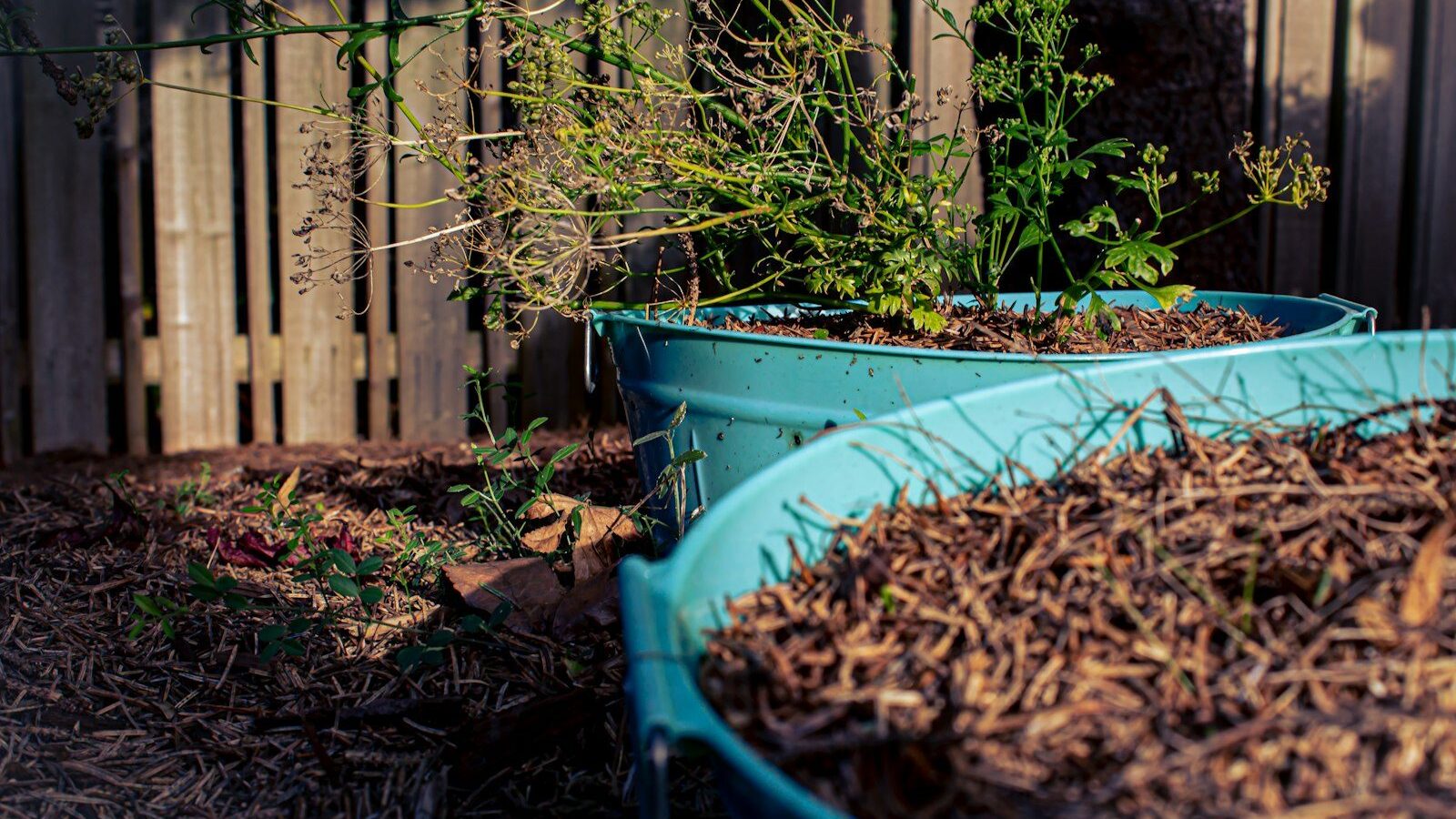
No grass seed makes a lawn drought-proof, but the right species can cut summer watering a lot and recover after a dry spell instead of dying out. In most of the northern half and the transition zone, that means a turf-type tall fescue blend with deep roots. In dry shade, it means fine fescues. In the South and the low desert, it means Bermudagrass, which goes dormant in drought and greens up when rain returns. Below are seven drought-tolerant seed listings on Amazon, matched to the regions and situations they fit best, followed by a buyer’s guide on seeding rates, timing and what “drought tolerant” really means on a bag.
Part of our Lawn Care guide →
In this guide
- 1. Jonathan Green Black Beauty Heat & Drought — Best Overall for Hot Cool-Season Lawns
- 2. Scotts Drought Tolerant Mix 10 lb — Best for Overseeding a Large Lawn
- 3. Pennington The Rebels Tall Fescue — Best for High-Traffic Lawns
- 4. Pennington Kentucky 31 Tall Fescue — Best for Rough and Utility Areas
- 5. Nature’s Seed Native Fine Fescue — Best for Dry Shade and Low-Input Lawns
- 6. Jonathan Green Black Beauty Sunny — Best for Slopes and South-Facing Lawns
- 7. Pennington Bermudagrass — Best for Southern Full-Sun Lawns
- What to Look for in Drought-Tolerant Grass Seed
- Frequently Asked Questions
Urban Lotus Project is reader-supported. When you buy through links on our site, we may earn an affiliate commission at no extra cost to you.
How we compared: we compared 7 current Amazon listings on what each listing states (species mix, sun needs, coverage, timing and germination). We did not test or handle the products, and availability changes.
| Product | Best for | Key features | Buy |
|---|---|---|---|
| Jonathan Green Black Beauty Heat and Drought | Hot-summer cool-season lawns |
| Buy now →Check current price |
| Scotts Drought Tolerant Mix 10 lb | Overseeding a large lawn |
| Buy now →Check current price |
| Pennington The Rebels Tall Fescue | High-traffic family lawns |
| Buy now →Check current price |
| Pennington Kentucky 31 Tall Fescue | Rough, utility and rural areas |
| Buy now →Check current price |
| Natures Seed Native Fine Fescue | Dry shade and low-input lawns |
| Buy now →Check current price |
| Jonathan Green Black Beauty Sunny | Slopes and south-facing lawns |
| Buy now →Check current price |
| Pennington Bermudagrass | Southern full-sun lawns |
| Buy now →Check current price |
Prices change often; check Amazon for today’s price. As an Amazon Associate we earn from qualifying purchases.
1. Jonathan Green Black Beauty Heat & Drought — Best Overall for Hot Cool-Season Lawns

Tall fescue and Texas bluegrass blend aimed at hot, dry summers in sun to light shade.
Check price on AmazonWhy We Like It
- Built specifically for heat and drought
- Texas bluegrass adds heat-hardy spreading growth
- Listing cites roots up to 4 feet deep
- Clear spring and fall seeding windows
| Specification | Details |
|---|---|
| Grass types | Black Beauty turf-type tall fescues, Texas bluegrass |
| Sun | Full sun to light shade |
| Coverage (3 lb) | 750 sq ft new lawn, 1,500 sq ft overseeding |
| Germination | 14–21 days |
| Seeding window | Mid-Aug to mid-Oct, or mid-Mar to mid-May |
Jonathan Green Black Beauty Heat & Drought — compressed specs
This is the most purpose-built drought blend on the shelf. Where the Scotts and Pennington tall fescue bags pair fescue with Kentucky bluegrass or rye, this one pairs it with Texas bluegrass, a heat-tolerant type that spreads by rhizomes and helps fill thin spots through summer. The listing claims heat tolerance up to 100°F and a waxy leaf coating that slows moisture loss, and it is the only listing here to cite roots reaching 4 feet.
It suits the transition zone (Virginia to Kansas to Oklahoma) and hot inland parts of the Northeast and Midwest, where Kentucky bluegrass alone browns out each July. The 3 lb bag is sized for patching and small lawns; you’ll need several for a full renovation.
Pros
- Blend targeted at heat and drought
- Works in sun and light shade
- Spreading bluegrass helps self-repair
Cons
- Small bag for big lawns
- Slower germination than rye blends
- Not for Deep South full-summer seeding
Check Jonathan Green Black Beauty Heat and Drought price on Amazon
2. Scotts Drought Tolerant Mix 10 lb — Best for Overseeding a Large Lawn

Tall fescue and Kentucky bluegrass mix; one bag overseeds up to 5,000 sq ft per the listing.
Check price on AmazonWhy We Like It
- Big coverage for whole-lawn overseeding
- Bluegrass component fills bare spots
- Weed-free seed purity stated on listing
- Simple temperature-based timing guidance
| Specification | Details |
|---|---|
| Grass types | Tall fescue, Kentucky bluegrass |
| Coverage (10 lb) | 1,665 sq ft new lawn, up to 5,000 sq ft overseeding |
| When to apply | Spring or fall, air temps 65–85°F |
| Purity | 99.99% weed-free seed stated |
| Sun | not stated in listing |
Scotts Grass Seed Drought Tolerant Mix — compressed specs
If you have a typical 5,000 sq ft northern lawn that thins out every August, one 10 lb bag of this mix covers it for overseeding. The tall fescue roots deep; the Kentucky bluegrass spreads to repair damage, which is what the listing means by “self-repairs.” A 4 lb version of the same mix is also on the shelf if you only need 2,000 sq ft of overseeding.
Compared with the Jonathan Green blend, this is the more mainstream choice for the cool-season North rather than the hot transition zone. The listing doesn’t specify sun hours, so plant the shadiest areas with a shade mix instead.
Pros
- Large overseeding coverage
- Proven fescue plus bluegrass combo
- High stated seed purity
Cons
- Bluegrass needs more water to look green
- No sun or shade guidance in listing
- New-lawn coverage much lower than overseeding
Check Scotts Drought Tolerant Mix 10 lb price on Amazon
3. Pennington The Rebels Tall Fescue — Best for High-Traffic Lawns
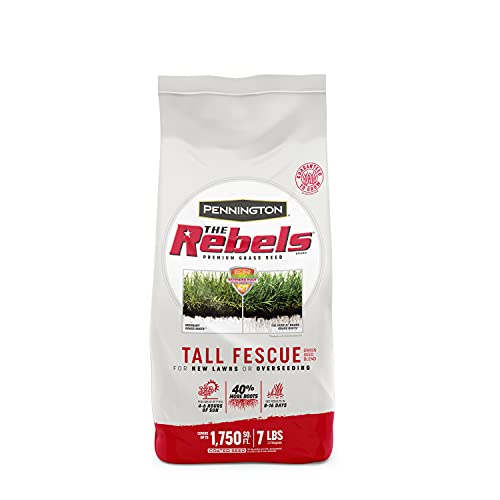
Turf-type tall fescue blend rated for heavy traffic, heat and drought in 4 to 6 hours of sun.
Check price on AmazonWhy We Like It
- All tall fescue for deep rooting
- Rated for kids, dogs and heavy traffic
- Darker, denser than K-31 per listing
- Handles partial shade
| Specification | Details |
|---|---|
| Grass type | Turf-type tall fescue |
| Sun | 4–6 hours per day |
| Coverage (7 lb) | Up to 10,000 sq ft stated |
| Results | 8–16 days |
| Tolerances | Heavy traffic, insects, heat, drought |
Pennington The Rebels Tall Fescue — compressed specs
Rebels is a straight turf-type tall fescue product, so it gives you the drought advantage of the species without bluegrass or rye. Tall fescue is a bunch grass, so it won’t spread much on its own, but its roots go deeper than bluegrass or ryegrass, and that’s what keeps it green longer between waterings. The listing positions it as darker and denser than Kentucky 31, which matches the general difference between modern turf-type fescues and older pasture-type K-31.
The stated 10,000 sq ft coverage is likely an overseeding figure; for a bare-soil new lawn, tall fescue is usually sown much heavier, so plan on several bags. See our wider list of tall fescue grass seed picks if you want more options in this species.
Pros
- Single-species, deep-rooted lawn
- Good traffic tolerance
- Works in partial sun
Cons
- Bunch grass won’t fill gaps itself
- Coverage claim needs context
- Needs overseeding every few years
Check Pennington The Rebels Tall Fescue price on Amazon
4. Pennington Kentucky 31 Tall Fescue — Best for Rough and Utility Areas
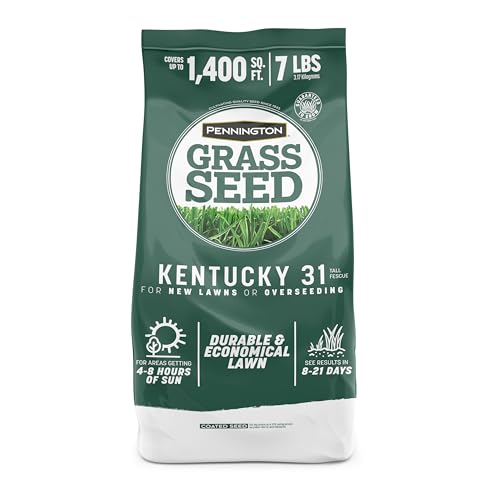
Classic K-31 tall fescue for full sun to moderate shade; a 7 lb bag covers up to 4,000 sq ft.
Check price on AmazonWhy We Like It
- Tough, traffic-tolerant workhorse fescue
- Handles heat and heavy rain
- Sun to moderate shade
- Also sold in 3 lb and 40 lb bags
| Specification | Details |
|---|---|
| Grass type | Kentucky 31 tall fescue |
| Sun | Full sun to moderate shade |
| Coverage (7 lb) | Up to 4,000 sq ft |
| Results | 8–21 days |
| Color | Lighter green than turf-type fescues |
Pennington Kentucky 31 Tall Fescue — compressed specs
K-31 is the original tall fescue and still the toughest choice for back lots, roadsides, septic fields, slopes and acreage where a perfect lawn isn’t the goal. It is coarser and lighter in color than the Rebels or Black Beauty fescues, but it roots deep and survives neglect. The shelf has it in 3 lb, 7 lb and 40 lb sizes, so it scales from patching to seeding a field.
For a front lawn, turf-type fescues look better. Our guide to Kentucky 31 vs turf-type tall fescue explains the difference in blade width and density.
Pros
- Very tough and adaptable
- Multiple bag sizes
- Fast results window
Cons
- Coarse, wide blades
- Lighter green color
- Can look clumpy in fine lawns
Check Pennington Kentucky 31 Tall Fescue price on Amazon
5. Nature’s Seed Native Fine Fescue — Best for Dry Shade and Low-Input Lawns

Blend of creeping red, Chewings, hard and sheep fescue for shade, dry spells and poor soils.
Check price on AmazonWhy We Like It
- Four fine fescues in one blend
- Handles shade and dry conditions
- Tolerates poor, compacted soils
- Can be left unmowed as meadow
| Specification | Details |
|---|---|
| Grass types | Creeping red, Chewings, hard and sheep fescue |
| Season | Cool-season |
| Sun | Shade and dry sites |
| Bag size | 5 lb |
| Coverage | not stated in listing |
Nature’s Seed Native Fine Fescue Mix — compressed specs
Fine fescues are the low-water specialists of cool-season grass: thin-bladed, slow-growing, and happy under trees where tall fescue thins and bluegrass fails. This is the only fine fescue blend on the shelf, and the only one aimed at dry shade and minimal mowing. The listing says it needs little to no supplemental water once established and copes with compacted soil and slopes.
The catch is wear. Fine fescues don’t take heavy foot traffic or the hot, humid summers of the Southeast. Use it in the North, the Upper Midwest, the Northeast and the Pacific Northwest, under trees and on low-use areas.
Pros
- Lowest water needs on this list
- Excellent for dry shade
- Soft, fine texture
Cons
- Poor traffic tolerance
- Struggles in hot, humid regions
- Coverage not stated
Check Natures Seed Native Fine Fescue price on Amazon
6. Jonathan Green Black Beauty Sunny — Best for Slopes and South-Facing Lawns

Rye, Kentucky bluegrass and tall fescue mix for hot, sunny slopes that dry out fast.
Check price on AmazonWhy We Like It
- Fast 7 to 14 day germination
- Made for runoff-prone slopes
- Suits southern-exposure lawns
- Small bag for spot repairs
| Specification | Details |
|---|---|
| Grass types | Perennial rye, Kentucky bluegrass, tall fescue |
| Sun | Full sun to light shade |
| Coverage (1 lb) | 425 sq ft new, 850 sq ft overseeding |
| Germination | 7–14 days |
| Seeding window | Mid-Aug to mid-Oct, or mid-Mar to mid-May |
Jonathan Green Black Beauty Sunny — compressed specs
The perennial ryegrass in this mix sprouts quickly, which matters on slopes where seed washes off if it sits too long. That’s why it germinates in 7 to 14 days versus 14 to 21 for the Heat & Drought blend. The fescue and bluegrass then take over for long-term drought tolerance.
At 1 lb, this is a patch-and-repair bag. It’s ideal for a hot bank by the driveway or the strip along a south wall, not for a whole yard.
Pros
- Quick germination on slopes
- Three-species blend
- Good for hot exposures
Cons
- Only 1 lb
- Rye is less drought-hardy than fescue
- Not for shade
Check Jonathan Green Black Beauty Sunny price on Amazon
7. Pennington Bermudagrass — Best for Southern Full-Sun Lawns

Warm-season Bermuda blend with improved cold tolerance for lawns in 8 plus hours of sun.
Check price on AmazonWhy We Like It
- Warm-season grass built for heat
- Aggressive self-spreading fills damage
- Very wear-resistant with deep roots
- Low-growing blend, fewer clippings
| Specification | Details |
|---|---|
| Grass type | Bermudagrass (warm-season) |
| Sun | 8+ hours daily |
| Planting season | Spring |
| Bag size | 5 lb |
| Dormancy | Turns brown in winter |
Pennington Bermudagrass — compressed specs
Bermuda is the most drought-capable lawn grass on this shelf. In a dry spell it can go dormant and brown, then recover once rain or irrigation returns, rather than dying. It suits the Southeast, Texas, Oklahoma, the Southwest and Southern California. The listing mentions improved cold tolerance, which helps at the northern edge of its range in the transition zone. A Scotts Bermudagrass 1 lb bag is also on the shelf if you only need a small patch.
Bermuda will not grow in shade, and it invades flower beds by runners. Seed it in late spring once soil is above about 65°F. For how it compares to other southern grasses, see zoysia vs Bermuda grass.
Pros
- Best drought recovery here
- Extremely wear-resistant
- Spreads to repair itself
Cons
- Needs full sun
- Brown all winter
- Creeps into beds
Check Pennington Bermudagrass price on Amazon
What to Look for in Drought-Tolerant Grass Seed
Match the species to your region
- North and Upper Midwest (zones 3–6): turf-type tall fescue blends for sun; fine fescues for dry shade. Kentucky bluegrass alone needs more summer water.
- Transition zone (zones 6–7): tall fescue with a heat-tolerant bluegrass, or zoysia/Bermuda on hot, sunny sites.
- Southeast and South (zones 7–10): Bermudagrass for sun; avoid cool-season mixes except for winter overseeding.
- Arid West and Southwest: Bermuda in low desert; tall fescue at elevation with irrigation; consider replacing some lawn with native or xeric plantings.
For a deeper look at the species themselves, read our guide to drought-tolerant grass types.
Read the label, not just the front
Check the species percentages, weed seed and “other crop” content, and the germination rate on the seed tag. A bag that’s mostly annual ryegrass or coated with fertilizer or mulch delivers less actual seed per pound. “Drought tolerant” on the front isn’t a regulated term; the species list on the back tells you what you’re getting.
Plant at the right time
Cool-season seed does best from mid-August to mid-October, when soil is warm and weeds are fading, with spring as a second choice. Warm-season seed goes down from late April to June once soil reaches about 65°F. Our guide to the best time to plant grass seed breaks this down by region.
Establishment needs water, even for drought grasses
Every seed on this list needs consistently moist soil for germination: light watering once or twice a day for the first two to three weeks, then tapering to deep, infrequent watering (about 1 inch per week) once seedlings are mowed a couple of times. Drought tolerance comes from deep roots, and deep roots come from infrequent deep watering after establishment, mowing high (3.5 to 4 inches for tall fescue) and not over-fertilizing with nitrogen in summer.
Plan for the whole lawn, not just the bag
Measure your lawn before buying and use the new-lawn figure for bare soil and the overseeding figure for thickening an existing lawn. Core aerating before overseeding improves seed-to-soil contact, and our flowers and perennials hub has ideas for drought-hardy beds that can replace hard-to-water strips of turf.
Frequently Asked Questions
What is the most drought-tolerant grass seed?
Among grasses you can grow from seed, Bermudagrass is the most drought-capable in warm climates, while turf-type tall fescue and fine fescue are the best cool-season options. Buffalograss is even more drought-hardy on the Plains but is less common as a home lawn seed.
Will drought-tolerant grass stay green without watering?
Not in a long dry spell. Tall fescue stays green longer than bluegrass or rye, and Bermuda goes dormant and recovers, but all lawns look better with about an inch of water a week in summer.
Can I overseed my lawn with drought-tolerant seed?
Yes. Overseeding a thin cool-season lawn with a tall fescue blend in early fall gradually shifts it toward deeper-rooted grass. Aerate first and keep the seedbed moist for the first few weeks.
Is Kentucky 31 good for a front lawn?
It’s tough but coarse and lighter green. Most homeowners prefer turf-type tall fescues such as the Rebels or Black Beauty blends for a front lawn and keep K-31 for rough or utility areas.
What grass seed is best for dry shade under trees?
Fine fescues, such as creeping red, Chewings and hard fescue, tolerate dry shade better than any other common lawn grass. They don’t handle heavy traffic, so use them in low-use areas.