

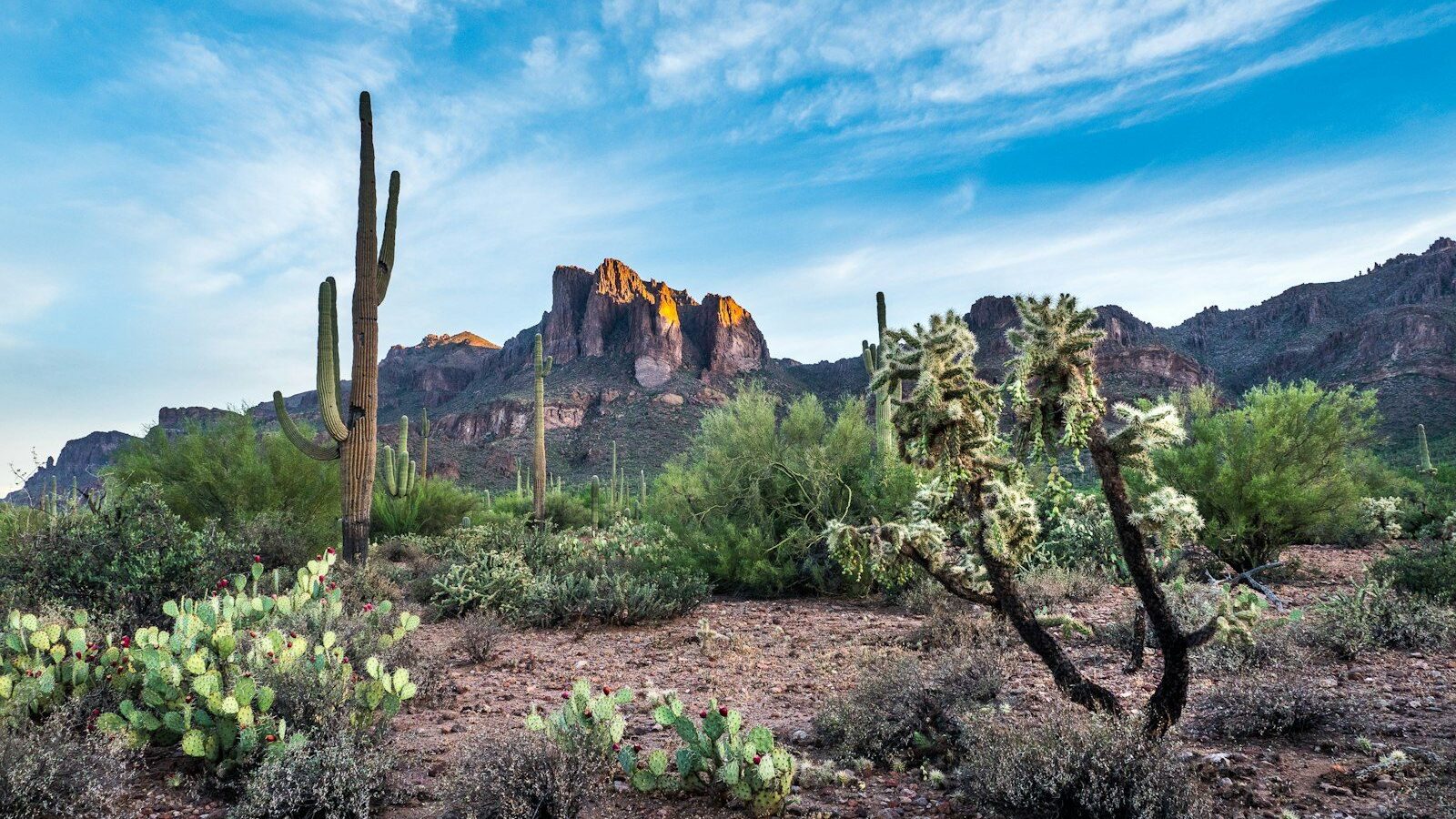
Desert landscaping (xeriscaping) is the art of building a yard that looks intentional and lush while drinking a fraction of the water a lawn demands. Done right, a desert garden in Phoenix, Tucson, Las Vegas, or Albuquerque can cut irrigation by 50 to 75 percent, eliminate weekly mowing, and still deliver color from spring through fall. The trick is not “rocks instead of plants” — that bakes your yard into a heat island. The trick is layered planting, smart hardscape, and drip irrigation tuned to how desert-adapted plants actually drink. This guide walks you through design zones, a plant palette by USDA zone, hardscape detailing, irrigation rates, and a month-by-month maintenance plan so the bed still looks sharp in its third summer, not just its first.
Key Takeaways
- Xeriscape is a system: hydrozoning, soil prep, drip irrigation, mulch, and low-water plants — not just gravel.
- Group plants by water need (high/moderate/low) so one valve never overwaters drought-lovers.
- Use 3/4-inch decomposed granite or screened gravel at 2 to 3 inches deep; skip plastic sheeting that traps heat and roots.
- Water deeply and infrequently — established agave and cactus often need water only every 3 to 4 weeks in summer.
- Anchor the design with boulders and a few structural specimens (agave, ocotillo, saguaro where legal), then fill with flowering perennials and grasses.
The seven principles of xeriscape
Xeriscape, coined by Denver Water in the early 1980s, rests on seven principles, and every good desert yard honors all of them. First, planning and design: map sun, slope, and drainage before you buy a single plant. Second, soil improvement — even in the desert, amending compacted caliche or adding compost to planting holes helps roots establish. Third, appropriate plant selection, favoring natives and proven desert adapters. Fourth, practical turf areas: if you keep any lawn, shrink it to a usable patch and use a warm-season grass. Fifth, efficient irrigation via drip and smart controllers. Sixth, mulch — gravel or organic — to hold moisture and moderate soil temperature. Seventh, appropriate maintenance, which in a xeriscape is light but never zero.
Step 1: Hydrozoning — design around water need
The single biggest mistake in desert landscaping is mixing thirsty and drought-tolerant plants on the same irrigation valve. Split your yard into three hydrozones. The high-water zone sits near the house or patio where you spend time — a small area for a citrus tree, container annuals, or a tiny turf patch. The moderate zone is the transition: flowering shrubs and perennials that want a soak every week or two. The low-water zone is the bulk of the yard, the outer beds full of cactus, agave, and native shrubs that survive on rainfall plus occasional deep drinks. Run each zone on its own drip valve so you never drown the agave to keep the citrus happy.
Step 2: Hardscape and ground plane
Gravel and decomposed granite
Decomposed granite (DG) in a 1/4-inch minus screening compacts into firm, walkable paths, while 3/4-inch screened gravel reads as a clean mulch in planting beds. Spread it 2 to 3 inches deep over a weed barrier of woven landscape fabric — woven, not plastic sheeting. Plastic traps heat and stops water and air from reaching roots, which slowly cooks your plants. For a 200-square-foot bed at 2 inches deep you need roughly 1.25 cubic yards of gravel; order 10 to 15 percent extra for settling and edges. Choose a gravel color that flatters your home: warm gold “Apache brown” or “Madison gold” for adobe and stucco, cooler gray for modern desert-contemporary builds.
Boulders and dry creek beds
Boulders give a desert yard the structure that lawns give a traditional one. Bury each boulder one-third into the soil so it looks like it grew there rather than being dropped. Group them in odd numbers — threes and fives — and vary the sizes. A dry creek bed (an arroyo) is both beautiful and functional: it channels monsoon runoff away from the foundation. Dig a shallow, meandering trench 12 to 18 inches wide, line it with fabric, set larger cobbles along the banks, and fill the center with 2- to 4-inch river rock.
Step 3: A desert plant palette by zone
Build the planting in three layers — structural specimens, mid-height shrubs and perennials, and groundcovers/accents. The lists below are organized by USDA zone so you choose plants that survive your winter lows, not just your summer highs. Most of the Southwest low desert is zone 9b–10a; the high desert and intermountain West run zone 7–8.
Structural specimens (the “trees” of the desert garden)
- Ocotillo (Fouquieria splendens), zones 8–11 — whip-like canes, scarlet spring flowers; needs sharp drainage.
- Blue agave / Agave americana, zones 8–11 — bold blue rosettes to 6 feet; give it room and gravel.
- Golden barrel cactus (Echinocactus grusonii), zones 9–11 — globe of gold spines, classic focal point.
- Saguaro (Carnegiea gigantea), zones 9–11 — iconic but slow and protected; buy nursery-grown with a permit, never wild-collected.
- Desert willow (Chilopsis linearis), zones 7–9 — small flowering tree, orchid-like blooms, true monsoon survivor.
Mid-height shrubs and flowering perennials
- Texas sage / cenizo (Leucophyllum frutescens), zones 8–11 — silver foliage, purple flowers after rain.
- Red yucca (Hesperaloe parviflora), zones 5–11 — grassy clump, coral flower spikes loved by hummingbirds.
- Brittlebush (Encelia farinosa), zones 8–11 — silver mound, sheets of yellow daisies in spring.
- Autumn sage (Salvia greggii), zones 6–9 — long bloom, many colors, light shearing keeps it tidy.
- Damianita (Chrysactinia mexicana), zones 8–11 — fine green mound topped with yellow daisies.
Groundcovers, grasses and accents
- Trailing lantana (Lantana montevidensis), zones 8–11 — purple sheet of bloom spring to frost.
- Deer grass (Muhlenbergia rigens), zones 7–10 — soft fountain of green, great between boulders.
- Pink muhly grass (Muhlenbergia capillaris), zones 6–9 — pink autumn haze.
- Angelita daisy (Tetraneuris acaulis), zones 4–10 — nearly ever-blooming yellow buttons.
- Blackfoot daisy (Melampodium leucanthum), zones 5–10 — low white-flowering mound for path edges.
Step 4: Soil prep and planting
Desert soils are often alkaline and may hide a layer of caliche — cemented calcium carbonate — a foot or two down. When you dig a planting hole, fill it with water; if it hasn’t drained in 24 hours you’ve hit caliche and must punch through it with a digging bar or relocate the plant. Dig holes twice as wide as the rootball but no deeper, set the plant slightly high so the crown never sits in a puddle, and backfill with native soil rather than rich potting mix (a too-cushy hole keeps roots from spreading). For cactus and agave, mix in 30 to 50 percent pumice or coarse sand to guarantee drainage. Build a temporary watering basin around new plants for the first season, then remove it once they establish.
Step 5: Drip irrigation rates
Drip is non-negotiable in a xeriscape — it delivers water to the root zone with almost no evaporation loss. Use pressure-compensating emitters: 1 GPH for small perennials, 2 GPH for shrubs, and two to four 2-GPH emitters spaced around the dripline of trees and large specimens. The goal is always deep and infrequent. New plantings (first 6 to 8 weeks) want water every 2 to 3 days. After establishment, shift to the schedule below, which is a starting point — adjust for your soil and a smart controller’s weather data.
- Cactus & agave (established): deep soak every 3 to 4 weeks in summer; none in winter.
- Desert shrubs & perennials: every 7 to 10 days in summer, every 14 to 21 days in spring/fall, monthly or off in winter.
- Desert trees: deep soak every 10 to 14 days in summer, wetting soil to 3 feet deep.
- Citrus / high-water zone: every 5 to 7 days in summer; mulch heavily with organic mulch, not gravel.
Season-by-season maintenance checklist
Spring (March–May)
- Plant new cactus, agave, and warm-season perennials — spring is the best establishment window.
- Lightly prune brittlebush and salvias after the first bloom to encourage a second flush.
- Check and flush drip lines; replace clogged emitters before the heat arrives.
- Top up gravel mulch where monsoon and wind have thinned it.
Summer (June–September)
- Run irrigation in the pre-dawn hours to cut evaporation.
- After monsoon storms, turn drip off for a week — the rain has done your watering.
- Watch for sunburn on transplanted cactus; shade new specimens with 30 percent shade cloth their first summer.
- Pull summer weeds while small; a stirrup hoe makes quick work of gravel beds.
Fall (October–November)
- Plant trees and shrubs now — fall planting gives roots a full cool season to establish.
- Cut back deer grass and muhly to 6 inches once they brown, or leave for winter structure.
- Reduce irrigation frequency as temperatures drop.
Winter (December–February)
- Cover frost-tender cactus and tropical accents with frost cloth on nights below 28°F.
- Hold off on pruning frost-damaged agave/cactus until spring — the dead tissue protects living growth.
- Plan next year’s additions and order bare-season specimens.
A well-built desert garden gets better and cheaper to run every year as plants mature and irrigation needs fall. If you’re pairing this with other hardscape work, our guide on installing a flagstone patio covers a perfect xeriscape sitting area, and if you want a different low-water aesthetic, compare it with our Mediterranean garden ideas. For more outdoor projects, browse the Outdoor Living hub.
Frequently Asked Questions
Is desert landscaping cheaper than a lawn?
Upfront, gravel, boulders, and specimen plants cost more than seeding turf — often $8 to $20 per square foot installed. But it pays back fast through water savings (50 to 75 percent less), no mowing, no fertilizer, and almost no ongoing replacement. Most homeowners recoup the difference within three to five years, and many Southwest cities offer turf-removal rebates that cover part of the conversion.
Do I really need landscape fabric under the gravel?
Use woven, water-permeable fabric in pure gravel beds to slow weeds, but never use solid plastic sheeting — it traps heat, blocks water, and suffocates roots. In planting areas, skip continuous fabric and instead spread gravel directly over soil so plants can self-seed and breathe; spot-weed by hand a few times a year.
How often do established cactus and agave need water?
Once established (after the first full year), most desert cactus and agave need a deep soak only every three to four weeks in peak summer and essentially nothing in winter. Overwatering is the leading cause of cactus death — rot from soggy roots kills far more plants than drought.
Will a desert yard look bare and brown?
Not if you plant in layers. Combine structural agave and ocotillo with flowering shrubs like Texas sage and red yucca, perennials like autumn sage and angelita daisy, and grasses like pink muhly. With this palette something is blooming nearly year-round, and the silver and blue foliage stays handsome between flushes.
Can I xeriscape in a colder climate?
Yes. Xeriscape principles apply anywhere — the plant list just changes. In zones 5–7, swap cactus for cold-hardy choices like red yucca, agastache, lavender, prairie grasses, and hardy ice plant (Delosperma). The water-saving design, hydrozoning, drip irrigation, and mulch work in any climate.