

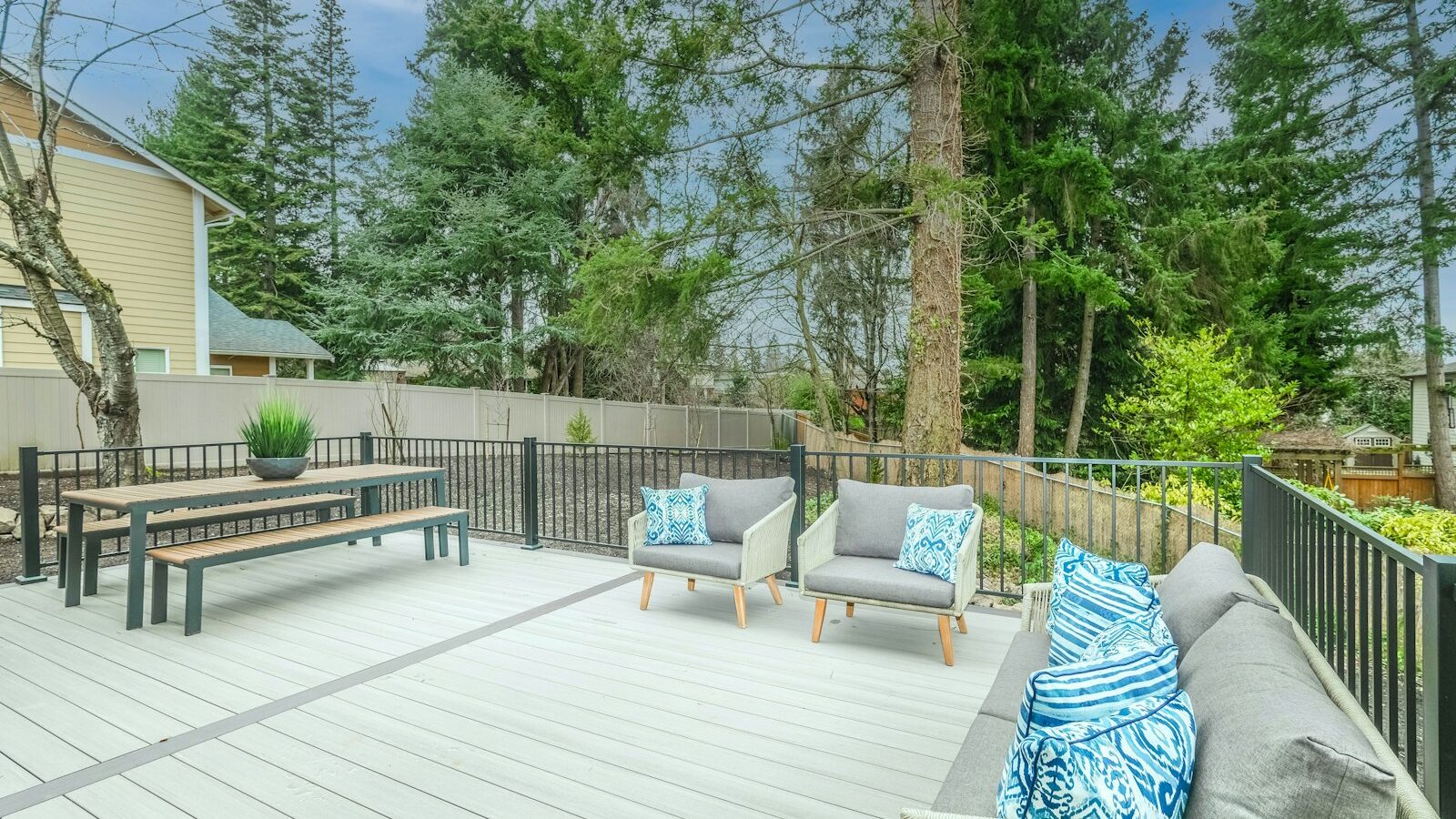
A deck is one of the highest-impact upgrades you can make to a backyard, turning unused space into an outdoor room for dining, lounging, and entertaining. Whether you have a sprawling yard or a tight side lot, the right design, material, and details make all the difference. Below are 30 deck ideas grouped by theme, with quick notes and rough cost cues to help you plan and budget.
Key takeaways
- Pressure-treated pine is the budget pick (around $15-$25 per sq. ft. installed); composite and PVC cost more upfront but slash long-term upkeep.
- Ground-level and floating decks skip costly railings and deep footings, making them the cheapest way to add usable square footage.
- Built-in seating, planters, and pergolas add function without expanding the footprint, ideal for small yards.
- Lighting and privacy screens deliver the biggest “wow” for the lowest spend, often under a weekend’s work.
- Plan railings, stairs, and permits early; they quietly drive 15-30% of total cost.
Choosing your decking material
Material is the single biggest decision you’ll make. It sets the look, the price, and how many weekends you’ll spend maintaining it over the next 20 years. Here are the four most common options.
1. Pressure-treated pine
The default budget choice across the U.S. It’s affordable, widely available, and easy for pros (or skilled DIYers) to work with. The trade-off is upkeep: expect to clean, stain, or seal it every 1-3 years to prevent warping, splitting, and graying. Rough cost: $15-$25 per sq. ft. installed.
2. Cedar & redwood
Natural softwoods with a warm, rich grain and built-in resistance to rot and insects. They feel cooler underfoot than composite and smell wonderful when fresh. They still need periodic sealing to hold their color. Rough cost: $20-$35 per sq. ft. installed, with redwood at the higher end in western states.
3. Composite
A blend of wood fibers and recycled plastic that mimics wood grain without the splinters or staining. No sealing required; just an occasional wash. Modern lines resist fading and scratching well. Rough cost: $30-$50 per sq. ft. installed. See our deeper breakdown in composite vs wood decking.
4. PVC (cellular vinyl)
100% plastic, the lightest-maintenance and most moisture-proof option, great for poolside and humid coastal climates. It stays cooler than some composites and won’t rot, period. Rough cost: $35-$60 per sq. ft. installed.
| Material | Look | Cost | Upkeep |
|---|---|---|---|
| Pressure-treated pine | Plain, paintable; grays over time | $ | High (seal every 1-3 yrs) |
| Cedar / redwood | Warm natural grain | $$ | Medium (seal periodically) |
| Composite | Wood-look, uniform | $$$ | Low (occasional wash) |
| PVC | Sleek, synthetic | $$$$ | Very low (wash only) |
Small deck ideas for tight yards
You don’t need a huge yard to get a useful deck. Small footprints keep costs down and force smart, efficient layouts.
5. The bistro deck
A 6×8 or 8×10 platform sized for a two-person cafe table and chairs. Tuck it off the back door or a corner for morning coffee. With pressure-treated lumber, a simple ground-level version can land under $1,500 in materials.
6. Side-yard runner
A narrow deck along an unused side yard turns dead space into a walkway-lounge combo. Add a slim bench and a row of planters to soften the corridor feel.
7. Corner platform with angled rail
Angling one edge at 45 degrees makes a small deck feel intentional and opens sightlines into the yard. It’s a cheap design trick that adds polish without extra square footage.
Free, no-obligation quote · Connect with a local pro
Multi-level & wraparound decks
For larger homes or sloped lots, breaking a deck into levels or wrapping it around the house creates distinct zones and handles grade changes gracefully.
8. Two-tier dining and lounge
Put the grill and dining set on the upper level near the kitchen door, then step down to a lounge or fire-pit zone. The level change defines the rooms without walls.
9. Cascading deck for a sloped yard
A series of stepped platforms follows the hillside instead of fighting it, eliminating the need for tall, expensive understructure. Great for walkout basements.
10. Full wraparound
Wrapping two or three sides of the house chases the sun (or shade) throughout the day and connects multiple rooms to the outdoors. It’s a premium build; budget for the added perimeter, railing, and footings.
Ground-level & floating decks
When a deck sits low to the ground, you often skip railings and deep footings entirely, which is where the real savings live.
- 11. Floating platform deck: A detached “island” deck set anywhere in the yard on concrete deck blocks, no attachment to the house and usually no permit for small sizes (check locally).
- 12. Patio-to-deck transition: Lay a low deck flush with an existing patio to blend wood warmth with paver durability. Pairs well with our patio ideas.
- 13. Around-the-tree deck: Frame a low platform around a mature shade tree for an instant, leafy outdoor room.
- 14. Pool surround: A ground-level deck around an above-ground pool hides the structure and adds lounging space. PVC shines here.
Deck + pergola & shade structures
Overhead structure makes a deck usable in midday heat and gives it an architectural anchor. It’s also the perfect frame for lights and greenery.
15. Pergola over the dining zone
A cedar or aluminum pergola above the table dapples the light and defines the space. Add a retractable canopy for full shade on demand. Rough cost: $3,000-$8,000 installed depending on size and material.
16. Attached roof / covered deck
A solid roof extension off the house makes the deck rain-proof and three-season. It’s a bigger investment but dramatically extends usable days.
17. Shade sail
The budget shade option: tensioned fabric triangles anchored to posts and the house. Modern, colorful, and removable for winter, often under $500.
Built-in seating & planters
Built-ins multiply function without expanding the deck. They’re a favorite for small yards where every square foot counts.
- 18. Perimeter bench seating: Benches along the edges double as a low railing and seat a crowd; add hidden storage under the lids for cushions.
- 19. Built-in planters: Integrated boxes bring greenery up to eye level and soften hard edges. Line them properly and add drainage.
- 20. Bench-planter combo: Alternate seating and planters around the perimeter for a built-in “living wall” effect.
- 21. Sunken fire-pit lounge: A built-in bench wrapping a gas fire pit creates a conversation pit that anchors the whole deck.
Lighting, privacy & railings
These finishing details deliver the highest visual payoff per dollar and turn a plain platform into a destination.
22-24. Deck lighting
Recessed stair-riser lights for safety, post-cap lights for ambiance, and under-rail or under-bench LED strips for a soft nighttime glow. Low-voltage kits are DIY-friendly and often run $200-$600. For more layered schemes, see our landscape lighting ideas.
25-26. Privacy screens
A horizontal-slat screen or louvered panel blocks the neighbor’s sightline without feeling like a fence. A planted trellis with climbing vines does the same job greener and cheaper. Either can be added in a weekend.
27-28. Railing styles
Cable rail keeps views open and looks modern; black aluminum balusters are durable and low-cost; glass panels feel high-end but cost more and need cleaning. Match the railing to your view and budget, it’s a major style driver.
Free, no-obligation quote · Connect with a local pro
Budget tips to stretch your dollar
A few smart moves can shave thousands off a deck project without making it look cheap.
- 29. Go low and skip the railing: Keeping a deck under 30 inches high (check local code) often eliminates required railings and deep footings, the two biggest cost adders.
- 30. Mix materials strategically: Use premium composite only for the surface boards and high-touch areas; use pressure-treated lumber for the hidden framing and substructure.
- Keep the shape simple: Rectangles use lumber efficiently. Curves, multiple angles, and many corners drive up labor and waste.
- Build off-season: Many contractors discount in late fall and winter when demand drops.
- DIY the finishing touches: Even if pros build the structure, you can handle staining, lighting, planters, and screens yourself.
However you build it, a deck is the centerpiece of a great backyard. Explore how it fits with the rest of your space in our complete outdoor living guide.
Frequently asked questions
How much does a deck cost to build?
For a standard 300-400 sq. ft. deck, expect roughly $4,500-$10,000 with pressure-treated lumber, or $9,000-$20,000+ with composite or PVC. Railings, stairs, multiple levels, and built-ins push the total higher.
What is the cheapest decking material?
Pressure-treated pine is the lowest-cost option at about $15-$25 per square foot installed. Just budget for regular cleaning and sealing to keep it from graying and warping.
Do I need a permit to build a deck?
Usually yes for attached or elevated decks. Many areas waive permits for small, ground-level floating decks under a certain height or size, but rules vary by city, so always check with your local building department first.
Composite or wood, which is better?
Wood costs less upfront and feels natural; composite costs more but needs almost no maintenance and lasts longer. Choose wood for budget and authenticity, composite for convenience. Our composite vs wood decking guide compares them in detail.
How long does a deck last?
A well-maintained pressure-treated deck lasts 15-20 years, cedar around 15-25, and composite or PVC often 25-30+ years thanks to their rot resistance.
Featured project by Gensou Aquascaping
Get free decking quotes
Compare free, no-obligation quotes from vetted local decking pros near you.