

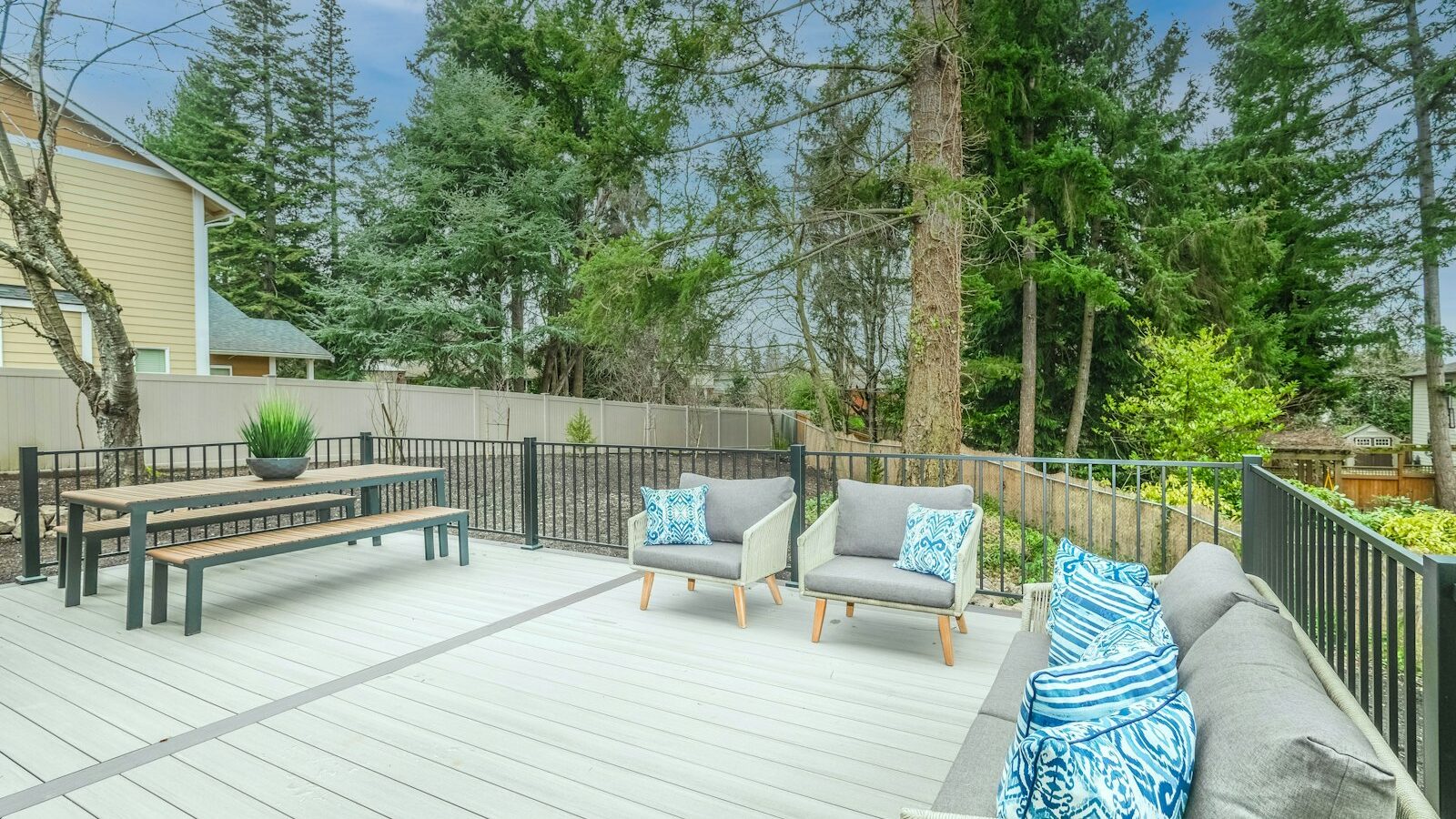
A new deck is one of the highest-value upgrades you can make to a backyard, but the first big decision comes before you draw a single plan: should you build with natural wood or composite boards? Both can look stunning and last for years, yet they behave very differently on cost, upkeep, heat, and how they age. This guide breaks down the real-world trade-offs for homeowners in the US and Singapore so you can pick the surface that fits your climate, budget, and patience for maintenance.
Key takeaways
- Wood costs less upfront but composite usually wins on total cost over 20+ years once you factor in staining, sealing, and replacement.
- Composite is near zero-maintenance (an occasional wash), while wood needs sealing or oiling every 1-3 years to stay good-looking.
- In Singapore’s heat and humidity, dense tropical hardwoods like chengal and ipe excel, but quality composite resists rot, mould, and termites with far less fuss.
- Composite runs hotter in direct sun, especially dark colours, so shade and lighter tones matter for barefoot patios.
- Wood is renewable and recyclable; composite reuses plastic waste but is hard to recycle at end of life. Neither is automatically “greener.”
The quick verdict: which suits you?
If you love the look and smell of real timber, enjoy seasonal upkeep, and want the lowest upfront price, natural wood is hard to beat. If you would rather build once and forget about it, hate sanding and sealing, or live somewhere brutally hot and humid, composite earns its premium. Most buyers land somewhere in between, so the rest of this guide arms you with the details to decide.
Decking is only one layer of a great outdoor space. If you are planning the whole yard, start with our outdoor living and backyard landscaping guide to see how a deck pairs with patios, planting, and lighting.
Natural wood decking options
“Wood decking” covers a huge range of materials, from budget softwood to premium tropical hardwood. The species you choose drives almost everything: price, lifespan, hardness, and how much maintenance it demands.
Pressure-treated softwood
Pressure-treated (PT) pine or fir is the cheapest and most common decking material in North America. Chemicals forced into the wood help it resist rot and insects, and it accepts stain well. The downsides: it can warp, crack, or splinter as it dries, and it needs cleaning and resealing every one to three years to stay attractive. Budget roughly US$3-7 per square foot for materials alone.
Cedar and redwood
Cedar and redwood are naturally rot-resistant softwoods prized for their rich colour and stability. They warp less than PT lumber and feel premium underfoot, but they are softer (prone to dents and scratches) and still need regular sealing if you want to preserve the colour rather than let it silver. Expect US$6-12 per square foot for materials.
Tropical hardwoods: chengal, ipe, balau
Dense tropical hardwoods are the gold standard in hot, humid climates. Chengal and balau are the traditional choices in Singapore and Malaysia, naturally resistant to rot, termites, and fungal decay, with chengal especially valued for outdoor use. Ipe (Brazilian walnut) is the global premium option, so dense it barely floats and can last 40+ years. These woods are gorgeous and tough, but they are heavy, hard to cut, expensive, and need pre-drilling and specialised fixings. Many owners oil them once or twice a year to keep the deep brown tone; left untreated they weather to a silver-grey patina.
Free, no-obligation quote · Connect with a local pro
Composite and WPC decking
Composite decking, often called WPC (wood-plastic composite), blends recycled wood fibres with plastic (polyethylene or PVC) and binders, then extrudes the mix into boards. Modern capped composite wraps a hard polymer shell around the core, dramatically improving stain, scratch, and fade resistance compared with first-generation uncapped boards.
What composite does well
- Almost no maintenance – no sanding, sealing, or staining; just an occasional soapy wash.
- Rot, termite, and mould resistant – the plastic content means there is little for pests or fungi to feed on, a big plus in humid climates.
- Consistent appearance – no knots, splinters, or warping, and good colour stability with modern fade warranties.
- Long warranties – quality brands offer 25-30 year limited warranties.
Where composite falls short
- Higher upfront cost – typically US$8-15+ per square foot for boards, plus hidden fasteners.
- Heat retention – dark composite can get uncomfortably hot in direct sun.
- Look and feel – good composite is convincing, but purists can still tell it is not real wood, and you cannot refinish it to a new colour.
- End-of-life recycling – mixed wood-plastic is difficult to recycle and often ends up in landfill.
Head-to-head comparison
| Factor | Wood | Composite |
|---|---|---|
| Upfront cost | Lower (softwood) to high (hardwood) | Higher across the board |
| Lifetime cost | Higher (ongoing sealing, possible replacement) | Lower once installed |
| Maintenance | Clean + seal/oil every 1-3 years | Occasional wash only |
| Lifespan | 10-15 yrs (PT) up to 40+ (ipe/chengal) | 25-30+ years |
| Look & feel | Authentic grain, can refinish | Uniform, cannot recolour |
| Surface heat | Cooler, especially light wood | Hotter, esp. dark colours |
| Humidity/pests | Hardwood excellent; softwood needs care | Excellent rot/termite resistance |
| Eco profile | Renewable, recyclable, but harvesting impact | Reuses plastic, hard to recycle later |
Cost, lifespan, and the long game
Looking only at the receipt on installation day favours wood, particularly pressure-treated softwood. But a deck is a 20-year asset, so the smarter comparison is total cost of ownership. Wood demands cleaning supplies, stain or oil, and several hours of labour every couple of years; over two decades those costs and your weekends add up. Composite shifts almost all the spending to day one, then asks for very little.
Premium hardwood like ipe or chengal blurs the line: it costs as much as composite upfront and can outlast it, but only if you accept either yearly oiling or a weathered grey finish. If you want decades of low effort and predictable costs, composite tends to win the long game. If you want the warmth of real timber and do not mind the ritual of upkeep, wood pays you back in character.
Climate matters: hot and humid vs temperate
In Singapore and other tropical regions, constant humidity, heavy rain, and termites punish the wrong material fast. Cheap softwood struggles, which is why dense hardwoods like chengal and balau became local standards, and why quality composite is increasingly popular for its rot and pest resistance. The catch is heat: choose lighter composite tones and plan for shade or a pergola so the surface stays barefoot-friendly.
In cooler temperate US climates, freeze-thaw cycles and moisture are the main enemies. Both materials cope well; wood just needs diligent sealing, while composite shrugs it off. Whichever you pick, a solid sub-structure and good drainage matter as much as the boards. If you are weighing a deck against a ground-level option, compare the build effort with our walkthrough on how to build a paver patio, and finish either surface with the right ambience using our roundup of the best outdoor string lights.
Free, no-obligation quote · Connect with a local pro
Buying and hiring checklist
- Confirm the material grade – capped composite over uncapped; certified hardwood from legal, sustainable sources (look for FSC).
- Check the warranty – what it covers (fade, stain, structural), how long, and whether it is transferable.
- Inspect the sub-frame plan – joist spacing, ventilation, and rot-resistant or treated framing; this dictates how long any deck lasts.
- Use hidden fasteners where possible for a cleaner finish and fewer trip/splinter points.
- Ask about heat and slip – request lighter colours or grooved/textured boards for hot, wet areas.
- Get itemised quotes – materials, labour, removal of old decking, and prep should be listed separately.
- Vet the installer – licence/insurance, recent local references, photos of completed decks, and a written timeline.
Frequently asked questions
Is composite decking worth the extra cost?
If you plan to keep the deck for 10+ years and dislike maintenance, yes. The higher upfront price is usually offset by saving on stain, sealant, and labour over the deck’s life, plus you reclaim your weekends.
Which lasts longer, wood or composite?
It depends on the wood. Pressure-treated softwood lasts around 10-15 years; premium hardwoods like ipe or chengal can exceed 40 years with care. Quality composite typically lasts 25-30+ years with minimal upkeep.
Does composite decking get too hot to walk on?
Dark composite can get noticeably hotter than wood in direct sun. Choosing lighter colours, textured boards, and providing shade keeps it comfortable – important in tropical climates like Singapore.
Is chengal or ipe better for Singapore’s climate?
Both are excellent. Chengal is the traditional, locally available choice with strong rot and termite resistance. Ipe is denser and extremely durable but pricier and harder to source. Either outperforms softwood in heat and humidity.
Which is more eco-friendly, wood or composite?
Neither is clearly greener. Wood is renewable and recyclable but harvesting has an impact – choose FSC-certified timber. Composite reuses plastic and wood waste but is difficult to recycle at end of life. The most sustainable deck is the one that lasts longest.
Get free decking quotes
Compare free, no-obligation quotes from vetted local decking & paving pros.