

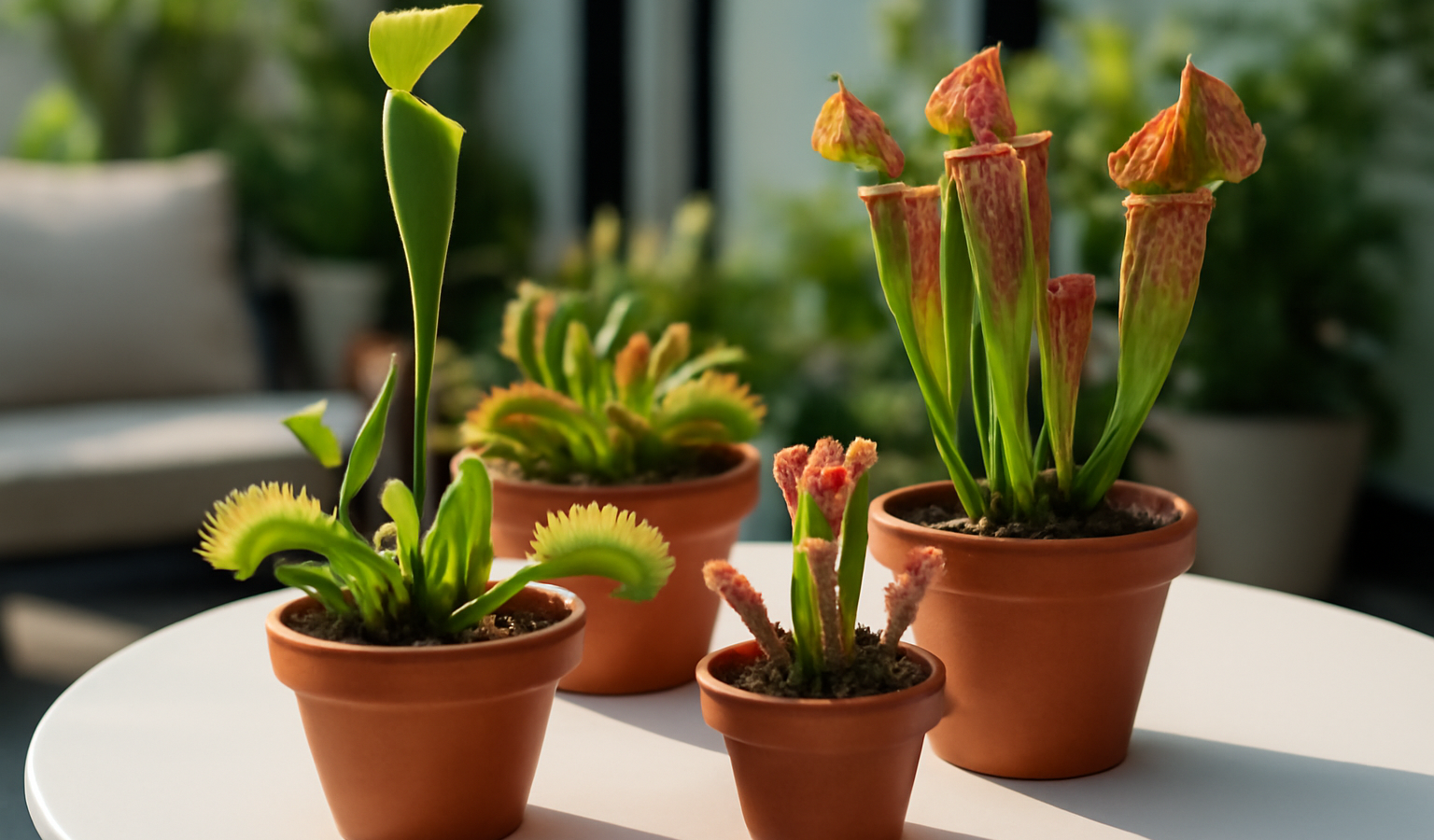
Carnivorous plants look exotic and intimidating, but most beginner failures come from treating them like ordinary houseplants — and from a handful of mistakes that are easy to avoid once you understand why these plants are so unusual. They evolved in nutrient-starved, rain-fed bogs, which means everything you would normally do for a houseplant (good potting soil, the occasional feed, tap water) is exactly wrong here. The good news: once you learn four simple rules — mineral-free water, nutrient-poor soil, intense light, and a seasonal rest for some species — carnivorous plants are genuinely low-maintenance and incredibly rewarding. They snap, glisten, and trap real insects on your windowsill. This guide gives you the universal rules, the best beginner species to start with, and a clear troubleshooting list so your first plants actually thrive.
In this guide
- Why Carnivorous Plants Are Different
- Rule 1: Water — Distilled, RO, or Rain Only
- Rule 2: Soil — Poor on Purpose
- Rule 3: Light — More Than You Think
- Rule 4: Feeding — Let Them Hunt
- Rule 5: Dormancy for Temperate Species
- The Best Carnivorous Plants for Beginners
- A Simple Starter Setup
- Troubleshooting Common Problems
- Frequently Asked Questions
Key Takeaways
- Water only with distilled, reverse-osmosis, or rainwater — never tap, spring, or bottled mineral water. This single rule prevents the most common cause of death.
- Plant in nutrient-poor, acidic media: roughly 1:1 sphagnum peat moss and perlite or silica sand. Never use potting soil, compost, or fertilizer.
- Give the brightest light you can — a sunny window, a grow light, or full sun outdoors. Most beginner deaths from “leggy, weak” plants are really light starvation.
- Keep the roots constantly damp using the tray method, and never feed meat, cheese, or fertilizer. The plant catches its own insects.
- Temperate species (Venus flytraps, many sundews and pitchers) need a cold winter dormancy of 3-4 months; tropical species do not. Match the plant to your conditions.
Why Carnivorous Plants Are Different
Carnivorous plants did not evolve to be difficult — they evolved to survive in places nothing else could. Their native bogs and seeps are so poor in nitrogen and phosphorus that ordinary plants starve there. To get around that, these species evolved to trap and digest insects for nutrients, and to grow in pure, acidic, rain-fed water. Two consequences flow from that history and explain every care rule. First, they get nutrients from prey, not from soil, so rich potting mix and fertilizer literally burn their roots. Second, they tolerate no dissolved minerals, because their habitat has none. Stop thinking “houseplant” and start thinking “bog plant,” and the care suddenly makes sense.
Rule 1: Water — Distilled, RO, or Rain Only
This is the rule that saves the most plants. Water carnivorous plants only with distilled water, reverse-osmosis (RO) water, or collected rainwater. Tap, well, spring, and bottled “mineral” water all carry dissolved salts and minerals — total dissolved solids, or TDS — that these plants cannot process. Every watering leaves those minerals behind in the peat, where they accumulate until they scorch the roots and kill the plant over a few weeks to a few months. It is a slow death new growers almost always misdiagnose.
Aim for water under about 50 ppm TDS; under 30 is ideal. A cheap TDS meter confirms it. Distilled water from the grocery store reads near zero, rainwater collected in a clean barrel is free and excellent, and home RO water is perfect. Most US tap water runs 150-400 ppm and is unsafe — and no, letting it sit out overnight does not help, because minerals do not evaporate. Use the tray method: stand the pot in a saucer holding half an inch to an inch of safe water and let the plant wick it up, keeping the roots evenly moist.
Rule 2: Soil — Poor on Purpose
Carnivorous plants need deliberately barren soil. Regular potting mix, garden soil, compost, and anything labeled “with feed” or “moisture control” will kill them. The standard, all-purpose recipe is a 1:1 blend of sphagnum peat moss and perlite (or silica sand). Long-fiber sphagnum moss works well too, alone or mixed with perlite. Rinse perlite and sand before use to remove dust and mineral residue. Use plastic, glazed ceramic, or glass pots — never unglazed terracotta, which leaches minerals and dries out too fast. This one mix suits Venus flytraps, sundews, and most temperate pitcher plants, so beginners can keep things simple.
Rule 3: Light — More Than You Think
Most “my plant looks weak and floppy” problems are light starvation. Carnivorous plants are sun lovers. Give them the brightest spot you have: a south- or west-facing window, a grow light a few inches above the plant running 12-14 hours a day, or — best of all in the warm season — full sun outdoors. Strong light produces compact, colorful, vigorous growth: red trap interiors on flytraps, heavy dew on sundews, bright pitcher coloration. Weak light produces pale, stretched, trap-less growth and a slow decline. When in doubt, give more light, not less. If you grow indoors year-round, a dedicated grow light is one of the best investments you can make; the same fixtures used to grow vegetables indoors in winter work well for carnivorous plants.
Rule 4: Feeding — Let Them Hunt
You almost never need to feed a carnivorous plant by hand. Outdoors or on a sunny sill they catch their own insects — flytraps grab flies, sundews trap gnats, pitchers drown wasps and beetles. Never put fertilizer in the soil and never offer hamburger, cheese, or human food. The plant cannot digest them; they rot, mold, and harm it. If a plant indoors catches nothing, you can offer tiny prey occasionally — a rehydrated dried bloodworm or a freshly killed insect — but sparingly, once every week or two during active growth. And resist the urge to trigger Venus flytraps for fun: each snap costs the plant energy, and a trap that closes repeatedly with no food simply dies.
Rule 5: Dormancy for Temperate Species
Many popular carnivorous plants are temperate — they come from places with real winters and are programmed to rest. Venus flytraps, North American pitcher plants (Sarracenia), and temperate sundews need a cold winter dormancy of roughly 3-4 months at 35-50°F. During this rest they slow down, look ragged, and may die back — that is normal and necessary. A bright unheated porch, a cold windowsill, or a garage with a window works. Skipping dormancy is a slow killer: the plant keeps growing, exhausts its reserves, and dies after a year or two. Tropical species — like tropical pitcher plants (Nepenthes) and subtropical sundews — do not need dormancy and grow year-round, which makes them good choices if you cannot provide a cold season.
The Best Carnivorous Plants for Beginners
Cape Sundew (Drosera capensis)
If you buy one plant, make it this. The Cape sundew is nearly indestructible, grows year-round with no dormancy, tolerates average home humidity, sparkles with dew, and self-seeds prolifically so you will soon have spares. It is the perfect confidence-builder and a quiet fungus-gnat eliminator. Our dedicated sundew growing guide covers it in detail.
Venus Flytrap (Dionaea muscipula)
The iconic snap-trap is more forgiving than its reputation if you follow the rules: pure water, lean soil, blazing light, and a winter dormancy. It is a temperate plant, so it needs that cold rest. Buy a healthy specimen, resist poking the traps, and it can live for decades and multiply into a clump.
Trumpet Pitcher (Sarracenia)
For an outdoor grower in a temperate climate, North American trumpet pitchers are spectacular and tough. Grown in a pot standing in a tray of rainwater, in full sun, they produce tall, colorful pitchers all summer and need only the same cold winter dormancy as flytraps. They are arguably the easiest carnivorous plant if you have a sunny patio.
Tropical Pitcher (Nepenthes)
If you want a hanging plant and have no cold winter, a tropical pitcher plant fits the bill. The easy hybrids (often sold simply as “Nepenthes”) tolerate normal room warmth and humidity, grow year-round with no dormancy, and dangle dramatic fluid-filled pitchers. They want bright, indirect-to-direct light and the same mineral-free water as everything else.
A Simple Starter Setup
Here is a foolproof first setup. Take a plastic pot with drainage holes, fill it with a rinsed 1:1 peat-perlite mix, and plant a Cape sundew or Venus flytrap. Stand the pot in a saucer or shallow tray. Keep half an inch of distilled or rainwater in the tray at all times during the growing season. Place the whole thing on your brightest windowsill or a few inches under a grow light running 12-14 hours. Do not fertilize, do not feed, and do not fuss. In summer, move it outdoors to a sunny spot where it can catch its own prey. In autumn, if it is a temperate species, let it cool down for its winter rest. That is the entire routine — carnivorous plants reward consistency, not attention.
Troubleshooting Common Problems
Weak, floppy, pale growth nearly always means too little light — move it brighter. Browning or dying leaves and stalled growth often signal mineral buildup from the wrong water; switch to distilled or rain and consider repotting in fresh mix. Traps not closing or a flytrap that looks worn in winter may simply be dormancy, which is normal. Mold, mush, or rot follows uneaten hand-fed food, soggy stagnant conditions, or poor airflow — remove debris and improve ventilation. A plant that declines a year after purchase was probably denied its dormancy. Work through the four rules in order and you will usually find the culprit. For more growing guides, browse the Plants & Flowers hub.
Frequently Asked Questions
What is the easiest carnivorous plant for a beginner?
The Cape sundew (Drosera capensis) is the most forgiving — it grows year-round with no dormancy, tolerates average home humidity, sparkles with dew, and self-seeds freely. Trumpet pitchers (Sarracenia) are the easiest for a sunny outdoor patio. Both thrive on the four basic rules.
Why can’t I use tap water on carnivorous plants?
Tap, well, spring, and bottled mineral water all contain dissolved minerals that accumulate in the peat and burn the roots over weeks. These plants evolved in pure rain-fed bogs and tolerate no minerals. Use only distilled, reverse-osmosis, or rainwater, ideally under 50 ppm TDS.
Do I have to feed my carnivorous plant?
No. Outdoors or on a sunny sill they catch their own insects. If an indoor plant catches nothing, offer tiny prey such as a rehydrated bloodworm once every week or two — but never fertilizer, meat, or human food, which rot and harm the plant.
Does every carnivorous plant need a winter dormancy?
No. Temperate species — Venus flytraps, Sarracenia pitchers, and temperate sundews — need a cold rest of 3-4 months at 35-50°F. Tropical species like Nepenthes pitchers and subtropical sundews grow year-round and should not be chilled. Match the plant to your conditions.
Why is my carnivorous plant turning black or brown?
Some browning is normal leaf turnover, especially during dormancy. Widespread browning with stalled growth usually means mineral buildup from the wrong water — switch to distilled or rain and repot in fresh peat-perlite. Black mush at the crown points to rot from soggy, stagnant, warm conditions.