

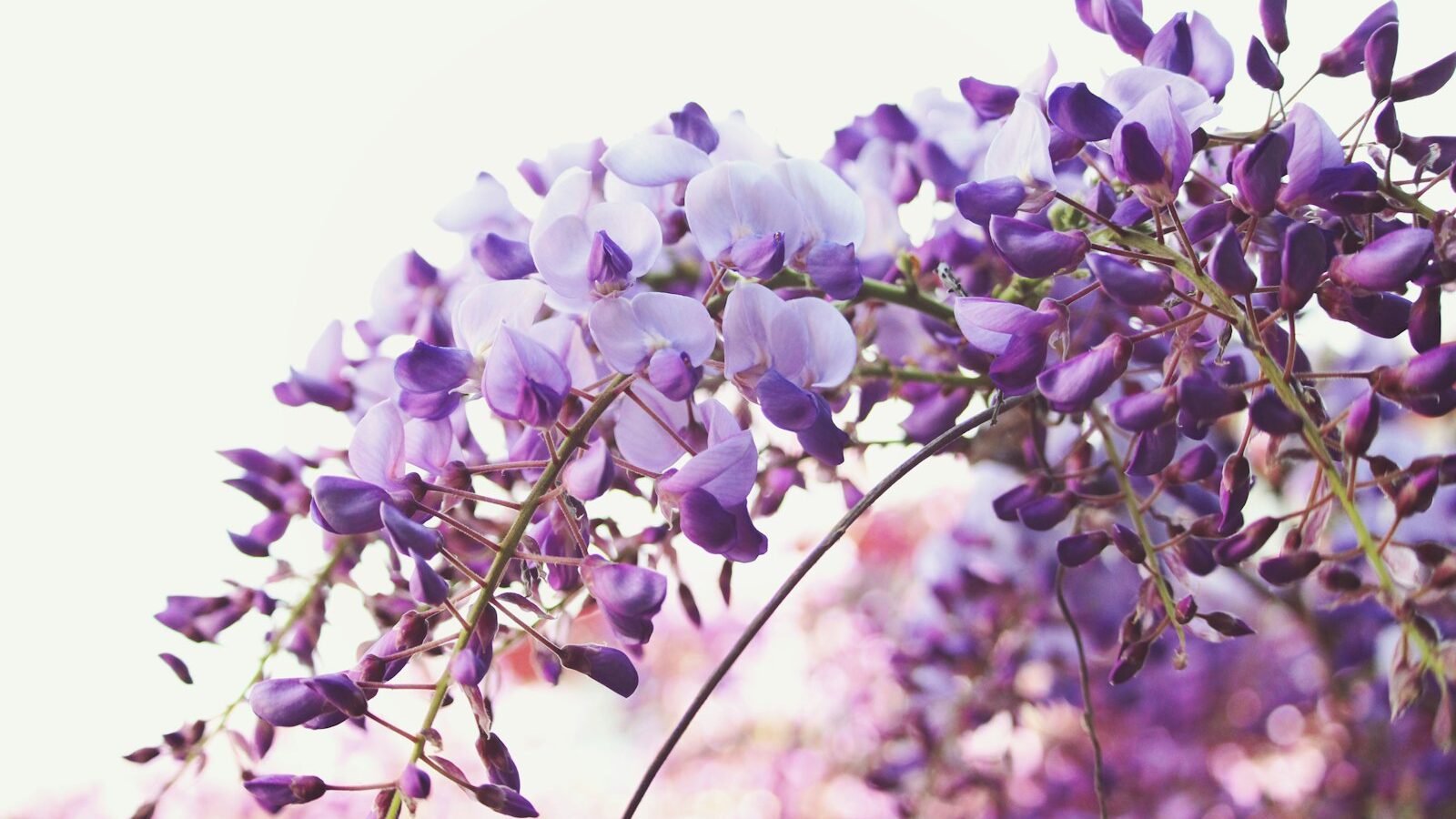
Few plants are as breathtaking as a wisteria in full bloom, draping cascades of fragrant purple, blue, or white flowers over an arbor in late spring. But this dramatic vine is also one of the most vigorous and demanding climbers you can grow, capable of crushing weak supports and refusing to flower for years if mistreated. With the right type, a sturdy structure, and the essential twice-a-year pruning, you can keep wisteria spectacular and under control.
Wisteria quick facts
- Light: full sun (6+ hrs to bloom)
- Soil: moist, well-drained
- USDA zones: 4-9 (by type)
- Needs a very strong support
- Prune twice yearly; can be invasive
As an Amazon Associate we earn from qualifying purchases.
Choosing the right type of wisteria
Not all wisterias behave the same way, and choosing the right one is the single most important decision you will make. The two groups you will encounter fall broadly into the aggressive Asian species and the better-behaved North American natives. Picking wisely up front saves you years of frustration and can spare your garden, and your neighbors’, from a runaway vine.
Chinese and Japanese wisteria
Chinese wisteria (Wisteria sinensis) and Japanese wisteria (Wisteria floribunda) produce the longest, showiest flower clusters and the most intense fragrance. They are hardy in roughly USDA zones 5 to 9. The catch is that both are extremely vigorous and are listed as invasive across much of the southeastern and eastern United States, where they smother native trees and shrubs. Chinese wisteria twines counterclockwise; Japanese twines clockwise, and Japanese types often have longer flower racemes that open gradually from top to bottom.
American and Kentucky wisteria
American wisteria (Wisteria frutescens) and its close relative Kentucky wisteria (Wisteria frutescens var. macrostachya) are native to North America, hardy to around zone 4, and far less aggressive. Their flower clusters are shorter and rounder, with lighter scent, but they bloom at a younger age and are much easier to keep in bounds. Popular cultivars like ‘Amethyst Falls’ and ‘Blue Moon’ are excellent choices for smaller gardens or anyone nervous about invasiveness. If you live where Asian wisteria is a documented problem, these natives are the responsible pick.
When buying, look for a named, grafted or cutting-grown cultivar rather than a cheap seedling. Browse options for a quality wisteria plant and check the label carefully so you know exactly what you are getting.
Planting and the support it demands
Wisteria is a long-lived, woody vine that can reach 25 to 40 feet and develop a trunk as thick as your arm over the years. Plant it in spring or fall in a spot with full sun, rich but well-drained soil, and most importantly, against a support that can carry hundreds of pounds for decades. Dig a hole as deep as the root ball and twice as wide, set the plant at the same depth it grew in its pot, and water it in well.
Light and soil
- Full sun: at least six hours of direct sun is essential for heavy flowering; shade gives you leaves and little else.
- Soil: moist, fertile, well-drained soil with a slightly acidic to neutral pH is ideal, though wisteria tolerates a wide range.
- Avoid rich nitrogen: overly fertile or heavily fertilized ground pushes leafy growth at the expense of blooms.
Build a serious structure
This cannot be overstated: wisteria will destroy flimsy lattice, gutters, downspouts, and trellises. Give it a heavy timber pergola, a steel-pipe arbor, or thick galvanized cables bolted to a masonry wall. Keep it away from your house, as the vines work into siding, shingles, and frames. If you want a built-for-the-job structure, shop for a heavy-duty pergola or arbor rated to carry real weight. Train the main stems onto the structure early and tie them loosely, since wisteria climbs by twining rather than clinging.
Watering and feeding
Once established, wisteria is fairly drought-tolerant, but consistent moisture in the first two or three years helps it root in and supports bud development. Water deeply during dry spells and especially while flower buds are forming in spring. A layer of mulch keeps roots cool and conserves moisture.
- Go easy on fertilizer: wisteria is a legume and fixes its own nitrogen, so feeding rarely helps and often hurts.
- Skip high-nitrogen products: lawn fertilizer that drifts into the bed is a common reason a vine grows lush but never flowers.
- Phosphorus, if anything: if your plant is healthy but shy to bloom, a low-nitrogen, higher-phosphorus feed in spring may encourage buds.
The essential twice-a-year pruning
If you do nothing else, prune wisteria twice a year. This is the secret behind those photogenic flower-laden arbors. Pruning controls the vine’s size, channels its energy into flower spurs instead of endless leafy whips, and exposes the developing buds to sun. Without it, you get a tangled green monster that blooms poorly or not at all.
Summer pruning (after flowering)
About two months after the blooms fade, usually mid to late summer, cut back the long, whippy new shoots to about six leaves, or roughly 12 inches. This tidies the plant, lets light reach the wood, and starts the process of forming short flowering spurs. Do this whenever the vine sends out runaway tendrils through the season.
Winter pruning (dormant season)
In late winter, while the plant is leafless and dormant, go back over those summer-shortened shoots and cut them down further to just two or three buds from the base of each spur. With the leaves gone you can clearly see the plump, rounded flower buds, which are noticeably fatter than the pointed leaf buds. This hard winter cut concentrates the plant’s energy into a spectacular spring show. For thick woody stems you will want a sharp pair of bypass loppers alongside your hand pruners.
Why your wisteria won’t flower
A non-blooming wisteria is the most common complaint gardeners have, and the cause is almost always one of a handful of issues. Work through this list before giving up.
- It’s too young: seed-grown wisteria can take 7 to 15 years to bloom. This is why a named, cutting-grown or grafted plant that flowers within a few years is worth the extra money.
- Too much nitrogen: excess nitrogen from fertilizer or nearby lawn feed drives foliage and suppresses flowers.
- No pruning: without the summer and winter cuts, the vine never forms flowering spurs.
- Not enough sun: a shaded vine simply will not set many buds.
- Late frost: a hard spring frost can kill the season’s buds; the plant usually recovers the following year.
If you crave that purple cascade and want backup, pair your wisteria with other reliable purple flowers so the display never disappoints while a young vine matures.
Keeping it in check and common problems
Wisteria’s vigor is both its glory and its danger. The same plant that makes a stunning arbor can also send runners under fences, root where stems touch soil, and climb 30 feet into a tree if you let it. Stay on top of it with regular pruning and by removing suckers and any seed pods, which can self-sow. Where Asian wisteria is invasive, never let it escape into wild areas, and consider a native type instead.
Pests, disease, and other issues
- Aphids and scale: usually minor; a strong water spray or insecticidal soap handles them.
- Yellowing leaves: often chlorosis from alkaline or poorly drained soil; improve drainage and check pH.
- Powdery mildew: appears in humid, crowded conditions; prune for airflow.
- Toxicity: seeds and pods are poisonous to people and pets if eaten, so plant with care around children and animals.
If wisteria feels like more vine than you want to wrestle, a gentler twining climber such as clematis care may suit you better. For more growing help across the garden, visit our full plant & flower care guide.
Frequently asked questions
How long does it take wisteria to bloom?
A named, cutting-grown or grafted wisteria usually flowers within three to five years, while a seed-grown plant can take anywhere from 7 to 15 years. Buying a flowering-size cultivar is the fastest route to reliable blooms.
Why is my wisteria all leaves and no flowers?
The usual culprits are too much nitrogen, a lack of the twice-yearly pruning, too little sun, or simply a plant that is still too young. Cut back on feeding, prune in summer and winter, and make sure it gets at least six hours of sun.
Is wisteria invasive?
Chinese and Japanese wisteria are aggressive and listed as invasive in much of the eastern and southeastern United States. American and Kentucky wisteria are native and far better behaved, making them the safer choice if invasiveness is a concern.
When should I prune wisteria?
Prune twice a year: in mid to late summer, shorten the long new shoots to about six leaves; then in late winter, cut those same shoots back to two or three buds. This builds flowering spurs and keeps the vine in bounds.
What kind of support does wisteria need?
A very strong one. Mature wisteria can weigh hundreds of pounds and easily destroys flimsy trellises, gutters, and lattice. Use a heavy timber pergola, a steel arbor, or thick cable on masonry, and keep it well away from your house.