

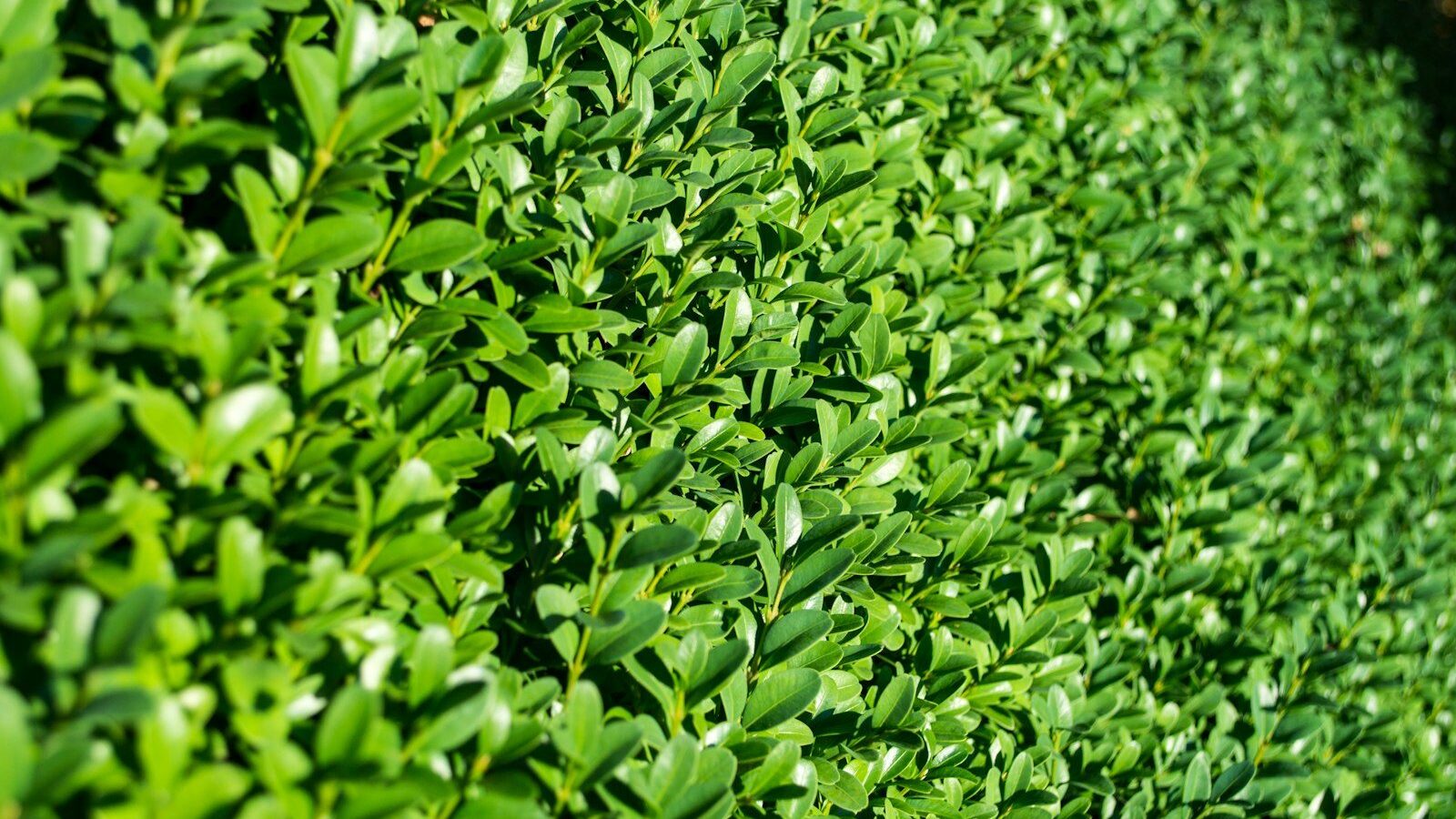
Choose Wintergreen boxwood if you garden in a cold zone or want a hedge that stays greener through winter, and choose Winter Gem if you want a slightly larger, faster-filling hedge in zones 5 to 9 and don’t mind some bronzing in cold weather. Both are small-leaf Asian boxwoods that take shearing well and handle heat better than English boxwood. The real differences are mature size, how quickly they fill in, and how they look in January, which matters a lot for a plant you chose because it is evergreen.
Part of our Trees & Shrubs guide →
In this guide
Key Takeaways
- Wintergreen is hardier (to zone 4) and usually holds better green color in winter.
- Winter Gem grows a bit faster and larger, which helps a hedge fill in sooner.
- Both bronze in exposed, windy, sunny winter sites; siting and watering reduce it.
- For low hedges of 2 to 3 feet, either works with regular shearing.
- Neither is immune to boxwood blight; buy from clean nurseries and space for airflow.
Winter Gem vs Wintergreen at a Glance
| Feature | Winter Gem | Wintergreen |
|---|---|---|
| Botanical name | Buxus microphylla var. japonica ‘Winter Gem’ (often sold as a Korean or littleleaf type) | Buxus sinica var. insularis ‘Wintergreen’ (Korean boxwood) |
| USDA zones | About 5 to 9 | About 4 to 9 |
| Mature size, unpruned | About 4 to 6 ft tall and wide | About 2 to 4 ft tall, 3 to 5 ft wide |
| Growth rate | Moderate; fast for a boxwood | Slow to moderate |
| Leaf | Small, oval, rich green | Small, oval, medium to bright green |
| Winter color | Often bronzes or yellows in cold, exposed sites | Usually holds green better; can bronze in harsh sites |
| Natural shape | Rounded to oval | Rounded, slightly wider than tall |
| Best hedge height | 2 to 5 ft | 1 1/2 to 3 ft |
| Heat tolerance | Good | Good |
Nursery labels vary, and both plants have been sold under more than one botanical name over the years. The cultivar names, Winter Gem and Wintergreen, are what matter when you shop. Mature sizes also vary by climate and pruning; most homeowners keep both much smaller with regular shearing. For pairing boxwood with other evergreens and small trees, see our trees and shrubs guide.
Size and Growth Rate
Winter Gem is the larger plant. Left alone, it can reach roughly 4 to 6 feet tall and wide, and it puts on more growth each year than Wintergreen. That makes it useful when you want a 3- to 5-foot hedge to fill in within a few seasons, or a foundation shrub that holds its own against a two-story house.
Wintergreen is more compact, generally maturing around 2 to 4 feet tall and a little wider. It suits low hedges, parterres, edging along walks and small foundation beds where you don’t want to fight size every year. Its slower growth means less shearing, but also longer waits for a new hedge to close gaps. Plant it a little closer to compensate.
Spacing for Hedges
| Hedge type | Winter Gem spacing | Wintergreen spacing |
|---|---|---|
| Low edging, 12 to 18 in | 12 to 15 in | 10 to 12 in |
| Medium hedge, 2 to 3 ft | 18 to 24 in | 15 to 18 in |
| Tall hedge, 3 to 5 ft | 24 to 30 in | Not ideal; consider Winter Gem |
Space plants center to center along a string line. Our guide on how to plant a boxwood hedge covers trench preparation and staggered rows.
Winter Color: The Deciding Factor for Many
Many small-leaf Asian boxwoods change color in winter. Cold, wind and winter sun cause leaves to turn bronze, orange-brown or yellowish until new growth returns in spring. It is a stress response, not disease, but it is not the crisp green most people expect from an evergreen hedge.
Winter Gem is known for bronzing in cold, exposed sites, especially in the colder half of its range. In zone 7 and warmer, or in sheltered spots, it often stays reasonably green. Wintergreen was selected partly for holding its color, and it typically stays greener through winter, though in very harsh, sunny, windswept spots it can bronze too. If winter color is important and you live in zones 4 to 6, Wintergreen is the safer choice.
Reducing Winter Bronzing on Either Plant
- Site it out of winter wind, such as on the east side of a house or behind a fence.
- Avoid strong winter afternoon sun on south and west exposures in cold zones.
- Water deeply in late fall before the ground freezes, and during dry winter thaws.
- Mulch 2 to 3 inches over the root zone to keep soil moisture even.
- Wrap or screen exposed young plants with burlap for their first winters.
Winter browning can also signal other problems. If leaves stay brown into late spring or whole branches die, see our troubleshooting guide on why boxwood turns brown.
Cold Hardiness and Climate Fit
Wintergreen is typically rated to zone 4, making it one of the hardiest boxwoods widely available. It is a common choice in the upper Midwest, northern New England and the colder parts of the Rockies. Winter Gem is generally rated to zone 5. Both handle summer heat in the South better than English boxwood, and both grow in zones up to about 9 with some afternoon shade and consistent water in the hottest areas.
- Zones 4 to 5a: Wintergreen.
- Zones 5b to 6: Either; Wintergreen for best winter color, Winter Gem for faster, taller hedges in sheltered spots.
- Zones 7 to 8: Either. Winter Gem’s bronzing is usually mild here.
- Zone 9: Either, with afternoon shade and regular watering.
Pruning and Shaping
Both cultivars have small leaves and dense branching that shear cleanly into formal shapes. Shear in late spring after the first flush of growth hardens off, and again lightly in early summer if needed. Avoid heavy pruning after mid-August in cold zones so new growth has time to harden before frost. Every few years, thin out a few interior branches with hand pruners to let light and air into the center, which keeps the plant healthier and reduces disease.
Winter Gem’s faster growth means it needs shearing once or twice a year to hold a crisp line. Wintergreen often needs only one shearing.
Pests and Diseases
Both are Asian boxwoods, which as a group tend to be less troubled by boxwood leafminer than American and English boxwood, though no boxwood is pest-free. Watch for boxwood psyllid, mites and, in some regions, box tree moth, an invasive caterpillar that has been found in parts of the US and Canada.
Boxwood blight is the most serious disease. Neither Winter Gem nor Wintergreen is fully resistant. Reduce risk by buying from reputable nurseries, inspecting new plants for leaf spots and black streaks on stems, spacing plants for airflow, watering at the base rather than overhead, and cleaning pruning tools between plants. If blight is common in your area, consider newer cultivars bred for improved blight tolerance. For more options and their trade-offs, see our overview of boxwood varieties.
Soil, Sun and Care
Care is identical. Both prefer well-drained, moderately fertile soil with a pH around 6.5 to 7.2 and grow in full sun to part shade. Shallow roots mean they dislike cultivation around their base and benefit from mulch. Water new plantings deeply once or twice a week through the first growing season. Feed in early spring with a slow-release fertilizer formulated for shrubs or evergreens, following label rates. Poor drainage is the most common killer; in heavy clay, plant slightly high or in a raised bed.
Landscape Uses Beyond Hedges
Foundation Plantings
Winter Gem’s larger size makes it a better fit under tall windows and along two-story facades, where a 2-foot shrub looks lost. Wintergreen works under low windows and beside porches on ranch and cottage-style homes, where it will not grow into the view. Set either at least 2 to 3 feet out from the foundation so roots get rain and you have room to shear the back side.
Containers and Topiary
Both make good container specimens flanking a door, and both shear into balls and cones. Wintergreen’s hardiness gives it the edge in pots, because roots in a container are exposed to colder temperatures than roots in the ground. In zones 6 and colder, use a large, frost-proof pot at least 18 inches across, or move containers against a sheltered wall for winter. Winter Gem’s faster growth helps shaped topiary fill out more quickly in mild climates.
Mixed Borders
Rounded, unsheared boxwoods give winter structure to perennial beds. Plant them in loose groups of three or five at the front or corners of a border, where they anchor the bed after perennials die back.
Buying Tips
- Check the tag for the cultivar name, not just “Korean boxwood” or “littleleaf boxwood.”
- Buy all hedge plants at once, from the same batch, for uniform size and color.
- Look for dense, evenly green plants without leaf spots, dieback or webbing.
- Slip a plant out of its pot to check for white, healthy roots and no circling mats.
- Fall and early spring are the best planting windows in most zones.
Which Should You Choose?
- If you live in zone 4 or a cold, windy part of zone 5, choose Wintergreen.
- If winter green color is your top priority, choose Wintergreen.
- If you want a 3- to 5-foot hedge that fills in quickly, choose Winter Gem.
- If you need low edging or a parterre, choose Wintergreen for its compact size and slower growth.
- If you are planting a foundation bed on a large house in zones 6 to 8, choose Winter Gem for presence.
- If you want the least pruning, choose Wintergreen.
Frequently Asked Questions
Which boxwood stays greenest in winter, Winter Gem or Wintergreen?
Wintergreen generally holds its green color better through winter. Winter Gem is more likely to bronze or yellow in cold, sunny, windy sites, especially in zones 5 and 6.
How fast does Winter Gem boxwood grow?
Winter Gem grows at a moderate rate, which is fast for a boxwood. Under good conditions, it can add several inches a year, filling in a hedge a season or two sooner than Wintergreen.
Can I mix Winter Gem and Wintergreen in one hedge?
It is not recommended for a formal hedge. Their growth rates, sizes and winter colors differ enough that a mixed hedge can look uneven, especially in winter. Use one cultivar per hedge.
Will winter bronzing kill my boxwood?
No. Bronzing is a cosmetic stress response, and leaves usually green up or are replaced by new growth in spring. Persistent browning, dieback or leaf drop points to other issues such as drainage, root damage or disease.
Are Winter Gem and Wintergreen deer resistant?
Boxwoods in general are rarely browsed by deer because of their bitter foliage, so both are good choices where deer pressure is high.