

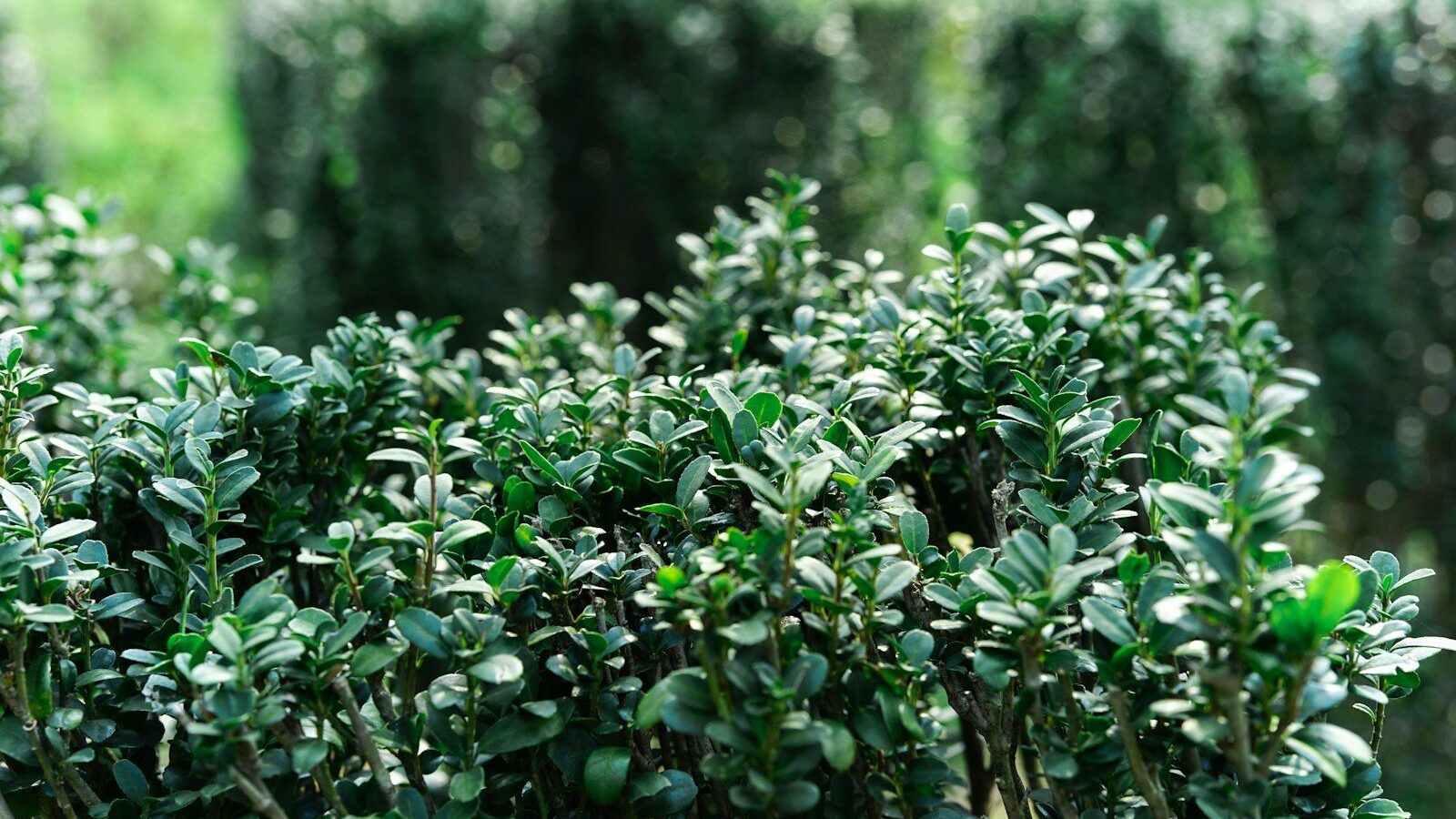
The right boxwood variety comes down to three questions: how big you want the shrubs to be without constant shearing, how cold your winters get, and whether you care if the leaves turn bronze in January. For a low, tidy hedge in cold zones, Green Gem or Green Velvet hold their color best. For a fast, budget-friendly hedge in zones 5–9, Wintergreen and Winter Gem are the workhorses. Sprinter is the quickest to fill in. And if boxwood blight is a problem in your area, look at the newer blight-resistant NewGen lines. Below is a side-by-side comparison of the common cultivars, plus spacing and planting notes for hedges.
Part of our Trees & Shrubs guide →
In this guide
Key Takeaways
- Pick by mature size first — a variety that wants to be 5 feet tall will fight you in a 2-foot hedge.
- Korean-type boxwoods (Wintergreen, Winter Gem) are the hardiest but bronze in winter.
- Sheridan hybrids (Green Gem, Green Velvet, Green Mountain) stay green through winter in zones 4–9.
- Sprinter grows fastest for a quick, uniform hedge in zones 5–9.
- Where boxwood blight occurs, choose blight-resistant cultivars and avoid English boxwood.
- Typical hedge spacing: 12–18 inches for small varieties, 18–30 inches for medium ones.
Boxwood Varieties Compared
Sizes below are typical unpruned mature dimensions from growers’ descriptions. Boxwoods grow slowly and can be kept smaller with shearing, but choosing a variety close to your target size means far less work.
| Variety | Mature size (H x W) | USDA zones | Shape | Winter color | Best use |
|---|---|---|---|---|---|
| Wintergreen | 2–4 ft x 3–4 ft | 4–9 | Rounded | Bronzes in cold | Budget hedges, cold climates |
| Winter Gem | 3–5 ft x 3–5 ft | 5–9 | Rounded, dense | Bronzes in cold | Medium hedges, heat tolerance |
| Green Gem | 2 ft x 2 ft | 4–9 | Natural globe | Stays green | Low edging, parterres, balls |
| Green Velvet | 3–4 ft x 3–4 ft | 4–9 | Rounded mound | Stays green | Foundation hedges |
| Green Mountain | 3–5 ft x 2–3 ft | 4–9 | Upright, pyramidal | Mostly green | Narrow hedges, cones |
| Sprinter | 2–4 ft x 2–3 ft | 5–9 | Upright-rounded | Mostly green | Fast, uniform hedges |
| Baby Gem | 2–3 ft x 2–3 ft | 5–9 | Compact mound | Light bronzing | Small hedges, containers |
| American boxwood | 5–15 ft x 5–12 ft | 5–8 | Large, loose | Green | Tall screens, old gardens |
| English boxwood | 2–3 ft x 2–4 ft | 5/6–8 | Billowy mound | Green | Traditional edging (blight-prone) |
The Main Groups (Why Varieties Behave Differently)
Most boxwoods sold in the US fall into a few botanical groups, and knowing which group a variety belongs to tells you a lot about how it will behave:
- Korean and Japanese littleleaf boxwood (Buxus sinica var. insularis and B. microphylla): very cold-hardy (Korean types) or heat-tolerant (Japanese types), small leaves, fast for boxwood, but the foliage turns yellow-bronze or orange-brown in winter wind and sun. Wintergreen, Winter Gem and Sprinter come from this side of the family.
- Common boxwood (B. sempervirens): American and English boxwood. Deep green year-round with a classic look and scent, but less tolerant of extreme cold and heat, and more susceptible to boxwood blight.
- Sheridan hybrids (Korean x common crosses bred in Canada): Green Gem, Green Velvet, Green Mountain and Green Mound. They combine Korean hardiness with common boxwood’s better winter color.
Variety Profiles
Wintergreen
Wintergreen is the most widely planted hedge boxwood in the country, mainly because it is tough, inexpensive and widely available. It handles cold down into zone 4 and takes shearing well. The trade-off is winter color: in exposed spots, the leaves turn yellow-bronze from late fall until new growth flushes in spring. In the South it holds up to heat better than English boxwood. Space 18–24 inches apart for a 2–3 foot hedge.
Winter Gem
Winter Gem is very similar to Wintergreen and often sold side by side. It tends to be a little larger and denser, with slightly bigger, glossier leaves, and it is a strong choice for hot, humid regions in zones 6–9 as well as colder areas down to zone 5. It also bronzes in winter. Good for medium hedges of 3–4 feet; space 24–30 inches apart.
Green Gem
Green Gem is the smallest of the Sheridan hybrids and naturally forms a tight ball about 2 feet across with almost no pruning. It keeps deep green color through winter in zones 4–9, which makes it the top pick for low edging along walks, knot gardens and formal parterres. It grows slowly, so buy larger plants if you want an instant effect. Space 12–18 inches apart for a continuous low hedge.
Green Velvet
Green Velvet forms a soft, rounded mound 3–4 feet tall and wide with rich green foliage that holds color through most winters. It is a common foundation plant and makes a fuller, more natural-looking hedge than Green Gem. Space 24–30 inches apart. For a detailed comparison with its upright sibling, see Green Velvet vs Green Mountain boxwood.
Green Mountain
Green Mountain grows upright in a natural pyramid, so it fits where width is limited — narrow side yards, flanking a door or as cones in containers. Plant 18–24 inches apart for a narrow formal hedge.
Sprinter
Sprinter is a littleleaf boxwood selected for speed. It grows noticeably faster than most boxwoods, with glossy, rounded leaves and a naturally upright-rounded habit that fills in a hedge quickly and evenly. It holds color better than Wintergreen in most winters. Rated for zones 5–9. Space 18–24 inches apart for a 2–3 foot hedge.
Baby Gem
A compact littleleaf type that stays around 2–3 feet, handles heat well and works in containers and small hedges. Light winter bronzing is common in colder zones.
American and English boxwood
American boxwood is the large, loose shrub you see around colonial-era homes — eventually 10 feet or taller. English boxwood is a dwarf, slow-growing form with a billowy, cloud-like shape and a distinctive scent. Both are beautiful, but both are highly susceptible to boxwood blight and to the decline problems common in hot, humid summers. Plant them only where blight is not present, with excellent drainage and good air flow.
Blight-resistant options
Boxwood blight, a fungal disease that causes rapid leaf spotting, leaf drop and black streaks on stems, has spread across much of the East, Midwest and Pacific Northwest. Breeders have released cultivars with improved resistance, including the NewGen series (such as ‘Independence’ and ‘Freedom’). Resistance isn’t immunity, but these are the safer bet where blight has been reported. Ask your local extension office whether blight is active in your county.
How to Choose: Quick Decision Guide
- Low edging under 2 feet: Green Gem (stays green) or Baby Gem.
- 2–3 foot hedge in a cold climate (zones 4–5): Wintergreen, Green Velvet or Green Gem.
- Hedge that must look green all winter: Green Velvet, Green Gem or Green Mountain.
- Fastest fill-in: Sprinter.
- Hot, humid South (zones 7–9): Winter Gem, Baby Gem or Sprinter.
- Narrow spaces or cones: Green Mountain.
- Tall screen 5+ feet: American boxwood where blight isn’t an issue — or a different shrub entirely, since boxwood is slow at that size. Our trees and shrubs guide covers faster screening options.
Hedge Spacing and Planting Basics
| Target hedge height | Good varieties | Spacing (center to center) | Plants per 10 feet |
|---|---|---|---|
| 12–24 inches | Green Gem, Baby Gem | 12–18 inches | 7–10 |
| 2–3 feet | Wintergreen, Sprinter, Green Velvet | 18–24 inches | 5–7 |
| 3–4 feet | Winter Gem, Green Velvet | 24–30 inches | 4–5 |
| Narrow 3–5 feet | Green Mountain | 18–24 inches | 5–7 |
Closer spacing fills in faster but costs more plants and creates more competition for water. Plant in spring or early fall in well-drained soil with a pH of roughly 6.5–7.5, setting the top of the root ball slightly above grade — boxwood roots are shallow and rot in wet soil. Mulch 1–2 inches deep, keeping mulch off the stems. For the step-by-step process, see how to plant a boxwood hedge.
Site Conditions That Affect Every Variety
- Light: full sun to part shade. In hot climates, afternoon shade reduces leaf scorch. In cold climates, shelter from winter sun and wind reduces bronzing.
- Drainage: the single biggest factor in boxwood health. Avoid downspouts and low spots.
- Watering: about 1 inch per week the first year; established plants need water in drought and a deep soak before the ground freezes.
- Pruning: shear lightly after the spring flush; avoid late-summer shearing that pushes tender growth before frost. Thin the interior every few years for airflow. Details in how to prune boxwood.
Buying Tips
- Check the tag, not the nickname. Garden centers sometimes label plants simply “boxwood” or “Korean boxwood.” Look for the cultivar name so you know the mature size.
- Buy all hedge plants at once, from the same batch. Plants of one cultivar from one grower match in color and texture; mixing sources can give a patchy hedge.
- Inspect before you buy. Avoid plants with black-streaked stems, sudden leaf drop, blistered leaves or webbing. Look at the interior, not just the outer shell.
- Size versus patience. Boxwoods grow only a few inches a year. Larger containers (3–5 gallon) cost more but give a finished hedge years sooner than 1-gallon plants.
- Buy a couple of extras. Keep one or two spares in pots to replace any losses, so replacements match the rest of the hedge.
Pests and Problems to Plan For
Boxwood leafminer (blistered, yellow-spotted leaves), boxwood mites (fine stippling), and boxwood psyllids (cupped new leaves) are common but usually manageable. The invasive box tree moth, whose caterpillars can strip shrubs, has been found in parts of the Great Lakes and Northeast; report suspected sightings to your state agriculture department. Winter burn and root rot cause most other browning. If an existing hedge is struggling, our guide to why boxwood turns brown walks through the causes.
Frequently Asked Questions
What is the best boxwood for a hedge?
For most 2–3 foot hedges, Wintergreen, Sprinter and Green Velvet are reliable choices. Pick Green Velvet if you want green winter color, Sprinter if you want it to fill in fastest, and Wintergreen for cold hardiness at a lower cost.
What is the difference between Winter Gem and Wintergreen boxwood?
Both are Korean-type littleleaf boxwoods that bronze in winter. Winter Gem tends to grow a bit larger and denser with slightly glossier leaves, while Wintergreen is a bit smaller and extremely cold-hardy.
Which boxwood stays green in winter?
The Sheridan hybrids — Green Gem, Green Velvet and Green Mountain — hold green color best through cold winters. Korean-type varieties like Wintergreen and Winter Gem usually turn yellow-bronze until spring growth.
What is the smallest boxwood variety?
Green Gem is one of the smallest widely available varieties, naturally forming a globe about 2 feet tall and wide. Baby Gem and English boxwood are also compact options.
How far apart should boxwoods be planted for a hedge?
Plant small varieties 12–18 inches apart, medium varieties 18–24 inches apart, and larger types 24–30 inches apart, measured center to center.