

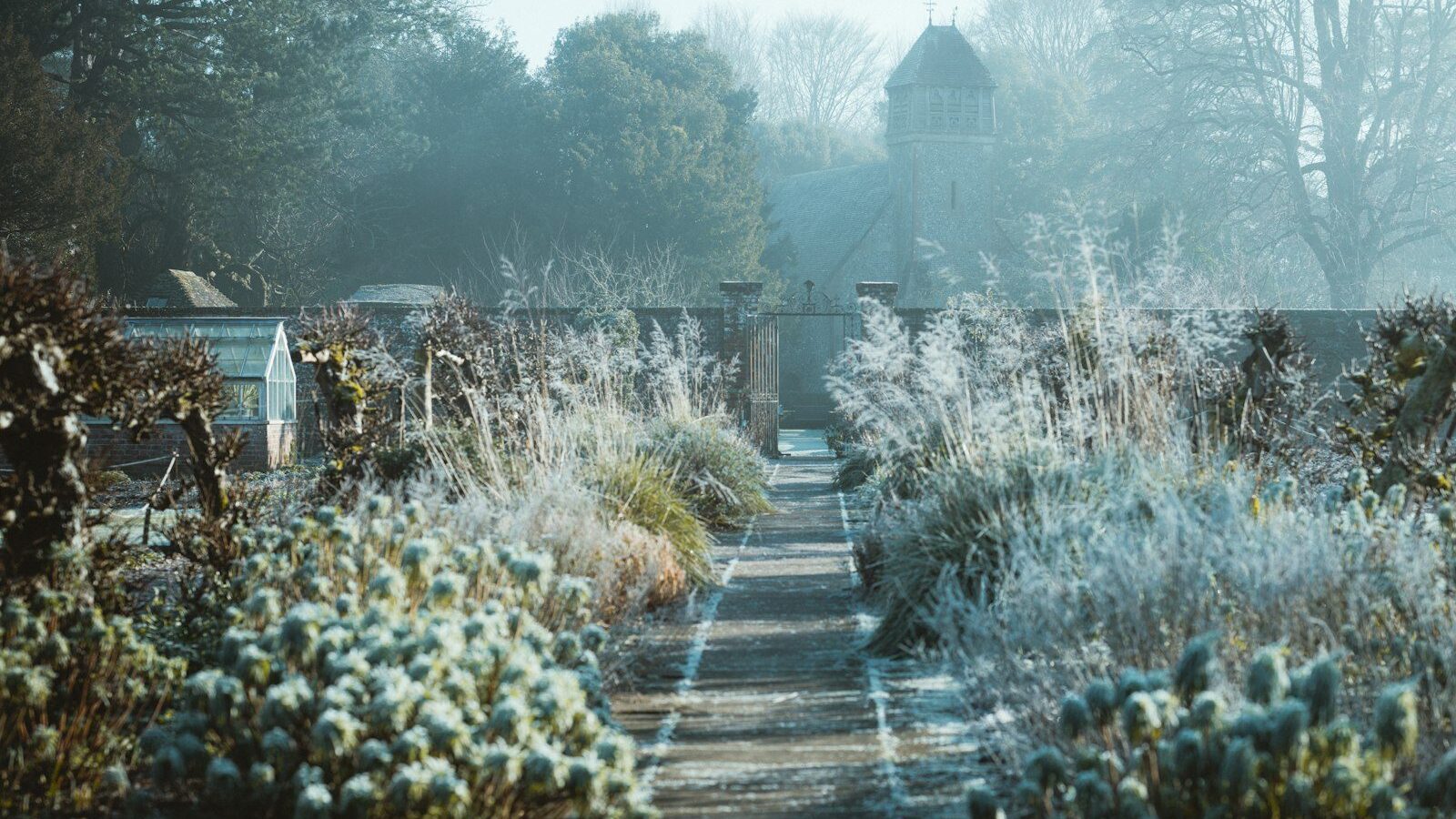
What you do in October and November decides how hard your March will be. A garden that’s properly winterized — beds cleaned of disease, perennials mulched, irrigation drained, tools cleaned and stored — wakes up healthier, weed-suppressed, and ready to plant weeks ahead of a neglected one. Skip the work and you’ll spend spring fighting overwintered pests, split garden hoses, rusted pruners, and frost-heaved perennials. This guide is a complete, zone-aware winter-prep checklist covering the vegetable garden, perennial beds, lawn, trees and shrubs, irrigation, water features, and tool storage, with the specific timing, materials, and depths that actually matter. Work through it once each fall and you’ll bank yourself a faster, cleaner spring.
Key Takeaways
- Clean up diseased plant debris but leave healthy hollow stems and seed heads for pollinators and birds.
- Mulch perennials 2 to 4 inches deep after the ground freezes to prevent frost heave, not to keep roots warm.
- Drain and blow out irrigation lines and disconnect hoses before the first hard freeze to avoid burst pipes.
- Plant garlic, spring bulbs, cover crops, and bare-root trees in fall while the soil is still workable.
- Clean, sharpen, and oil tools before storage so they’re rust-free and ready in spring.
Step 1: Clean up the vegetable garden
Pull spent annual vegetables — tomatoes, squash, beans, cucumbers — and remove them entirely if they showed any disease (blight, powdery mildew, wilt). Diseased debris left in place overwinters spores and pests that re-infect next year’s crop, so bag it for municipal compost rather than your home pile, which rarely gets hot enough to kill pathogens. Healthy, disease-free plant matter can be chopped and composted or turned shallowly into the bed. Pull weeds now, especially any going to seed; a single pigweed can drop tens of thousands of seeds, so an hour of fall weeding saves dozens of spring hours. Rake out fallen fruit and remove tomato cages and stakes, scrubbing them with a 10 percent bleach solution before storage to sanitize.
Step 2: Build and protect the soil
Bare winter soil erodes, compacts, and leaches nutrients. Protect it one of two ways. Cover crops (a “green manure”) are the best option if you have time before the ground freezes: sow winter rye, hairy vetch, crimson clover, or field peas 4 to 6 weeks before your first hard frost. Rye is the most cold-tolerant and germinates down to 34°F. In spring, mow and turn it under three to four weeks before planting to add organic matter and nitrogen. If it’s too late for a cover crop, mulch instead — spread 3 to 4 inches of shredded leaves, straw, or compost over beds to shield soil from rain compaction and feed it as it breaks down. A simple fall soil test now also gives you the winter to plan lime or amendment additions, which take months to act.
Step 3: Cut back and mulch perennials
Resist the urge to cut everything to the ground. Cut back anything that was diseased or that turns to mush (hostas, peonies — peonies especially should be cut to prevent botrytis). But leave ornamental grasses, coneflowers, black-eyed Susans, sedum, and other sturdy seed heads standing: they feed birds, shelter beneficial insects, and add winter structure, and the stems catch insulating snow. Hollow stems host overwintering native bees, so a “messy” winter bed is an ecological asset.
Mulch timing matters more than gardeners think. The point of winter mulch is not to keep roots warm — it’s to keep soil uniformly cold so freeze-thaw cycles don’t heave shallow-rooted perennials out of the ground. Wait until the top inch or two of soil has frozen, then apply 2 to 4 inches of straw, shredded leaves, or pine bark over the root zone, keeping it a couple inches off plant crowns to prevent rot. In zones 4 and 5, mound an extra few inches over marginally hardy plants and tender roses (a “rose collar” of soil or compost over the graft union is classic protection).
Step 4: Trees, shrubs, and tender plants
- Wrap young trees: use white tree-guard wrap or plastic spirals on smooth-barked young trees (maple, fruit) to prevent sunscald and rodent gnawing over winter.
- Water deeply before freeze-up: evergreens especially lose moisture all winter; a deep soak in late fall prevents winter desiccation (“winter burn”).
- Anti-desiccant spray on broadleaf evergreens (boxwood, holly, rhododendron) in exposed sites reduces moisture loss.
- Burlap windbreaks for shrubs in harsh, windy, or salt-spray locations — stake burlap on the windward side, don’t shrink-wrap the plant.
- Dig and store tender bulbs: lift dahlias, cannas, gladiolus, and caladium after the first frost blackens the foliage; cure and store in peat or vermiculite at 40 to 50°F.
- Hold off heavy pruning: most trees and shrubs are best pruned in late winter dormancy, not fall — fall cuts can stimulate tender growth and invite disease.
Step 5: Winterize irrigation and water
Freezing water expands and splits pipes, valves, and hose bibs — this is the most expensive winter mistake. Before the first hard freeze: disconnect, drain, and coil all garden hoses indoors; shut off and drain outdoor spigots (and install insulated faucet covers). For in-ground sprinkler and drip systems, shut the main supply, then blow out the lines with an air compressor (or have a pro do it) — gravity draining alone leaves enough water in low spots to crack a manifold. Drain and store drip-line filters and pressure regulators. For ponds and water features in cold zones, install a de-icer or aerator to keep a gas-exchange hole open for fish, lower submersible pumps below the freeze line or remove and store them, and stop feeding fish once water drops below 50°F.
Step 6: Lawn winterization
Give cool-season lawns (fescue, bluegrass, rye) their most important feeding of the year in late fall: a “winterizer” high in potassium and moderate nitrogen, applied at the labeled rate (typically about 1 lb N per 1,000 sq ft) after top growth slows but while grass is still green, roughly four to six weeks before the ground freezes. This builds roots and stores energy for a fast green-up. Mow the final cut slightly lower (around 2.5 inches for cool-season turf) to reduce snow mold and matting. Rake or mulch fallen leaves so they don’t smother the grass — a thick wet leaf layer kills turf and breeds disease. Warm-season lawns (Bermuda, zoysia) go dormant and need no fall nitrogen, which would only feed winter weeds.
Step 7: Clean and store tools
- Scrape soil off shovels, hoes, and trowels; wash and dry to prevent rust.
- Sharpen blade edges with a mill file, then wipe metal with a light coat of oil (boiled linseed or 3-in-1).
- Disinfect pruners and loppers (70 percent alcohol or 10 percent bleach), sharpen, and oil the pivot.
- Drain fuel or add stabilizer to mowers and trimmers; for the mower, change oil, clean or replace the air filter and spark plug, and sharpen the blade so it’s ready in spring.
- Empty, clean, and store clay and ceramic pots indoors — left full of soil and water they crack when they freeze.
- Take stock of seeds, label what you saved, and store in a cool, dry, dark place.
Step 8: Plant for spring before the freeze
Fall is planting season for several things. Set spring-flowering bulbs (tulips, daffodils, crocus, alliums) once soil cools below 60°F, at a depth roughly two to three times the bulb’s height. Plant garlic 4 to 6 weeks before the ground freezes, cloves pointed up 2 inches deep and 6 inches apart, then mulch heavily. Fall is also prime time to plant trees, shrubs, and bare-root perennials — cool air and warm soil let roots establish without heat stress, so they leap ahead next spring.
Winterizing pairs well with planning your cold-season harvests — see our guide on extending your growing season to keep picking greens through the cold. If raking left your turf patchy, our walkthrough on reviving a dead or dying lawn covers spring repair. For more seasonal projects, visit the Outdoor Living hub.
Frequently Asked Questions
When should I winterize my garden?
Start cleanup and planting tasks (bulbs, garlic, cover crops) in early to mid fall while soil is workable, ideally 4 to 6 weeks before your first hard freeze. Save mulching perennials until after the top inch of soil has frozen, and drain irrigation before the first hard freeze. In most US zones the bulk of this happens between mid-October and late November.
Should I cut all my perennials back in fall?
No. Cut back anything diseased or mushy (peonies, hostas, bearded iris) to prevent overwintering pathogens, but leave sturdy seed heads and hollow stems — coneflowers, grasses, sedum, black-eyed Susans. They feed birds, shelter native bees and beneficial insects, and catch insulating snow. Tidy them up in early spring instead.
Why mulch after the ground freezes instead of before?
Winter mulch isn’t meant to keep roots warm — it’s meant to keep soil uniformly cold so repeated freeze-thaw cycles don’t heave shallow-rooted plants out of the ground. Mulching too early traps warmth and can prompt growth or rot. Wait until the top inch of soil freezes, then apply 2 to 4 inches, kept off plant crowns.
How do I keep my outdoor pipes from bursting?
Before the first hard freeze, disconnect and drain all hoses, shut off and drain outdoor spigots, and install insulated faucet covers. For in-ground sprinkler and drip systems, shut the supply and blow out the lines with an air compressor — gravity draining alone leaves enough water in low spots to crack valves and manifolds when it freezes.
Do I need to fertilize my lawn before winter?
Cool-season lawns (fescue, bluegrass, rye) benefit most from a late-fall “winterizer” feeding — about 1 lb of nitrogen per 1,000 sq ft, applied while grass is still green but growth has slowed. It builds roots and fuels a fast spring green-up. Warm-season lawns (Bermuda, zoysia) are dormant and should not be fed, as the nitrogen only feeds winter weeds.