

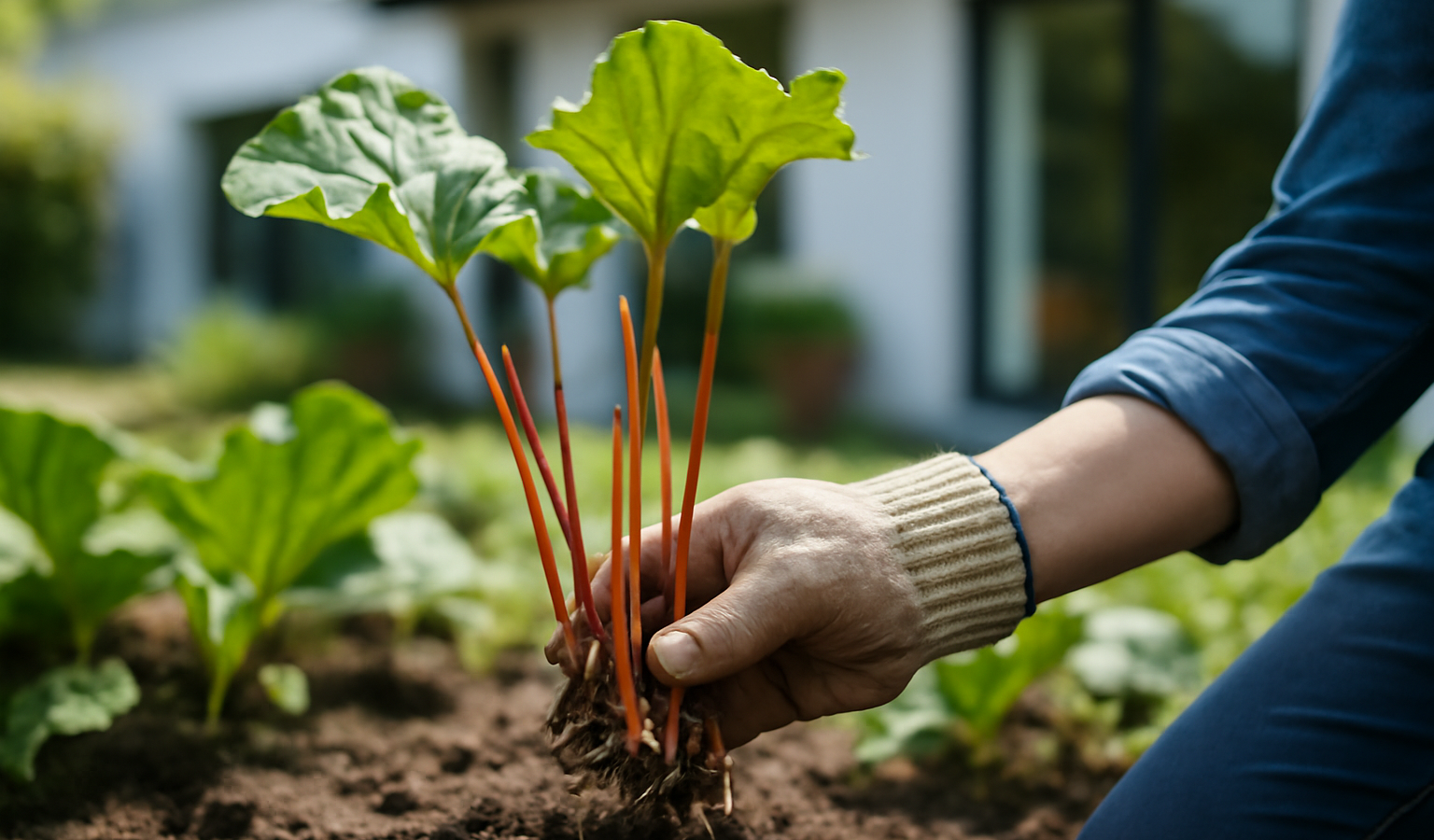
Few things are more disappointing than walking out to a rhubarb patch in late spring expecting thick, ruby-red stalks and finding a clump of pencil-thin, floppy petioles instead. Rhubarb is supposed to be one of the most generous, low-fuss perennials in the temperate garden, reliably productive for fifteen or twenty years once it settles in. So when the stalks come up thin and spindly, it is almost always a sign that one of a handful of basic needs is not being met. The good news is that thin rhubarb is very rarely a death sentence and almost always fixable within a season or two.
Rhubarb thrives in cooler climates, roughly USDA zones 3 through 8, where it gets a real winter chill to trigger dormancy. It is a heavy feeder with a big appetite for nitrogen, it sulks in heat and shade, and it resents both crowding and drought. When you understand that profile, the question of “why is my rhubarb thin” becomes a process of elimination. Below I walk through the six causes I see most often, in roughly the order of how common they are, and exactly how to diagnose and fix each one. Work through them in order and you will usually find your culprit.
Key Takeaways
- Thin rhubarb is most often a young plant that simply needs two to three years to build a strong crown before it can push fat stalks.
- Old crowns get woody and overcrowded; dividing every five to eight years in early spring or fall restores vigor.
- Rhubarb is a heavy feeder, so poor, hungry, or wrong-pH soil produces weak growth; feed generously with nitrogen and compost.
- Too much shade and inconsistent watering both starve the plant of the energy and turgor it needs for thick petioles.
- A plant that bolts and goes to seed pours its energy into flowering, leaving stalks thin; cut flower stalks out at the base immediately.
- Stop harvesting by late June or early July so the plant can rebuild reserves for next year’s crop.
Cause 1: The Plant Is Too Young to Crop
This is the single most common reason for thin rhubarb, and it is not a problem at all, just impatience. Rhubarb grown from a crown division or a potted plant needs time to establish a deep, fat root system before it can support the thick stalks we associate with a mature plant. A first-year plant is putting almost all of its energy below ground, building the storage roots that will fuel decades of harvests. Pulling thick stalks off it in that window simply is not possible, because the plant has not yet built the engine to make them.
How to Diagnose It
Think back to when you planted. If your rhubarb went in last spring or fall, or you bought it as a small potted division, thin stalks in its first or second season are completely normal and expected. The plant may look healthy in every other respect, with good green leaves and steady growth, but the petioles stay slim. The crown itself will still be small, perhaps the size of a fist or a grapefruit rather than a dinner plate. If everything else about the plant looks vigorous and the only issue is stalk thickness on a young plant, you have your answer and the fix is mostly patience.
How to Fix It
Resist the urge to harvest in year one. Let every leaf stay on the plant so it can photosynthesize and channel sugars down into the roots. In year two, you can take a light harvest, perhaps three or four of the thickest stalks per plant over a couple of weeks in late spring, then leave the rest. By the third spring the crown will be established enough for a full harvest of six to ten weeks, and the stalks will have bulked up dramatically. Through these establishment years, focus on feeding and watering well so the plant builds the largest possible root reserve. If you compare the experience to other crops where young plants underperform, the pattern is the same one you see when seedlings are not growing as expected and simply need time and resources to size up.
Cause 2: The Crown Is Overgrown and Needs Dividing
At the other end of the age spectrum, a rhubarb plant that has been in the same spot for many years can become its own worst enemy. Over time the crown multiplies into a dense mass of buds all competing for the same patch of soil, water, and nutrients. The center of the clump often dies out and goes woody while the outer ring keeps fighting for resources. The result is a tangle of thin, weak stalks because no single bud has enough room or food to develop properly. An overcrowded, congested crown is one of the classic reasons established rhubarb declines.
How to Diagnose It
Age is your first clue. If the plant has been in place for more than five or six years and the stalks have been getting progressively thinner each season, congestion is likely. Look at the crown itself. A healthy plant has plump, well-spaced growth buds, while an overcrowded one shows a dense cluster of many small buds packed tightly together, often with a dead or hollow woody center. The whole clump may have spread well beyond its original footprint, and the stalks emerging from the middle are usually the thinnest and most miserable of the lot.
How to Fix It
Divide the crown. The best windows are early spring just as the buds break dormancy, or in fall after the foliage dies back, when the plant is dormant and recovers with the least stress. Dig up the entire crown with a spade, lifting as much root as you can. Then use a sharp spade or a knife to cut it into sections, making sure each division has at least one or two healthy growth buds, sometimes called eyes, and a generous chunk of fleshy root attached. Discard the woody, exhausted center. Replant the divisions about three feet apart in soil enriched with compost, setting each so the buds sit an inch or so below the surface. Expect to divide an established plant every five to eight years to keep it vigorous. Treat the freshly divided sections like new plants and harvest lightly the following year while they re-establish.
Cause 3: The Plant Is Underfed in Poor Soil
Rhubarb is a genuinely hungry crop. Those huge leaves and thick stalks take a lot of building, and the plant pulls hard on the soil to supply them. Grown in thin, sandy, or depleted ground without regular feeding, rhubarb simply cannot manufacture fat stalks, no matter how mature the crown is. Nitrogen in particular drives the lush leafy growth that in turn powers thick petioles, so a nitrogen-starved plant produces small leaves on spindly stalks. This is one of the most common fixable causes of thin rhubarb in long-established gardens where the original planting hole was never topped up.
How to Diagnose It
Pale, smallish leaves combined with thin stalks point strongly toward a feeding problem, especially if the plant is mature and not crowded. Think about your soil. If it is sandy and free-draining, or if the rhubarb sits in an unimproved corner that never gets compost or mulch, hunger is the likely cause. A simple soil test is worth doing, because rhubarb prefers a slightly acidic to near-neutral pH between 6.0 and 6.8. Outside that range nutrients become harder for the plant to take up, so even well-fed rhubarb can underperform if the pH is off. The same logic applies to other heavy feeders, which is why undernourished plants stay stunted across the board, much like the issue behind beets that come up small in poor ground.
How to Fix It
Feed generously and build the soil. In early spring, before growth really takes off, spread a thick two to three inch layer of well-rotted manure or rich compost over the root zone, keeping it slightly clear of the crown itself so it does not rot the buds. A high-nitrogen feed at the same time gives a strong push; a balanced granular fertilizer or a dose of blood meal worked lightly into the surface both work well. Follow up with a deep organic mulch of compost or aged manure that feeds the plant slowly through the season and conserves moisture at the same time. If a soil test shows the pH below 6.0, work in garden lime over a season or two to nudge it up into the 6.0 to 6.8 range. Within a single growing season of this regime you will usually see noticeably thicker, greener growth.
Cause 4: Too Much Shade
Rhubarb is sometimes described as a plant that tolerates shade, and it does survive there, but tolerating and thriving are two very different things. To build thick stalks the plant needs to capture a lot of light through those big leaves and convert it into the sugars and reserves that fuel growth. In a shady spot, the plant stretches and reaches for light, producing long, thin, weak stalks with smaller leaves rather than the squat, robust petioles you get in good sun. Shade is an underrated and surprisingly common cause of thin rhubarb, especially as nearby trees, hedges, or structures grow up and gradually steal the light from a spot that used to be sunny.
How to Diagnose It
Watch the patch through the day. Rhubarb wants at least six hours of direct sun, and ideally more in cooler climates. If the plant only sees dappled light, or sits in the shadow of a fence, wall, shed, or maturing tree for most of the afternoon, shade is a strong suspect. The tell-tale sign is etiolation: stalks that are unusually long and thin with the leaf held high, as if the plant is straining upward. If a clump that produced well years ago has slowly declined as surrounding plantings filled in, creeping shade is very likely the reason.
How to Fix It
Get more light onto the plant. The most direct fix is to prune back or remove whatever is casting the shade, whether that means thinning the canopy of an overhanging tree or cutting back an encroaching hedge. Where that is not possible, the better long-term solution is to move the plant. Lift and divide the crown in early spring or fall, as described above, and replant the divisions in the sunniest spot you have, ideally one that gets full sun for most of the day. Rhubarb transplants well when dormant, so relocating a struggling shaded plant is usually a straightforward and worthwhile job that pays off within a year or two.
Cause 5: Drought and Inconsistent Watering
Those enormous rhubarb leaves transpire a great deal of water, and the thick juicy stalks are mostly water by weight. It follows that a plant short of moisture cannot fill out its petioles, so they come up thin and may feel limp or tough. Rhubarb has a large, deep root system and is reasonably resilient, but it performs best with steady, even moisture through the growing season. Erratic watering, where the soil swings between bone dry and soaked, stresses the plant and produces uneven, stringy, thin growth. Drought stress is especially common in sandy soils, in containers, and during hot dry spells in early summer when the plant is working hardest.
How to Diagnose It
Check the soil moisture a few inches down near the root zone. If it is dry and crumbly during the active growing season, water is likely the limiting factor. Leaves that wilt in the heat of the day and recover overnight, then over time produce thinner stalks, point to inconsistent moisture. Plants in fast-draining sandy beds or in pots dry out fastest and are the usual suspects. If your thin rhubarb coincides with a dry spell or a stretch where watering lapsed, drought is almost certainly part of the picture.
How to Fix It
Water deeply and consistently rather than little and often. During dry weather, give the plant a thorough soaking once or twice a week so the moisture reaches the deep roots, aiming to keep the soil evenly moist but never waterlogged. The single most effective tool here is mulch: a thick layer of compost, well-rotted manure, or straw spread over the root zone in spring dramatically reduces evaporation, keeps the soil cool, and smooths out the wet-dry swings that stress the plant. Mulch does double duty by feeding the soil as it breaks down, so it addresses both the water and the feeding causes at once. Keep the mulch pulled back slightly from the crown to prevent rot.
Cause 6: The Plant Is Going to Seed (Bolting)
At some point in late spring or early summer, many rhubarb plants throw up a tall, thick central stalk topped with a frothy, cream-colored flower head. This is bolting, the plant’s attempt to set seed, and it is triggered by plant maturity, heat, stress, and sometimes a particular variety’s tendency to flower. The problem is that producing flowers and seed is enormously expensive in energy terms. A bolting plant diverts its reserves away from leaf and stalk production and into the flower spike, and the harvestable stalks suffer as a result, coming up thinner and fewer. Older plants and stressed plants bolt most readily, which is why bolting often shows up alongside the other causes on this list.
How to Diagnose It
This one is the easiest to spot. If you see one or more tall, stout stalks rising above the leaves and topped with a branching cluster of buds or pale flowers, the plant is bolting. The flower stalk is usually thicker and rounder than the edible leaf stalks, and it shoots up fast. Once you notice it, look at the surrounding edible stalks and you will often find they have thinned out as the plant’s energy got rerouted. Frequent bolting is also a hint that the plant is stressed or aging and may need dividing and better care across the board.
How to Fix It
Remove the flower stalk the moment you see it. Cut or snap it off right down at the base, as low as you can reach into the crown, before the flowers open and certainly before any seed sets. Doing this promptly stops the plant wasting energy and redirects those reserves back into the leaves and roots, which helps the remaining stalks recover some thickness. Repeat through the season as new flower stalks appear, since a determined plant may try more than once. Beyond the immediate cut, reduce the underlying stress that prompts bolting: keep the plant well fed, well watered, and divided on schedule, and consider choosing less bolt-prone varieties such as Victoria or Timperley Early when you next plant or divide.
Preventing Thin Rhubarb in the First Place
Almost everything that produces thin rhubarb comes down to a plant that is either too young, too old, too hungry, too shaded, too dry, or stressed into flowering. Build your care routine around preventing those conditions and thin stalks rarely become a problem. Start at planting: give each crown a sunny spot with at least six hours of direct sun, set in deep, fertile, free-draining soil that you have enriched with plenty of compost or rotted manure, and confirm the pH sits in the 6.0 to 6.8 range. Space plants about three feet apart so they have room to bulk up without crowding their neighbors as they mature.
Feed the patch every spring with a generous top dressing of compost or aged manure plus a nitrogen boost, and mulch deeply to lock in moisture and feed the soil through the season. Water deeply during dry spells rather than letting the plant swing between wet and dry. Cut out flower stalks promptly whenever they appear, and stop harvesting by late June or early July, taking no more than a third to a half of the stalks at any one time so the plant always has plenty of leaf left to rebuild its reserves for the following year. Finally, put a note in your calendar to lift and divide the crown every five to eight years, before it gets congested, so it never has the chance to decline into a thicket of spindly growth.
Work through these habits and a healthy rhubarb plant will reward you with thick, glossy stalks year after year. For more troubleshooting guides on getting the best from your edible and ornamental plants, browse the full Plants and Flowers hub, where you will find companion articles on common crop problems and their fixes.
Frequently Asked Questions
How long does rhubarb take before the stalks get thick?
Most rhubarb needs two to three years from planting to produce full, thick stalks. The plant spends its first year building roots, so you should not harvest at all in year one, take only a light harvest of a few stalks in year two, and begin full harvesting in the third spring once the crown is well established.
Can I still eat thin rhubarb stalks?
Yes. Thin stalks are perfectly safe and edible as long as they come from the petioles, not the leaves, which are toxic. They may be a little more fibrous or tart, but they cook and taste fine. Diagnosing and fixing the underlying cause will give you thicker stalks in future seasons.
How often should I divide rhubarb to keep it productive?
Divide an established crown every five to eight years, in early spring as buds break or in fall after the foliage dies back. Lift the whole crown, cut it into sections each with one or two healthy buds and a chunk of root, discard the woody center, and replant about three feet apart in enriched soil.
What is the best fertilizer for thicker rhubarb stalks?
Rhubarb is a heavy feeder that responds best to nitrogen and rich organic matter. Top dress in early spring with well-rotted manure or compost plus a high-nitrogen or balanced granular fertilizer, then mulch with more organic matter. Keep the soil pH between 6.0 and 6.8 so the plant can take up those nutrients efficiently.
Why does my rhubarb keep producing flower stalks?
Bolting is triggered by maturity, heat, and stress, and some varieties flower more than others. Cut flower stalks out at the base as soon as they appear to stop the plant wasting energy. To reduce repeat bolting, keep the plant well fed, watered, and divided on schedule, and choose less bolt-prone varieties such as Victoria or Timperley Early.