

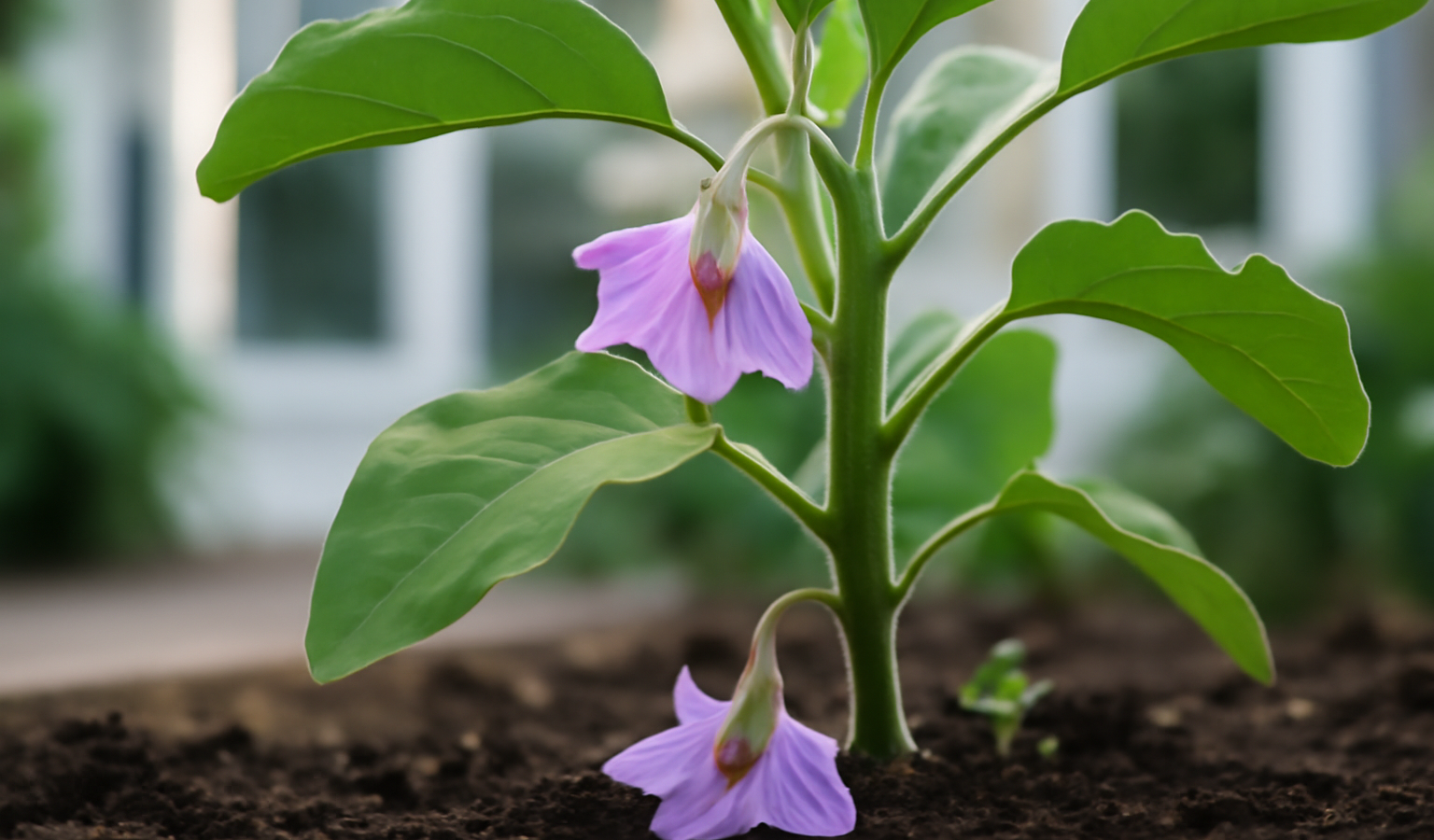
If your eggplant is throwing out plenty of pretty purple blossoms but they keep yellowing at the stem and falling off before any fruit sets, you are dealing with blossom drop — and the short answer is almost always stress. Eggplant is the fussiest of the common nightshades when it comes to temperature and pollination, more demanding than its tomato and pepper cousins. The plant produces flowers it has no intention of fruiting whenever conditions push it outside a fairly narrow comfort zone. The good news is that eggplant blossom drop is rarely a disease and almost never fatal to the plant. It is a signal, and once you read it correctly you can usually turn things around within one or two flowering cycles. Below I walk through the seven causes I see most often, how to diagnose each one in your own garden, and exactly what to do about it.
Part of our Vegetable Gardening & Raised Beds guide →
In this guide
- Cause 1: Temperature Extremes (Too Hot or Too Cold)
- Cause 2: Poor Pollination, Low Bee Activity, and Humidity Problems
- Cause 3: Too Much Nitrogen (Lots of Leaves, No Fruit)
- Cause 4: Water Stress (Drought or Waterlogging)
- Cause 5: Pests on the Blossoms (Thrips and More)
- Cause 6: Overcrowding and Low Light
- Cause 7: Young Plants Naturally Shedding First Flowers
- Prevention: Keeping Eggplant Flowers on the Plant
- Frequently Asked Questions
Key Takeaways
- Temperature is the number-one cause: eggplant aborts flowers when daytime highs climb above roughly 90°F or nighttime lows drop below about 60–65°F.
- Eggplant flowers are self-fertile but need vibration (wind or buzzing bees) to release pollen; still air and high humidity above 80% or very dry air below 40% prevents pollen from transferring.
- Too much nitrogen produces a lush, leafy plant that drops blossoms instead of setting fruit — switch to a lower-N, higher-P-and-K feed once flowering starts.
- Inconsistent watering, thrips on the blossoms, crowding, and low light all trigger drop; young plants also shed their first one or two flowers naturally.
- Hand-pollinate during heat waves and stabilize moisture and feeding, and fruit set usually resumes within a week or two.
Cause 1: Temperature Extremes (Too Hot or Too Cold)
This is the single most common reason eggplant flowers drop, and it is the first thing to check before chasing anything more exotic. Eggplant pollen becomes unviable at both ends of the thermometer. When daytime temperatures rise above about 90°F, especially when they stay there for several days, the pollen sterilizes and the flower has nothing to fertilize itself with, so it drops. At the cold end, nighttime temperatures below roughly 60–65°F slow pollen tube growth and trigger the same abortion response. Eggplant is a true warm-season crop with a tighter window than tomatoes; it genuinely wants nights in the mid-60s to low-70s and days in the 70s and 80s.
Diagnose
Pull up the high and low temperatures for the past week — a cheap min/max thermometer in the bed tells you far more than the regional forecast. If you have had a string of 90°F-plus afternoons or nights dipping under 60°F, temperature is your culprit. The tell-tale sign is that the flowers look perfectly healthy: full purple petals, no spots, no chewing, no wilting — they simply yellow at the joint where the flower meets the stem and drop cleanly. Drop that coincides with a heat wave or a late-spring cold snap is almost diagnostic on its own.
Fix
- During heat waves above 90°F, drape 30–40% shade cloth over the plants from late morning through mid-afternoon to knock the canopy temperature down. Remove it once the spell breaks.
- Mulch heavily with 2–3 inches of straw or shredded leaves to keep root-zone temperatures stable and moisture even.
- If nights are still dropping below 60°F early in the season, wait. Do not rush transplants out; eggplant set out into cold soil sulks for weeks. Use row cover or wall-of-water cloches to hold warmth around young plants.
- Hand-pollinate during marginal weather (see the prevention section) to make the most of the few good pollen hours you get.
- Be patient. Once temperatures settle back into the 70s and 80s by day and mid-60s to low-70s at night, the next flush of flowers will set normally. The dropped flowers are not coming back, but the plant is fine.
Cause 2: Poor Pollination, Low Bee Activity, and Humidity Problems
Eggplant flowers are self-fertile, meaning each blossom contains both male and female parts and can pollinate itself. But they are not self-pollinating on their own — the pollen sits inside the anther and needs to be shaken loose to fall onto the stigma. In nature, that shaking comes from wind and especially from buzz-pollinating bees like bumblebees, which grab the flower and vibrate their flight muscles to release a cloud of pollen. If your eggplant is in a still, sheltered spot with few bees around, the pollen never moves and the flowers drop unfertilized.
Humidity makes this worse at both extremes. When relative humidity climbs above about 80%, pollen grains clump and stick inside the anther and will not shed. When humidity falls below roughly 40%, the pollen dries out and the stigma is not receptive enough to hold what little arrives. The sweet spot is moderate humidity, somewhere in the 50–70% range, with at least a little air movement.
Diagnose
Watch the garden for fifteen minutes on a warm morning. Are bees, especially bumblebees, working the flowers? If the patch is silent, pollinator scarcity is likely. Greenhouse and balcony growers see this constantly because there is no wind and no insects. Combine that observation with a humidity reading — sticky, muggy mornings over 80% or bone-dry desert air under 40% both point at pollination failure. Like temperature drop, the flowers look healthy right up until they fall.
Fix
- Hand-pollinate. This is the most reliable fix and takes seconds per flower. Either touch a battery-powered electric toothbrush to the back of each open flower for a couple of seconds, or flick the flower’s stem with your finger. Do it mid-morning on a warm, dry day when pollen sheds best.
- Plant pollinator-attracting flowers nearby — borage, basil left to bloom, marigolds, and zinnias bring bees into the bed. See our wider Plants & Flowers hub for companion planting ideas.
- In a greenhouse or on a covered balcony, open vents or run a small fan to create gentle air movement that shakes pollen loose.
- On muggy days, water in the early morning so foliage dries quickly and the bed is not adding to local humidity during peak pollen-shed hours.
Cause 3: Too Much Nitrogen (Lots of Leaves, No Fruit)
If your eggplant is a towering, dark-green, gorgeous bush that flowers but never holds a fruit, suspect nitrogen. Nitrogen drives leafy, vegetative growth. When there is too much of it in the soil, the plant pours its energy into stems and foliage and treats reproduction — flowering and fruiting — as a low priority. The blossoms it does produce drop because the plant is not committed to carrying them. This is one of the most common self-inflicted causes, usually from over-applying a general-purpose lawn or all-purpose fertilizer that is heavy on the first N-P-K number.
Diagnose
The signature is the mismatch: vigorous, lush, deep-green leaves and plenty of flowers, but almost no fruit set. Think back to what you have been feeding. A high-nitrogen fertilizer, fresh manure, or repeated doses of something like a 24-8-16 or a lawn feed all push this. If the plant looks like it belongs in a magazine but the harvest basket is empty, nitrogen excess is the prime suspect. This same leafy-but-fruitless pattern shows up across the nightshade family; our guide on pepper leaf and nutrition problems walks through related symptoms in a sibling crop.
Fix
- Stop applying high-nitrogen feed immediately. Once eggplant begins flowering, switch to a fertilizer with a lower first number and stronger phosphorus and potassium — something in the range of a 5-10-10 or a balanced tomato-and-vegetable formula promotes fruit over foliage.
- Feed lightly and consistently rather than dumping a big dose. A diluted liquid feed every two to three weeks during fruiting beats one heavy application.
- If you over-fed, be patient — you cannot pull nitrogen back out of the soil, but heavy watering will leach some through, and the plant will rebalance over a few weeks as the surplus is used up.
- Work compost into the soil at planting next season instead of relying on synthetic high-N feeds; compost releases nutrients slowly and rarely overloads nitrogen.
Cause 4: Water Stress (Drought or Waterlogging)
Eggplant has a high, steady demand for water, and it is unusually sensitive to swings in soil moisture during flowering. Both extremes trigger blossom drop. When the soil dries out and the plant wilts, it sheds flowers to conserve resources — there is not enough water to support developing fruit, so the blossoms go first. Waterlogging is just as damaging: saturated soil starves the roots of oxygen, they begin to suffocate and rot, and a stressed root system cannot hold a flower load any better than a parched one can.
Diagnose
Push a finger two inches into the soil. If it is bone dry and the plant wilts in the afternoon heat, you are under-watering. If it is soggy, smells sour, or the lower leaves are yellowing and the soil never seems to dry between waterings, you are over-watering or have poor drainage. A history of erratic watering — letting the bed dry hard, then soaking it, then forgetting again — is a classic trigger because the inconsistency itself stresses the plant even if the average is about right. Inconsistent moisture is also a leading cause of blossom-end rot once fruit does form.
Fix
- Aim for consistent moisture: roughly 1 to 1.5 inches of water per week, more during hot, dry, or windy spells, delivered deeply rather than in frequent shallow sprinklings.
- Mulch with 2–3 inches of straw or shredded leaves to even out soil moisture and reduce evaporation — this single step solves a surprising number of water-stress cases.
- For container eggplant, check daily in summer; pots dry out fast and may need water every day in heat. Use a pot at least 5 gallons in size so the root zone is not constantly swinging.
- If drainage is the problem, improve the soil with compost, or grow in raised beds or containers so excess water can escape. Never let eggplant sit in a saucer of standing water.
- Water at the base in the morning so foliage dries by evening, which also reduces fungal pressure.
Cause 5: Pests on the Blossoms (Thrips and More)
Tiny sap-feeding insects, thrips chief among them, feed directly inside the flowers. They rasp at the developing reproductive tissue and the petals, damaging the blossom enough that it aborts before it can set fruit. Because thrips are slender and only a millimeter or two long, most gardeners never see them and instead blame the weather. Aphids and spider mites pile on additional stress when populations get high, weakening the plant’s overall ability to hold flowers.
Diagnose
Open a few flowers and tap them over a sheet of white paper. If you see tiny, fast-moving slivers — pale, yellowish, or dark — scurrying on the paper, those are thrips. Look also for silvery, stippled scarring or tiny black specks of excrement on the petals and nearby leaves. Distorted, scarred young leaves and a general grimy look to the growing tips back up a thrips diagnosis. Fine webbing on leaf undersides points to spider mites; clusters of soft green or black insects on new growth are aphids.
Fix
- Knock populations down with a strong jet of water on the undersides of leaves and around the flower clusters every few days.
- For persistent thrips, spray insecticidal soap or neem oil in the evening, when blossoms are closed and pollinators are not active, coating the undersides of leaves and the flower bases thoroughly. Repeat at the interval on the label.
- Hang blue or yellow sticky traps near the plants to monitor and reduce flying adults.
- Encourage beneficial predators — lacewings, minute pirate bugs, and predatory mites all eat thrips — by avoiding broad-spectrum insecticides that wipe them out.
- Clear weeds and old plant debris around the bed, which harbor thrips between crops.
Cause 6: Overcrowding and Low Light
Eggplant is a sun worshipper that wants a full 6 to 8 hours of direct light a day to fuel fruit production. When plants are crowded too closely, shaded by taller neighbors, or tucked into a spot that only gets dappled or partial sun, they cannot photosynthesize enough to support fruiting. The plant produces flowers as a reflex but lacks the energy to carry them, so they drop. Crowding compounds the problem by reducing air circulation, raising local humidity around the blossoms, and starving the bees of room to work.
Diagnose
Watch the bed across a full day and count the hours of unobstructed direct sun the eggplant actually receives — not what the spot got in early spring before the surrounding plants and trees leafed out. Less than six hours, or heavy afternoon shade, is a problem. Check spacing too: eggplant wants 18 to 24 inches between plants. If your plants are touching, leggy, and stretching toward the light, crowding and shade are limiting them. Spindly, pale, slow growth in seedlings often starts the same way; our notes on stalled, leggy seedlings cover the early-stage version of this light problem.
Fix
- Thin or transplant crowded plants to restore 18–24 inches of spacing — give each plant room to spread and breathe.
- Prune back or relocate taller neighbors casting shade, and cut any lower foliage on the eggplant that is shading the center of the plant.
- If the chosen spot simply does not get enough sun, move container-grown eggplant to the sunniest position you have. This is the great advantage of growing eggplant in large pots.
- Plan next season’s bed so the tallest crops sit on the north side and do not shade the eggplant as the season progresses.
Cause 7: Young Plants Naturally Shedding First Flowers
Before you tear your bed apart, rule out the most benign cause of all. Young, recently transplanted eggplant frequently drop their first one or two flowers, and this is completely normal. A small plant that has just been moved is still building roots and foliage; it often decides it is not yet big enough to support a fruit and quietly aborts those early blossoms. This is the plant making a sensible choice, not a sign of anything wrong.
Diagnose
If the plant is young — still establishing, under a foot or so tall, recently transplanted — and only the very first flush of flowers dropped while the plant otherwise looks healthy and is growing well, this is almost certainly natural early shedding. The signal you are looking for is that later flowers, once the plant has put on size and root mass, begin to set fruit normally without any intervention.
Fix
- Do nothing but wait. Keep the plant well watered, fed appropriately, and in full sun, and let it grow.
- Some growers pinch off the very first flowers on a young plant on purpose, redirecting energy into roots and foliage so the plant is stronger when it does begin to fruit in earnest.
- Make sure the basics — temperature, water, light, feeding — are all in the right range so that when the plant is ready, nothing else is holding it back.
Prevention: Keeping Eggplant Flowers on the Plant
Most blossom drop is preventable once you treat eggplant as the heat-and-stability lover it is. Set plants out only after nights are reliably above 60°F and soil has warmed; rushing transplants into cold ground is the most common early-season mistake. Space them 18 to 24 inches apart in a spot that gets a full 6 to 8 hours of direct sun, mulch with 2 to 3 inches of straw to hold even moisture, and water deeply and consistently rather than in erratic bursts. Feed lightly and shift to a lower-nitrogen, higher-phosphorus-and-potassium fertilizer the moment flowering starts. Scout the flowers weekly for thrips, and during forecast heat waves above 90°F throw 30–40% shade cloth over the plants in the afternoon. None of these steps is difficult, and together they keep the plant inside the narrow comfort zone where it actually holds its fruit.
How to Hand-Pollinate Eggplant
Hand-pollination is your insurance policy whenever weather, low bee activity, or a greenhouse environment is working against you. It is quick and genuinely effective. Do it mid-morning, between about 10 a.m. and noon, on a warm, dry day, when the flowers are fully open and pollen sheds most freely. Follow these steps for each open blossom:
- Identify the open flowers. Eggplant blossoms are perfect flowers, so each one is its own complete unit — you are simply jostling the pollen loose inside it.
- Turn on a battery-powered electric toothbrush and touch the vibrating end to the back of the flower or the stem just behind it for two to three seconds. The vibration mimics a buzzing bumblebee and shakes pollen onto the stigma.
- No toothbrush? Flick the flower’s stem firmly with a finger, or gently tap the supporting stake, several times to vibrate the blossom.
- Move through every open flower. Repeat every day or every other day during the period when natural pollination is failing.
- Confirm success a few days later — pollinated flowers stay on and begin to swell at the base, while unpollinated ones still yellow and drop.
Frequently Asked Questions
Is it normal for eggplant to drop some flowers?
Yes. Healthy eggplants commonly drop a portion of their flowers, especially the first one or two on a young plant or during brief weather stress. A plant cannot support every blossom it produces. Occasional drop with healthy-looking flowers and otherwise good growth is normal. It only becomes a problem when nearly every flower falls and no fruit sets over several weeks.
At what temperature do eggplant flowers drop?
Eggplant flowers tend to drop when daytime highs climb above roughly 90°F or when nighttime lows fall below about 60–65°F. Both extremes make the pollen unviable so the flower cannot self-fertilize. The plant fruits best with days in the 70s and 80s and nights in the mid-60s to low-70s. A few hot or cold days will pass; a sustained spell causes noticeable drop.
Why does my eggplant flower but never produce fruit?
Flowering without fruiting usually means pollination is failing or the plant is over-fed with nitrogen. If the plant is lush and leafy, cut the nitrogen and switch to a lower-N, higher-P-and-K feed. If the plant looks balanced but flowers still drop, hand-pollinate with an electric toothbrush mid-morning and check that temperatures are in range. One of those two fixes resolves most cases.
Do I need to hand-pollinate eggplant?
Not always. Eggplant flowers are self-fertile and outdoors are usually pollinated by wind and buzzing bees. You only need to hand-pollinate when bee activity is low, the plant is in a greenhouse or sheltered balcony, or weather and humidity are working against natural pollen shed. In those situations, vibrating each flower with an electric toothbrush mid-morning dramatically improves fruit set.
Can too much water cause eggplant flowers to drop?
Yes. Waterlogged, soggy soil suffocates the roots and stresses the plant into dropping flowers, just as drought does. Eggplant wants consistent moisture — about 1 to 1.5 inches per week, delivered deeply, with good drainage and a layer of mulch. Avoid swinging between bone-dry and soaking wet; the inconsistency itself triggers drop and later contributes to blossom-end rot in the fruit.