

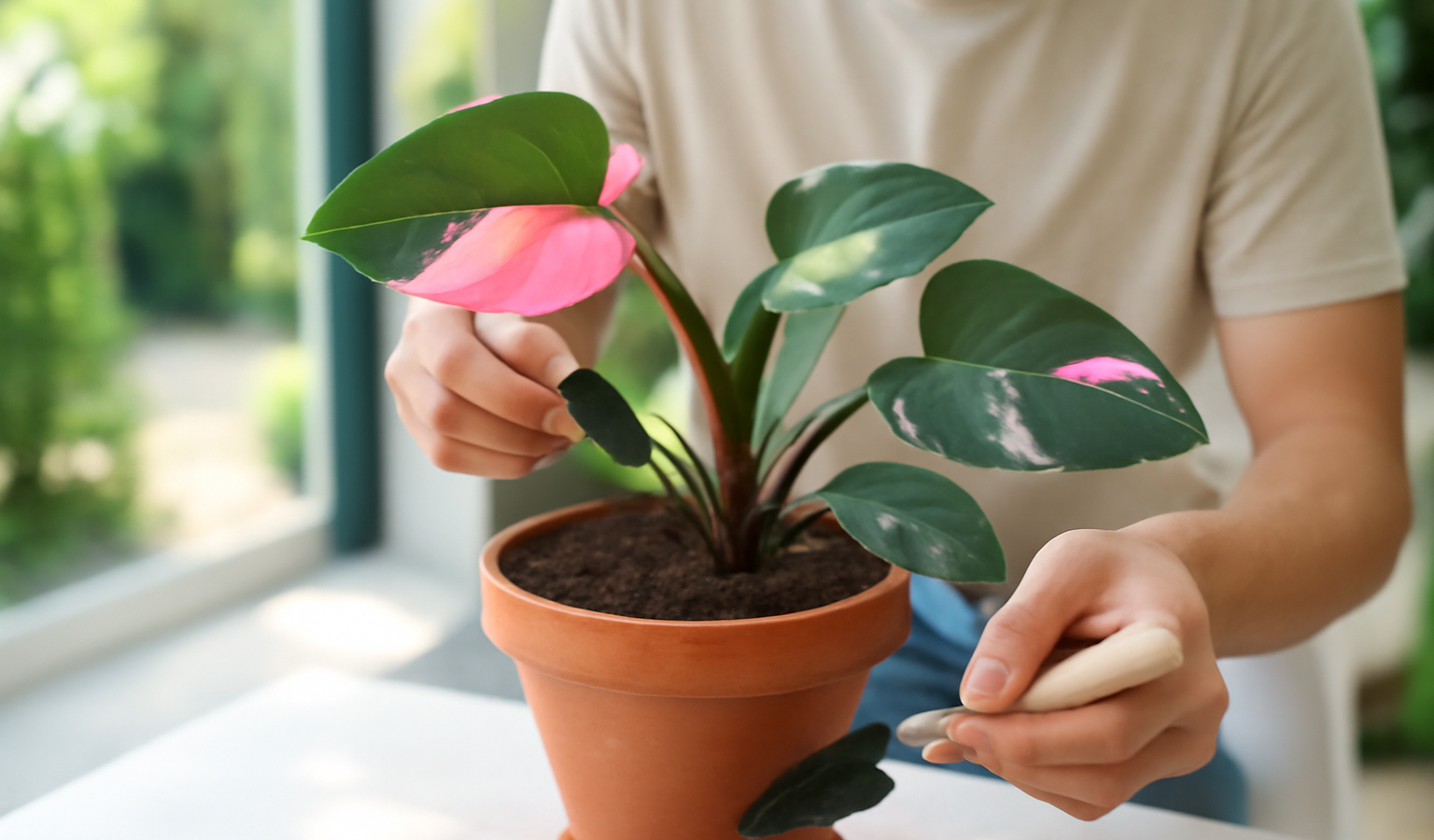
The Pink Princess Philodendron (Philodendron erubescens ‘Pink Princess’, often shortened to PPP) earned its cult status the hard way: those splashes of bubblegum pink on dark, almost black-green leaves are genuinely unstable, which means the difference between a showpiece and a plain green vine often comes down to how you care for it. The pink is a chimeric variegation — a genetic quirk where some cells produce no chlorophyll — and it cannot photosynthesize. That single fact drives almost every care decision you will make, from where you place the pot to how aggressively you prune. Get the light, water, and pruning right and you can coax out reliable pink. Get them wrong and the plant will quietly revert to all-green to save itself. This guide walks through everything that matters, with the specific numbers and trade-offs that keep a PPP both healthy and pink.
Key Takeaways
- Bright, indirect light (no harsh midday sun) drives pink variegation — too little light and new leaves come in green.
- Water when the top 1–2 inches of soil dry out; this aroid hates soggy roots and rots fast in dense mix.
- Use a chunky, airy aroid mix (potting soil + orchid bark + perlite) and a pot with drainage holes.
- Propagate from stem cuttings with at least one node; choose a cutting with some pink AND green for the best balance.
- Reversion to all-green is normal — prune back to a node above a well-variegated section to push new pink growth.
- All philodendrons are toxic to cats, dogs, and humans (calcium oxalate). Keep out of reach of pets and kids.
Light: The Single Most Important Factor for Pink
Variegated plants are always more light-hungry than their solid-green cousins, and the Pink Princess is the textbook case. Because the pink (and any white or cream) sections contain little or no chlorophyll, the green parts of the leaf have to do all the photosynthetic heavy lifting for the whole plant. Starve the plant of light and it responds defensively: new leaves emerge with more green and less pink, because green is what keeps it alive. Give it generous bright, indirect light and it can afford to “spend” energy on pink.
Aim for several hours of bright, indirect light per day — an east-facing window, or a few feet back from a south or west window behind a sheer curtain. A little gentle morning direct sun is fine and often helps intensify pink, but harsh midday or afternoon sun through glass will scorch the delicate pink tissue, leaving crispy brown patches that never recover. If your home is dim, a basic LED grow light on a timer for 10–12 hours a day is a reliable fix and one of the surest ways to maintain variegation through winter. Rotate the pot a quarter-turn each week so growth stays even and the plant does not lean toward the window.
Watering: Consistent, Never Soggy
Pink Princess roots want moisture but despise sitting in water. The reliable method is to water thoroughly when the top 1–2 inches of the mix feel dry to the touch, then let excess drain completely out the bottom. In a bright spot with a chunky mix that usually means watering roughly every 7–10 days in spring and summer, stretching to every 10–14 days in winter when growth slows. Skip the calendar and check the soil with a finger or a wooden chopstick instead — light levels, pot size, and humidity change the schedule.
Overwatering is the number one killer. Symptoms are yellowing lower leaves, a mushy stem base, and a sour smell from the soil — that is root rot, and you can read more in our guide on root rot vs overwatering. Underwatering shows as curling, droopy leaves and dry, crispy edges; this plant recovers from a missed watering far more easily than from a waterlogged pot, so when in doubt, wait a day. PPP appreciates humidity above 50% — a pebble tray or a small humidifier nearby keeps leaf edges from browning, especially in heated winter air.
Soil and Potting
As a climbing aroid, the Pink Princess evolved with its roots clinging to bark and leaf litter, not buried in dense earth. Replicate that with a chunky, fast-draining aroid mix: roughly equal parts quality potting soil, orchid bark, and perlite, with a couple of handfuls of coco coir or worm castings for moisture retention and nutrients. This blend holds water around the roots but drains fast enough that air can reach them between waterings — exactly what prevents rot.
Always use a pot with drainage holes; decorative cachepots without holes drown roots. Choose a container only an inch or two wider than the root ball, because too much excess soil stays wet and invites rot. Repot every 1–2 years in spring when roots circle the pot or poke out the drainage holes. PPP is a natural climber — give it a moss pole or trellis and it will reward you with noticeably larger, more dramatically variegated leaves as it matures and climbs.
Feeding
Feed with a balanced liquid houseplant fertilizer diluted to half strength every 4–6 weeks during spring and summer. Skip feeding in late fall and winter when growth naturally slows. Avoid over-fertilizing: salt buildup burns the sensitive pink tissue first. Flush the pot with plain water every couple of months to clear accumulated salts.
Propagation: How to Multiply (and Bank) Your Pink
Pink Princess propagates readily from stem cuttings, and propagation is also your insurance policy against losing variegation. The key is the node — the small bump where a leaf meets the stem and where roots and new growth emerge. A cutting without a node will never grow.
- Choose a healthy stem segment with at least one node and one or two leaves. Crucially, pick a section that has both pink AND green — an all-pink cutting has no chlorophyll and will eventually die, while an all-green one stays green forever.
- Cut just below the node with clean, sterilized scissors or a sharp knife.
- Root in water (changing it every few days) or directly in moist sphagnum moss or a chunky propagation mix. Water rooting lets you watch progress; moss often gives sturdier roots.
- Keep the cutting warm (70–80°F), in bright indirect light, and humid — a clear bag or propagation box helps.
- Once roots reach 1–2 inches (usually 3–6 weeks), pot up in your aroid mix and treat it like a mature plant.
If you want to learn the broader technique, our walkthrough on how to propagate houseplants in water covers node selection and rooting in more detail.
Reversion: Why Your PPP Turns All Green (and How to Fix It)
This is the heartbreak that catches new owners off guard. Because the variegation is chimeric and unstable, a Pink Princess can “revert” — start pushing out leaves that are entirely green, with no pink at all. It can also go the other way and produce all-pink leaves, which look spectacular but cannot survive long-term because they have no chlorophyll to feed themselves.
Reversion is driven mostly by insufficient light: a stressed plant reverts to green to maximize survival. The fix is twofold. First, improve light — move it brighter or add a grow light, and you may see the next few leaves return to pink. Second, prune strategically. When a vine starts producing all-green leaves, cut it back to a node just above the last well-variegated leaf. The plant will activate a dormant bud at that node, and the new growth often emerges with restored pink. Conversely, prune off any all-pink leaves or shoots before they sap energy — cut back to a node with healthy green so the plant keeps a chlorophyll engine running. Think of it as steering: you remove the extremes (all-green, all-pink) and keep promoting the balanced, pink-and-green sweet spot.
Common Problems and Pests
Brown crispy pink patches usually mean too much direct sun or low humidity. Yellowing lower leaves point to overwatering. Tiny new leaves with little color signal not enough light. Watch for the usual indoor pests: spider mites (fine webbing, stippled leaves), mealybugs (white cottony clusters in leaf joints), and thrips (silvery scarring). Treat early by wiping leaves and stems with insecticidal soap or a diluted neem solution, and isolate the plant until clear. Because PPPs are slow-growing and pricey, catching pests early matters more than usual.
Pet and Child Safety
Like all philodendrons — and all aroids generally — the Pink Princess is toxic. Its sap contains insoluble calcium oxalate crystals that cause intense burning, drooling, oral swelling, and vomiting if chewed by cats, dogs, or humans. It is rarely fatal but genuinely painful. Keep it well out of reach of curious pets and small children, and wash your hands after pruning or taking cuttings, since the sap can irritate skin and eyes. If you keep other aroids, the same caution applies — see related care notes in our Plants & Flowers guides.
Frequently Asked Questions
Why is my Pink Princess losing its pink?
The most common cause is too little light. Variegated leaves need bright, indirect light because the pink areas can’t photosynthesize. Move it to a brighter spot or add a grow light, and prune all-green growth back to a node above a variegated leaf to encourage new pink.
How do I get more pink on my Pink Princess?
Maximize bright indirect light (with a little gentle morning sun), give it a moss pole to climb, and prune off all-green reverted stems. Don’t keep all-pink leaves long term — they have no chlorophyll and weaken the plant. The goal is balanced pink-and-green growth.
How often should I water a Pink Princess Philodendron?
Water when the top 1–2 inches of mix feel dry — roughly every 7–10 days in summer and every 10–14 days in winter, depending on light and humidity. Always let excess drain out; never let the pot sit in water.
Is the Pink Princess Philodendron toxic to cats and dogs?
Yes. It contains insoluble calcium oxalate crystals that cause oral burning, drooling, swelling, and vomiting in pets and people. Keep it out of reach and wash your hands after handling cuttings.
Why is my Pink Princess growing so slowly?
This is a naturally slow grower, and the pink (non-photosynthetic) tissue limits its energy. Slow growth is normal. Boost light, provide a climbing support, feed at half strength in the growing season, and keep it warm (70–80°F) to encourage faster, larger leaves.