

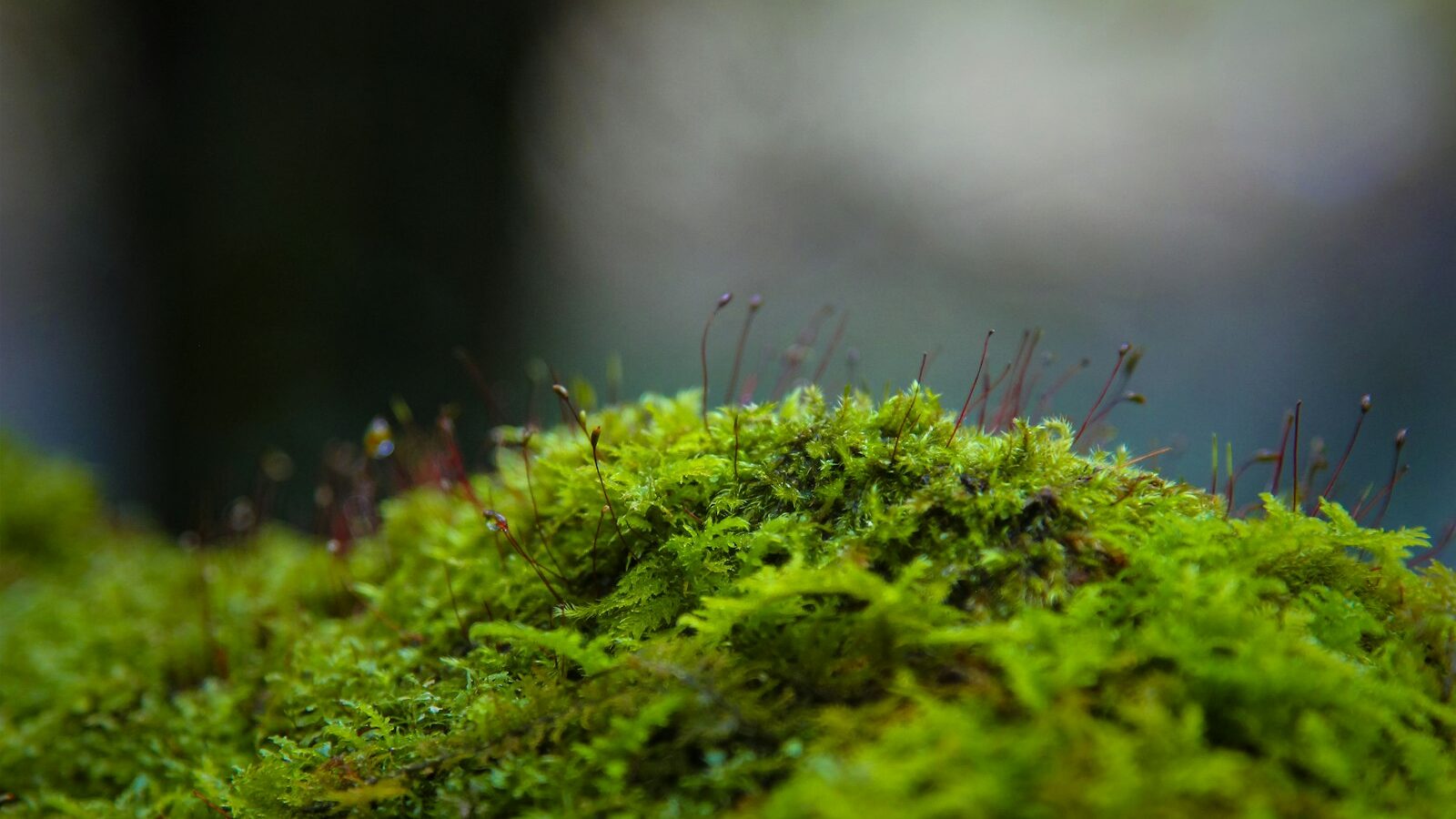
Sphagnum moss and peat moss come from the same plant but are completely different products. Sphagnum moss is the living or recently harvested top growth of the sphagnum plant, dried into the long, stringy, fibrous strands used to line baskets and wrap orchid roots. Peat moss, also called sphagnum peat, is what that same plant becomes after sinking to the bottom of a bog and decomposing under waterlogged, oxygen-starved conditions for hundreds to thousands of years. Time and pressure break the fibers down into the fine, dark, crumbly, acidic material sold in compressed bales for soil amendment and seed starting. The practical upshot: sphagnum moss is long-fibered, near-neutral to mildly acidic, and used decoratively and for drainage, while peat moss is fine, strongly acidic, and used to hold water and lighten soil. Below is exactly how they differ in origin, texture, pH, and use, plus the sustainability question that increasingly shapes which one to buy.
Key Takeaways
- Sphagnum moss is the living, top-growth plant harvested and dried; peat moss is the same plant after centuries of decomposition deep in the bog.
- Sphagnum is long, stringy, and fibrous; peat moss is fine, dark, and crumbly with no visible plant structure.
- Peat moss is strongly acidic (pH about 3.5 to 4.5) and great for acid-loving plants; sphagnum is closer to neutral to mildly acidic.
- Use sphagnum for lining baskets, wrapping orchid roots, and propagation; use peat moss for amending soil, seed-starting mixes, and raising water retention.
- Peat is a slow-to-renew resource and harvesting it raises real environmental concerns, so coir is a common renewable substitute for many peat uses.
| Factor | Sphagnum Moss | Peat Moss |
|---|---|---|
| What it is | Living/recently harvested top growth of the plant | Decomposed remains from deep in the bog |
| Age | Fresh; harvested from the surface | Hundreds to thousands of years old |
| Texture | Long, stringy, fibrous strands | Fine, dark, crumbly, soil-like |
| pH | Near neutral to mildly acidic (about 5 to 7) | Strongly acidic (about 3.5 to 4.5) |
| Water retention | High; holds many times its weight | Very high; classic moisture sponge |
| Primary uses | Basket liners, orchid mounts, propagation wraps | Soil amendment, seed mixes, acidifying beds |
| Form sold | Loose dried strands, sometimes long-fiber grades | Compressed bales and bags |
| Renewability | Faster surface regrowth where managed | Very slow; raises sustainability concerns |
Sphagnum Moss: The Living Plant, Dried
Sphagnum moss is the actual plant, harvested from the living surface layer of a bog and dried. There are many species, but commercially the product is prized for its long, stringy, fibrous strands that hold their structure even when dried and rehydrated. Pick up a handful and you can see the individual stems and branching leaves; it looks like what it is, dried moss. That fibrous structure is the whole reason it is useful. Sphagnum can absorb and hold many times its own weight in water while still retaining open spaces between the fibers, so it stays moist without becoming a dense, airless mass. Those qualities make it the standard liner for hanging baskets and wire planters, where it holds soil in, retains moisture, and lets excess water drain.
The same open, moisture-holding, near-neutral structure makes sphagnum the go-to medium for orchids and other epiphytes whose roots need air as much as water. Growers wrap orchid roots in long-fiber sphagnum or mount plants on it because it cradles moisture against the roots without suffocating them. Propagators use it the same way, wrapping it around a stem cutting or an air layer to keep the rooting zone humid but oxygenated. Sphagnum also has mild natural antiseptic properties and a relatively high, near-neutral pH compared with peat, which is part of why it works for delicate propagation where a strongly acidic medium might not. One caution worth knowing: handling sphagnum moss carries a small risk of sporotrichosis, a fungal skin infection, so wearing gloves when working with it is sensible.
Grades and forms
Not all sphagnum is equal. Long-fiber sphagnum, with the longest intact strands, is the premium grade for orchids and decorative work because it drains well and holds its structure for a season or more before breaking down. Shorter, more fragmented grades are cheaper and fine for basket liners or general moisture retention. Sphagnum is sold loose and dried, often in compressed bricks that fluff up dramatically when soaked. Because it is the surface growth rather than the ancient buried layer, sphagnum can regrow where bogs are managed for sustainable harvest, which gives it a somewhat better renewability profile than peat, though sourcing still matters. For container projects where this kind of moisture management is central, our overview of small-space and container gardening systems covers matching media to pot type and plant.
Peat Moss: The Decomposed Remains
Peat moss is what sphagnum becomes after it dies, sinks, and decomposes for centuries at the bottom of a waterlogged bog. The cold, acidic, oxygen-deprived conditions slow decomposition to a crawl, so instead of rotting away the plant material slowly compresses into peat. Harvesters strip back the living surface and extract this aged layer from depth, then dry and compress it into the familiar bales. The result bears no visible resemblance to the original plant: peat moss is fine, dark brown, crumbly, and soil-like, with the fibrous structure broken down into a uniform spongy material. Because it took hundreds to thousands of years to form, peat regenerates extraordinarily slowly, which is the root of the sustainability debate around it.
Peat’s value in the garden comes from two traits: enormous water retention and strong acidity. It can hold many times its weight in water and releases it slowly, which is why it is a staple ingredient in seed-starting and potting mixes that need to stay evenly moist. Blended into heavy clay it adds organic matter and improves structure, and worked into sandy soil it dramatically improves water and nutrient holding. Its low pH, typically around 3.5 to 4.5, makes it a natural amendment for acid-loving plants such as blueberries, azaleas, rhododendrons, and camellias, where it both holds moisture and nudges the soil more acidic. That same acidity is why you do not want to overuse it around plants that prefer neutral soil without also adjusting pH.
Working with peat’s quirks
Peat moss has two handling quirks worth planning for. First, when it dries out completely it becomes hydrophobic and actively repels water, beading it off the surface rather than absorbing it, so it must be pre-moistened before use. Wet it in a bucket or tub, working the water in until it is uniformly damp, before blending it into a mix or a bed. Second, because peat carries almost no nutrients of its own and is strongly acidic, it is an amendment rather than a standalone growing medium; you blend it with compost, perlite, and fertilizer to make a working mix. When amending an in-ground bed, our guide to improving and building garden soil walks through how peat fits alongside compost and other organic matter.
How They Compare on the Decisions That Matter
On texture, the two could not be more different: sphagnum is long and fibrous with visible plant structure, while peat is fine and crumbly with none. That single difference drives most of their uses. The fibrous strands of sphagnum make it ideal anywhere you need a material that holds shape, drains, and stays open, lining baskets and cradling orchid roots, while the fine sponginess of peat makes it ideal anywhere you need to blend a moisture-holding amendment uniformly into a mix or a bed. On pH, peat is far more acidic, which is an asset for acid-loving plants and a liability for everything else, whereas sphagnum’s near-neutral pH suits a wider range of delicate propagation work.
On water, both are champions, holding many times their weight, but peat releases moisture more slowly into a mix while sphagnum holds it in an open, airy structure better suited to roots that need oxygen. On cost and volume, peat is cheaper per volume and sold in large compressed bales for big soil jobs, while sphagnum is pricier and bought in smaller quantities for targeted decorative and propagation uses. On sustainability, both come from bogs, but harvesting the ancient deep peat layer is far harder to justify than skimming and managing surface sphagnum, which is why the environmental conversation centers on peat and why coir has emerged as a popular renewable substitute for many peat applications.
The sustainability question and coir
Peatlands store vast amounts of carbon and provide unique wildlife habitat, and because peat forms over millennia, extracting it releases stored carbon and degrades ecosystems faster than they can recover. That concern has driven a real shift toward alternatives, the most common being coconut coir, the fiber from coconut husks. Coir holds water comparably to peat, has a near-neutral pH that suits a wider range of plants, rewets easily without going hydrophobic, and is a renewable byproduct of coconut harvesting. It does lack peat’s acidity, so for blueberries and other acid lovers you may still reach for peat or add a separate acidifier. The honest position is that peat remains effective and widely sold, but where a renewable swap works as well, coir is increasingly the responsible default.
The Verdict
These are not interchangeable products despite the shared name and origin. Pick based on what the job needs, structure and air, or moisture and acidity.
Scenario: Lining a hanging basket or wire planter. Use sphagnum moss. Its long fibers hold soil in, retain moisture, drain excess water, and look attractive at the edges in a way fine peat never could.
Scenario: Potting or mounting orchids. Use long-fiber sphagnum moss. It cradles moisture against the roots while keeping them aerated, and its near-neutral pH suits epiphytes far better than acidic peat.
Scenario: Making a seed-starting or potting mix. Use peat moss (or coir) for its fine texture and even moisture retention, blended with perlite and compost. Pre-moisten peat first so it absorbs rather than repels water.
Scenario: Planting blueberries, azaleas, or other acid lovers. Use peat moss. Its strong acidity both lowers soil pH and improves moisture retention, exactly what these plants want; coir would need a separate acidifier to match it.
Scenario: You want the most sustainable choice for general amending. Consider coconut coir in place of peat. It matches peat’s water-holding, rewets easily, suits a wider pH range, and is a renewable byproduct rather than a slowly-forming bog resource.
Frequently Asked Questions
Are sphagnum moss and peat moss the same thing?
They come from the same plant but are different products. Sphagnum moss is the living top growth harvested and dried into long fibers. Peat moss is that same plant after it sank to the bottom of the bog and decomposed for centuries into a fine, dark, acidic, crumbly material. Texture, pH, and uses all differ.
Which is more acidic, sphagnum or peat moss?
Peat moss is far more acidic, typically pH 3.5 to 4.5, which makes it ideal for acid-loving plants like blueberries and azaleas. Sphagnum moss is closer to neutral or only mildly acidic, roughly pH 5 to 7, which is part of why it suits orchids and delicate propagation.
Can I use peat moss to line a hanging basket?
It is not ideal. Peat is fine and crumbly, so it falls through the gaps of a wire basket and packs into an airless mass. Long-fiber sphagnum moss is the right material for liners because its fibers hold soil in, retain moisture, drain well, and keep their structure.
Why does my peat moss repel water?
When peat dries out completely it becomes hydrophobic and beads water off rather than absorbing it. Pre-moisten it before use by working water into it in a bucket or tub until it is uniformly damp. Coir, by contrast, rewets easily, which is one reason gardeners favor it as a peat substitute.
Is peat moss bad for the environment?
It raises real concerns. Peat forms over hundreds to thousands of years and peatlands store large amounts of carbon and unique habitat, so harvesting it releases that carbon and degrades ecosystems faster than they recover. Coconut coir is a popular renewable substitute for many peat uses, though it lacks peat’s acidity.