

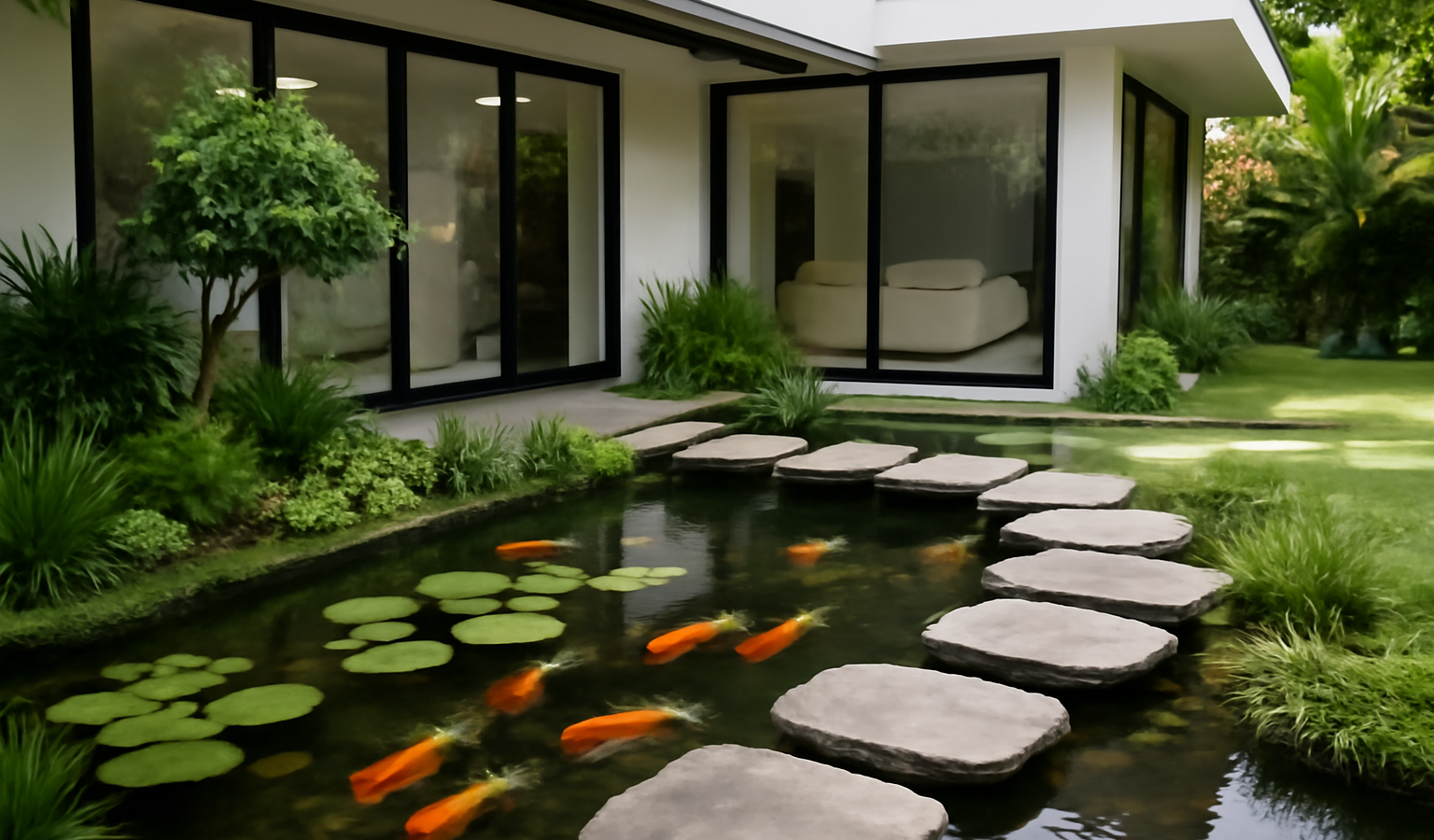
A well-designed pond can transform a Singapore home, whether you have a sprawling landed garden in Serangoon, a condo courtyard or a sliver of HDB outdoor space. The trick is choosing a style that suits your plot, your budget and our relentless tropical climate. This guide walks through the main pond design ideas that work in Singapore, from naturalistic koi ponds to crisp formal water features, plus tropical planting, feng shui placement and rough SGD cost bands to plan around.
Key takeaways
- Naturalistic ponds suit landed gardens, while formal raised ponds and slim reflecting pools work better in condos and tight courtyards.
- Tropical planting like water lilies, papyrus and lotus thrives year-round here and helps shade and cool the water.
- Feng shui favours placing a pond to the front or left of the main door with gently moving water flowing towards the home.
- Rough costs run from S$1,500 for a small container pond to S$20,000 and up for a large concrete landed-home build.
- Plan around our heat and monsoon rain from the start: build in shade, depth, aeration and proper overflow drainage.
Matching pond style to your home
The single biggest design decision is matching the pond to the space you actually have. Landed homes in areas like Bukit Timah or Serangoon can support a generous in-ground pond with room for a waterfall, planting margins and a winding edge. Condos and townhouses usually do better with a raised or semi-raised pond that doubles as seating, fits a paved courtyard and avoids deep excavation. HDB dwellers, working within balcony or corridor limits, are best served by compact container ponds that deliver the sound and life of water without major building work.
Scale matters in our climate too. A larger volume of water is more stable, heats up more slowly and is far more forgiving of the algae and oxygen swings the tropics throw at you. If your space allows, going bigger usually means less daily fuss, not more. For balcony-bound readers, our water gardens hub collects smaller-scale ideas that fit tighter footprints.
Naturalistic versus formal designs
Most Singapore ponds fall into one of two camps. Naturalistic ponds mimic a wild pool with irregular edges, rocks, bog planting and a hidden liner, blending into a lush tropical garden. They look relaxed, support wildlife and hide their equipment well, but they need space and regular planting upkeep to stop them looking untidy in our fast growing season.
Formal ponds take the opposite approach: clean geometric shapes, rendered or tiled walls, sharp coping and often a raised profile. They suit modern condo architecture and small courtyards, read as deliberate design rather than nature, and are easy to keep tidy. The trade-off is that hard edges and shallow formal pools can heat up quickly under our sun, so depth and shade still matter.
- Naturalistic — best for landed gardens, wildlife and a soft tropical look; needs space and planting care.
- Formal — best for condos, courtyards and a clean architectural feel; easy to keep tidy but watch heat in shallow pools.
- Hybrid — a formal raised edge with naturalistic planting inside, a popular middle ground for Singapore gardens.
Koi pond versus wildlife pond
Deciding what lives in your pond shapes its whole design. A koi pond is built around the fish: deeper water, strong multi-stage filtration, powerful pumps and minimal planting that the koi would otherwise eat. It is the more demanding and expensive route, but a mature koi pond is a striking centrepiece and carries strong feng shui appeal for many local owners. For full pricing on this route, see our detailed koi pond cost guide.
A wildlife or planted pond takes the opposite tack, favouring dense aquatic planting, gentle filtration and small hardy fish or none at all. It attracts dragonflies and birds, needs less equipment and runs more cheaply. One Singapore-specific caution: any pond must have moving water or fish so it never becomes stagnant, since still water invites mosquito breeding and NEA scrutiny during dengue season. A small pump or a few guppies solves this neatly.
Tropical planting that thrives here
Singapore’s year-round warmth is a gift for aquatic planting, and the right plants do real work: they shade the surface, soak up nutrients that would otherwise feed algae, and give the pond a lush, settled look within weeks rather than seasons. Water lilies are the classic choice, their pads shading the water and keeping it cooler, while lotus brings dramatic height and ties in beautifully with feng shui themes.
Around the margins, papyrus, dwarf umbrella plant and water iris add structure, and floating plants such as water lettuce help starve algae of nutrients. Aim to cover roughly half to two-thirds of the surface with planting to balance shade against open water. Because everything grows fast in our climate, expect to thin and divide plants a few times a year. For a deeper run-through of suitable species, browse the planting guides in our water gardens section.
Feng shui placement for Singapore homes
Many Singapore homeowners design a pond with feng shui in mind, where water represents wealth and the placement relative to the main door carries meaning. A common guideline is to position the pond to the front of the home or to the left of the main entrance as you look outward, so the energy of moving water flows towards the house rather than away from it. Gently moving water from a spout or small waterfall is considered more auspicious than still water, and it conveniently doubles as the aeration your fish need.
Avoid sharp pond edges pointing directly at the front door, and steer clear of positioning that suggests wealth draining away from the property. If you want to lean fully into this approach, our water feature feng shui guide covers placement, fish numbers and shapes in more detail. Treat these principles as a design lens rather than rigid rules, and always let pond health and practicality have the final say.
Rough cost bands in SGD
Pond costs in Singapore vary enormously with size, build method and equipment, but the bands below give a realistic starting point for budgeting. These figures cover design, materials, basic equipment and surrounding landscaping, and exclude fish and ongoing running costs.
| Pond design / setting | Typical SGD range |
|---|---|
| Container or patio pond (HDB or condo balcony) | S$1,500 – S$4,000 |
| Small formal raised pond (condo courtyard) | S$4,000 – S$8,000 |
| Medium naturalistic liner or fibreglass pond (landed garden) | S$8,000 – S$15,000 |
| Large concrete pond with waterfall and filtration (landed) | S$15,000 – S$30,000 |
| Premium bespoke design (viewing window, automation, koi-grade) | S$30,000 – S$60,000+ |
| Monthly running and maintenance cost | S$50 – S$200 / month |
The cheapest way in is a container pond, which you can largely set up yourself, while concrete landed-home builds sit at the top of the range. Filtration, pumps and finishing materials move the price most, so get an itemised quote that separates structure, equipment and landscaping. To have a designer plan and build your pond from scratch, see our pond and water feature installation service.
Designing around heat and monsoon rain
Two tropical realities should shape every Singapore pond design from day one: heat and heavy rain. Warm water holds less oxygen, so build in depth where you can, since deeper water stays cooler at the bottom and buffers temperature swings. Partial shade from a pergola, sail or surrounding planting cools the water and curbs algae, and reliable aeration from a pump, waterfall or air stone keeps oxygen levels safe for fish through the hottest afternoons.
The monsoon brings the opposite problem. A sudden downpour can overwhelm a pond, washing in debris and overflowing onto paths or, worse, into neighbouring units. Design in a proper overflow that channels excess water safely to a drain in line with BCA and PUB drainage expectations, and keep the pond edge slightly proud of surrounding paving so runoff is directed, not dumped in. Getting drainage right at the design stage costs little and saves real grief later.
Frequently asked questions
Can I have a pond in an HDB flat?
Yes, within limits. A compact container or tabletop pond on a balcony or in a corridor is the practical option, since major excavation is not possible. Keep it small, use a pump or small fish to avoid stagnant water and mosquito breeding, and check the weight your balcony can safely carry.
What is the best pond style for a small condo courtyard?
A formal raised pond usually works best in a tight courtyard. Its clean geometry suits modern architecture, the raised edge doubles as seating, and it avoids deep digging. Add planting inside for a softer hybrid look and build in some depth or shade to manage our heat.
Should I choose a koi pond or a wildlife pond?
Choose a koi pond if the fish are the main attraction and you accept higher cost, deeper water and strong filtration. Choose a wildlife or planted pond if you want lower cost, more planting and less equipment. Either way, ensure moving water or fish so the pond never goes stagnant.
Where should I place a pond for good feng shui?
Classical feng shui favours placing the pond to the front of the home or to the left of the main door as you look outward, with gently moving water flowing towards the house. Avoid sharp edges pointing at the entrance and avoid positioning that suggests water draining away.
How do I stop my pond breeding mosquitoes?
Never let the water sit still. A running pump, waterfall or air stone keeps the surface moving, and a few small fish such as guppies eat any larvae. This keeps the pond healthy and avoids NEA dengue concerns, which matter year-round in Singapore.
Featured project by Gensou Aquascaping
Get free pond design quotes in Singapore
Tell us about your space and we’ll match you with vetted local pond specialists island-wide. Free, no obligation.