

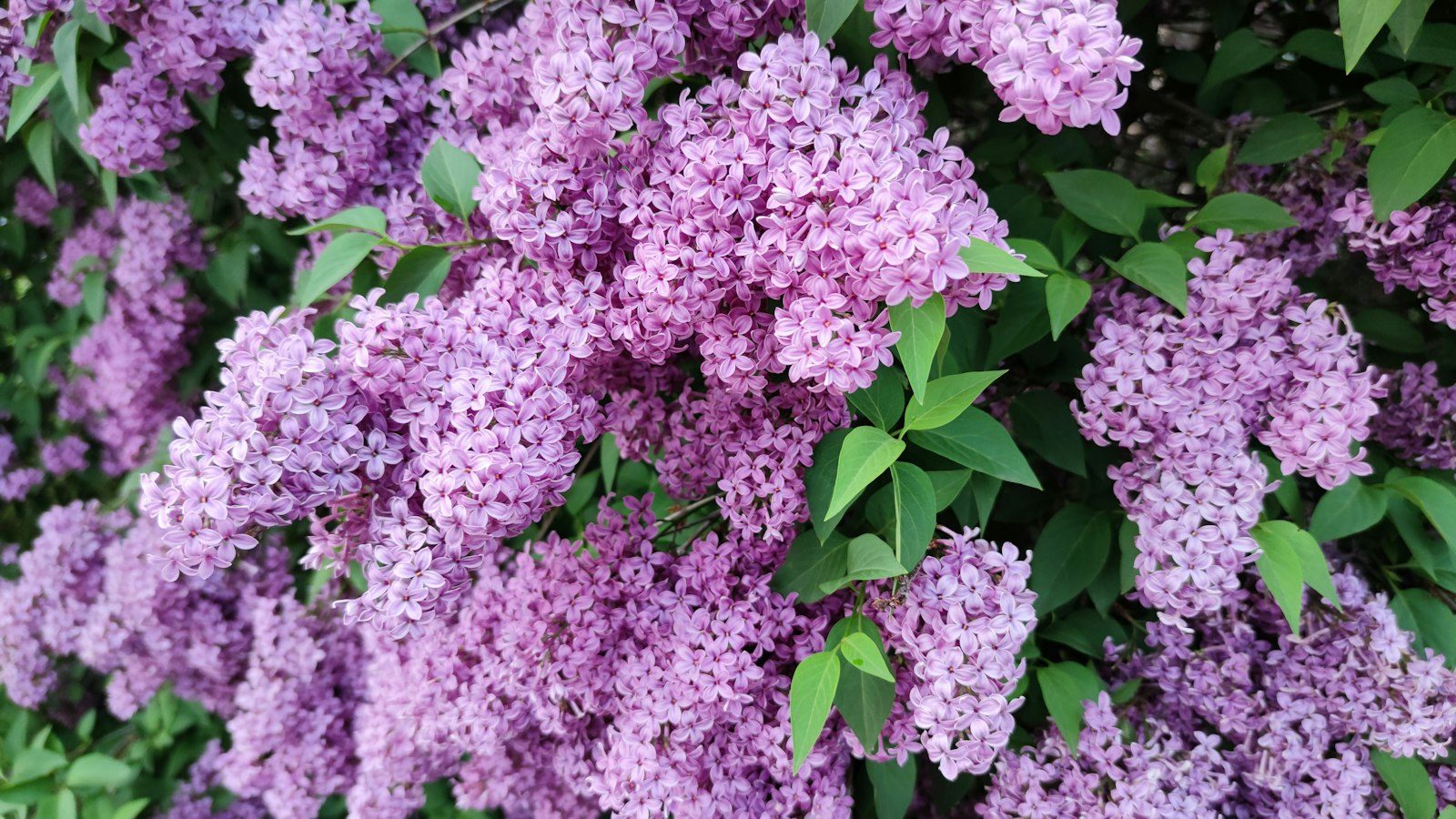
Miss Kim is the lilac to plant when you love the fragrance but don’t have room for a 12-foot common lilac. It’s a selection of Manchurian lilac (Syringa pubescens subsp. patula) that stays roughly 6 to 9 feet tall in time, can be kept smaller with pruning, blooms a couple of weeks after common lilacs, and shrugs off the powdery mildew that turns many lilac leaves gray by August. It’s hardy in USDA zones 3 to 8, wants full sun and well-drained soil, and the one rule that matters most is simple: prune right after it finishes flowering, never in fall or winter.
In this guide
Key Takeaways
- Hardy in zones 3 to 8; it needs winter cold and struggles in hot, humid zone 9.
- Expect 6 to 9 feet tall and 5 to 7 feet wide at maturity, slowly; it’s easy to keep at 4 to 6 feet.
- Plant in at least 6 hours of sun in well-drained soil, near neutral pH.
- Prune within a few weeks after flowering; next year’s buds form over summer.
- It blooms late in the lilac season, so it often escapes the late frosts that damage early lilacs.
What Makes Miss Kim Different
Miss Kim was raised from seed collected in Korea in the late 1940s and introduced by the University of New Hampshire in the 1950s. Compared with the common lilac (Syringa vulgaris), it differs in several ways that matter in a small yard.
| Trait | Miss Kim lilac | Common lilac |
|---|---|---|
| Mature size | About 6 to 9 ft tall, 5 to 7 ft wide | 8 to 15 ft tall, 6 to 12 ft wide |
| Bloom time | Late spring, roughly 2 weeks later | Mid spring |
| Flower color | Purple buds opening pale lavender-blue, fading near white | Lilac, purple, white, pink, blue by cultivar |
| Suckering | Little | Heavy |
| Powdery mildew | Good resistance | Often susceptible |
| Fall color | Burgundy to purple in many years | Usually none |
| Zones | 3 to 8 | 3 to 7 |
The leaves are smaller, narrower and slightly wavy, which gives the shrub a finer texture than a common lilac. In cool falls the foliage often turns a deep wine color, a bonus you rarely get from lilacs. For the general care that applies to all lilacs, see our guide to how to grow lilacs; this article focuses on what’s specific to Miss Kim.
Where to Plant Miss Kim
Sun
Give it full sun, meaning at least six hours of direct light, and more is better. In part shade it grows lankier and flowers less. In zone 8, a spot with afternoon shade helps it cope with heat, but don’t go below about six hours total.
Soil
Lilacs want well-drained soil. They tolerate clay as long as water doesn’t stand around the roots, but soggy ground causes root rot and slow decline. A pH between about 6.5 and 7.5 is ideal. If a soil test shows strongly acidic soil, a modest dose of garden lime worked in before planting helps. Avoid planting where a lawn sprinkler hits the shrub daily.
Small yards and foundation beds
Miss Kim is a natural fit along a foundation, at a corner of the house, flanking a front walk or as a low informal hedge. Plan for its eventual width: set the center of the shrub at least 3 to 4 feet from the house wall so air can move behind it and you can reach the siding. Plant it near a window, patio or path where you’ll actually smell the flowers. For a hedge, space plants 4 to 5 feet apart on center for a continuous screen, or 6 feet for individual shrubs that just touch.
Miss Kim also pairs well with other compact shrubs and perennials in a mixed border; our flowers and perennials guide has ideas for underplanting with spring bulbs and summer bloomers that carry color after the lilac finishes.
How to Plant
- Time it. Plant container-grown shrubs in spring after the ground thaws or in early fall, at least six weeks before the ground freezes.
- Dig wide, not deep. Make the hole two to three times as wide as the root ball and no deeper. The top of the root ball should sit level with or slightly above the surrounding soil.
- Loosen the roots. Tease apart circling roots so they grow out into native soil.
- Backfill with native soil. Heavy amendments in the hole can create a bathtub effect in clay. Mix in a little compost at most.
- Water deeply and mulch. Soak the root zone, then spread 2 to 3 inches of shredded bark or wood chips, kept a few inches off the stems.
Watering and Feeding
For the first growing season, water deeply about once a week when there’s less than an inch of rain, more often in sandy soil or heat waves. Check by pushing a finger a few inches into the soil; water when it’s dry at that depth. Once established, usually after the second summer, Miss Kim is quite drought tolerant and needs watering only in prolonged dry spells.
Go easy on fertilizer. Lilacs flower best on lean rations, and high-nitrogen feeding, including lawn fertilizer that drifts onto the bed, produces lots of leaves and few flowers. A layer of compost each spring is usually enough. If growth is weak, apply a balanced slow-release shrub fertilizer once in early spring.
Pruning Miss Kim Lilac
Like all lilacs, Miss Kim blooms on old wood. It sets next year’s flower buds at the tips of this year’s growth over summer, so the timing of pruning decides whether you get flowers.
When to prune
Prune within about three to four weeks after the last flowers fade, typically in June in most of the North. Pruning in late summer, fall or winter removes the buds you’ve been waiting for. If you must remove a broken branch out of season, go ahead, but limit cuts to that.
How to prune
- Deadhead spent clusters by snipping just below the flower head, above a pair of leaves or buds. It tidies the shrub; Miss Kim will bloom without it.
- Shape by cutting overly long shoots back to a side branch or bud pair. This keeps the dense, rounded form and controls height.
- Thin older shrubs by removing one or two of the oldest, thickest stems at ground level every year or two. That keeps fresh wood coming and air moving through the center.
- Avoid shearing into a tight ball. Shearing removes buds across the whole surface and gives a lot of small, weak shoots.
A neglected, overgrown Miss Kim can be renovated by removing a third of the oldest stems each year for three years. Flowering drops for a season or two, then recovers. Our lilac pruning guide walks through renewal pruning with diagrams of where to cut.
Seasonal Care Calendar
| Season | Tasks |
|---|---|
| Early spring | Top up mulch, add compost, optional light balanced fertilizer |
| Late spring | Enjoy blooms; water during dry spells |
| Early summer | Prune and deadhead within 3 to 4 weeks of bloom ending |
| Mid to late summer | Water young shrubs; no pruning |
| Fall | Enjoy foliage color; deep water before freeze if dry |
| Winter | Leave alone; remove only storm-damaged branches |
Problems and Fixes
Few or no flowers
The usual causes are pruning at the wrong time, too much shade, too much nitrogen or a young plant that hasn’t settled in. Newly planted shrubs often take a year or two to bloom heavily. Our article on why a lilac isn’t blooming goes through each cause in order.
Powdery mildew
Miss Kim resists mildew well, but in humid summers or crowded spots you may still see a light gray coating late in the season. It’s mostly cosmetic. Improve airflow by thinning and avoid overhead watering.
Lilac borer and scale
Wilting stems with small holes and sawdust near the base point to lilac borer, which targets older, stressed stems. Cut affected stems to the ground and keep the shrub vigorous with regular renewal pruning. Scale insects appear as small bumps on stems; prune out heavy infestations and consult your local extension office for treatment timing.
Brown leaf edges in summer
Scorched margins usually mean drought stress or reflected heat from pavement or siding. Water deeply and mulch, and in zone 8 consider a site with afternoon shade.
Good Companions for Miss Kim
Because Miss Kim flowers for only two to three weeks, the plants around it carry the bed for the rest of the year. A few combinations work especially well in sunny foundation beds:
- Spring bulbs such as daffodils, alliums and grape hyacinths fill the gap before the lilac blooms and fade as its leaves fill in.
- Low perennials like catmint, hardy geraniums and creeping phlox cover the base and soften bare lower stems on older shrubs.
- Summer bloomers such as coneflowers, black-eyed Susans and Russian sage pick up color in July and August when the lilac is just green.
- Contrasting shrubs with fine or dark foliage, like dwarf spirea or ninebark, play off Miss Kim’s burgundy fall color.
Keep companions out of the shrub’s immediate root zone for the first two years while it establishes, and choose plants with similar needs: full sun, good drainage and modest water once settled. Avoid pairing it with acid-loving plants like azaleas or blueberries, which want a much lower soil pH than lilacs prefer.
Growing Miss Kim in a Container
Miss Kim can live in a large pot on a patio for several years. Use a container at least 20 to 24 inches wide with drainage holes and a gritty, well-drained potting mix. Water when the top couple of inches dry out. In zones 5 and colder, container roots are far more exposed than roots in the ground, so move the pot against a sheltered wall, wrap it, or sink it into a garden bed for winter. Eventually it will want to go in the ground.
Frequently Asked Questions
How big does a Miss Kim lilac get?
It grows slowly to about 6 to 9 feet tall and 5 to 7 feet wide over many years. With annual pruning after bloom, it’s easy to hold at 4 to 6 feet.
When does Miss Kim lilac bloom?
Late spring, typically about two weeks after common lilacs. In many northern gardens that means late May to early June.
Is Miss Kim a dwarf lilac?
It’s often sold as a dwarf or compact lilac because it’s much smaller than common lilac, but it isn’t truly tiny. Expect a medium shrub unless you prune it.
Does Miss Kim lilac rebloom?
No. It blooms once in late spring. Reblooming lilacs are different varieties bred to flower again in summer.
How far from the house should I plant Miss Kim?
Set the center of the shrub at least 3 to 4 feet from the foundation so it has room to spread and air can circulate behind it.