

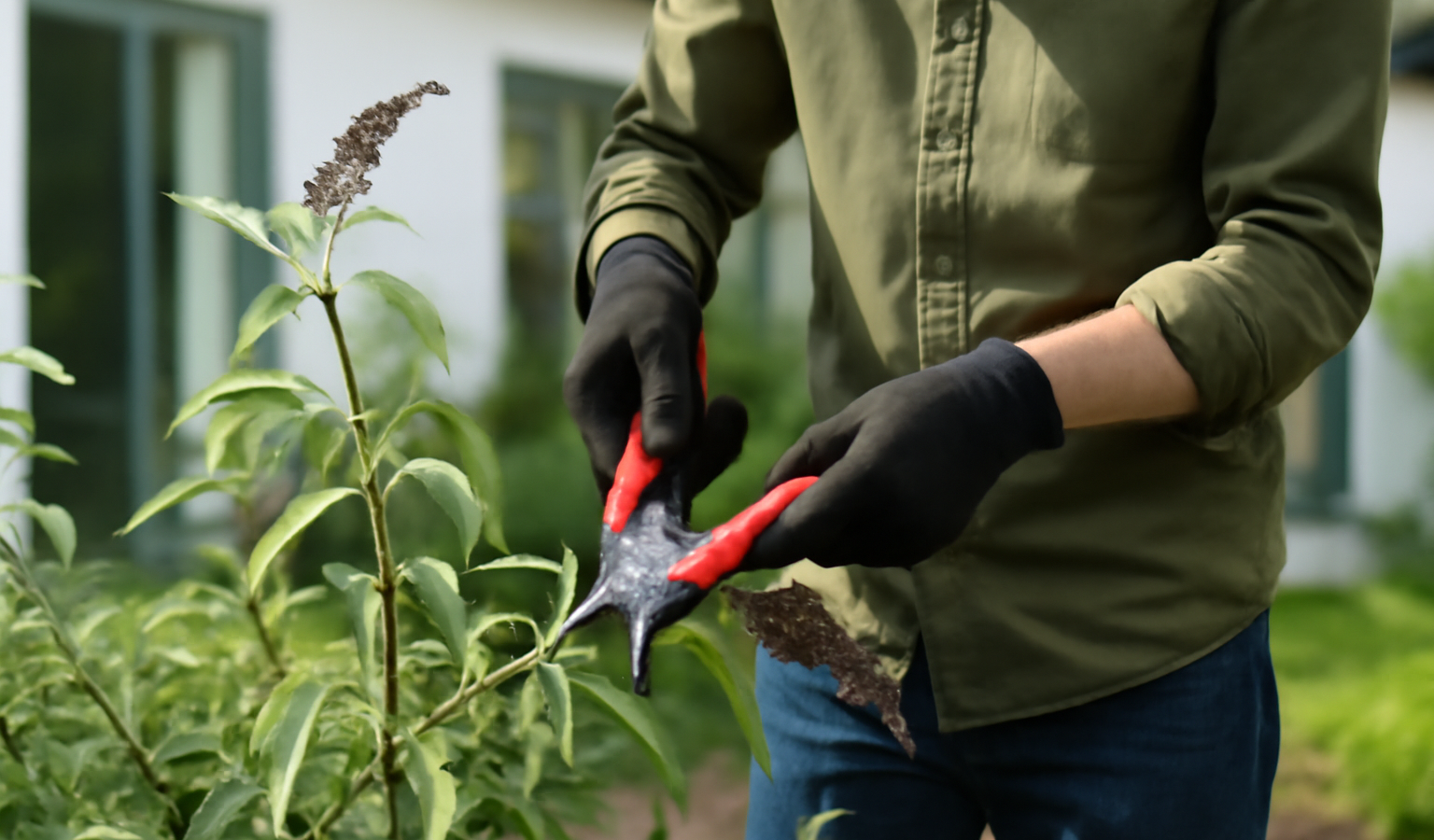
Butterfly bush (Buddleja davidii) is one of the few shrubs you can hack nearly to the ground and have reward you with a bigger, more flower-covered plant than ever. That is because it blooms on new wood — growth produced in the current season — so the harder you prune in spring, the more vigorous shoots and nectar-rich flower spikes it pushes out for the butterflies. Skip the pruning and you get the opposite: a sprawling, woody, top-heavy shrub that flowers sparsely on bare lower stems and tends to flop. The two pruning jobs that matter are a hard cut-back in early spring and regular deadheading through summer (which also helps keep this sometimes-invasive plant from seeding around). This guide covers the timing, exactly how low to cut, how to deadhead for a longer bloom show, and the mistakes that leave you with a leggy, under-flowering bush.
Key Takeaways
- Prune hard in early spring, after the last hard frost, when new buds just begin to swell at the base — not in fall.
- Cut the whole shrub down to 12–24 inches (about knee-high). Butterfly bush blooms on new wood, so this drives the strongest growth and most flowers.
- Leave dead-looking stems on over winter; they protect the crown from cold. Wait to prune until you see live buds in spring.
- Deadhead spent flower spikes all summer to extend bloom for weeks and reduce unwanted self-seeding.
- In cold zones it dies back like a perennial; if winter killed the top, just cut to live growth and it rebounds fast.
Why Butterfly Bush Wants a Hard Cut
The single fact that governs butterfly-bush pruning is that it flowers on new wood. Each spring it sends up fresh shoots, and those new shoots carry the long, cone-shaped flower panicles in summer. Old wood left in place gets increasingly bare, woody, and unproductive, with flowers retreating to the very tips of tall, leggy stems. By cutting the plant back hard each spring, you force a dense flush of vigorous new growth from low down — and that growth is what blooms. It is the exact opposite situation from a lilac, which blooms on old wood and must never be cut in spring. Knowing which type of wood a shrub flowers on tells you everything about when to prune it.
In warm climates (roughly zones 6–9) butterfly bush behaves as a woody shrub. In colder zones (5 and below) it often dies back to the ground each winter and regrows like a herbaceous perennial — which is fine, because you were going to cut it down anyway.
When to Prune
Do the main prune in early spring, after the danger of hard frost has passed and the buds at the base of the plant just begin to swell. In most US gardens this is late March into April, a little earlier in the South and later in the North. Pruning at this moment means the plant immediately channels its energy into the new growth that will bloom.
Resist the urge to cut it down in fall. The standing dead stems insulate the crown and roots through winter, and a fall cut on a marginally hardy plant can lead to winter loss in cold zones. Leave the old growth as winter protection — the seed heads also feed birds — and clean it up in spring. The only winter task is removing any clearly broken stems.
How to Do the Spring Cut-Back
This is about as forgiving as pruning gets. You almost cannot cut a butterfly bush too hard.
- Wait for live buds. In spring, look at the lower stems for swelling green buds. This tells you which wood is alive and how low you can safely cut.
- Cut the entire shrub down to about 12 to 24 inches from the ground — roughly knee-high. For a hard rejuvenation you can go even lower, to 6 to 12 inches, and a vigorous plant will bounce right back.
- Cut just above a set of buds or a leaf node, using bypass pruners for thin stems and loppers for the thick old canes.
- Remove any dead, weak, or crossing stems entirely, and thin out a few of the oldest, woodiest canes at the base to keep the plant renewed and the center open.
- Shape the framework so remaining stems are evenly spaced. The plant will quickly fill in with fresh growth and form a rounded, full shape by summer.
After cutting, scratch in a balanced fertilizer and refresh the mulch as growth begins. Within weeks the shrub will be a mound of fresh shoots, and by midsummer it will be taller than you cut it and covered in flower spikes.
Deadheading for Longer Bloom (and Fewer Seedlings)
Butterfly bush blooms on and off all summer, and deadheading dramatically extends the show. As each flower panicle fades and browns, snip it off just above the next set of leaves or a side shoot. This stops the plant from putting energy into seed and redirects it into producing more flower spikes, often keeping a well-tended plant in bloom from early summer until frost.
Deadheading has a second important benefit: it sharply reduces self-seeding. The species form of butterfly bush is considered invasive in parts of the US, escaping gardens and crowding out native plants. Removing spent flowers before they set seed is a responsible way to enjoy the plant while limiting its spread. Choosing one of the newer sterile or seedless cultivars is an even better option where invasiveness is a concern.
Cold-Climate Notes
If you garden where winters dip well below zero, expect the top growth to die back. That is normal and not a problem — the roots are hardier than the stems. In spring, simply cut all the dead wood down to the live buds emerging at or near ground level, and the plant regrows and blooms the same season. Leaving the dead top on through winter genuinely helps the crown survive, so be patient and prune late rather than early.
Common Mistakes to Avoid
Pruning in fall. A fall cut removes the winter insulation the crown needs and can kill a marginally hardy plant. Always wait until spring for the main cut.
Not pruning hard enough. Timid trimming leaves a tall, woody, leggy shrub that flowers only at the top. Be bold — cut to knee-high and the plant rewards you.
Skipping deadheading. Letting spent spikes stay shortens the bloom season and lets the plant self-seed into the wider landscape.
Pruning before buds show. Cutting too early, before you can see live wood, can mean guessing wrong on a winter-damaged plant. Wait for the swelling buds to guide your cut.
Letting it sprawl unsupported. Combined with no pruning, an unpruned butterfly bush flops badly. The annual hard cut is what keeps it compact and upright. For more flowering-shrub care, see the Outdoor Living hub.
Pinching for a Bushier, Fuller Plant
The spring hard cut sets the size, but a second optional technique shapes the plant for more flowers. Once the new spring growth reaches roughly 12 inches tall, you can pinch or snip an inch or two off the tips of the main shoots. This removes the growing tip and forces each stem to branch into two or more side shoots — and since every shoot tip carries a flower panicle, more branching means more blooms. The trade-off is that pinched plants flower a week or two later, so do it early in the season and only once.
Pinching is most useful on younger plants or where you want a denser, more compact form rather than a few tall wands. Combined with the annual hard cut-back, it produces a full, rounded shrub smothered in flower spikes rather than a sparse, leggy one. Skip it if you specifically want tall stems for cutting or for reaching above neighboring plants.
Feeding, Watering, and Season-Long Care
Butterfly bush is not a heavy feeder, and overfeeding actually works against you — too much nitrogen produces lush leaves at the expense of flowers and can make stems even floppier. A single application of a balanced, slow-release granular fertilizer at the spring cut-back is plenty for the whole season. Skip the high-nitrogen lawn-type fertilizers entirely.
Established plants are notably drought-tolerant and prefer well-drained soil and full sun — at least six hours of direct light to bloom heavily. Water new plantings regularly through their first season to establish the roots, then back off; mature shrubs need watering only during prolonged dry spells. Good drainage matters far more than rich soil, since soggy roots cause more problems than lean ground ever will. A light mulch conserves moisture and suppresses weeds, but keep it pulled back from the base of the stems. With the right spring cut, optional early pinching, steady deadheading, and a lean feeding regimen, a butterfly bush becomes one of the easiest, most reliable pollinator magnets in the summer garden — a steady source of nectar for butterflies, bees, and even hummingbirds from midsummer until the first frosts arrive.
Frequently Asked Questions
When should I prune my butterfly bush?
In early spring, after the last hard frost, when buds at the base of the plant just begin to swell — typically late March into April. Because butterfly bush blooms on new wood, an early-spring hard cut produces the most vigorous growth and flowers. Avoid fall pruning, which removes winter protection.
How far back should I cut a butterfly bush?
Cut the whole shrub down to about 12 to 24 inches from the ground — roughly knee-high. For a harder rejuvenation you can go to 6 to 12 inches. The plant blooms on new growth, so it regrows quickly and flowers heavily after a hard cut.
Should I deadhead my butterfly bush?
Yes. Snipping off faded flower spikes just above the next leaves keeps the plant blooming for weeks longer and, importantly, reduces self-seeding. Since the species can be invasive in parts of the US, deadheading before seeds form is a responsible practice.
My butterfly bush died back to the ground over winter — is it dead?
Probably not. In cold zones the top growth dies back while the roots survive, and it regrows like a perennial. In spring, cut the dead stems down to the live buds near the base and it will resprout and bloom the same season. Wait for buds before deciding it is gone.
Can I prune a butterfly bush in summer?
Light summer pruning is fine and even helpful — deadheading spent spikes and trimming the occasional wayward stem keeps it tidy and blooming. Save the major cut-back for early spring, though; the big structural prune belongs at the start of the growing season.