

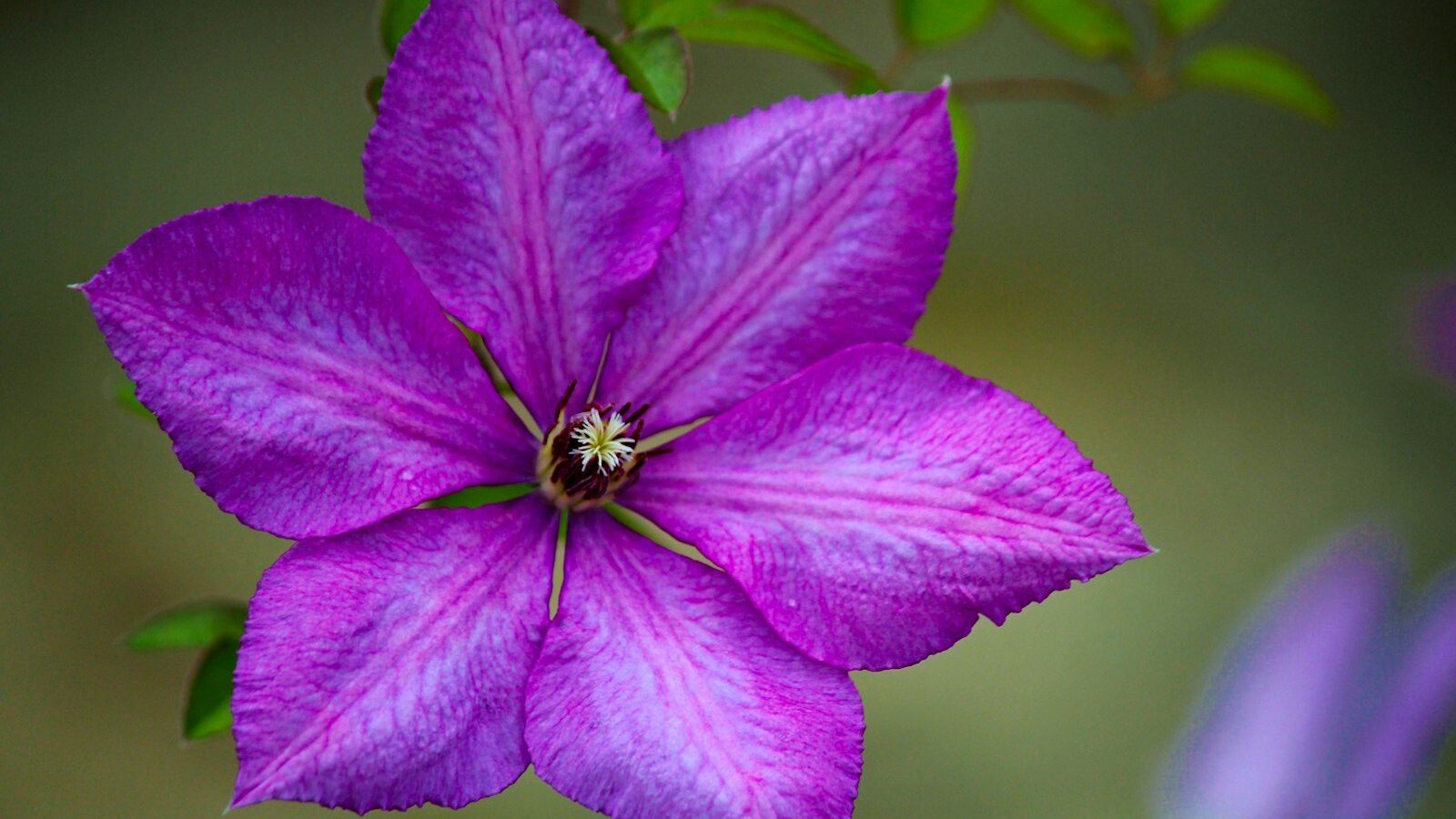
No plant generates more pruning anxiety than clematis, and for good reason: cut the wrong vine at the wrong time and you trade a wall of flowers for a season of bare leaves. The confusion melts away once you know one thing — which of three pruning groups your clematis belongs to. The groups are defined entirely by when the vine blooms and whether it flowers on old or new wood, and each group has a simple, different rule. This guide explains how to figure out your clematis’s group even if you’ve lost the label, then gives the exact timing and cuts for Group 1, Group 2, and Group 3. Master that and clematis becomes one of the easiest, most rewarding climbers you can grow.
Key Takeaways
- Clematis fall into three pruning groups defined by bloom time and whether they flower on old or new wood.
- Group 1 (early spring bloomers, e.g. montana, alpina): prune lightly, only right after flowering.
- Group 2 (large-flowered, bloom late spring then again in summer): light prune in late winter, deadhead after first flush.
- Group 3 (late-summer bloomers, e.g. viticella, ‘Jackmanii’): hard prune to 12 inches every late winter.
- If you don’t know the group, watch when it blooms for one year before pruning, or treat it cautiously as Group 2.
Why Clematis Pruning Comes in Three Groups
Every clematis flowers on either last year’s growth (old wood), this year’s growth (new wood), or a combination of both. That single fact determines when you can safely cut. Prune a vine that blooms on old wood in late winter and you remove all the stems carrying this year’s buds. Prune a vine that blooms on new wood too gently and it becomes a tangled, bare-bottomed mess that flowers only at the top. The three-group system simply sorts every variety by this behavior so you know which rule applies. Identify the group once and you never have to guess again.
How to Identify Your Clematis Group
If you still have the plant tag, it almost always states the pruning group (1, 2, or 3, sometimes written A, B, or C). If not, the most reliable method is to observe the vine for a full season and note when it first blooms.
- Blooms in early-to-mid spring (April–May) on growth from the previous year, often vigorous and large: likely Group 1.
- Blooms in late spring/early summer (May–June) with the biggest flowers, then often a lighter second flush later: likely Group 2.
- Blooms only from mid/late summer into fall (July onward), often smaller flowers in profusion: likely Group 3.
When in doubt, do nothing the first year except remove dead stems, watch the bloom timing, and prune correctly the following winter. The cautious fallback is to treat an unknown clematis as Group 2 — a light prune rarely causes serious harm, whereas a hard prune on a Group 1 or 2 vine costs you the season’s flowers.
Group 1: Early-Flowering — Prune Lightly After Bloom
Group 1 includes the early-spring bloomers: Clematis montana, C. alpina, C. macropetala, C. armandii, and C. cirrhosa. These flower on old wood — the stems they grew last year — so the golden rule is to prune as little as possible and only immediately after flowering finishes (typically late spring). That gives the vine the whole rest of the season to grow the new stems that will carry next spring’s flowers.
In most years Group 1 needs no real pruning at all. Limit yourself to removing dead or damaged stems and lightly tidying the vine to keep it within bounds, cutting back wayward shoots to a strong pair of buds just after bloom. These can become enormous, so if a montana has outgrown its space, do the bigger reshaping right after flowering — never in winter or you’ll cut off the coming display. If an old Group 1 vine has become a bare, woody tangle, you can hard-renovate it after flowering; it will skip a year or two of bloom but recover, since these are vigorous plants.
Group 2: Large-Flowered — Light Prune in Late Winter
Group 2 covers the showy large-flowered hybrids that bloom in late spring to early summer and often repeat later in the season — varieties like ‘Nelly Moser’, ‘The President’, ‘Henryi’, ‘Niobe’, and most of the big double-flowered types. These produce their first and largest flowers on old wood, then a second flush on new growth, which is exactly why they need a gentle touch.
In late winter or very early spring, before growth starts, work down each stem from the top and cut back to the first pair of strong, plump, healthy buds you find, removing the dead, weak, and damaged tips above them. Don’t cut the whole vine down — you want to preserve the framework of old wood that carries the early bloom. After that first flush of flowers fades in early summer, deadhead and lightly prune the spent stems back; this tidies the plant and encourages the second flush of flowers later in the season. Group 2 is the one most people get wrong by either ignoring it (so it gets leggy and bare at the base) or hard-pruning it (so they lose the early flowers). Light and twice — late winter, then after the first bloom — is the rhythm.
Group 3: Late-Flowering — Hard Prune Every Year
Group 3 is the easiest and most forgiving. It includes the late-summer and fall bloomers: Clematis viticella, C. tangutica, C. texensis, ‘Jackmanii’, ‘Polish Spirit’, ‘Etoile Violette’, and the sweet autumn clematis. These flower entirely on new wood produced in the current season, so every year you can — and should — cut them hard.
- In late winter or very early spring (February to early March in most regions), before new growth gets going, take the whole vine down hard.
- Cut every stem back to a pair of strong, healthy buds about 12 inches above the ground — roughly knee height.
- Remove all the old top growth and clear it away from the base; the vine will send up vigorous new stems that flower the same season.
This hard annual prune is what keeps Group 3 clematis flowering low and full instead of becoming a bare-stemmed tangle blooming only at the very top. Skip it for a few years and you’ll get exactly that — a knotted mess with flowers out of reach. If yours has reached that state, simply cut it hard the next late winter and it will reset within a season. Because Group 3 is so forgiving, it’s the best choice for beginners who want reliable bloom without fussy timing.
Pruning a Newly Planted Clematis
Regardless of group, give a young clematis a hard prune in its first late winter or early spring after planting. Cut it back to about 12 inches, just above a strong pair of buds. It feels brutal on a plant you just bought, but it forces the vine to branch from low down and develop multiple stems instead of a single bare whip — the foundation of a full, well-clothed plant for years to come. Many growers repeat a lighter version of this in the second year. After that, switch to the regular routine for the plant’s group.
Supporting and Caring for Clematis
Pruning is only half the picture. Clematis perform best with “cool feet and a sunny head” — roots shaded and cool while the top climbs into sun. Mulch the root zone or set a low plant in front of the base to keep it cool, and give the vine a trellis, obelisk, or netting to climb, since clematis cling by twisting leaf stalks and need thin supports to grab. Feed in spring with a balanced fertilizer and keep the soil evenly moist. When you cut, make clean cuts just above a leaf node, the same principle covered in our guide to pruning shrubs the right way. For more climbing and structural plantings, see our ideas for fence line landscaping and browse the Outdoor Living hub.
Frequently Asked Questions
How do I know which pruning group my clematis is in?
Check the plant tag, which usually lists Group 1, 2, or 3. If it’s lost, watch when it blooms for a season: early spring on old growth is Group 1; late spring with the biggest flowers (often repeating) is Group 2; mid-summer into fall is Group 3. When unsure, treat it as Group 2 and prune lightly.
When should I prune a Group 3 clematis?
In late winter or very early spring, before new growth starts. Cut every stem back hard to a pair of strong buds about 12 inches above the ground. Group 3 (viticella, ‘Jackmanii’, sweet autumn) flowers on new wood, so this hard annual prune keeps it blooming full and low rather than bare and leggy at the top.
Will I lose flowers if I prune at the wrong time?
Yes — that’s the main risk. Pruning a Group 1 or Group 2 clematis hard in winter removes the old wood that carries the early bloom, costing you that season’s flowers. The vine survives and recovers, but you forfeit the display. Matching the cut to the group is what prevents this.
Should I prune a newly planted clematis?
Yes. Whatever the group, hard-prune a young clematis to about 12 inches above a strong pair of buds in its first late winter. It feels drastic but forces branching from low down, giving you a full, multi-stemmed plant instead of a single bare stem. Many growers repeat a lighter cut the second year.
My clematis only flowers at the top — what’s wrong?
It’s almost always a Group 3 (new-wood) vine that hasn’t been pruned, so it’s grown into a bare-bottomed tangle that blooms only on the upper new growth. Cut it hard to about 12 inches the next late winter and it will reset and flower low and full again that same season.