

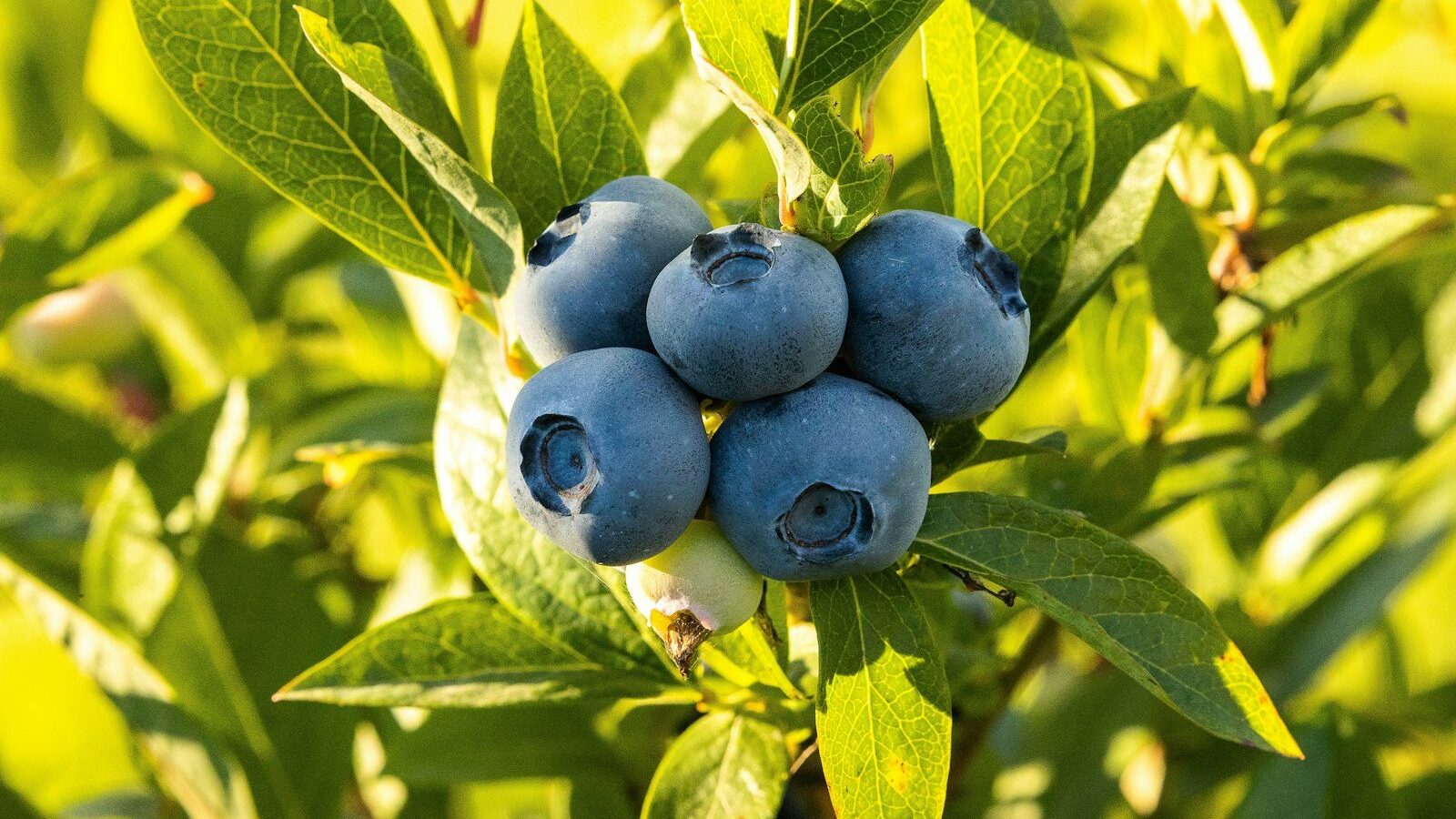
Blueberries are forgiving plants that fruit happily for a few years with almost no attention — which is exactly why so many backyard bushes drift into decline. Left unpruned, a blueberry bush gradually fills with a thicket of old, twiggy wood; the berries get smaller and fewer each year, ripening late and hiding inside a congested, disease-prone tangle. The fix is annual pruning built around one core idea: cane renewal. Blueberries fruit best on young, vigorous wood, so the job each winter is to steadily remove the oldest canes and encourage strong new ones, keeping the bush forever young. It’s not complicated, but the timing matters and so does knowing what to cut. This guide covers when to prune, the difference between training a young bush and renewing a mature one, the step-by-step technique, and the common mistakes that cost you berries.
Key Takeaways
- Prune in late dormancy: Late winter to early spring while the bush is leafless but the worst cold has passed — fat, round fruit buds are easy to see and spare.
- Renew the canes: Blueberries fruit best on young wood; each year remove a few of the oldest canes to make room for vigorous new ones.
- Wait a few years on young bushes: For the first 2–3 years, prune lightly and even remove flower buds to build a strong root system and framework.
- Aim for an open, balanced bush: Keep 6–12 well-spaced canes of mixed ages on a mature plant; cut out dead, weak, twiggy, and crossing wood.
- Know your buds: Plump, round buds are fruit; slender, pointed buds are leaves. Don’t strip off all the fruit buds.
- Biggest mistake: Never pruning at all — it leads to small berries and a worn-out, overgrown bush.
Why prune blueberries at all
Blueberries produce their best fruit on healthy wood that is roughly two to five years old. As canes age past that, they branch into ever-finer twigs that set lots of tiny berries the plant can’t size up properly. Meanwhile the crowded center shades out new growth and traps damp air that invites disease. Pruning solves all of this at once: by removing the oldest, least productive canes each year, you push the bush to throw up strong new shoots from the base, you open the center to light and air, and you concentrate the plant’s energy into fewer, larger, earlier-ripening berries. A well-pruned blueberry bush is more productive, healthier, and longer-lived — good ones crop well for 20 years or more.
When to prune blueberries
Prune while the bush is dormant and leafless, in late winter to early spring — after the coldest part of winter has passed but before new growth begins. In most regions that means roughly February into March, adjusting for your climate (later in cold zones, earlier in mild ones). Pruning at this stage has two big advantages: the bare branches make the structure easy to read, and the fat, rounded fruit buds stand out clearly against the slender pointed leaf buds, so you can prune deliberately and avoid stripping off your crop.
Avoid pruning in fall, which can stimulate tender new growth that winter cold will kill, and avoid heavy pruning once the bush has leafed out and is flowering. A little light cleanup right after harvest — removing an obviously dead or broken branch — is fine, but save the real structural pruning for the dormant season. If you’re in a very cold area, prune toward the end of the dormant window so fresh cuts aren’t exposed to the harshest freezes.
Pruning young vs. mature bushes
The first two to three years
It’s tempting to let a young blueberry fruit immediately, but holding it back early pays off enormously. For the first two, ideally three, years after planting, prune only lightly — remove any dead, damaged, weak, or low-lying twiggy growth — and rub or pinch off most or all of the flower buds. Sacrificing those first small crops directs the plant’s energy into building a deep root system and a sturdy framework of strong canes, which means far bigger harvests for the rest of the bush’s long life. By the third or fourth year, the plant is established and you transition to maintenance pruning.
Mature bushes (renewal pruning)
From year four or five onward, you prune for cane renewal every winter. The goal is a balanced bush of 6 to 12 main canes of mixed ages — some young, some in their productive prime, a couple older. Each year you remove one or two of the very oldest canes (often the thick, gray, peeling, heavily twiggy ones) right down to the base or to a strong low shoot. This makes room and triggers vigorous new canes to grow from the crown, which become next year’s producers. By always rotating out the oldest wood, you keep the whole bush perpetually in its productive prime — no cane ever gets too old.
How to prune, step by step
- Remove the dead and damaged first. Cut out any dead, diseased, broken, or winter-killed wood, plus low branches that touch the ground (these stay wet and pick up disease). This alone clears up the picture.
- Take out the oldest canes. Identify the one or two oldest, least productive canes — thick, gray, peeling bark and a mass of fine twiggy growth with few strong buds — and cut them off at ground level or back to a vigorous low side shoot.
- Thin the crowded middle. Remove weak, spindly, crossing, or inward-growing shoots to open up the center. You want light and air reaching the heart of the bush. Aim for an open, vase-like shape.
- Tidy the fruiting wood. On the canes you keep, trim back excessively twiggy tips. Each twig crowded with many small fruit buds will produce small berries; shortening these so fewer, larger berries form improves size. But don’t remove all the plump fruit buds — leave a healthy crop’s worth.
- Step back and check balance. Aim to leave 6–12 strong, well-spaced canes of varied ages. Overall you’ll typically remove around 20% or so of the wood on a healthy mature bush each year.
Use sharp, clean bypass pruners for small wood and loppers for thick old canes, making cuts close to the base or just above an outward-facing bud. Disinfect blades if you’ve cut diseased wood. For help choosing pruning tools, see our Tools & Gear hub.
Identifying fruit buds vs. leaf buds
This is the one skill that turns careful pruning into confident pruning. On dormant blueberry wood, the buds come in two clearly different shapes. Fruit buds are plump, round, and fat — usually clustered toward the tips of last year’s growth — and each will open into a cluster of flowers and then berries. Leaf buds are small, slender, and pointed, found lower along the stems. When you shorten a twiggy branch, you’re choosing how many fat fruit buds to leave: a vigorous cane covered in fruit buds will set more berries than it can size up, so light tipping to reduce the bud load actually increases berry size. The mistake to avoid is hacking back so hard that you remove nearly all the fruit buds and leave yourself with a leafy, fruitless bush. For more seasonal fruit-garden care, our Outdoor Living hub has related guides.
Common pruning mistakes
Never pruning
The biggest mistake of all. An unpruned bush slowly fills with old twiggy wood and produces ever smaller berries on a congested, disease-prone plant. Even a basic annual cane renewal transforms an aging bush.
Letting a young bush fruit too soon
Allowing heavy crops in years one and two stunts root and cane development. Remove most early flower buds for the first couple of years and the bush rewards you with far bigger harvests later.
Removing too many fruit buds
Over-enthusiastic tipping that strips off the fat round fruit buds leaves you with a leafy, low-yield bush. Learn to tell fruit buds from leaf buds and leave a sensible crop.
Pruning at the wrong time
Fall pruning invites winter-killed growth; pruning a leafed-out, flowering bush wastes energy and removes fruit. Stick to the late-winter dormant window.
Frequently Asked Questions
When should I prune my blueberry bushes?
Prune in late winter to early spring while the bush is fully dormant and leafless, after the harshest cold has passed but before new growth begins — usually around February into March. The bare branches make the structure easy to read, and the fat, round fruit buds are easy to spot and spare.
How do I prune an old, overgrown blueberry bush?
Rejuvenate it through cane renewal. Each winter, remove the one or two oldest, thickest, gray, twiggy canes down to the base, plus all dead and crossing wood, to open the center and trigger strong new canes. With a severely neglected bush, spread heavy renewal over two or three years rather than cutting everything at once.
How can I tell fruit buds from leaf buds on a blueberry?
Fruit buds are plump and round, usually clustered near the tips of last year’s growth, and each opens into a cluster of flowers and berries. Leaf buds are small, slender, and pointed, found lower on the stems. Knowing the difference lets you tip back twigs for bigger berries without removing your whole crop.
Should I let a new blueberry bush fruit the first year?
No — it’s best to remove most or all of the flower buds for the first two, ideally three, years. Sacrificing those small early crops channels energy into building strong roots and canes, giving you much larger, healthier harvests for the rest of the bush’s long productive life.
How many canes should a mature blueberry bush have?
Aim for roughly 6 to 12 strong, well-spaced main canes of mixed ages — some young, some in their productive prime, a few older. By removing one or two of the very oldest canes each year and encouraging fresh ones, you keep the whole bush perpetually young and productive.
Blueberry pruning comes down to a simple rhythm: hold a young bush back to build its strength, then renew an established one every winter by rotating out the oldest canes and opening the center to light. Learn to read the fat fruit buds, prune in the dormant season, and don’t be afraid to cut — that yearly trim is what keeps the berries big, the harvest early, and the bush thriving for decades.