

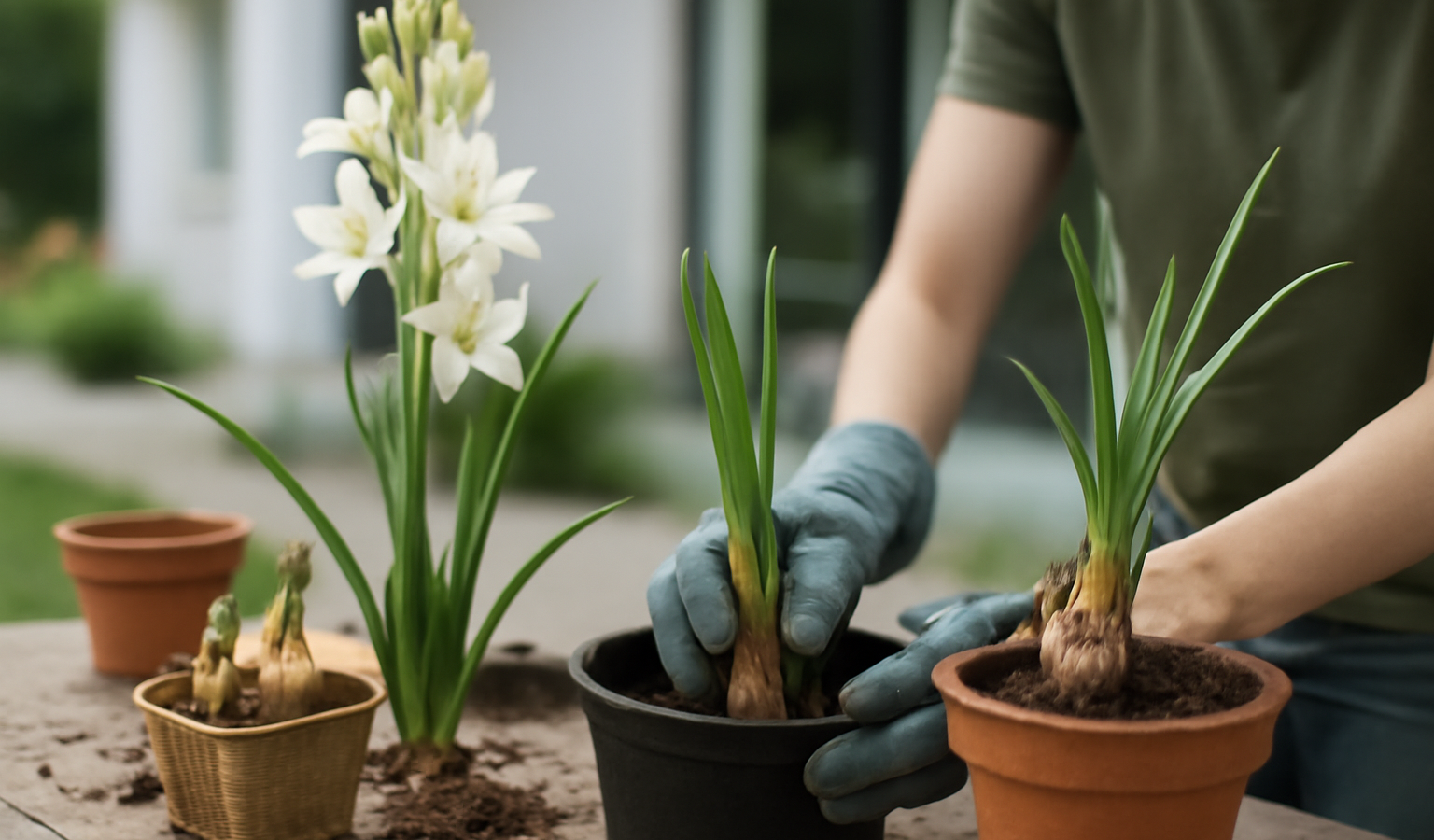
Tuberose (Agave amica, long sold as Polianthes tuberosa) is grown for one reason above all others: the perfume. On a warm evening a single stalk of those waxy white florets can scent an entire patio, which is why the bulb has been a staple of the cut-flower and fragrance trade for centuries. The plant itself is undemanding once it has heat, sun, and a long growing season. The catch for most US gardeners is that tuberose is only winter-hardy in USDA zones 8–10, so in colder regions you grow it like a dahlia or gladiolus: plant the tubers in spring, enjoy late-summer bloom, then lift and store them before the ground freezes. This guide walks through planting depth and spacing, the watering and feeding rhythm that drives those tall flower spikes, how to coax the strongest fragrance, and exactly how to lift and overwinter the bulbs so they multiply year after year.
In this guide
Key Takeaways
- Plant in late spring once soil is reliably above 60°F — tuberose hates cold, wet ground and rots in it.
- Set tubers 2 inches deep, 6–8 inches apart in full sun (6–8 hours) and rich, well-drained soil.
- Expect bloom 90–120 days after planting — often August into October — so start early or pre-sprout indoors in short-season zones.
- Hardy only in zones 8–10. In zones 3–7, lift the tubers after the first frost and store them dry and frost-free over winter.
- Fragrance peaks at dusk; plant near a path, patio, or doorway and cut stems just as the lowest florets open.
Meet the Plant: What Tuberose Wants
Tuberose grows from a clumping tuber that sends up a grassy fan of strappy, bright-green leaves, followed in late summer by a slender flower spike that can reach 18 to 40 inches tall. Each spike carries a column of tubular florets that open from the bottom up over two to three weeks. The common heirloom ‘Mexican Single’ has simple, star-shaped flowers and arguably the cleanest, strongest scent. ‘The Pearl’ (also sold as ‘Double Pearl’) is a fully double, rose-like form that is shorter, heavier, and often needs staking but is the classic florist’s tuberose. There are also pink-flushed selections like ‘Pink Sapphire,’ though white remains the standard.
The single non-negotiable requirement is heat plus a long season. Tuberose needs roughly three to four months of warm growing time to flower, and it simply will not bloom if it is planted too late or grown in a cool, shaded spot. Think of it as a sun-worshipper that resents anything cold and damp around its roots.
When and Where to Plant
Plant outdoors in late spring, after all danger of frost has passed and the soil has warmed to at least 60°F — the same window you would use for dahlias, cannas, or sweet potato slips. In the warm South (zones 8–10) that may be late March to April; in the North, hold off until late May or even early June. Tubers set into cold, wet spring soil sulk and frequently rot before they ever root.
Choose the sunniest spot you have. Tuberose wants full sun — six to eight hours of direct light minimum. Less light means floppy foliage and few or no flowers. The soil should be fertile and, above all, well-drained: a sandy loam enriched with compost is ideal. If your ground is heavy clay, plant in raised beds or large containers instead, because standing water is the fastest way to kill the tubers. Aim for a slightly acidic to neutral pH around 6.0–7.0.
Pre-Sprouting for Short Seasons
If you garden in zone 6 or colder, give the plant a head start. About four to six weeks before your last frost, pot the tubers in containers and keep them indoors near a bright window or under lights at room temperature. By the time the garden warms up, you will have rooted, leafing plants that bloom weeks earlier than tubers planted cold into the ground. This single trick is often the difference between flowers and a no-show in northern gardens.
How to Plant Tuberose Bulbs
Tuberose tubers are usually sold as small clusters or “bulbs.” Larger offsets bloom the first year; tiny ones may need a season to size up before flowering. Plant them like this:
- Loosen the bed 10–12 inches deep and work in 2–3 inches of compost. Mix a balanced granular fertilizer into the planting zone.
- Set each tuber 2 inches deep, pointed growth tip facing up. In heavy soil, plant a touch shallower; in sandy soil, slightly deeper.
- Space tubers 6–8 inches apart. For a strong scent column, plant in clusters of three to five rather than as lonely singles.
- Firm the soil and water in once, then back off on watering until you see green shoots emerge — usually two to four weeks later.
In containers, use a pot at least 10–12 inches wide with drainage holes and a free-draining potting mix. Three to five tubers per large pot makes a fragrant, portable display you can move onto a deck or by the front door.
Watering, Feeding, and Summer Care
Once shoots appear and growth is active, tuberose is a thirsty, hungry plant. Water deeply and regularly through the growing season — roughly an inch a week, more in heat and in containers — keeping the soil evenly moist but never waterlogged. The cardinal rule still applies: consistent moisture during active growth, but sharp drainage so the tubers never sit in standing water.
Feed for flowers. Once growth is underway, switch to a fertilizer higher in phosphorus and potassium than nitrogen — a bloom-booster formula or something like a 5-10-10 — applied every three to four weeks. Too much nitrogen gives you lush leaves and no spikes. A 2-inch mulch of shredded bark or compost conserves moisture and keeps roots cool through the hottest weeks.
Tall single varieties and the heavy double ‘Pearl’ often flop under their own weight, especially after rain. Stake the flower spikes with thin bamboo and soft ties as they elongate. Tuberose has few serious pests; the main troublemakers are spider mites in hot, dry spells (rinse the foliage and treat with insecticidal soap if needed) and rot from overwatering, which prevention — not cure — solves. If you are also planting saffron crocus or other tender bulbs, the same warm-soil, sharp-drainage logic applies across the board.
Getting the Most Fragrance
Tuberose earns its place purely on scent, so position and timing matter. The fragrance intensifies dramatically at dusk and into the night, when the flowers release perfume to attract night-flying moths. Plant where you will actually be in the evening: alongside a patio, beside a path, under a bedroom window, or in pots flanking a doorway. A cluster of several plants concentrates the scent far better than scattered singles.
For cut flowers, harvest when the lowest one or two florets on the spike have just opened. Cut in the cool of morning, plunge stems immediately into water, and the remaining buds will continue opening indoors over a week or more — perfuming a room the whole time. The ‘Mexican Single’ generally gives the cleanest, most penetrating scent, while ‘The Pearl’ offers the showy double florist’s look.
Lifting and Storing Tubers for Winter
In zones 8 and warmer, leave tuberose in the ground year-round; mulch it for winter and divide the clumps every few years when bloom thins. In zones 3 through 7, you must lift and store the tubers, exactly as you would for dahlias and cannas. Here is the routine:
- Wait for the first light frost to blacken the foliage, or for leaves to yellow naturally in fall. This signals the plant to move energy down into the tubers.
- Cut the foliage back to a few inches, then carefully dig a wide circle around the clump with a fork to avoid spearing the tubers.
- Lift, shake off loose soil, and cure the clumps in a dry, airy, frost-free spot for one to two weeks until the outer skin and remaining stems are dry.
- Separate the offsets — the small new tubers around the parent — if you want to multiply your stock. Larger ones bloom next year; tiny ones grow on for a season.
- Store dry and frost-free at roughly 50–60°F in mesh bags, paper sacks, or open boxes of dry peat, vermiculite, or sawdust. Keep them in a dark, ventilated spot and check occasionally, discarding any that turn soft or moldy.
Replant the following late spring once the soil warms, and a healthy clump will return larger and more floriferous each year. Tuberose is a natural multiplier, so within a few seasons one purchase becomes a generous, shareable patch.
Troubleshooting Common Problems
No flowers, just leaves? The usual causes are too little sun, too short a season, or too much nitrogen. Move to full sun, pre-sprout indoors next year, and feed for bloom rather than foliage.
Tubers rotted before sprouting? You planted into cold, wet soil. Wait for 60°F-plus soil and improve drainage with compost or raised beds.
Weak, late spikes? Crowded or undersized tubers, or a cool summer. Lift, divide, and replant the largest offsets, and consider container culture so you can move pots into the warmest microclimate. For more shade-tolerant fragrance options, compare notes with our guide to growing fragrant daphne, and browse the full Plants & Flowers hub for companion plantings.
Frequently Asked Questions
How long does tuberose take to bloom from planting?
Typically 90 to 120 days after planting, which usually means late summer into fall (August–October) for spring-planted tubers. In short-season climates, pre-sprout the tubers indoors four to six weeks early so they have time to flower.
Is tuberose perennial or do I replant every year?
It is a tender perennial. In USDA zones 8–10 it overwinters in the ground and returns each year. In zones 3–7 you lift the tubers after frost, store them dry and frost-free over winter, and replant in late spring.
Why won’t my tuberose flower?
The most common reasons are insufficient sun, too short a warm season, or excess nitrogen fertilizer. Give it full sun, start it early, and feed with a low-nitrogen, high-phosphorus formula to push flower spikes instead of leaves.
How deep and far apart should I plant tuberose bulbs?
Set the tubers about 2 inches deep with the growth tip up, spaced 6 to 8 inches apart. Plant in clusters of three to five for a stronger scent column and better visual impact.
Can I grow tuberose in pots?
Yes, and it is ideal for cold climates. Use a pot at least 10–12 inches wide with drainage holes and a free-draining mix, plant three to five tubers, and move the container into your warmest, sunniest spot. Pots also make it easy to bring the fragrance onto a deck or porch.