

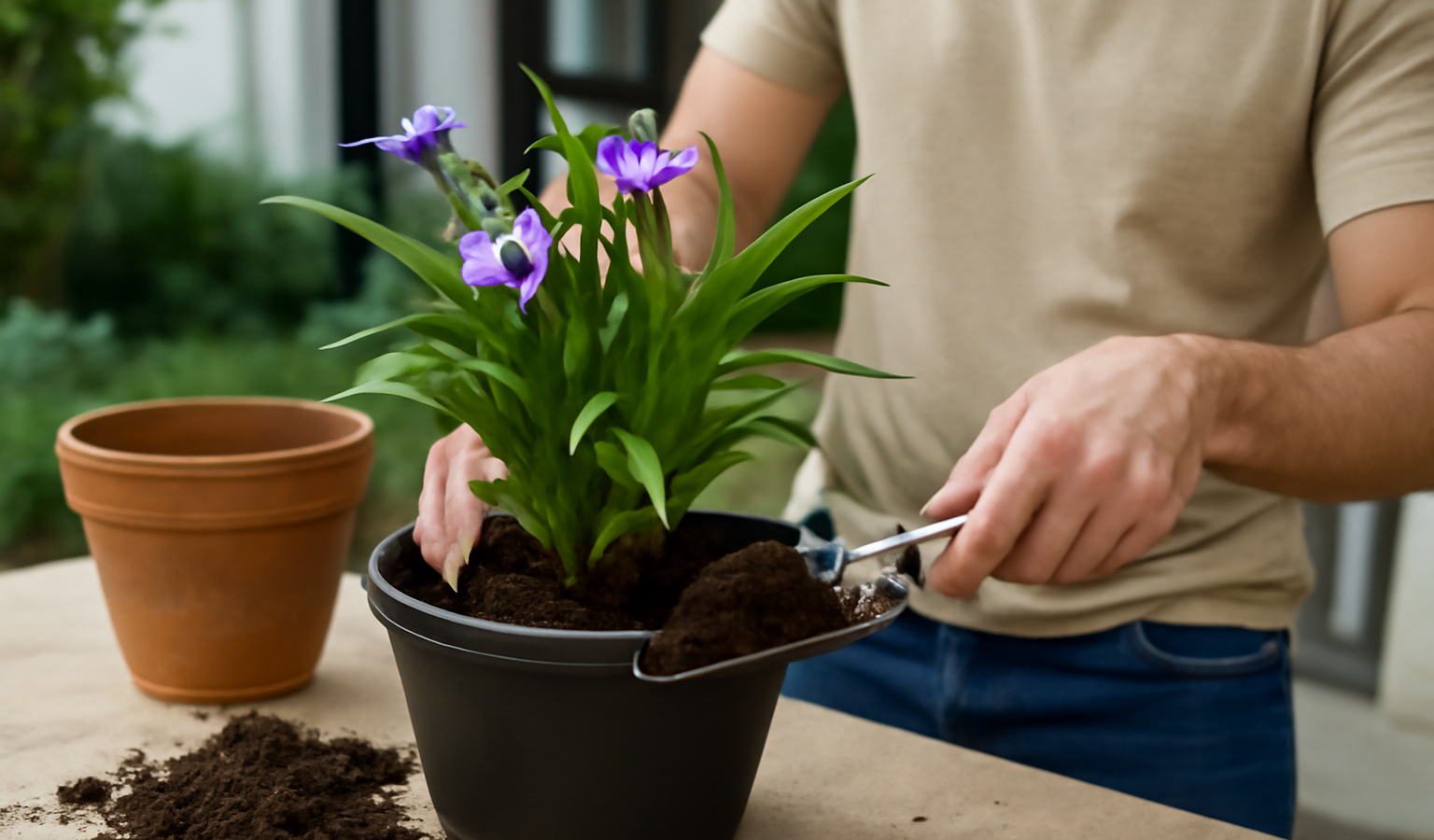
Spiderwort (Tradescantia) is one of the easiest, most generous perennials you can grow — a tough North American native that produces a steady succession of three-petaled flowers in violet, purple-blue, magenta, or white from late spring well into summer. Each individual bloom lasts only a single morning, closing by afternoon heat, but the plant opens a fresh wave of flowers day after day for weeks on end against grassy, arching, strap-like foliage. It thrives in sun or part shade, shrugs off poor soil, attracts bees and other pollinators, and asks almost nothing of the gardener beyond a midsummer haircut. This guide covers hardiness zones, light and soil, planting and spacing, watering, the all-important summer cutback that resets the plant, dividing, and the few problems — mainly flopping and aggressive self-seeding — to keep in check.
Key Takeaways
- Zones: Hardy in USDA zones 4–9; a vigorous, cold-hardy native perennial.
- Light: Full sun to part shade — sun gives the most flowers, light afternoon shade keeps blooms open longer in heat.
- Soil & water: Adaptable to most soils; prefers consistently moist, average-to-rich soil and tolerates clay and damp sites.
- Bloom: Late spring through summer; each flower lasts a morning, but the plant reblooms in waves for weeks.
- Key task: Cut the whole plant back hard after the first flush gets leggy to spark fresh foliage and a second bloom.
Hardiness and Size
Spiderwort is reliably hardy across USDA zones 4 through 9, thriving from the cold north well into the warm South. The most commonly grown garden plants are hybrids in the Tradescantia Andersoniana Group, bred from native species, and they carry the toughness and adaptability of their wild parents. These are clump-forming herbaceous perennials that die back to the ground in winter and return reliably each spring, expanding steadily into substantial clumps over a few seasons.
In size, garden spiderwort typically reaches one to two and a half feet tall and one to two feet wide, forming a fountain of narrow, arching, grass-like leaves topped with clusters of buds that open a few at a time. Popular cultivars give you a range of colors and habits: ‘Sweet Kate’ (also sold as ‘Blue and Gold’) pairs electric chartreuse foliage with deep blue-purple flowers, ‘Concord Grape’ offers rich purple blooms on blue-green leaves, and ‘Osprey’ is a clean white with a fluffy blue center. All share the same easygoing nature and weeks-long bloom.
Light and Soil
Spiderwort is wonderfully flexible about light, growing well in full sun through partial shade. Full sun produces the most flowers and the sturdiest, most compact growth, but because individual blooms close in the heat of the afternoon, a spot with morning sun and light afternoon shade can actually keep the flowers open and looking good a little longer on hot days. In deep shade the plant survives but grows leggier and blooms less, so aim for at least a half day of sun for the best show. In the hot South, afternoon shade is genuinely helpful; in the cool North, give it all the sun you can.
Soil is rarely a problem for this adaptable native. Spiderwort grows in everything from sandy loam to heavy clay and tolerates poor soil better than most perennials, though it performs best in average-to-rich, consistently moist, well-drained ground enriched with a little organic matter. It naturally favors damp conditions and will happily take a low, wet spot or the edge of a rain garden where many perennials would rot — a useful trait for problem sites. It is not fussy about pH, succeeding across a broad acidic-to-neutral range. The main thing to avoid is hot, dry, impoverished soil that causes early dormancy.
Planting
Plant spiderwort in spring after the last frost, or in early fall in milder zones, giving the roots time to establish. Container plants transplant easily, and bare-root divisions take hold quickly. Choose a site with the sun and moisture described above, dig a hole as deep as the root ball and about twice as wide, mix some compost into the backfill, set the crown level with the soil surface, firm gently, and water in well.
Space plants about twelve to eighteen inches apart — the clumps fill out steadily, and a little breathing room improves airflow and keeps the planting from becoming a dense, floppy mat. Spiderwort looks best planted in informal drifts or tucked among other perennials that can help hold up its arching stems. Mulch around the base with two to three inches of organic mulch to conserve moisture and suppress weeds, keeping it off the crown. Water newly planted spiderwort regularly through its first season. It combines beautifully with other sun-and-moisture perennials; for damp-site companions, see our Water Gardens & Ponds selections for pond and rain-garden edges.
Watering and Feeding
Spiderwort likes consistent moisture and rewards it with longer, fuller bloom. Keep the soil evenly moist, especially through the first season and during summer dry spells; in the absence of rain, water deeply once or twice a week. The plant signals dryness clearly — in hot, dry conditions the foliage browns and the whole plant may go dormant early, collapsing into a tired heap by midsummer. This is not fatal (it usually resprouts when cool, moist weather returns), but it is unsightly, and it is one of the main reasons to do the summer cutback described in the next section. Plants in damp or partly shaded sites need far less supplemental water.
Feeding needs are minimal. Spiderwort is a vigorous grower that does fine in average soil, so an annual spring topdressing of compost or a single light application of balanced fertilizer is all it needs. Go easy on nitrogen — overfeeding produces lush, weak, floppy foliage and fewer flowers. In rich soil with plenty of moisture, you may not need to feed at all. The plant’s real fuel is steady moisture, not fertilizer.
The Summer Cutback
The single most useful technique for growing great-looking spiderwort is the hard summer cutback. After the first flush of bloom winds down — typically by midsummer — the plant often becomes leggy, floppy, and tired, the foliage browning and the flowers thinning out. Rather than tolerate this slump, cut the entire plant back hard, to just a few inches above the ground. It looks drastic, but spiderwort takes it in stride. Water and lightly feed after cutting, and within a few weeks the clump pushes out a flush of fresh, compact green foliage, often followed by a welcome second round of flowers in late summer or fall.
This single cut solves the plant’s two biggest cosmetic faults — midsummer flop and early dormancy — and keeps the clump neat and floriferous into autumn. You can also shear plants more lightly to deadhead and tidy them if you prefer a gentler touch, but the full cutback gives the most dramatic rejuvenation. Cutting back before seed sets has the added benefit of curbing self-seeding, which spiderwort does freely.
Dividing and Propagation
Spiderwort forms vigorous clumps that benefit from division every two to three years to maintain vigor, control their spread, and produce new plants — and division is so easy it is the standard way to propagate them. The best time is early spring as new growth emerges, or early fall in milder climates. Dig up the clump, and either pull it apart by hand or cut it with a sharp spade into sections, each with healthy roots and several shoots. Because spiderwort is so robust, even small divisions establish readily.
Replant divisions immediately at the same depth, water in well, and keep them moist while they take hold. Spiderwort also roots easily from stem cuttings and grows readily from seed — in fact it self-seeds enthusiastically, and unwanted seedlings can pop up around the garden. If you want to limit this, cut plants back before they set seed (the summer cutback does this neatly) and pull volunteers while young. For more on managing vigorous clump-forming perennials through division, our guide to growing Joe Pye weed covers similar techniques.
Seasonal Care and Overwintering
Through the season, spiderwort care comes down to keeping it watered, doing the midsummer cutback, and pulling any unwanted self-sown seedlings. There is no need to deadhead individual flowers, since each lasts only a morning and the plant produces a constant supply of fresh buds. After fall frosts knock the plant down, the foliage yellows and collapses, and the plant heads into winter dormancy.
Cut the dead foliage back to a few inches in late fall, or leave it until early spring before new growth begins — either works. As a hardy native, established spiderwort needs no winter protection within its zones; it overwinters easily and returns reliably from the crown each spring, often earlier than many other perennials. A light mulch is helpful for first-year plants and new divisions in the coldest zones but is otherwise optional. The clump expands a little more each year, which is your cue to divide every few seasons.
Common Problems and Pests
Flopping, leggy stems. The most common complaint. Caused by too much shade, overly rich soil, or excess nitrogen, and worsened by midsummer fatigue. Grow in more sun, ease off feeding, plant among supporting perennials, and do the hard summer cutback to reset the plant.
Aggressive self-seeding. Spiderwort seeds around freely in moist soil and can become weedy if ignored. Cut plants back before seed sets and pull volunteers while small to keep it in bounds.
Early dormancy and browning. In hot, dry sites the plant may brown out and collapse by midsummer. Keep it watered, give it afternoon shade in hot climates, and cut it back hard to bring on fresh growth.
Few flowers. Usually too much shade or too much nitrogen. Move the plant into more sun and feed sparingly. Remember that even healthy plants close their blooms by afternoon — that is normal, not a problem.
Pests and disease. Spiderwort is largely trouble-free, but watch for aphids and spider mites on stressed plants, and occasional rust or leaf spot in humid, crowded conditions. Good spacing, airflow, and the summer cutback prevent most issues; deer and rabbits usually leave it alone.
For more easygoing native perennials to plant alongside spiderwort, browse the Plants & Flowers hub.
Frequently Asked Questions
Why do my spiderwort flowers close in the afternoon?
That is completely normal. Each spiderwort bloom lasts only a single morning and closes in the afternoon heat, but the plant opens a fresh wave of flowers day after day for weeks. Morning sun with afternoon shade keeps the blooms open a little longer on hot days.
Should I cut spiderwort back in summer?
Yes. When the first flush of bloom fades and the plant gets leggy and floppy in midsummer, cut the whole clump back to a few inches. It will quickly regrow fresh, compact foliage and often a second round of flowers, and it stays much tidier.
Is spiderwort invasive?
It is not classified as invasive, but it self-seeds freely and spreads steadily, so it can become weedy if neglected. Cut it back before seed sets, pull volunteer seedlings while young, and divide the clumps every few years to keep it in bounds.
How much sun does spiderwort need?
It grows in full sun to part shade. Full sun gives the most flowers and sturdiest plants, while light afternoon shade is helpful in hot climates and keeps the morning blooms open longer. Aim for at least a half day of sun for the best display.
When and how do I divide spiderwort?
Divide every two to three years in early spring as new growth emerges, or in early fall in mild climates. Dig up the clump and pull or cut it into sections, each with roots and several shoots, then replant immediately and keep moist until established.