

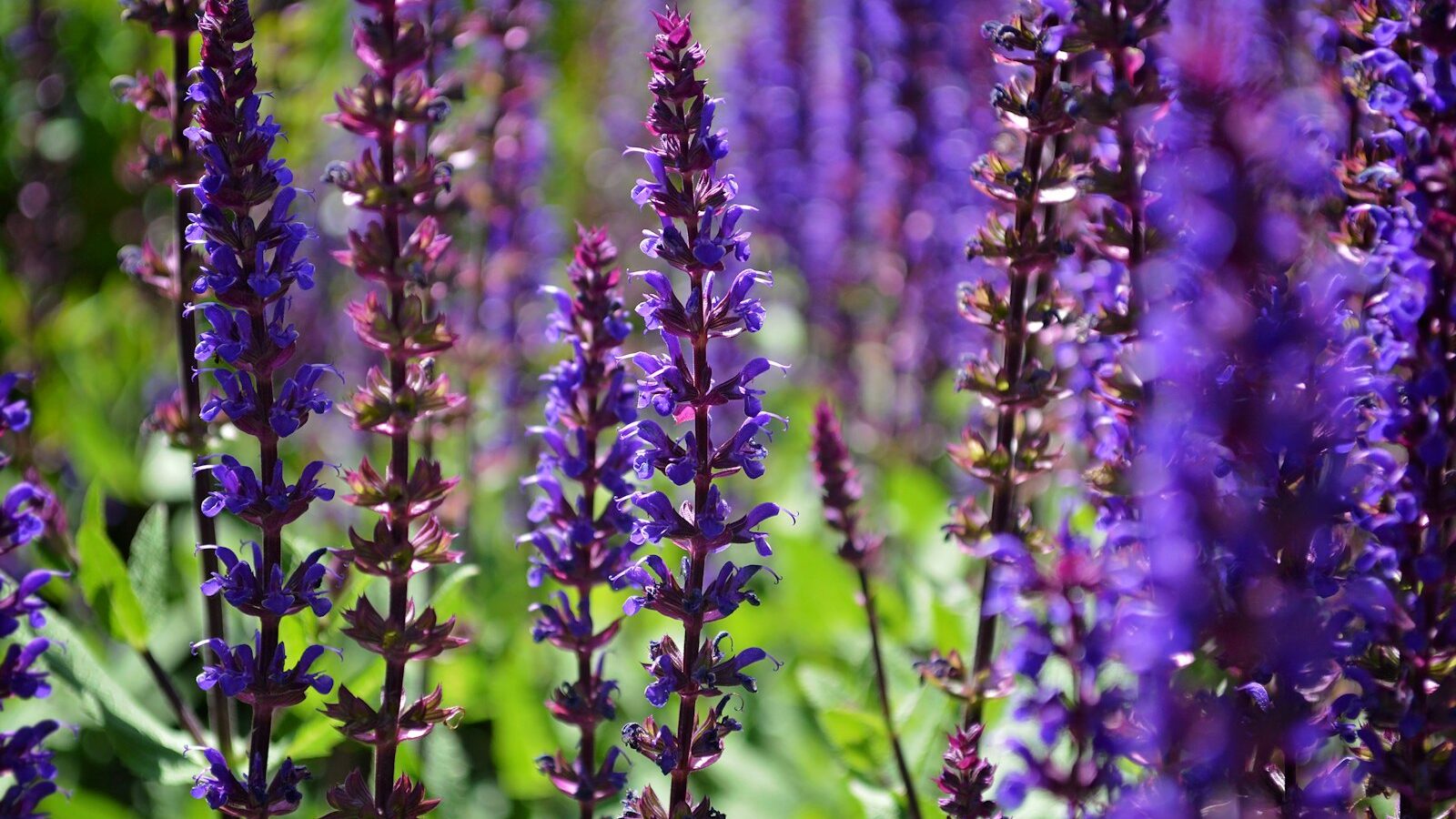
Salvia is one of the hardest-working plants you can put in a sunny garden: it shrugs off heat and drought, pumps out spires of color from late spring well into fall, and is practically a magnet for bees and hummingbirds. The genus is huge, covering everything from culinary sage in the herb bed to ornamental perennials like ‘May Night’ and tender annuals like scarlet sage. Once you understand a few basics — sharp drainage, full sun, and a well-timed cut-back — salvia is about as low-maintenance as a flowering plant gets.
Salvia quick facts
- Full sun & sharp drainage — they rot in wet soil
- Drought- & heat-tolerant once established
- Cut back/deadhead for a second flush
- Deer-resistant pollinator magnet
- Both perennial & annual types available
As an Amazon Associate we earn from qualifying purchases.
Meet the salvias: annual, perennial, ornamental, and culinary
“Salvia” is the botanical name for sage, and the genus contains close to a thousand species. For gardening purposes it helps to sort them into a few practical buckets, because how you treat a plant depends a lot on which group it belongs to. The good news is that they all share the same broad preferences — sun, good drainage, and a little restraint with the watering can.
Perennial salvias
Hardy perennial salvias come back year after year in roughly USDA zones 4–9, depending on the variety. These are the workhorses of the ornamental border: woodland sage (Salvia nemorosa) and its hybrids like ‘May Night’, ‘Caradonna’, and ‘East Friesland’ form tidy clumps topped with violet-blue spikes. They are reliably winter-hardy across most of the US and divide easily, making them the best choice if you want a permanent fixture.
Annual and tender salvias
Some of the showiest salvias are tender perennials grown as annuals in cooler climates. Scarlet sage (Salvia splendens), mealycup sage (Salvia farinacea, e.g. ‘Victoria Blue’), and the hummingbird favorite ‘Black and Blue’ (Salvia guaranitica) fall here. In zones 8–10 many of these overwinter; further north you replant each spring or take cuttings. They tend to bloom non-stop from planting until frost.
Culinary sage
Common kitchen sage (Salvia officinalis) is the same genus but grown for its aromatic gray-green leaves. It is a woody, shrubby perennial hardy to about zone 4, and while its flowers are loved by bees, most cooks pinch the blooms off to keep the leaves flavorful. Treat it like an ornamental salvia in terms of soil and sun and you’ll have an evergreen herb that lasts for years. For more on building a balanced bed around plants like these, see our plant & flower care guide.
Sun, soil, and the drainage that makes or breaks them
If there is one rule that governs salvia success, it’s this: they need sun and sharp drainage. Nearly every salvia is happiest in full sun — at least six hours of direct light, and ideally eight. In too much shade they grow leggy, flop, and flower poorly. A few species tolerate light afternoon shade in very hot southern climates, but as a rule, give them the brightest spot you have.
Why soggy soil is the enemy
Most salvias evolved in dry, rocky, or Mediterranean conditions, so they will rot in wet, heavy soil — especially over winter. Cold, waterlogged clay is the number-one killer of perennial salvias. The fix is drainage, not richness:
- Amend heavy clay with grit, coarse sand, or fine gravel to open it up
- Plant on a slight mound or slope where water can run off
- Raised beds and containers are excellent for problem soils
- Avoid overly rich, fertilizer-heavy beds, which produce floppy growth and fewer flowers
Salvias actually prefer lean to average soil. A neutral to slightly alkaline pH suits them, and they ask for very little feeding. If your soil is poor, a single light spring application of a slow-release perennial fertilizer is plenty — more than that just encourages leaves at the expense of blooms.
Planting and watering
Spring is the ideal time to plant salvia, once the danger of hard frost has passed and the soil has begun to warm. Fall planting works in mild-winter regions, giving roots time to settle before summer heat. You can start from nursery transplants — the easiest route — or grow annual types from seed indoors 6–8 weeks before your last frost. Browse salvia plants to compare varieties for your zone.
How to plant
- Space plants according to their mature size — typically 12–24 inches apart for perennials
- Set the crown at soil level; planting too deep invites rot
- Water in well at planting to settle the roots
- Apply a thin layer of mulch, keeping it away from the crown to prevent moisture buildup
Watering once established
For the first season, water newly planted salvias regularly so they develop deep roots — roughly once or twice a week if rain is scarce. After that first year, back off dramatically. Established salvias are genuinely drought- and heat-tolerant and prefer to dry out between waterings. Overwatering causes far more deaths than underwatering. In most climates, mature plants need supplemental water only during prolonged dry spells. This thriftiness makes them ideal for water-wise gardens; see more options in our roundup of drought-tolerant plants.
Deadheading, cutting back, and dividing
A little timely pruning is the secret to keeping salvia blooming. Most salvias will flower once heavily, then slow down — but if you intervene, you can coax a strong second flush and often more after that.
Deadhead for rebloom
As individual flower spikes fade, snip them off just above a set of leaves or a side shoot. This redirects the plant’s energy from setting seed back into producing new flowers. For perennial nemorosa types, once the bulk of the first flush is spent, shear the whole plant back by about a third to a half. Within a few weeks it will rebound with fresh foliage and a wave of new spikes.
Seasonal cut-back
In late fall or early spring, cut perennial salvias down to a few inches above the ground to tidy them and make room for new growth. Many gardeners leave the stems standing over winter to shelter beneficial insects and provide structure, then cut back in spring. Woody types like culinary sage and Russian sage respond best to a spring trim once new buds appear — avoid hard pruning into old bare wood.
Dividing perennials
Clumping perennial salvias benefit from division every three to four years, when the center starts to thin or the clump outgrows its space. Dig the plant in early spring or fall, split the root ball into sections with a spade or sharp knife, and replant the vigorous outer pieces. Division rejuvenates tired plants and is a free way to spread salvia around the garden or share with neighbors.
Drought, heat, deer, and pollinators
This is where salvia really earns its keep. The same traits that make it tough also make it one of the most wildlife-friendly plants you can grow.
Tough in heat and drought
Once their roots are established, salvias laugh at summer heat and dry spells that would wilt thirstier plants. Their aromatic, often hairy or silvery foliage helps conserve moisture, which is exactly why they pair so well with other low-water perennials in a sun-baked border.
Deer- and rabbit-resistant
The aromatic oils in salvia leaves taste and smell unpleasant to deer and rabbits, so they’re usually left alone even where browsing pressure is high. No plant is completely deer-proof, but salvia ranks among the most reliably resistant ornamentals — a big reason it’s a staple in rural and woodland-edge gardens.
A pollinator magnet
Salvia’s tubular flowers are tailor-made for bees, butterflies, and hummingbirds. Blue and purple types draw bumblebees and honeybees in droves, while red-flowered varieties like scarlet sage and ‘Black and Blue’ are irresistible to hummingbirds. Because the genus blooms over such a long season, salvia provides steady nectar from spring through fall. Plant it alongside other nectar-rich favorites from our guide to the best plants for pollinators, and consider pairing it with catmint, which thrives in the same lean, sunny conditions.
Popular types to know
With so many salvias available, a short shortlist helps you choose. Here are some standout, widely available varieties:
- ‘May Night’ (Salvia nemorosa) — a Perennial Plant of the Year winner with deep indigo-violet spikes; compact, hardy, and a bee favorite.
- ‘Caradonna’ — striking dark purple stems and violet flowers; upright and architectural.
- ‘Hot Lips’ (Salvia microphylla) — playful bicolor red-and-white blooms that shift with the season; a long-blooming tender perennial.
- Scarlet sage (Salvia splendens) — bold red annual spikes that hummingbirds love; great for containers and bedding.
- ‘Black and Blue’ (Salvia guaranitica) — cobalt-blue flowers on tall stems; a tireless hummingbird draw.
- ‘Victoria Blue’ (Salvia farinacea) — silvery-blue mealycup sage, excellent for cutting and drying.
A quick note on Russian sage (Perovskia atriplicifolia, now reclassified as Salvia yangii): it looks and behaves like a salvia, with airy lavender-blue clouds of bloom on silver stems. It loves the same lean, dry, sunny conditions and is wonderfully drought-tolerant, but it grows much larger and woodier — give it space and a spring cut-back rather than the shearing you’d give a nemorosa.
Growing salvia in containers
Salvia is a natural for pots, especially the tender and annual types. A container lets you control drainage perfectly — the one thing salvia cares most about — and lets gardeners in cold zones overwinter tender varieties indoors or in a sheltered spot.
- Choose a pot with generous drainage holes and use a free-draining potting mix, ideally cut with extra perlite or grit
- Place containers in full sun and don’t crowd plants
- Let the top inch or two of mix dry between waterings; pots dry faster than beds, so check often in heat
- Feed lightly — a diluted liquid feed every few weeks during active growth is plenty
- Deadhead regularly to keep container salvias blooming and tidy
Pair an upright salvia with trailing companions for a classic “thriller, filler, spiller” combination, and you’ll have a pollinator-friendly pot that performs all season with almost no fuss.
Frequently asked questions
Is salvia an annual or a perennial?
Both, depending on the type and your climate. Hardy perennial salvias like ‘May Night’ return each year in roughly zones 4–9, while tender types such as scarlet sage and ‘Black and Blue’ are usually grown as annuals in cold regions but may overwinter in zones 8–10.
Why is my salvia dying or rotting?
The most common cause is wet soil. Salvias rot in heavy, soggy ground, especially over winter. Improve drainage with grit, plant on a mound or in a raised bed or container, and water less — established salvias prefer to dry out between waterings.
How do I get my salvia to bloom again?
Deadhead spent spikes by cutting just above a leaf node, and once the first flush fades shear perennial types back by a third to a half. This redirects energy into a fresh flush of flowers within a few weeks.
Do deer eat salvia?
Rarely. The aromatic oils in salvia foliage deter deer and rabbits, making it one of the more reliably deer-resistant ornamentals. No plant is completely deer-proof, but salvia is a safe bet in browsing-heavy areas.
What pollinators does salvia attract?
Bees, butterflies, and hummingbirds. Blue and purple salvias draw bumblebees and honeybees, while red-flowered varieties are especially attractive to hummingbirds. Its long bloom season provides nectar from spring through fall.