

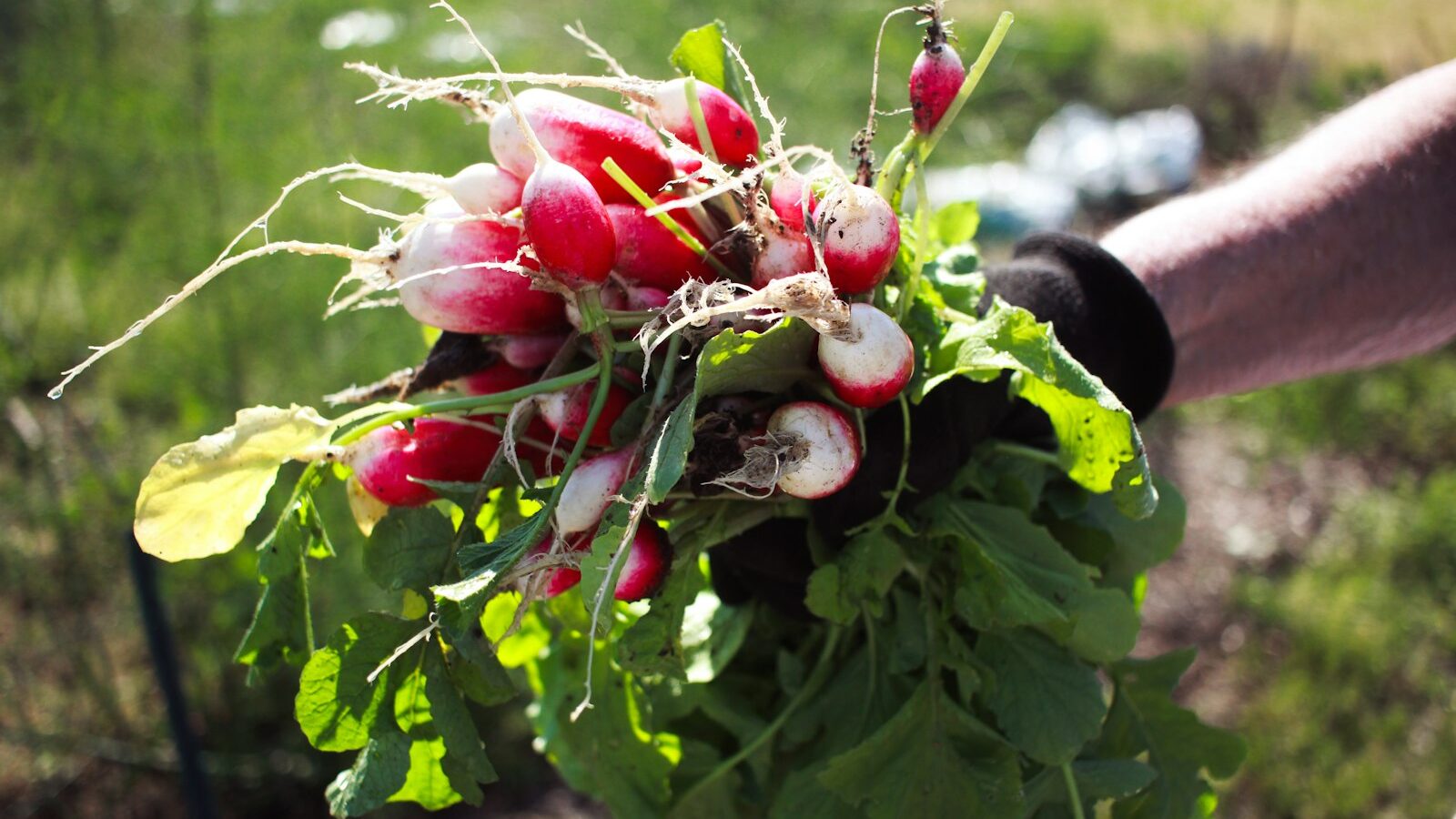
If you want a vegetable that goes from seed to plate in less time than it takes to finish a streaming series, radishes are it. Salad radishes are the fastest, easiest crop most beginners can grow, often pulling perfect crisp roots in just three to four weeks. This guide walks you through direct-sowing, thinning, watering, and harvesting so you get mild, snappy radishes instead of a tray of leaves with no bulb.
Radish quick facts
- Salad radishes mature in just 3-4 weeks
- Direct-sow in cool weather; thin seedlings
- Consistent moisture = mild, crisp roots
- Too much heat/nitrogen = all leaves, no bulb
- Great for containers & succession sowing
As an Amazon Associate we earn from qualifying purchases.
Radishes are a member of the brassica family, closely related to cabbage, mustard, and turnips, which is why they share that signature peppery bite. They are one of the best crops for building confidence in the garden because you get a fast, visible reward, and they fit beautifully into the kind of small-space, high-turnover plot we cover in our urban gardening guide. Whether you have a raised bed, a few containers on a balcony, or a slice of backyard soil, you can grow a steady supply of radishes from early spring through fall.
Choose your radish type: salad vs. winter
Before you sow, it helps to know that “radish” covers two very different groups, and they have very different growing timelines and uses.
Salad (spring) radishes
These are the small, round or oval radishes you picture first: ‘Cherry Belle’, ‘French Breakfast’, ‘Easter Egg’, and ‘White Icicle’. They mature in 22 to 35 days, which is what makes them the poster child for fast gardening. They are best grown quickly in cool weather, eaten raw, and replanted often. If you want results in a single month, this is your group.
Winter (daikon and storage) radishes
Daikon, ‘Watermelon’, ‘Black Spanish’, and other winter types are larger, slower-growing roots that take 50 to 70 days. They are sown in mid-to-late summer for a fall harvest, store well through winter, and have a milder, denser flesh. Daikon roots can also punch deep into compacted soil, acting as a natural tiller. Beginners usually start with salad radishes, then add a fall daikon planting once they are comfortable.
Grab a variety pack to experiment. Search for radish seeds and you will find inexpensive blends that let you try several colors and shapes from one order.
Timing: radishes love cool weather
Radishes are a cool-season crop, and timing is the single biggest factor in whether you get plump roots or a flush of leaves followed by flowers. They thrive in soil temperatures between 50 and 65 degrees Fahrenheit and tend to bolt (send up a flower stalk) when the weather turns hot.
When to sow
- Spring: Start as soon as the soil can be worked, about 4 to 6 weeks before your last frost. Radishes tolerate light frost.
- Fall: Sow salad types 4 to 6 weeks before your first fall frost; flavor is often best in cool fall weather.
- Winter daikon: Sow in mid-to-late summer so roots size up as temperatures drop.
- Summer: Skip the hottest months in warm climates, or use afternoon shade. Heat-tolerant varieties exist but still prefer cool conditions.
If you are new to planning a season around frost dates and cool-season crops, our walkthrough on how to start a vegetable garden covers the timing fundamentals that apply to radishes, lettuce, and other quick growers.
Sun and soil: loose ground is everything
Radishes want full sun, about 6 hours a day, though they appreciate a little afternoon shade in warm climates to delay bolting. The real make-or-break factor, though, is the soil. Radishes form their edible part underground, so the texture of your soil directly shapes the root.
What radishes need from the soil
- Loose and stone-free: Roots in compacted or rocky soil become forked, stunted, or oddly shaped. Loosen the top 6 to 8 inches and break up clumps.
- Well-draining: Soggy soil rots roots; aim for soil that holds moisture but drains freely.
- Moderate fertility, low nitrogen: Too much nitrogen drives leafy top growth at the expense of the root, a common cause of “all leaves, no bulb.”
- Near-neutral pH: A pH of 6.0 to 7.0 suits them well.
If your native ground is heavy clay or full of rocks, a raised bed filled with loose, fluffy mix solves the problem instantly and is ideal for short-rooted salad radishes. Look at raised bed soil blends that combine compost with a light, airy base so roots can swell without resistance.
How to direct-sow radishes (don’t transplant)
This is the most important rule for radishes: sow seeds directly where they will grow. Radishes do not transplant well. Disturbing the young root almost guarantees a deformed, forked, or bolting plant, so skip the seed trays and put seeds straight into the bed or container.
Step by step
- Rake the soil smooth and remove rocks and debris.
- Make shallow furrows about half an inch deep, spaced 6 inches apart.
- Drop seeds about 1 inch apart along the furrow. The seeds are large enough to handle individually, which helps you avoid over-sowing.
- Cover with a half inch of soil and firm gently.
- Water with a gentle spray and keep the surface consistently moist. Seeds germinate fast, often in 3 to 7 days.
Because germination is so reliable and quick, radishes are also a fantastic crop for getting kids interested in gardening. They see green shoots within a week and harvest within a month, which keeps the momentum going.
Thinning: the step beginners skip (and regret)
If there is one task that separates plump, round radishes from a tangle of skinny roots, it is thinning. When seedlings are about an inch tall with their first true leaves, thin them so plants stand 2 inches apart (3 to 4 inches for larger and winter types). Crowded radishes compete for space and light, and the roots never get room to swell, so they stay pencil-thin or never bulb at all.
How to thin without damage
- Snip extra seedlings at soil level with scissors rather than pulling, which protects the roots of the keepers.
- Don’t toss the thinnings: the tiny seedlings and their leaves are edible and make a peppery addition to salads.
- Thin on time. Waiting too long means the plants are already crowded and stressed.
Thinning feels wasteful at first, but it is genuinely the difference between a good harvest and a disappointing one. Give each plant its space and the roots will reward you.
Watering: consistent moisture for mild, crisp roots
Water is where flavor and texture are won or lost. Radishes need steady, even moisture from sowing to harvest. Inconsistent watering, where the soil dries out and then gets soaked, is the cause of nearly every radish disappointment.
What goes wrong without consistent water
- Splitting and cracking: A heavy soak after a dry spell makes roots swell suddenly and split open.
- Woodiness and pithiness: Drought stress turns roots tough, dry, and corky inside.
- Too spicy: Heat and water stress concentrate the mustard-oil compounds, making radishes unpleasantly hot. Fast, evenly watered, cool-grown radishes are the mildest.
Aim to keep the soil evenly moist, roughly an inch of water per week, more in heat or in containers. A light layer of mulch helps hold moisture and keeps the soil cool. The goal is fast, uninterrupted growth, which is what produces that crisp, juicy, mild radish.
Succession sowing, containers, and companion planting
Because radishes mature so fast and don’t store long in the ground, a single big planting tends to give you more radishes than you can eat at once, then nothing. Three smarter strategies fix that.
Succession sowing
Instead of sowing all your seeds at once, plant a short row every 10 to 14 days. This staggered approach gives you a continuous supply of fresh radishes rather than a glut. Stop sowing salad types once summer heat arrives, then resume in late summer for fall.
Growing radishes in containers
Salad radishes are ideal container crops thanks to their shallow roots and quick turnaround. Use a pot at least 6 inches deep (deeper for daikon), fill it with loose potting mix, and sow as you would in the ground. Containers dry out faster, so watch your watering closely, since consistent moisture matters even more in pots. A window box or a single large planter on a balcony can produce several rounds of radishes a season.
Companion and marker crop
Radishes earn their keep as a companion plant. Because they germinate so quickly, gardeners often mix radish seed with slow-to-sprout crops like carrots or parsnips. The radishes pop up fast, marking the row so you can weed accurately, loosen the soil, and then get harvested out of the way before the slower crop needs the space. They are also said to help lure flea beetles away from other brassicas. For more pairings like this, see our companion planting guide, and if you are sowing radishes alongside carrots, our guide on how to grow carrots pairs perfectly with this one.
If you interplant or succession-sow, simple garden markers are worth keeping on hand so you remember what was sown where and when.
Harvesting: pull them promptly
Radishes are best harvested young and on time. Salad types are usually ready when the root shoulders are about an inch across and just pushing up out of the soil. Brush back a little dirt to check size, and when in doubt, pull one and taste it.
Do not leave them in the ground hoping they will get bigger. Radishes left too long turn woody, pithy, overly hot, and eventually split or bolt. Pull the whole crop within a few days of maturity. Twist off the tops (the greens are edible and great sauteed), and store the roots in the fridge, where they keep for a couple of weeks. Winter daikon types can be harvested over a longer window and stored for months in cool conditions.
Why your radishes are all leaves and no bulb
This is the most common radish complaint, and it almost always comes down to a handful of fixable causes. If your plants are lush and green up top but have only a thin, stringy root below, check this list.
- Too much heat: Warm weather pushes radishes to make leaves and flowers instead of swelling roots. Grow them in cool seasons.
- Too much nitrogen: Rich, high-nitrogen soil or fertilizer feeds the foliage at the expense of the bulb.
- Overcrowding: Unthinned plants have no room to form roots. Thin them.
- Not enough sun: Too much shade slows root development and encourages leggy tops.
- Left too long: Past maturity, the plant shifts energy toward flowering and the root toughens or splits.
Fix the timing, ease up on nitrogen, thin properly, and water consistently, and radishes become one of the most foolproof crops you can grow.
Frequently asked questions
How long do radishes take to grow?
Salad radishes mature in just 3 to 4 weeks (about 22 to 35 days), making them one of the fastest vegetables you can grow. Winter and daikon types are slower, taking 50 to 70 days, and are usually sown in late summer for a fall harvest.
Why are my radishes all leaves and no bulb?
The usual culprits are too much heat, too much nitrogen in the soil, overcrowded plants that were never thinned, or not enough sun. Grow radishes in cool weather, go easy on high-nitrogen fertilizer, thin seedlings to about 2 inches apart, and give them full sun.
Can I grow radishes in containers?
Yes, salad radishes are excellent container crops because of their shallow roots and fast growth. Use a pot at least 6 inches deep with loose potting mix, sow directly, and keep the soil consistently moist since containers dry out quickly.
Why are my radishes too spicy or cracked?
Both come from inconsistent watering and heat stress. When soil dries out then gets soaked, roots crack and split, and drought plus warmth concentrates the peppery oils. Keep moisture steady (about an inch a week) and harvest promptly in cool weather for mild, crisp radishes.
Do I really need to thin radish seedlings?
Yes. Thinning is the step most beginners skip and the one that matters most for round roots. Crowded radishes compete for space and never bulb up. Snip extra seedlings at soil level when they are about an inch tall so the keepers stand 2 inches apart.