

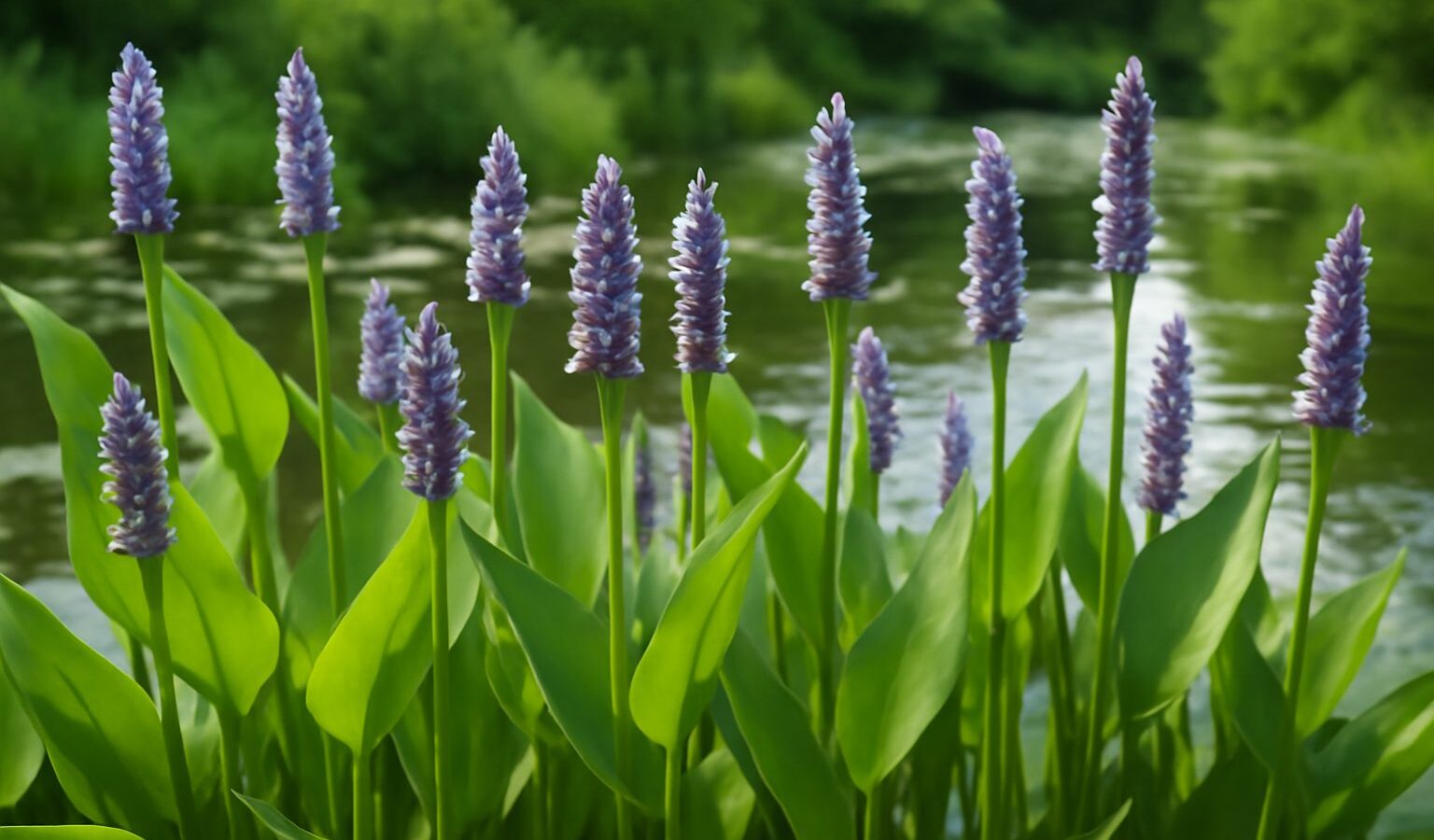
Pickerel weed (Pontederia cordata) is one of the most useful and beautiful native marginal plants you can add to a pond. From early summer into fall it throws up dense spikes of soft violet-blue flowers above glossy, heart-shaped leaves, drawing in bees, butterflies, and dragonflies while filtering the water and giving fish and frogs cover. It’s a North American native, hardy across a wide range, and remarkably easy once planted at the right depth in the right spot. This guide covers everything you need to grow pickerel weed successfully: the hardiness zones it thrives in, exactly how deep to plant it, how much sun it needs, the right soil and basket setup, and how to divide and overwinter it so a single plant becomes a sweeping drift of blue along your pond’s edge. If you want a low-maintenance native that pulls its weight ecologically and looks gorgeous doing it, pickerel weed is hard to beat.
Key Takeaways
- What it is: Pontederia cordata, a hardy North American native marginal with blue-purple summer flower spikes.
- Zones: reliably hardy in USDA zones 3–10, dying back in winter and returning in spring.
- Depth: a shallow-water marginal — grow with the soil surface 2 to 12 inches below the waterline (around 6 inches is ideal).
- Light: full sun for best flowering; tolerates part shade with fewer blooms.
- Soil: heavy clay loam or aquatic compost in a mesh basket, capped with gravel.
- Care: spreads by rhizomes; divide every 2–3 years, deadhead spent spikes, and it’s largely pest-free.
About Pickerel Weed
Pickerel weed is an herbaceous perennial that grows from spreading underground rhizomes at the margins of ponds, lakes, and slow streams across eastern and central North America. It reaches about 2 to 3 feet tall above the water, with upright, lance-to-heart-shaped leaves on long stalks and showy flower spikes 3 to 6 inches long packed with tiny tubular blue-violet flowers. Each spike blooms over several weeks, and the plant produces a long succession of them from June through September.
The name comes from a folk belief that the plant grew where pickerel fish spawned. Ecologically it earns its place: the flowers are a magnet for native bees, butterflies, and other pollinators, the dense stems shelter tadpoles and small fish, and the seeds and starchy rhizomes feed waterfowl and muskrats. The young leaves and seeds are even edible to people. As a bonus, like all vigorous marginals, it takes up excess nutrients from the water, helping starve out the algae that turn ponds green.
Hardiness Zones and Climate
Pickerel weed is impressively cold-hardy, thriving in USDA zones 3 through 10. In colder zones it dies back completely to its rhizomes each winter and re-emerges in spring once the water warms — a normal cycle, not a sign of trouble. In the mildest zones it may stay semi-evergreen. Because the rhizomes are insulated by water and pond muck, established plants survive hard winters easily as long as the rhizome doesn’t freeze solid; in shallow water or very cold climates, lower the basket to deeper, non-freezing water for winter or mulch heavily.
This wide adaptability is part of what makes pickerel weed so popular for ponds across most of the country. It handles both hot summers and frigid winters, and it isn’t fussy about water chemistry. Just note that in warm climates and natural settings it can spread enthusiastically by rhizome and seed, so contain it in a basket if you want to keep it in bounds.
Planting Depth and Position
Pickerel weed is a marginal, meaning it grows in the shallow water at a pond’s edge with its roots submerged and its foliage held above the surface. Planting depth is the single most important factor for success. Aim to have the soil surface of the basket sit 2 to 12 inches below the waterline, with around 3 to 6 inches being the sweet spot for most ponds. Too deep and the plant struggles to reach the surface and flowers poorly; too shallow and it dries out.
Place the basket on a planting shelf, a submerged ledge, or a stack of bricks to set it at the correct depth. When you first plant a young division, start it shallower — just an inch or two below the surface — so it can establish and reach the light easily, then lower it to its final depth as it grows taller. Position pickerel weed along the pond’s margin where it can form a vertical accent; it looks best in clumps or drifts rather than as a lone specimen, and pairs well with lower marginals and floating-leaved plants in front of it.
Light, Soil, and Planting
For the most flowers, give pickerel weed full sun — at least 6 hours of direct light a day. It will grow in partial shade but blooms noticeably less and may grow leggier reaching for light. A bright, open pond edge is ideal.
Plant it in a mesh aquatic basket using heavy clay loam or a proper aquatic compost — never lightweight potting mix, which floats out and clouds the water. Here’s the planting routine:
- Part-fill an aquatic basket (a 1- to 2-gallon size suits a young plant; size up for vigorous clumps) with heavy aquatic soil.
- Set the rhizome or division in place with its roots spread over the soil and the crown — where the shoots emerge — at the soil surface, not buried.
- Firm more soil around the roots, then top the whole surface with about an inch of pea gravel to hold the soil in and keep fish from disturbing it.
- Water the basket to settle it, then lower it gently into the pond at the right depth so the soil doesn’t billow out.
A slow-release aquatic fertilizer tablet pressed into the soil at planting and again each spring keeps the plant lush and free-flowering. Spring is the best time to plant, giving it a full season to establish. For help getting the depth and basket setup right for every plant in your pond, see our guide to dividing and repotting pond plants.
Ongoing Care
Once established at the right depth, pickerel weed is genuinely low-maintenance. Deadhead spent flower spikes through the season to keep it tidy and encourage more blooms, and to limit self-seeding if you want to control its spread. In autumn the foliage yellows and dies back; cut the dead stems off above the waterline before winter so they don’t decay in the pond and foul the water. Leave the rhizome in its basket to overwinter.
Pickerel weed is largely pest- and disease-free, one of its great virtues. Occasionally aphids may gather on the flower stalks; a strong spray of water knocks them off, and pond fish will eat any that fall in — avoid pesticides near water. Feed once or twice a season with an aquatic fertilizer tablet for the best flowering. Otherwise, the main task is keeping it from spreading too far, which the basket and annual division handle.
Dividing and Propagating
Pickerel weed spreads by rhizome and will fill its basket within a couple of seasons. Divide it every 2 to 3 years in spring to keep it vigorous and to make more plants for free. Lift the basket, slide out the plant, and either pull the clump apart by hand or cut through the rhizome with a sharp knife, making sure each division has healthy roots and at least one growing shoot. Discard the woody old center and replant the strong outer sections in fresh soil at the proper depth.
You can also grow pickerel weed from seed — sow fresh seed in pots of wet aquatic soil and keep them submerged just below the surface — but division is far quicker and gives you flowering plants the same season. Within a few years a single starter plant can edge a whole stretch of pond in summer blue. For more native and ornamental options to plant alongside it, explore our water gardens and ponds guides.
Frequently Asked Questions
How deep should pickerel weed be planted?
Pickerel weed is a shallow-water marginal. Set the basket so the soil surface sits 2 to 12 inches below the waterline, with about 3 to 6 inches ideal. Start young divisions shallower, then lower them as the plant grows taller.
What zones does pickerel weed grow in?
It’s hardy in USDA zones 3 through 10. In colder zones it dies back to its rhizomes each winter and returns in spring. In very cold areas, move the basket to deeper, non-freezing water over winter to protect the rhizome.
Does pickerel weed need full sun?
For the best flowering, give it full sun — at least 6 hours of direct light daily. It tolerates partial shade but produces fewer flowers and can grow leggier as it reaches for light. A bright, open pond edge is ideal.
Is pickerel weed invasive?
It’s a vigorous North American native that spreads by rhizome and seed, so it can fill space quickly. It isn’t classed as broadly invasive, but to keep it contained, grow it in a basket, deadhead to limit seeding, and divide every 2 to 3 years.
When does pickerel weed bloom?
It blooms from about June through September, sending up a long succession of violet-blue flower spikes through the summer. Deadheading spent spikes keeps it tidy and encourages continued flowering.