

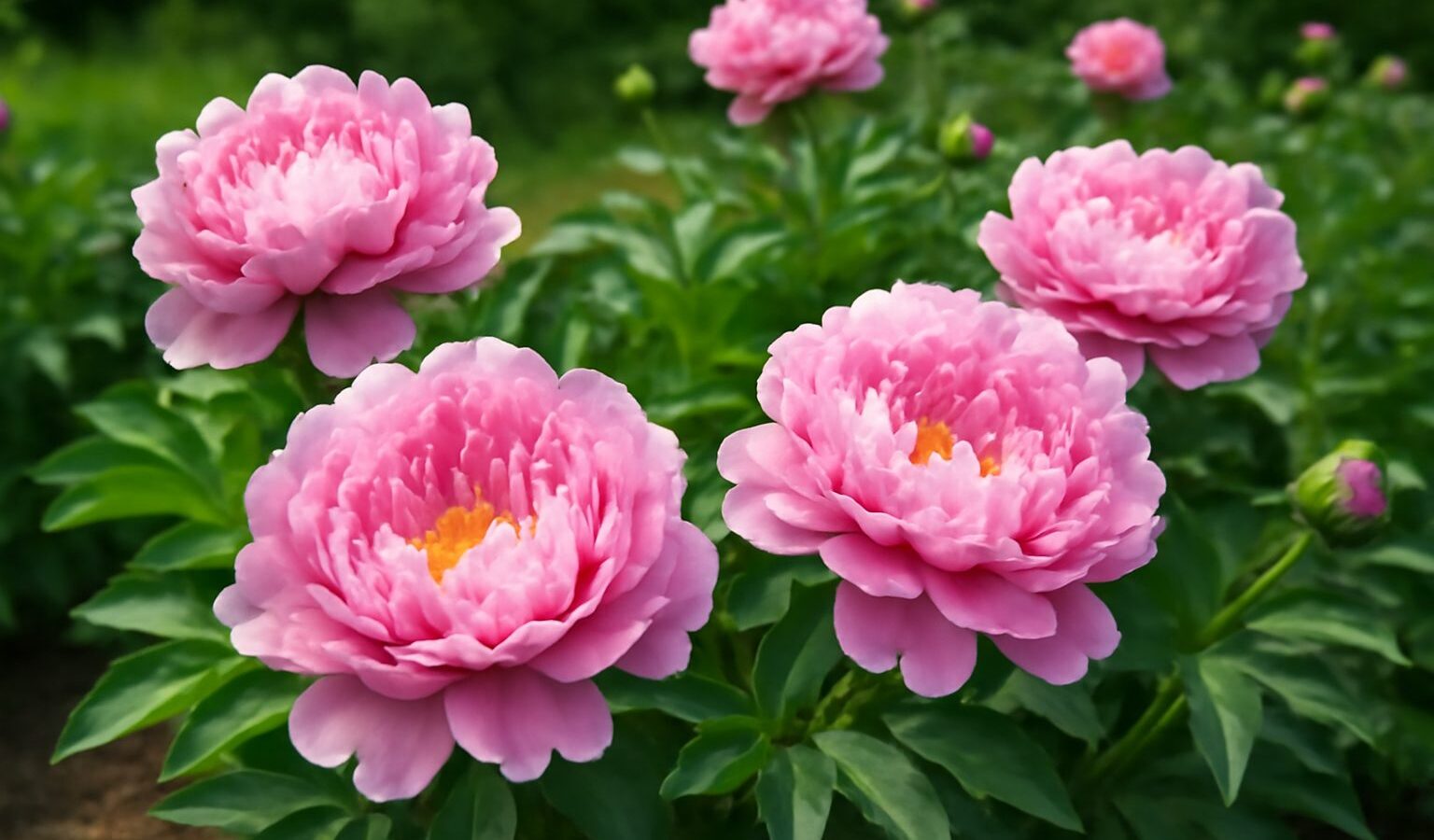
Peonies are the rare perennial that rewards a few hours of careful planting with decades of bloom. A well-sited peony can outlive the gardener who planted it, throwing out armfuls of huge, fragrant flowers every late spring with almost no maintenance. The catch is that peonies are particular about two things: planting depth and a cold winter. Get those right and you may never have to touch the plant again. Get them wrong and you will wait years for blooms that never come. This guide covers the three peony types, how and when to plant the roots, the cold requirement, support, deadheading, and the patience the plant demands in its first seasons.
Part of our Flowers & Perennials guide →
In this guide
Key Takeaways
- Herbaceous peonies thrive in USDA zones 3 to 8 and need a cold winter (a stretch below ~40°F) to bloom.
- Plant bare-root divisions in fall, with the eyes (pink buds) just 1 to 2 inches below the soil surface — planting too deep is the top cause of no blooms.
- Give peonies full sun (6+ hours) and rich, well-drained soil; they resent being moved, so choose the spot carefully.
- Be patient: plants often skip blooming the first year or two and hit full stride in years 3 to 5, then last for decades.
- Stake the heavy, double-flowered types with grow-through supports and deadhead spent blooms, but leave the foliage until fall.
The Three Types of Peony
Before you buy, know which kind of peony you are getting, because they are planted and treated differently. Herbaceous peonies (Paeonia lactiflora and hybrids) are the classic bush peonies that die back to the ground each winter and re-emerge in spring; these are what most people picture and the focus of this guide. Tree peonies are woody shrubs that keep a permanent framework of stems, grow taller, bloom earlier, and tolerate a bit more shade. Itoh (intersectional) peonies are crosses between the two: they have the lush flowers and strong stems of tree peonies on a plant that dies back like an herbaceous type, and they rarely need staking.
For a first peony, an herbaceous variety is the most affordable and forgiving choice. If you struggle with floppy stems, an Itoh is worth the higher price because its strong stems hold the blooms upright through rain without support.
Climate and the Cold Requirement
Herbaceous peonies are cold-climate plants, happiest in USDA zones 3 through 8. They actually need winter chill: a sustained period of temperatures below roughly 40°F triggers the chemical changes that let the buds break dormancy and flower. This is why gardeners in zones 9 and warmer often get lush foliage but few or no blooms. If you live in a mild-winter region, look for low-chill varieties such as ‘Festiva Maxima’ or some Itoh types, plant in the coolest spot in the garden, and skip mulching in winter so the soil stays as cold as possible.
When and Where to Plant
Plant peonies in fall, roughly six weeks before the ground freezes — generally September through October in most of the country. Fall planting lets the roots establish before winter and gives them the cold period they want. Bare-root divisions are sold and shipped in fall for exactly this reason. You can plant a potted peony in spring, but it will likely take an extra year to settle in and bloom.
Choose the site as if it is permanent, because peonies hate being disturbed and can sulk for years after a move. They want full sun, at least 6 hours and ideally 8, with good air circulation to fend off fungal disease. The soil should be rich, fertile, and well-drained; peonies will rot in soggy ground. Work in 2 to 3 inches of compost before planting, and aim for a near-neutral pH around 6.5 to 7.0. Keep them away from competing tree and shrub roots, which steal water and nutrients.
How to Plant the Roots — Depth Is Everything
This is the single most important section. A bare-root herbaceous peony is a fleshy root with several pink or red “eyes” (growth buds) at the crown. The cardinal rule: those eyes must sit only 1 to 2 inches below the soil surface — closer to 1 inch in warm zones, no more than 2 inches in the coldest zones. Planted any deeper, the peony grows leaves but refuses to bloom, sometimes for years. This depth mistake is by far the most common reason a peony never flowers.
Dig a hole about 2 feet wide and a foot deep, mix some compost into the bottom, and form a small mound. Set the root on the mound with the eyes pointing up, fanning the roots out and down, then backfill so the eyes end up no more than 2 inches deep. Firm the soil gently, water thoroughly to settle it, and resist the urge to bury the crown deeper “for protection.” Space multiple plants 3 to 4 feet apart so each mature clump has room and airflow. Tree peonies are the exception: plant them with the graft union about 4 to 6 inches deep.
Watering and Feeding
Newly planted peonies need consistent moisture through their first fall and the following growing season while roots establish; water deeply once a week in the absence of rain. Once established, peonies are quite drought-tolerant and only need watering during extended dry spells, especially while setting buds in spring. They do not need heavy feeding. A light topdressing of compost in early spring, or a low-nitrogen fertilizer such as a 5-10-10 applied as growth emerges, is plenty. Avoid high-nitrogen feeds, which push leafy growth at the expense of flowers and can flop the stems.
Staking and Support
The big, double-flowered herbaceous peonies are notorious for face-planting after rain, when the saturated blooms drag the stems to the ground. Install a grow-through grid support or a peony ring early in spring, while the shoots are still short, so the stems grow up through the ring and hide it. Trying to corral a fully grown, flopping plant later never looks as good. Single-flowered varieties, Itohs, and tree peonies generally have stiff enough stems to stand on their own.
Those Ants on the Buds
New peony growers often panic at the ants crawling over the flower buds. Relax: the ants are harmless. They are drawn to the sweet nectar the buds secrete and they do not damage the plant or determine whether it blooms — that old myth is false. If you are cutting flowers for the house, simply shake or rinse the ants off the buds before bringing them indoors.
Deadheading and Seasonal Care
After each flower fades, snip the spent bloom back to a strong leaf to keep the plant tidy and direct energy into the roots rather than seed production. Do not cut the foliage down after flowering, though; the leaves spend all summer feeding next year’s blooms. Leave the bush intact and let it work. In fall, after a frost blackens the foliage, cut herbaceous peony stems down to about an inch above the ground and remove the debris from the bed. This fall cleanup is the best defense against botrytis, the gray-mold fungus that overwinters on dead foliage and causes wilting shoots and blackened buds the next spring. Do not cut back tree peonies, which keep their woody framework.
Patience and the Bloom Timeline
Manage your expectations the first couple of years. A freshly planted division often produces only foliage, or just a flower or two, in its first spring. By year 2 you will see more, and most peonies hit their full, jaw-dropping stride in years 3 to 5. From then on the clump expands and blooms ever more generously for decades with little intervention. If an established plant suddenly stops blooming, the usual suspects are: it was planted or has settled too deep, it lost sun as nearby trees grew, it was divided or moved recently, or a late frost killed the buds.
Dividing Established Peonies
You rarely need to divide peonies, but if a clump is overgrown or you want more plants, do it in early fall. Cut the foliage back, lift the entire root mass, rinse off the soil, and use a sharp knife to cut the crown into divisions, each with 3 to 5 healthy eyes and a good chunk of root. Replant immediately at the correct shallow depth. Expect divided plants to take a year or two to resume strong blooming. For more long-lived perennials and flowers, explore the Plants & Flowers hub, and pair peonies with the shade-loving foliage in our guide to growing hostas. If you are amending poor soil before planting, our soil test guide helps you dial in the right fertility.
Frequently Asked Questions
Why won’t my peony bloom?
The most common reason is planting too deep — the eyes must be only 1 to 2 inches below the surface. Other causes include too little sun, a recent move or division, lack of winter cold in warm zones, excess nitrogen, or late-frost damage to the buds.
When should I plant peonies?
Plant bare-root divisions in fall, about six weeks before the ground freezes (typically September to October). Fall planting lets roots establish and gives the plant the winter chill it needs to bloom the following spring.
Do I need to worry about the ants on peony buds?
No. Ants are attracted to the sweet nectar on the buds and cause no harm. The belief that peonies need ants to open is a myth. Just shake them off before bringing cut flowers indoors.
How long do peonies take to bloom after planting?
Expect little or no bloom the first year, more in year two, and full performance in years 3 to 5. Once established, a peony blooms reliably for decades with minimal care.
Should I cut peonies back in fall?
Yes for herbaceous peonies — after frost, cut stems to about an inch above the soil and remove the debris to prevent botrytis fungus. Do not cut back tree peonies, which keep their woody stems year-round.