

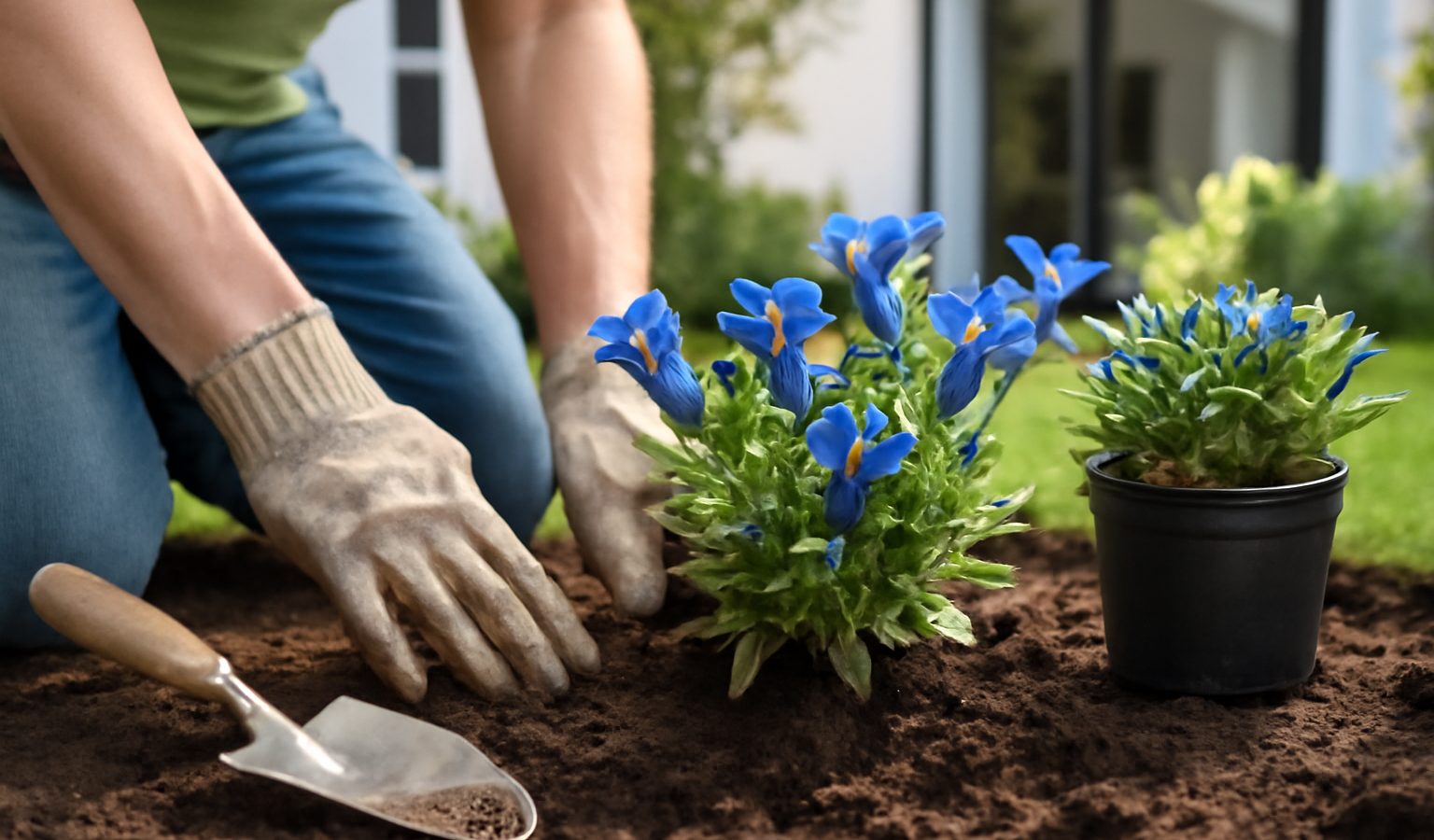
Grow gentian by giving it the one thing it refuses to do without: cool, consistently moist roots in humus-rich soil that drains well but never bakes dry. Plant in part shade (or sun with shaded roots for alpine types), keep the soil between slightly acidic and neutral depending on species, and never let it dry out. Gentians are perennials, hardy in roughly USDA zones 3 to 8, and they earn their reputation as challenging because gardeners treat them like ordinary border plants. They are not. Get the moisture and the cool conditions right, and you are rewarded with the truest, most electric blue in the plant world — a color most flowers only pretend to have.
In this guide
- Why Gardeners Chase the Gentian Blue
- Know Your Gentian: Species and Types
- Hardiness, Zones, and Climate
- Light and Soil: The Make-or-Break Factors
- When and How to Plant Gentian
- Starting Gentian From Seed
- Watering and Mulching
- Feeding Gentians
- Dividing & Why Gentians Resent Disturbance
- Pests, Problems & Why Gentians Fail
- Frequently Asked Questions
Key Takeaways
- Gentians are cool-loving perennials hardy in USDA zones 3–8; they will not survive hot, dry sites.
- Give them moist but well-drained, humus-rich soil — slightly acidic to neutral, though some alpines want lime and fall types like G. sino-ornata demand acidic soil.
- Part shade suits most; alpine and spring types want sun with cool, shaded roots.
- Seeds need cold stratification and germinate slowly and erratically — patience is mandatory.
- They resent root disturbance, so plant them where they can stay put and avoid dividing unless necessary.
Why Gardeners Chase the Gentian Blue
There is blue, and then there is gentian blue. Most flowers we call blue are really violet, lavender, or a washed-out periwinkle. Gentians produce a saturated, almost glowing cobalt-to-sapphire that stops people in their tracks. That color is the entire reason this finicky genus has a devoted following among rock gardeners and alpine plant collectors who will fuss over a single plant for years.
Gentiana is a large genus — several hundred species spread across mountain meadows, woodlands, and wet prairies on multiple continents. Sizes range from ground-hugging alpine cushions just 2 to 4 inches tall to upright woodland types reaching 18 to 24 inches. Bloom times split the genus too: some flower in spring, others in midsummer, and a celebrated group saves its show for fall. Flower shapes vary from open trumpets and stars to the curious closed “bottle” blooms that never fully open. What unites them is a preference for cool conditions, steady moisture, and soil that holds water without turning to muck.
One welcome bonus: deer tend to leave gentians alone. In a garden plagued by browsing, that alone makes them worth the effort.
Know Your Gentian: Species and Types
Choosing the right species for your conditions is the single most important decision you will make. The genus is not one-size-fits-all, and a plant suited to an acidic woodland will sulk and die in an alkaline rock garden. Match the gentian to your site rather than fighting your site to suit the gentian.
Spring Gentian (Gentiana verna)
A jewel-like alpine standing just 2 to 4 inches tall, producing intense starry blue flowers in early spring. It wants full sun but cool roots, sharp drainage, and gritty, often lime-rich soil. Difficult but spectacular in a trough or scree bed.
Willow Gentian (Gentiana asclepiadea)
The easiest gentian for most gardeners. This woodland species reaches 18 to 24 inches with arching stems lined in blue trumpets in late summer. It thrives in part to full shade in moist, humus-rich soil — treat it like a fern companion. If you are new to gentians, start here.
Fall Gentian (Gentiana sino-ornata)
A trailing autumn bloomer prized for huge brilliant-blue trumpets that open in September and October when most of the garden is fading. It is strict about soil: it demands acidic, peaty, lime-free conditions and ample moisture. If your water and soil are alkaline, this one will fail no matter what else you do.
Prairie / Bottle Gentian (Gentiana andrewsii)
A North American native of wet meadows and prairie edges, growing 1 to 2 feet tall with curious closed “bottle” flowers that never open — only strong bumblebees can force their way inside. It tolerates heavier, wetter soil than the alpines and is the best choice for a moist meadow planting or rain garden. Pair it with native moisture lovers and it largely takes care of itself.
Trumpet Gentian (Gentiana acaulis)
The classic alpine rock-garden gentian: a low mat, 3 to 4 inches tall, topped in late spring by oversized upturned blue trumpets. It needs sun, cool roots, and gritty, moisture-retentive soil. Notoriously temperamental about flowering — it may grow happily for years and then suddenly bloom heavily once settled.
Hardiness, Zones, and Climate
As a group, gentians are hardy across roughly USDA zones 3 to 8, though the exact range depends on the species. The alpine and prairie types are the cold-hardiest, comfortable down into zone 3, while some of the fall-blooming Asian species are happiest in the cooler, moister end of the range. Winter cold is rarely the problem — summer heat is. Gentians evolved in mountain meadows and cool woodlands, and they resent the muggy, baking summers common across much of the southern and central United States.
If you garden in zones 7 or 8, plant gentians where they get afternoon shade and the soil stays cool and damp — a north-facing slope, the edge of a pond, or among taller plants that shade the ground. Gardeners in cool maritime climates, the Pacific Northwest, the upper Midwest, and the Northeast have a real advantage with this genus. In hot-summer regions, lean toward the more forgiving willow gentian or the native bottle gentian rather than the demanding alpines.
Light and Soil: The Make-or-Break Factors
Light requirements split by type. Woodland gentians like willow gentian want part to full shade. Alpine and spring types want sun on their foliage but cool, shaded roots — in practice that means full sun in cool climates and morning sun with afternoon shade where summers are warm. Aim for at least 4 to 6 hours of light for the sun lovers, but always protect the root zone from heat.
Soil is where most gentians live or die. They need moist but well-drained, humus-rich soil — think the texture of a forest floor or a well-tended raised bed, never heavy clay that stays soggy and never sand that dries in an afternoon. Work in generous amounts of leaf mold, compost, or peat to build moisture-holding organic matter while keeping the structure open.
The pH question is where species differences matter most, and it trips up beginners constantly. Most gentians prefer slightly acidic to neutral soil (roughly pH 5.5 to 7.0). But there is real variation: the fall-blooming Gentiana sino-ornata and its relatives demand acidic, lime-free conditions and will collapse in alkaline soil or with hard tap water. At the opposite extreme, some European alpines like spring gentian actually appreciate lime. Before planting, identify your species’ preference and test your soil. Getting this single factor wrong is the most common reason gentians fail. For a companion that shares the same cool, humus-rich, woodland conditions, see our guide on how to grow hostas.
When and How to Plant Gentian
Set out container-grown gentians in spring or early fall, when the soil is cool and moist and there is no heat stress to fight. Spring planting gives roots a full season to establish before winter; early fall works well in mild climates and for the fall-blooming species. Avoid planting in the heat of midsummer.
Choose the spot carefully and commit to it — gentians resent being moved, so this is not a plant to shuffle around the garden. Dig a hole slightly wider than the root ball and set the plant at the same depth it grew in its pot; planting too deep invites crown rot. Spacing depends on type: low alpine and trumpet types go 6 to 8 inches apart, while taller woodland gentians like willow gentian want 12 to 18 inches between plants so their arching stems have room.
Firm the soil gently, water in thoroughly, and apply a cool mulch immediately. Handle the roots as little as possible during planting — the less disturbance, the faster they settle. Do not expect dramatic results the first year; gentians often spend their first season simply establishing before they put on a real show.
Starting Gentian From Seed
Growing gentians from seed is rewarding but tests your patience. The seed needs a period of cold to break dormancy — cold stratification — mimicking the winter chill it would receive in the wild. Sow seed in pots of gritty, humus-rich mix in late fall or winter and leave them outdoors exposed to natural freeze-and-thaw cycles, or refrigerate moist-sown seed for 4 to 8 weeks before bringing the pots into cool, bright conditions.
Even with proper chilling, germination is slow and erratic. Some seed sprouts within weeks; some takes months; a portion may not appear until a second winter has passed. Do not throw out a pot that looks empty — leave it outside, keep it moist, and give it another full cycle. Surface-sow the fine seed and barely cover it, since many species need light to germinate. Keep seedlings cool, evenly moist, and shaded from harsh sun.
Because gentians hate root disturbance, prick out seedlings carefully and pot them on individually as soon as they are large enough to handle, then disturb them as little as possible afterward. Expect two to three years from seed to a flowering-sized plant. If that timeline feels daunting, buy established plants for instant gratification and save seed-sowing for the species you cannot find at a nursery. For another perennial that rewards patient, hands-off care, compare notes in our guide on how to grow peonies.
Watering and Mulching
Consistent moisture is non-negotiable. Gentians do not tolerate drying out — a single hard wilt in summer can kill a plant or set it back a full season. Water deeply and regularly during the growing season so the soil stays evenly moist but never waterlogged. The native bottle gentian will take genuinely wet soil; the alpine types want moisture with sharp drainage so their crowns never sit in standing water.
If your water is hard and alkaline, use collected rainwater for the lime-hating fall species — tap water alone can slowly poison G. sino-ornata over a season. A 2-inch layer of organic mulch (leaf mold, compost, or shredded bark) is one of the best things you can do for gentians: it keeps roots cool, conserves moisture, and feeds the soil as it breaks down. Keep mulch pulled slightly back from the crown to prevent rot.
Feeding Gentians
Gentians are not heavy feeders, and overfeeding does more harm than good — rich nitrogen produces soft, floppy growth at the expense of flowers and toughness. The best fertilizer is the soil itself: an annual spring top-dressing of compost or well-rotted leaf mold supplies all the gentle, slow nutrition most plants need.
If a plant looks genuinely hungry, apply a balanced, low-strength liquid feed once in spring as growth begins. For the lime-hating acidic-soil types, choose a fertilizer formulated for ericaceous (acid-loving) plants and avoid anything containing lime. Stop feeding by midsummer so growth hardens before winter. When in doubt, feed less rather than more.
Dividing & Why Gentians Resent Disturbance
Gentians dislike having their roots disturbed, which is why the genus has its difficult reputation. Unlike many perennials that thrive on regular division, gentians prefer to be left alone — a settled, undisturbed plant is a happy one, and digging it up to divide often sets it back severely or kills it outright. Plant it where it can stay for years and resist the urge to fuss.
When you do need to propagate or rejuvenate a clump, the carpet-forming fall types like G. sino-ornata are the most forgiving: lift and tease apart the thread-like rooted shoots in early spring just as growth starts, replant immediately, and keep them watered. For most other species, propagate from seed, basal cuttings, or careful detached rosettes rather than hacking through the crown. Whatever the method, work in cool weather, keep roots from drying for even a moment, and water in well. If you must move a gentian, take as large a root ball as possible and disturb the soil around the roots as little as you can.
Pests, Problems & Why Gentians Fail
Pests are rarely the issue with gentians — cultural mistakes are. The most common cause of failure is letting the soil dry out, even once. A wilted gentian in hot weather is often a dead gentian. The second most common killer is the wrong soil pH: planting an acid-loving fall species in limey soil or watering it with hard tap water leads to slow yellowing decline. Heat and drought together are the third, which is why gardeners in hot-summer zones struggle.
Crown and root rot strike when drainage is poor or when plants sit waterlogged in cold weather — the fix is to amend for sharper drainage and keep mulch off the crown. Slugs and snails will nibble fresh spring growth and seedlings; control them with traps, barriers, or hand-picking. Aphids occasionally cluster on soft new shoots and rinse off easily. If a plant fails to flower, the usual culprits are too much shade for a sun-loving type, excess nitrogen, or simply a young plant that has not yet settled — trumpet gentian in particular can take years to bloom well.
Diagnose by working backward from the conditions: dry, hot, alkaline, or recently disturbed are the four words behind almost every gentian failure. Fix those and the genus rewards you generously. For more low-care, deer-resistant perennials suited to cool, moist gardens, browse the full Plants & Flowers hub.
Frequently Asked Questions
Why are gentians considered so hard to grow?
Mostly because gardeners treat them like ordinary border plants. Gentians demand cool, consistently moist roots and the correct soil pH for their species. Get those right — especially never letting them dry out — and many are no harder than a hosta.
Which gentian is easiest for a beginner?
Willow gentian (Gentiana asclepiadea) is the most forgiving. It grows like a woodland perennial in part shade and moist, humus-rich soil, reaching 18 to 24 inches with blue trumpets in late summer. North American gardeners with damp soil should also try the native bottle gentian.
What soil pH do gentians need?
Most prefer slightly acidic to neutral soil, roughly pH 5.5 to 7.0. But it varies: fall types like G. sino-ornata demand acidic, lime-free soil and rainwater, while some European alpines actually want lime. Always check your specific species before planting.
How long do gentians take to grow from seed?
Expect two to three years from seed to flowering size. Seed needs cold stratification to germinate and even then sprouts slowly and erratically — some may not appear until a second winter. Patience is essential; buy plants if you want quicker blooms.
Do deer and rabbits eat gentians?
Deer tend to avoid gentians, which makes them a good choice for gardens with browsing pressure. Slugs and snails are the more likely nuisance, nibbling tender spring growth and seedlings rather than established foliage.