

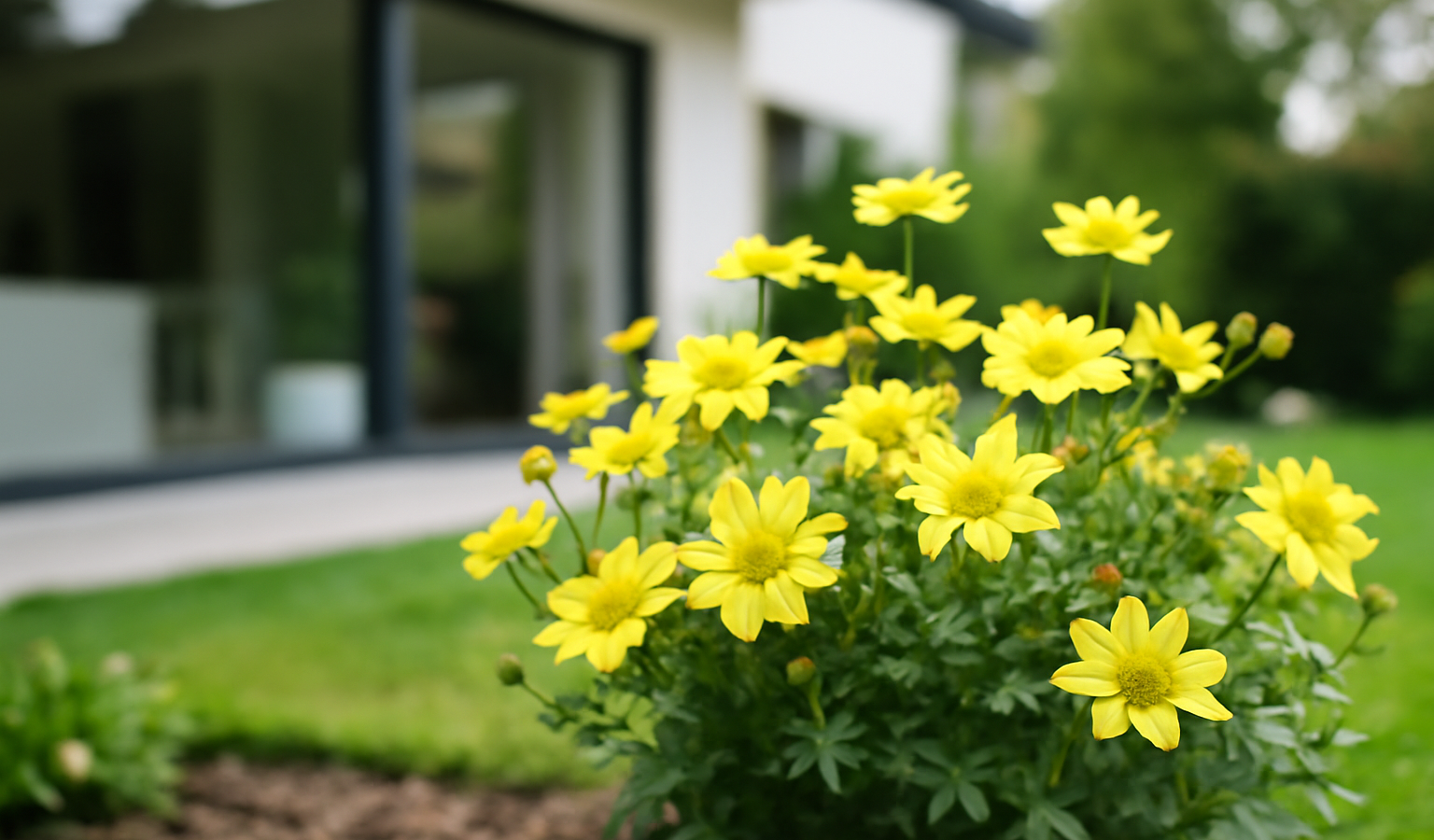
If you want a plant that laughs at July heat, shrugs off dry spells, and keeps tossing out cheerful daisy flowers without you fussing over it, Bidens belongs on your shortlist. Once a humble roadside yellow, today’s Bidens ferulifolia hybrids come in gold, tangerine, fiery red bicolors, soft pink and crisp white, and they spill out of containers and hanging baskets all season long. They’re members of the aster family (Asteraceae), and the name “bidens” literally means “two-toothed,” a nod to the little barbed seeds — the reason wild types earned the nickname beggarticks. For a low-maintenance, self-cleaning bloomer that performs where fussier annuals melt, this is one of the easiest workhorses you can plant.
Key Takeaways
- Full sun and lean, well-drained soil are all Bidens really wants — it actually flowers better in poor, dry ground than rich, wet beds.
- Outstanding heat and drought tolerance: once established it sails through summer with only moderate watering. Overwatering is the main way to kill it.
- Largely self-cleaning — modern hybrids bloom freely without deadheading; a midseason shear simply refreshes a tired, leggy plant.
- Trailing and mounding habit (6–18 inches tall, spreading 12–24+ inches) makes it ideal for baskets, container edges and groundcover.
- Tender perennial in USDA zones 8–11, grown as an annual everywhere colder; propagate by stem cuttings or seed.
- Pollinator magnet that draws bees and butterflies, with very few pest problems beyond occasional aphids.
Meet Bidens: The Two-Toothed Daisy
Most garden Bidens trace back to Bidens ferulifolia, a Mexican and southwestern U.S. native with finely divided, ferny foliage and bright yellow, five-petaled flowers about an inch across. As a wild plant it’s a sprawling, sun-loving thing that colonizes dry, rocky, disturbed ground — which tells you everything about how it likes to be treated in the garden. It’s not a diva. Give it heat, light and drainage and it rewards you; pamper it with rich soil and constant water and it sulks or rots.
The genus name comes from the Latin bi (two) and dens (tooth), describing the two-pronged barbed seeds that hitchhike on socks, fur and trouser cuffs — hence the folk names beggarticks, stick-tights and Spanish needles. Those clinging seeds are why some wild and older species can self-sow enthusiastically, a trait modern sterile or near-sterile hybrids have largely bred out. As a member of Asteraceae, Bidens shares its composite flower structure with cosmos, dahlias, zinnias and sunflowers, so the open, landing-pad blooms are tailor-made for pollinators.
What’s changed dramatically in the last fifteen years is the color range and the flower power. Breeders have pushed Bidens far past plain yellow into oranges, reds, bicolors and pastels, and selected for compact, free-branching plants that bloom continuously from late spring until frost. If you tried an old-fashioned Bidens years ago and found it leggy and short-lived, the newer hybrids are a different experience entirely.
Sun and Soil: Lean and Dry Wins
Plant Bidens in full sun — a minimum of six hours of direct light, and ideally eight or more. This is a plant built for the brightest, hottest spot in your yard, the sun-baked container on the south-facing patio that fries impatiens. In shade it stretches, flops and flowers sparsely, so don’t waste it in a dim corner. Heat that stalls petunias and calibrachoa rarely fazes a well-sited Bidens.
Soil is where gardeners trip up. Bidens thrives in lean, even poor, well-drained soil and resents heavy, soggy ground above all else. A sandy or gritty loam with a near-neutral to slightly alkaline pH (roughly 6.0–7.5) is perfect. Skip the temptation to dig in loads of compost or manure; overly fertile soil pushes lush green growth at the expense of flowers. If your native soil is dense clay, amend with grit or coarse sand and plant on a slight mound, or grow it in containers where you control the mix.
Drainage matters more than fertility. The fastest way to lose a Bidens is to let its roots sit in waterlogged soil, which invites root rot and fungal trouble. In beds, that means avoiding low spots and clay pockets that puddle after rain. In pots, it means a free-draining potting mix and an open drainage hole — never a saucer left full of standing water. Get the drainage right and the rest of the care is almost an afterthought.
Planting and Spacing
Set out Bidens transplants after your last spring frost has passed and the soil has warmed, typically mid-to-late spring once nights stay reliably above 50°F. It’s frost-tender, so there’s no advantage to rushing it into cold ground — it will simply sit and sulk until the weather turns. In zones 9–11 you can plant in spring or even fall for cool-season color where summers are brutally hot.
Space plants 12 to 18 inches apart in the ground; given the spreading, trailing habit, even that generous spacing fills in quickly. Each plant grows 6 to 18 inches tall depending on variety and spreads 12 to 24 inches or more, mounding and then cascading at the edges. As a groundcover, that spread makes Bidens an efficient, sun-loving filler for a hot slope or the front of a dry border. In a basket or mixed container, count on it to billow over the rim and weave through its neighbors.
Water transplants in well at planting and keep the root zone evenly moist for the first two to three weeks while roots establish — this is the one period when you shouldn’t let it bone-dry. After that, ease off and let the plant’s natural drought tolerance take over. A single bedding plant or one or two plants per 12-inch container is plenty; Bidens grows fast and resents crowding, which cuts airflow and invites disease.
Watering and Feeding (Less Is More)
Water moderately and let the soil dry between drinks. Established Bidens in the ground is genuinely drought tolerant and often gets by on rainfall alone in all but the longest dry spells. The cardinal rule is don’t overwater — consistently wet roots cause far more failures than underwatering ever will. Stick a finger an inch or two into the soil; if it’s dry, water deeply, and if it’s still damp, wait.
Containers and hanging baskets are the exception. Pots dry out fast in summer sun, so a basket in full afternoon heat may need a drink daily during a heat wave even though the plant itself is drought hardy. Water in the morning, aim at the soil rather than the foliage, and empty any saucer so roots aren’t sitting in water. The goal is a soil that swings from moist to nearly dry, not one that stays soggy.
Feed sparingly. Bidens flowers best on a lean diet, and the single most common mistake is too much nitrogen, which produces a jungle of ferny green foliage and disappointingly few flowers. In the ground, a thin spring application of a balanced, slow-release fertilizer is plenty — or nothing at all in decent soil. In containers, where nutrients leach out with watering, feed lightly every three to four weeks with a dilute, bloom-oriented (higher phosphorus, lower nitrogen) liquid fertilizer. If you see lots of leaves and few blooms, cut the feeding back, not up.
Deadheading and Shearing
Here’s the good news that makes Bidens such a relaxing plant: the modern hybrids are largely self-cleaning and bloom freely without deadheading. The small flowers drop and disappear on their own, and because the newer series are bred for continuous bloom, you don’t need to pick off spent heads to keep them going the way you do with many annuals. For gardeners who hate fussy maintenance, that’s a real selling point, much like its container companion calibrachoa, which is also self-cleaning.
What does help is a refreshing shear in midseason. By high summer a vigorous Bidens can grow leggy, with bare, woody stems trailing far from the crown and flowering concentrated at the tips. When that happens, don’t be timid: grab shears and cut the whole plant back by about a third, even up to half. It looks brutal for a week, but it forces fresh branching from lower down, rejuvenates the foliage, and triggers a flush of new blooms within two to three weeks. A trim around mid-July, with a light liquid feed afterward, keeps containers and baskets looking full into autumn.
You can also pinch young plants once or twice early in the season — nipping the growing tips when they’re 4 to 6 inches long — to encourage a bushier, more branched habit from the start. This is optional with the naturally branching modern hybrids but worthwhile if you’re growing an older type or want maximum fullness in a basket.
Varieties Worth Growing
The classic types are the original golden yellows. ‘Gold Star’ and ‘Solaire’ (sometimes sold as ‘Golden Eye’) are the old-school, vigorous yellow trailers that put on a generous spread and remain reliable, inexpensive choices for filling a hot bed or basket with sunshine-yellow bloom.
Among the improved series, Goldilocks Rocks is a standout — bigger, brighter golden-yellow flowers on a robust, heat-loving plant that’s become a container staple. The Campfire series broke real ground with bicolor blooms: ‘Campfire Fireburst’ opens in fiery red-orange with yellow centers and tips, shifting tone as flowers age for a glowing, two-tone effect that pairs beautifully with hot-colored combinations.
The Beedance series offers compact, free-flowering plants in yellow, painted (bicolor) and red shades, well-behaved enough for tighter container plantings and, as the name promises, beloved by bees. ‘Pretty in Pink’ and other newer introductions push into soft pinks, while white and apricot selections continue to widen the palette. For a sophisticated planter, mix a trailing red Campfire type with a clean white or pink Bidens and a contrasting upright partner like heat-loving angelonia for vertical structure.
Pests, Problems and Propagation
Bidens is refreshingly trouble-free. It has few serious pests, and most problems trace straight back to too much water or too little light. The occasional insect to watch for is aphids, which can cluster on tender new growth, especially on stressed or overcrowded plants; a strong jet of water or insecticidal soap usually clears them. The bigger threat is fungal — root rot, stem rot and botrytis (gray mold) — and these are almost always a symptom of soggy soil, poor drainage or crowded, airless plantings rather than a problem with the plant itself.
Prevention is simple: site in full sun, plant in well-drained soil, space for airflow, water at the base in the morning so foliage dries quickly, and resist overwatering. Do that and you’ll rarely reach for a spray. If a plant does collapse with mushy stems, it’s usually waterlogging — improve drainage before replanting.
Propagation is easy by two routes. Take softwood stem cuttings in summer: snip a 3- to 4-inch non-flowering shoot, strip the lower leaves, dip in rooting hormone, and stick it in moist, gritty mix — roots form in a couple of weeks, and this is how you reliably reproduce named hybrids true to type. You can also grow species and many open-pollinated types from seed, sown indoors 6 to 8 weeks before last frost or direct-sown after the soil warms; seed-grown plants flower in their first season. Note that some species and older types self-seed freely thanks to those clingy barbed seeds, so if you don’t want volunteers, shear before seed sets or choose a sterile hybrid.
Containers, Pollinators and Overwintering
Containers and hanging baskets are where Bidens truly shines. Its mounding-then-trailing habit makes it an ideal “spiller” in the classic thriller-filler-spiller recipe, cascading 12 to 24 inches over a basket rim by midsummer. Because it tolerates heat and missed waterings better than most basket plants, it’s forgiving for busy gardeners and a natural partner for other sun-and-heat lovers. For more sun-tough plant pairings, browse our plants and flowers guides.
As an Asteraceae member with open, accessible flowers, Bidens is a genuine pollinator magnet, drawing bees, hoverflies and butterflies all season. A drift of it in a sunny border or a row of baskets does real work for garden ecology while looking cheerful, and its long bloom window means a steady nectar supply from late spring through frost. It’s a worthy addition to any low-water pollinator planting.
Bidens is a tender perennial hardy in USDA zones 8 through 11, where it can persist year to year and may even bloom through mild winters. In colder zones it’s grown as an annual and killed by the first hard frost. If you want to keep a favorite hybrid, you have two options: take cuttings in late summer and overwinter the rooted young plants on a bright, cool windowsill, or lift a whole plant into a pot, cut it back hard, and hold it nearly dry in a frost-free, bright spot until spring. Either way, treat it lean and on the dry side over winter and resume normal care as days lengthen.
Frequently Asked Questions
Do you need to deadhead Bidens?
No. Modern Bidens hybrids are largely self-cleaning and bloom continuously without deadheading, so you can skip the tedious picking-off of spent flowers. The only useful maintenance is a midseason shear — cutting the plant back by a third to a half — to refresh leggy growth and trigger a fresh flush of bloom.
How much sun does Bidens need?
Full sun — at least six hours of direct light daily, and ideally eight or more. Bidens is built for hot, bright spots and flowers poorly in shade, where it stretches and flops. It’s one of the best choices for a sun-baked patio container or dry, exposed bed that scorches less heat-tolerant annuals.
Why is my Bidens all leaves and no flowers?
Almost always too much nitrogen or too little sun. Rich soil and high-nitrogen feed push lush ferny foliage at the expense of blooms, so cut back on fertilizer and switch to a lean, bloom-oriented (higher phosphorus) feed. Also confirm it’s getting full sun — shade dramatically reduces flowering.
Is Bidens drought tolerant?
Yes, once established it’s notably drought tolerant and often survives on rainfall alone in the ground. The bigger risk is overwatering, which causes root and stem rot. Let the soil dry between waterings. Containers and hanging baskets dry faster and may need daily water in summer heat despite the plant’s toughness.
Does Bidens come back every year?
It’s a tender perennial in USDA zones 8–11, where it can overwinter and return. In colder regions it’s grown as an annual and dies at the first hard frost. To keep a favorite hybrid, take stem cuttings in late summer or lift and pot up a plant to overwinter in a bright, frost-free spot.