

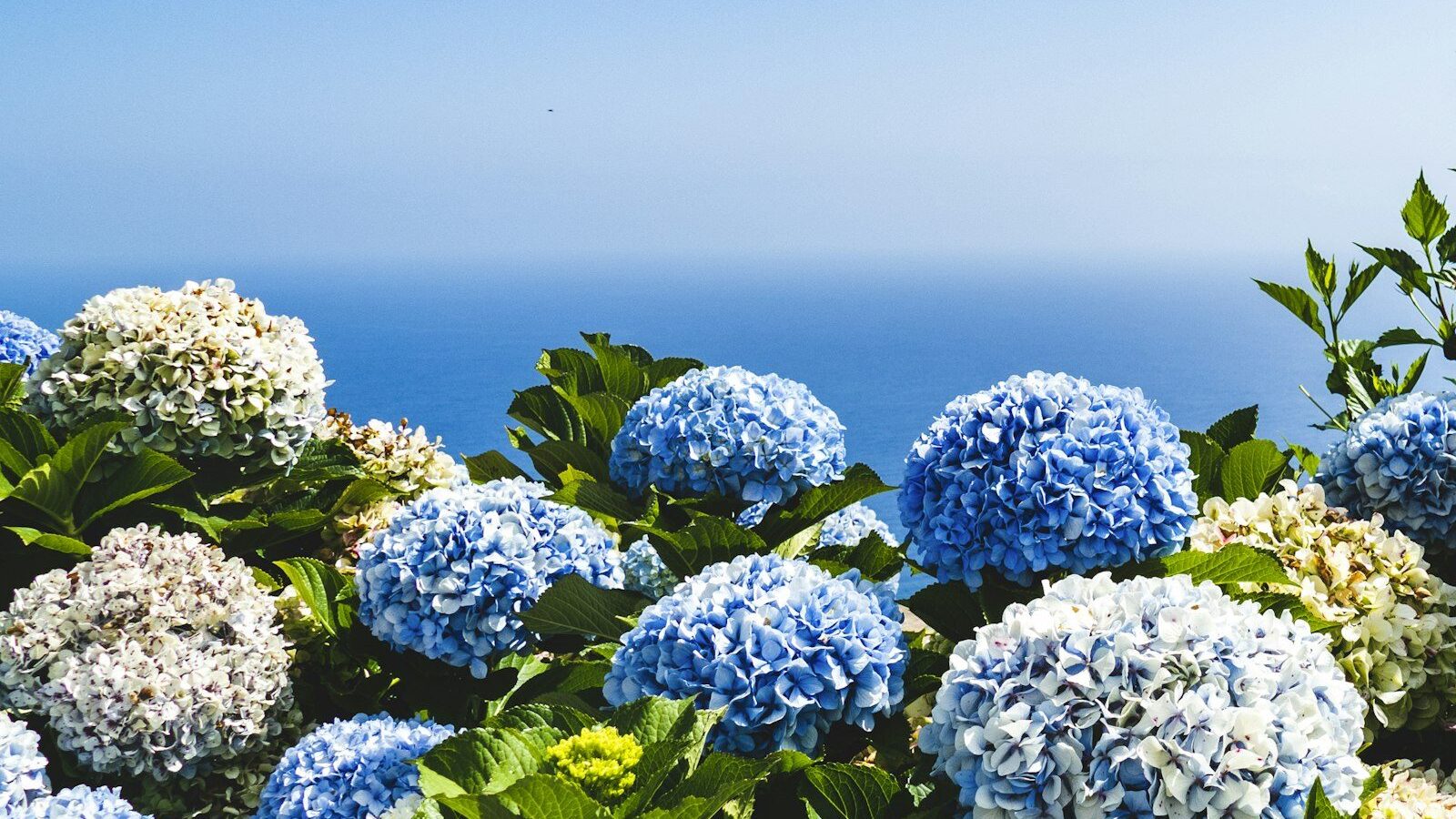
Fertilize most hydrangeas in spring, when new leaves are emerging, with a slow-release balanced fertilizer or a layer of compost, and stop feeding by late July or early August so new growth can harden off before winter. How much more you do depends on the type. Panicle and smooth hydrangeas bloom on new wood and benefit from a second feeding in late spring or early summer. Bigleaf and mountain hydrangeas need only light feeding, and too much nitrogen gives you big leaves and few flowers. Oakleaf hydrangeas often need little or nothing beyond compost.
Part of our Flowers & Perennials guide →
In this guide
- Feeding Schedule by Hydrangea Type
- When to Fertilize Hydrangeas
- What to Use
- How to Apply Fertilizer
- New Plantings vs Established Shrubs
- Regional Timing Notes
- Fertilizer and Flower Color
- Fertilizing Hydrangeas in Pots
- Mistakes That Cost You Flowers
- Signs Your Hydrangea Needs Feeding
- Feeding Calendar at a Glance
- Frequently Asked Questions
Key Takeaways
- Main feeding time: spring, as leaves emerge. Optional second feeding by early summer for heavy bloomers.
- Stop fertilizing by late July to early August in most of the US to avoid soft late growth that winter damages.
- Use a balanced slow-release fertilizer or one made for flowering shrubs. Avoid high-nitrogen lawn fertilizer.
- For blue bigleaf flowers, keep phosphorus low and soil acidic. For pink, a higher-phosphorus feed and higher pH help.
- Hydrangeas in containers need more frequent, lighter feeding than those in the ground.
Feeding Schedule by Hydrangea Type
| Type | Blooms on | Feeding need | When to feed |
|---|---|---|---|
| Bigleaf (Hydrangea macrophylla) | Old wood; rebloomers on old and new | Light to moderate | Once in spring; optional light feed in early summer |
| Mountain (H. serrata) | Old wood | Light | Once in spring |
| Panicle (H. paniculata), e.g. Limelight | New wood | Moderate to higher | Early spring and again late spring to early summer |
| Smooth (H. arborescens), e.g. Annabelle | New wood | Moderate | Early spring; optional second feed in early summer |
| Oakleaf (H. quercifolia) | Old wood | Low | Compost or one light feed in spring |
| Climbing (H. anomala petiolaris) | Old wood | Low | One light feed in spring |
For type-specific care, our guides to bigleaf hydrangea care, Limelight hydrangea care and Annabelle hydrangea care cover pruning and siting too. For the general feeding principles that apply across the garden, from vegetables to shrubs, see our vegetable gardening guide.
When to Fertilize Hydrangeas
Spring: the main feeding
Feed once leaves begin to emerge and the soil has warmed, which is usually March to May depending on your zone. Earlier in the South, later in the North. Feeding before the plant leafs out mostly feeds weeds and washes away.
Early summer: optional second feeding
Panicle and smooth hydrangeas, which build flower buds on the current season’s growth, often benefit from a second application in late spring or early summer, roughly May to June. Reblooming bigleaf types, such as the Endless Summer series, can also take a light second feeding to support later flushes.
Stop by late summer
In most of the US, stop by the end of July or early August. Fertilizer late in the season pushes new shoots that do not harden off before frost. For bigleaf and other old-wood bloomers, that soft growth often dies back in winter and takes next year’s flower buds with it. In mild zones 8 to 10 the window is a little longer, but the principle is the same.
Fall and winter
Do not fertilize. A fall layer of compost or shredded leaves is fine, since it breaks down slowly and mainly improves soil.
What to Use
Slow-release granular fertilizer
A balanced slow-release fertilizer, such as one labeled 10-10-10 or a shrub and tree formula, is the simplest choice. It feeds steadily for weeks or months and lowers the risk of burning roots. Apply at the label rate, scattering it evenly over the root zone from a few inches away from the stems out to just beyond the drip line, then water in.
Fertilizer for flowering shrubs or acid-loving plants
Fertilizers marketed for flowering shrubs, or for azaleas, rhododendrons and other acid-loving plants, work well, particularly for bigleaf hydrangeas grown for blue flowers. Our roundup of the best fertilizers for acid-loving plants covers good options.
Compost and organic options
One to two inches of compost spread over the root zone each spring supplies a slow, gentle trickle of nutrients and improves soil structure. For many established hydrangeas in decent soil, especially oakleaf and mountain types, compost alone is enough. Other organic options include composted manure, alfalfa meal and fish-and-seaweed liquid feeds.
Liquid fertilizer
Water-soluble fertilizers act fast but run out quickly. They are best for container hydrangeas or as a mid-season boost, applied every two to four weeks at label strength during spring and early summer.
How to Apply Fertilizer
- Water the day before if soil is dry. Fertilizing dry roots risks burn.
- Measure the rate on the label for the size of your shrub. More is not better.
- Spread granules evenly over the root zone, keeping them a few inches from the stems. The feeder roots extend out to and beyond the drip line.
- Scratch lightly into the top inch of soil or mulch, taking care not to damage shallow roots.
- Water thoroughly to move nutrients into the root zone.
- Refresh mulch to 2 to 3 inches, keeping it off the stems.
New Plantings vs Established Shrubs
Newly planted hydrangeas do not need fertilizer in the planting hole. Mix compost into the backfill instead, water well and let the roots settle in. Once you see a flush of new leaves, usually four to six weeks after planting in spring, a light application of slow-release fertilizer at the low end of the label rate is enough. Fall-planted shrubs should wait until the following spring.
Established shrubs that have been in the ground for several years are better judged by how they grow. A plant with good leaf color, steady growth and full flower heads may need only compost. A plant with pale leaves, thin stems and small blooms in good light and moisture is a candidate for a full spring feeding plus a second feeding for new-wood types.
Regional Timing Notes
- Northern states (roughly zones 3 to 6): feed once the shrubs leaf out, often late April into May, and finish any second feeding by late June or early July. Early cold snaps make late growth risky.
- Mid-Atlantic, Midwest and Pacific Northwest (zones 6 to 7): spring feeding in April, second feeding in late May or June, last application by late July.
- South and West (zones 8 to 10): growth starts earlier, so feed in March or early April. In hot summers, avoid feeding during heat waves when plants are stressed; water consistently instead.
Fertilizer and Flower Color
On bigleaf and mountain hydrangeas, flower color depends on aluminum availability, which is controlled by soil pH. Acidic soil, around pH 5.0 to 5.5, makes aluminum available and gives blue flowers. Neutral to alkaline soil, around 6.0 to 6.5 and higher, keeps aluminum locked up and gives pink flowers.
Fertilizer affects this too:
- For blue: choose a fertilizer low in phosphorus, since phosphorus binds aluminum. Fertilizers with a middle number of a few percent are better than bloom boosters. Pair with soil acidifiers such as sulfur or aluminum sulfate.
- For pink: a fertilizer with more phosphorus helps, along with garden lime to raise pH.
White hydrangeas and panicle, smooth and oakleaf types do not change color with pH, so you can feed them without worrying about it. For the full method, see our guide on how to change hydrangea color, and to lower pH for blue blooms, how to make soil more acidic.
Fertilizing Hydrangeas in Pots
Container hydrangeas lose nutrients every time you water, so they need more regular feeding:
- Mix a slow-release granular fertilizer into the potting mix at planting or in early spring.
- Supplement with a liquid fertilizer at half strength every two to three weeks from spring through early summer.
- Stop feeding by late July, as with in-ground plants.
- Flush the pot with plain water every month or two to wash out salt buildup.
Our guide to hydrangeas in pots covers container size, watering and overwintering.
Mistakes That Cost You Flowers
Too much nitrogen
The most common feeding mistake. High-nitrogen fertilizers, including lawn fertilizer that drifts into beds, produce lush leaves and few or no flowers, especially on bigleaf types. If your hydrangea is big, green and bloomless, check what is being spread on the lawn nearby.
Feeding too late
Late-summer feeding produces tender growth that freezes. On old-wood bloomers that means lost flower buds.
Feeding a stressed plant
Do not fertilize a hydrangea that is wilting from drought, recently transplanted or suffering root damage. Water and let it recover first. For newly planted shrubs, wait until they show new growth, usually several weeks after planting.
Blaming fertilizer for pruning or weather
Many bloomless hydrangeas were fed properly but pruned at the wrong time or lost buds to a late freeze. Our article on why hydrangeas are not blooming works through all the causes.
Signs Your Hydrangea Needs Feeding
- Pale green or yellowing older leaves across the plant, often a nitrogen shortage.
- Yellowing between the veins of new leaves with green veins, often iron deficiency linked to high soil pH rather than a lack of fertilizer. Lowering pH or using chelated iron helps.
- Slow growth and small flower heads on a plant in good light with adequate water.
- Weak new stems on panicle and smooth types after a hard spring cutback.
A soil test every few years tells you whether pH or a specific nutrient is the problem, so you can fix it without guessing.
Feeding Calendar at a Glance
- March to May: main spring feeding as leaves emerge; apply compost.
- May to June: second feeding for panicle, smooth and reblooming bigleaf types.
- Every two to three weeks through early summer: liquid feed for containers.
- Late July to early August: last feeding of the season.
- Fall: mulch only, no fertilizer.
For general care beyond feeding, see our complete hydrangea care guide.
Frequently Asked Questions
What month should I fertilize hydrangeas?
Usually in spring, March to May depending on your zone, when leaves are emerging. A second light feeding in May or June suits panicle, smooth and reblooming types.
Is Miracle-Gro good for hydrangeas?
General water-soluble fertilizers work, especially for containers, as long as you follow label rates and stop by midsummer. For blue flowers, choose a formula made for acid-loving plants.
Are coffee grounds good for hydrangeas?
Used coffee grounds add a little organic matter but are close to neutral in pH once brewed and will not reliably turn flowers blue. Use them sparingly in compost or as a thin mulch.
Should I fertilize hydrangeas after they bloom?
Not after midsummer. Late feeding encourages soft growth that is damaged by frost, which can cost old-wood types their next year’s flowers.
Do hydrangeas need fertilizer every year?
Most benefit from a spring feeding or compost each year. Established oakleaf and mountain hydrangeas in rich soil may need very little.